

When travellers talk about impressive engineering, the conversation usually turns to iconic structures — the Hoover Dam, the Golden Gate Bridge, the Millau Viaduct. But Ireland has its own remarkable roll call of engineering achievements, from a delicate arch bridge over a crashing Atlantic chasm to a 1920s hydroelectric station that changed what was possible in Europe.
Whether you are an engineer by trade or just someone who stops to wonder at how things were built, Ireland’s bridges, dams, and structures deserve more attention than they typically get. Here are some of the most impressive, along with what to know before you visit.
Mizen Head Bridge, County Cork
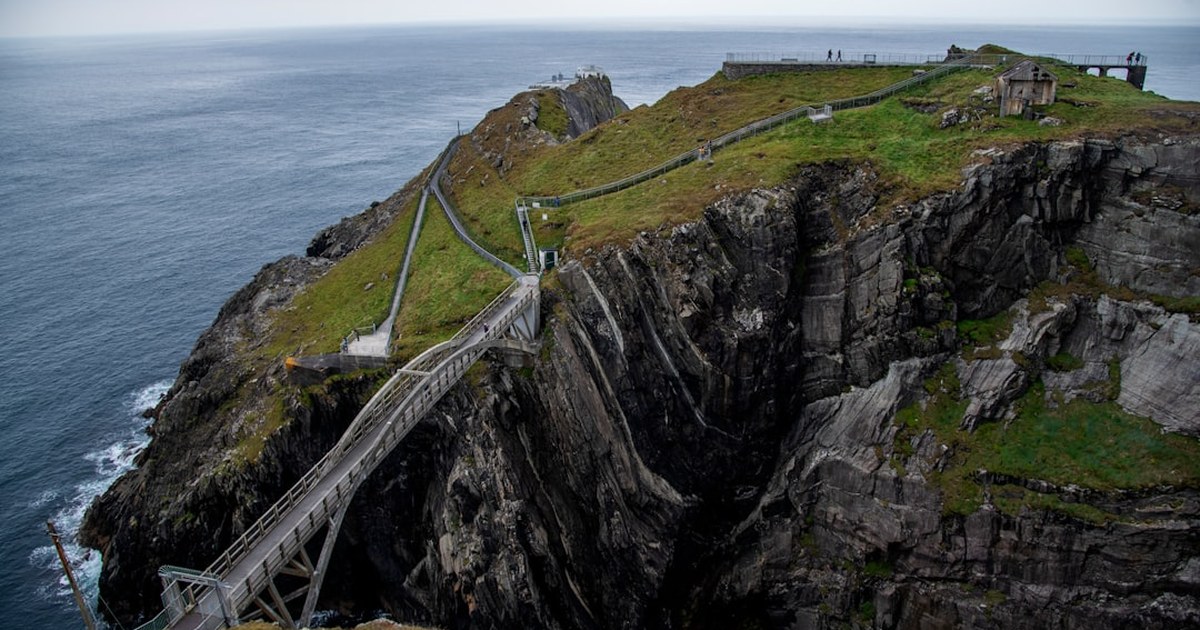
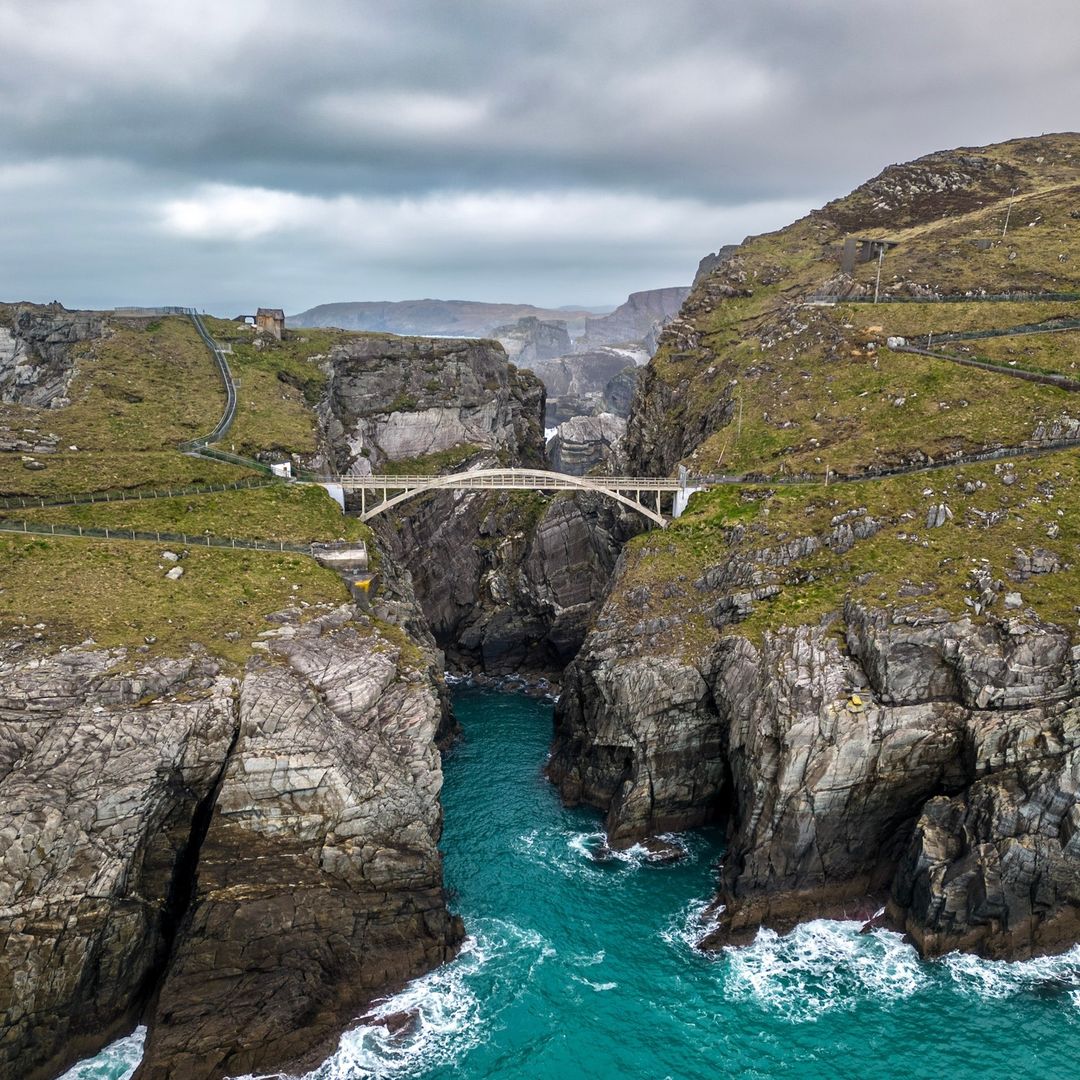
The Mizen Head Signal Station sits at the most south-westerly point of Ireland, and getting there requires crossing a narrow arch bridge that spans a rocky chasm above the Atlantic. The bridge stretches 52 metres in length, with a clear arch span of 45 metres above the churning sea below.
Built in 1909 to serve the lighthouse keepers who had to cross to the signal station in all weathers, it was not designed for tourists — it was built to be used. The reinforced concrete arch connects the mainland to a headland of sea-eroded rock. Standing on it on a windy day, with waves breaking far below and spray lifting from the rocks, makes it very clear why engineers took this seriously.
The site is now a heritage centre. You pay a small entry fee (around €8 for adults) and can walk the bridge, visit the restored fog signal station, and explore the rocky headland. There are also exhibits about the lighthouse keepers who lived and worked there for decades.
Getting there requires a drive along a single-track road from Goleen in West Cork. Allow at least two to three hours for the full site, not counting the drive. The road itself is tight in places — large campervans may have difficulties.
Love Ireland? Get our weekly newsletter.
Stories, travel tips, and hidden gems from across Ireland, straight to your inbox every week.
🇮🇪 Discover Your Irish Heritage
Join 64,000 people staying connected to their Irish roots. Get our free Irish Ancestry Guide — surnames, counties, parish records and emigration history — when you subscribe free.
Get My Free Ancestry Guide → Official info: en.wikipedia.org/wiki/Mizen_Head.
Carrick-a-Rede Rope Bridge, County Antrim
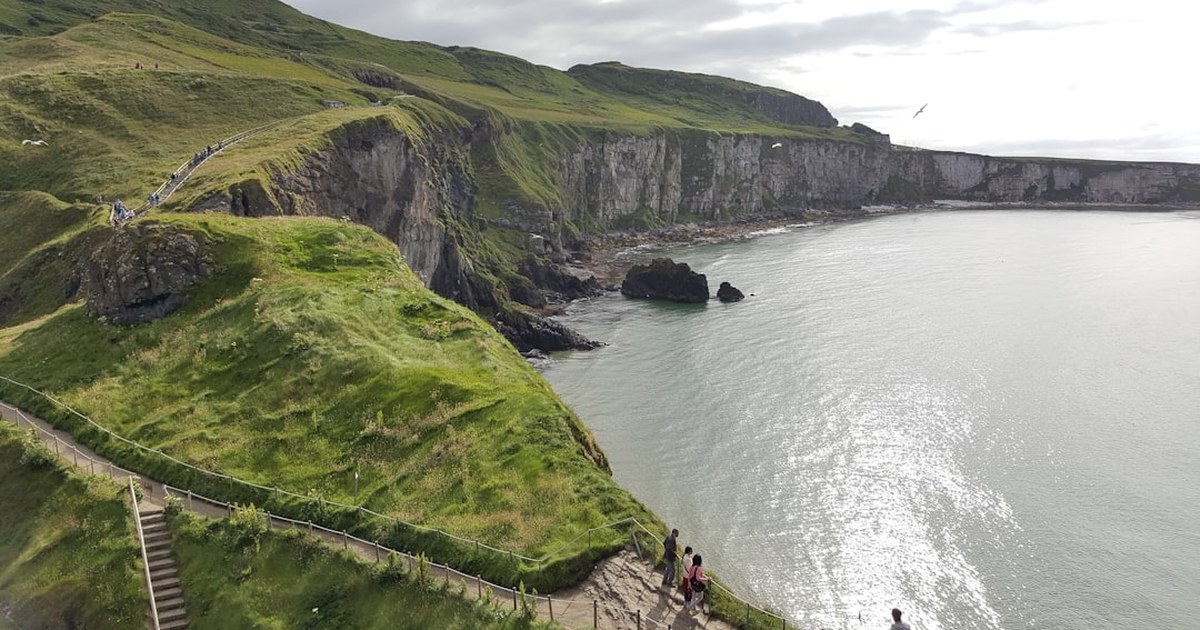
Few bridges in Ireland test the nerves the way Carrick-a-Rede does. Originally rigged each spring by salmon fishermen to reach a small island just off the Antrim coast, the rope bridge now draws hundreds of thousands of visitors a year. It spans a 20-metre chasm, 30 metres above the sea, and sways gently as you cross.
The current bridge is managed by the National Trust and is constructed from wire rope and wooden planks. It has been crossed millions of times and meets all modern safety standards. But none of that fully prepares you for looking down through the gaps at the rocks below.
The original fishermen rigged it each season and took it down each autumn to protect it from winter storms. At its busiest, the salmon fishery employed up to four men at a time. The fishing rights were sold in 2002, and the bridge became purely a visitor attraction.
Tickets must be booked in advance, especially in peak season. The car park fills early, and the walk from the car park to the bridge takes about 15 to 20 minutes each way along a clifftop path. The views of the Causeway Coast along the way are worth the trip on their own. Official info: en.wikipedia.org/wiki/Carrick-a-Rede_Rope_Bridge.
Ardnacrusha Hydroelectric Station, County Clare
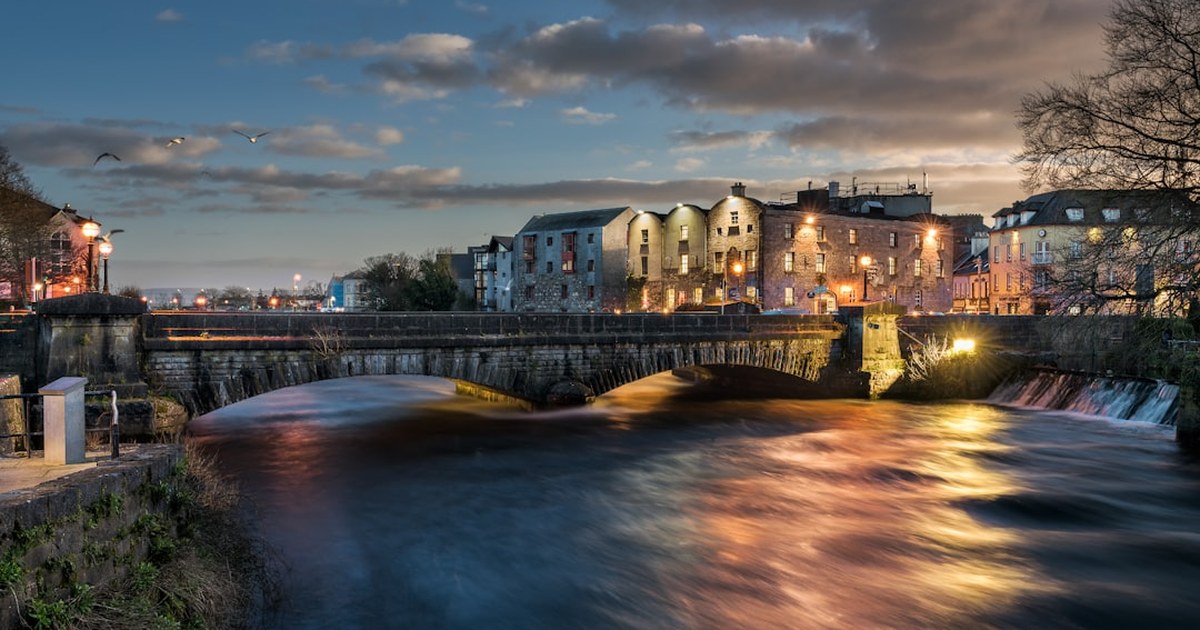
This is the one most travellers have never heard of, and that is a shame. When it opened in 1929, the Ardnacrusha power station on the River Shannon was the largest hydroelectric installation in the world. Ireland, then a new state just seven years old, committed heavily to it — the cost of construction consumed roughly one-fifth of the entire annual government budget.
The project was built by the German firm Siemens-Schuckertwerke and involved diverting most of the Shannon’s flow through a 12-kilometre headrace canal. At peak output it generated 86 megawatts, enough to supply the entire Irish national grid at the time. The project single-handedly created the Electricity Supply Board, Ireland’s national electricity provider, which still exists today.
The station is still fully operational, generating around 2% of Ireland’s electricity nearly a century after it was built. Guided tours have been offered intermittently — check the ESB’s current schedule before visiting, as access to the interior is limited. Even viewing the structure from the adjacent road and canal bank gives a clear sense of the scale of what was achieved here with 1920s technology.
The town of Killaloe, a short drive away, is worth a stop for lunch. The Shannon there is broad and calm, with no hint of the engineering project that redirected most of its flow a few kilometres upstream.
Planning a trip to Ireland?
Our newsletter covers practical travel guides, local recommendations, and things you won’t find in the guidebooks.
Subscribe Free →
Official info: en.wikipedia.org/wiki/Ardnacrusha.
Samuel Beckett Bridge, Dublin
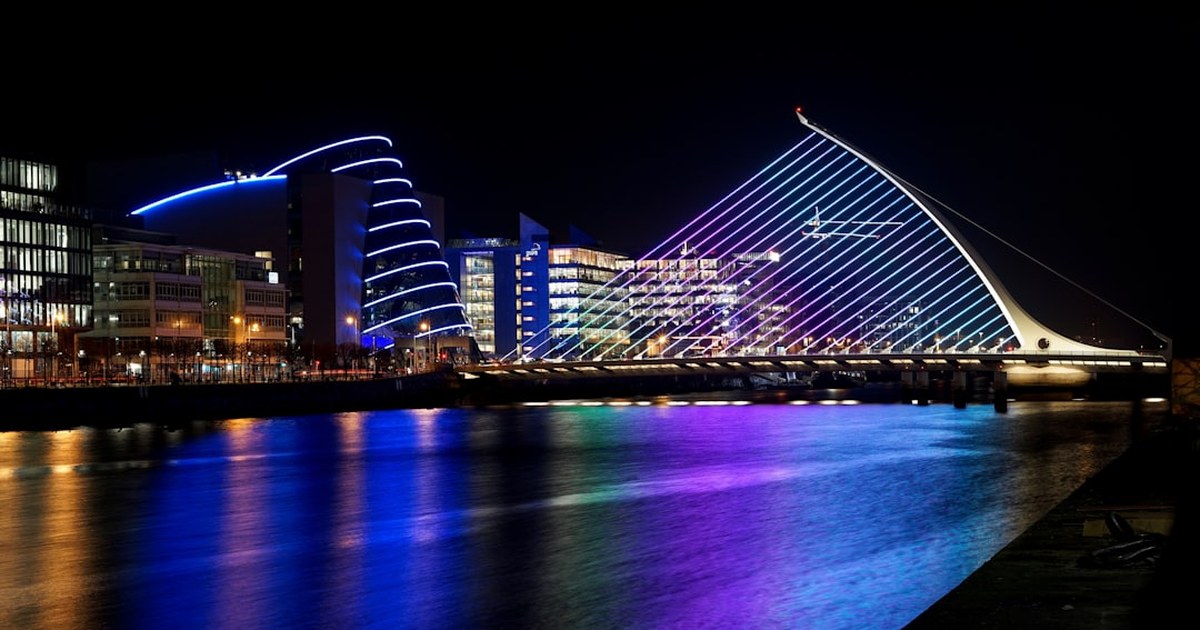
Dublin has many bridges crossing the Liffey, and most of them are serviceable. The Samuel Beckett Bridge, designed by architect Santiago Calatrava and opened in 2009, is in a different category. The cable-stayed structure is shaped like a curved harp — a nod to the harp on the Irish coat of arms — and the entire span rotates 90 degrees on its base to allow river traffic through.
The bridge connects Sir John Rogerson’s Quay on the south bank to Guild Street on the north, carrying both road and pedestrian traffic. The main pylon rises above the riverbed and anchors the cable stays that support the deck. At night, when it is lit, it is one of the most photographed structures in the city.
What makes it particularly impressive from an engineering standpoint is the moveable structure: the full span swings open in a few minutes. This happens a few times each year for tall vessels navigating the Liffey. If you are in Dublin and happen to time it right, it is worth watching.
The bridge is freely accessible at any hour and sits about 15 minutes’ walk from the city centre. It is an easy addition to any walking route through the Docklands. Official info: en.wikipedia.org/wiki/Samuel_Beckett_Bridge.
The Boyne Viaduct, County Louth
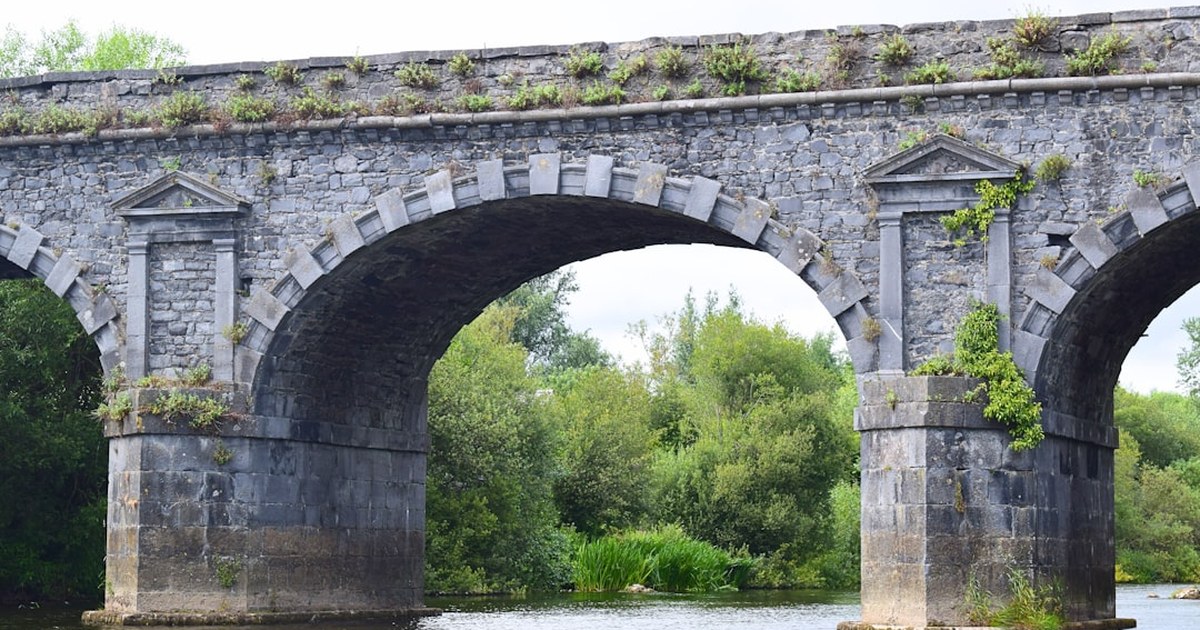
Spanning the River Boyne at Drogheda, this Victorian railway viaduct was built in 1855 and is still in daily use carrying the Dublin–Belfast rail line. It is a railway-only structure — twelve stone arches on the south side and three on the north, linked by a central steel span — standing about 30 metres above the river and stretching roughly 323 metres (1,060 feet) across the valley.
The ironwork was prefabricated and assembled on site, a standard approach for large Victorian infrastructure projects. The original wrought-iron central spans were replaced with steel girders in 1932 — the work was done inside the existing ironwork so trains could keep running throughout — while the stone piers and arches on either side are still the originals from 1855.
The best views are from the riverside paths in Drogheda town, looking up at the full structure from below. If you are catching the train between Dublin and Belfast, the Boyne crossing takes only a few seconds — but look out the left-hand window as you pass over the river and you will get a clear look at what you are travelling on. Official info: en.wikipedia.org/wiki/Boyne_Viaduct.
Ha’penny Bridge, Dublin
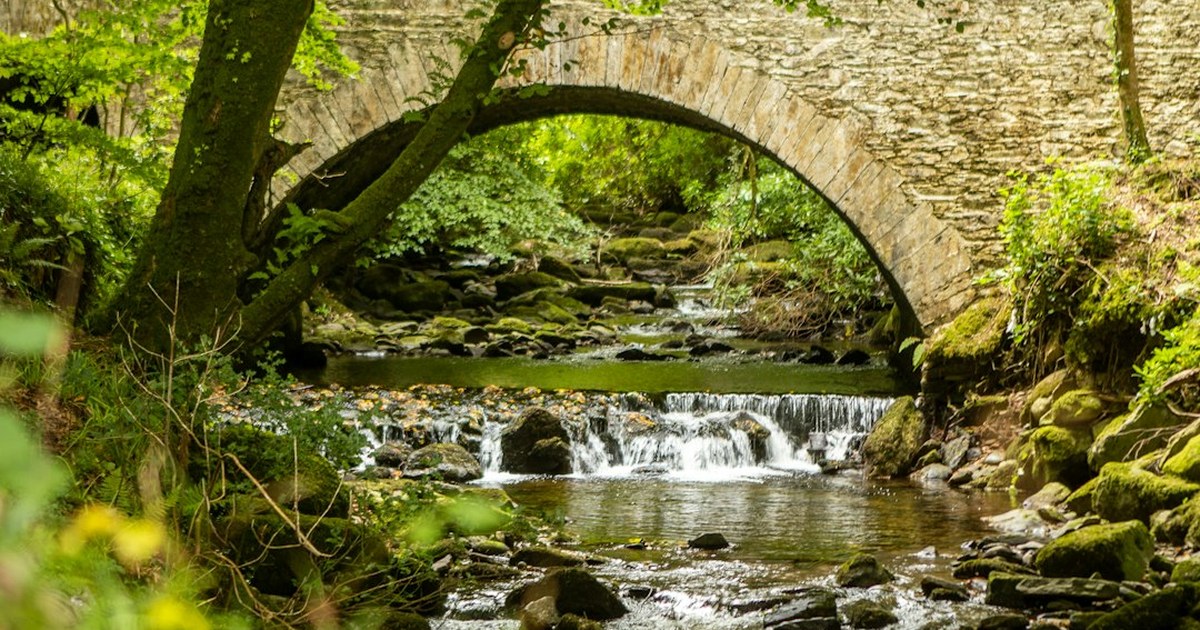
Older and smaller than most structures on this list, the Ha’penny Bridge — officially the Liffey Bridge — was opened in 1816 and was the first cast-iron bridge in Ireland. It replaced a series of ferries that crossed the Liffey at this point. The name comes from the half-penny toll charged to pedestrians until 1919.
The bridge is a single-span cast-iron arch, 43 metres long, and originally had three tollbooths at the city-side entrance. The ironwork was manufactured in Shropshire, England, shipped across, and assembled on site — an approach that was already well-established for iron bridge construction at the time.
It is now pedestrianised and is one of the most photographed spots in Dublin. It is small and looks nothing like a piece of serious engineering, which is exactly why the story behind it is worth knowing. For its time, an iron bridge of this span assembled in the middle of a city was a significant technical achievement.
Official info: en.wikipedia.org/wiki/Ha%27penny_Bridge.
Practical Tips for Visiting
Most of these structures do not require pre-booking, but a few things to keep in mind before you go:
- Carrick-a-Rede — book in advance through the National Trust website, particularly between May and September. Tickets sell out early on summer weekends.
- Mizen Head — the heritage centre is open year-round but hours vary by season. Check the Mizen Head Signal Station website before setting out.
- Ardnacrusha — access to the power station is not open to the general public without a guided tour booking. Check the ESB’s current schedule.
- Samuel Beckett Bridge and Ha’penny Bridge — freely accessible at all times, no booking needed.
- Boyne Viaduct — park in Drogheda town centre and walk down to the riverside paths for the best views. Signage in town will point you to the river.
Ireland’s engineering history stretches from Victorian ironwork through to 1920s dam-building and into 21st-century cable-stayed bridges. The range is wider than most visitors expect, and nearly all of these sites are reachable on a standard touring itinerary without significantly extending your route.
Never miss a story from Ireland.
Join thousands of readers who get our Ireland travel newsletter every week — free, no spam, unsubscribe any time.
☘️ Join 64,000+ Ireland Lovers
Every weekday morning, get Ireland’s hidden gems, local secrets, and travel inspiration — the kind you won’t find in any guidebook.
Subscribe free — enter your email:
📲 Know someone who’d love this? Share on WhatsApp →
Love more? Join 43,000 Scotland lovers → · Join 29,000 Italy lovers → · Join 7,000 France lovers →
Free forever · Unsubscribe anytime
Tours & experiences you might love


Powered by Viator. Some links are affiliate links — we may earn a small commission at no extra cost to you.
Secure Your Dream Irish Experience Before It’s Gone!
Planning a trip to Ireland? Don’t let sold-out tours or packed attractions spoil your journey. Iconic experiences like visiting the Cliffs of Moher, exploring the Rock of Cashel, or enjoying a guided walk through Ireland’s ancient past often sell out quickly—especially during peak travel seasons.

Booking in advance guarantees your place and ensures you can fully immerse yourself in the rich culture and breathtaking scenery without stress or disappointment. You’ll also free up time to explore Ireland’s hidden gems and savour those authentic moments that make your trip truly special.
Make the most of your journey—start planning today and secure those must-do experiences before they’re gone!