

Ireland has approximately 3,000 castles and castle ruins scattered across its 32 counties — more than almost any country of comparable size in the world. Most people visit the same handful: Blarney, Kilkenny, the Rock of Cashel. But Ireland’s most dramatic ruins are often the ones no coach trip ever stops at. These are the fortresses where history actually happened — sieges, rebellions, betrayals, and the kind of sudden destruction that left walls standing for centuries as monuments to moments of violence. Here are ten of the most dramatic castle ruins in Ireland, each with a story worth knowing.
These ruins share something that their more famous, better-maintained cousins often lack: the feeling that you are standing in a place where time stopped violently. Some stand because no one ever repaired them. Others stand because they were too solid to destroy. All of them carry stories that explain why they look the way they do.
1. Leap Castle, County Offaly — The Castle That Hid a Pit of Bones
Official visitor information for Leap Castle →
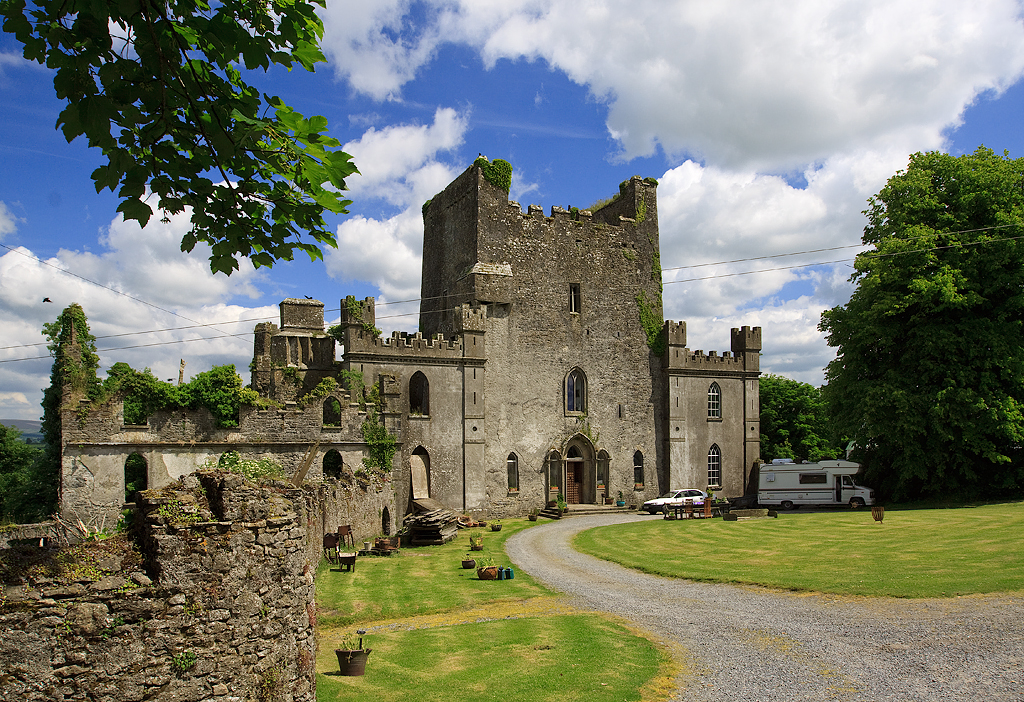
Leap Castle is arguably the most unsettling ruin in Ireland. Built by the O’Bannon clan around 1250 CE, the castle changed hands through violence so many times that its history reads like a catalogue of treachery. The most notorious event occurred in 1532, when the O’Carroll clan, then holding the castle, murdered a group of O’Carroll rivals during a mass — in the castle’s own chapel. The chapel became known as the Bloody Chapel, and it gives Leap its reputation as Ireland’s most haunted castle.
But the real discovery came in 1909, when workmen renovating the castle found an oubliette — a concealed pit beneath the Bloody Chapel floor — filled with human remains. The pit was approximately 6 metres (about 20 feet) deep and lined with spikes. When cleared, it yielded three cartloads of human bones. Some showed signs of blade wounds. Many were not complete skeletons. Historians believe the oubliette served as both a dungeon and a method of silent disposal over several centuries of O’Carroll occupation.
Leap Castle is in Clareen, County Offaly, and is privately owned. The owners occasionally open it for heritage tours. It is approximately 130 km southwest of Dublin.
2. Rock of Dunamase, County Laois — The Fortress Nobody Could Hold
Official visitor information for Rock of Dunamase →
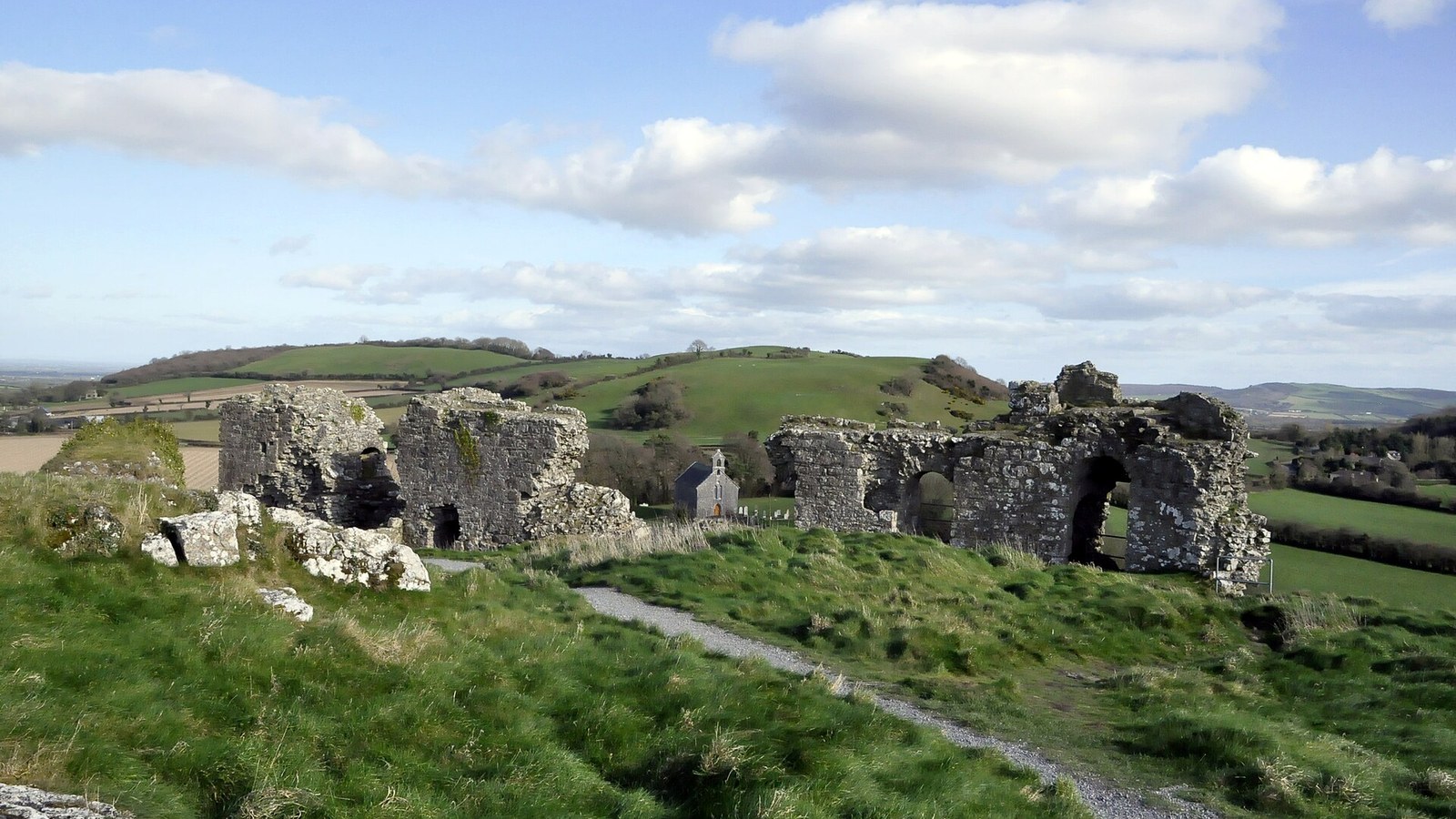
The Rock of Dunamase sits on a sudden limestone outcrop in the flat plains of County Laois, rising 46 metres above the surrounding landscape. The fortress on its summit changed hands through siege, marriage, and violence at least a dozen times between its Viking-era origins and its destruction by Cromwellian forces in 1650. It was held by the O’Dunmore clan, seized by Strongbow in the twelfth century, later held by the Mortimers, then the O’Mores, then the Butler family, then English forces — each acquisition involving either military conquest or advantageous marriage.
Cromwell’s artillery in 1650 left the fortress in the state you see today: shattered walls, missing sections, a gatehouse open to the sky. The destruction was deliberate. Cromwellian forces reduced Irish fortifications specifically to prevent them from serving as future strongholds. What survived is a dramatic shell on a dramatic rock, visible for miles across the Laois plain. The views from the summit over five counties on a clear day are exceptional. Access is free and the site is open year-round.
3. Kells Priory, County Kilkenny — The Walled Town That Time Forgot
Official visitor information for Kells Priory →
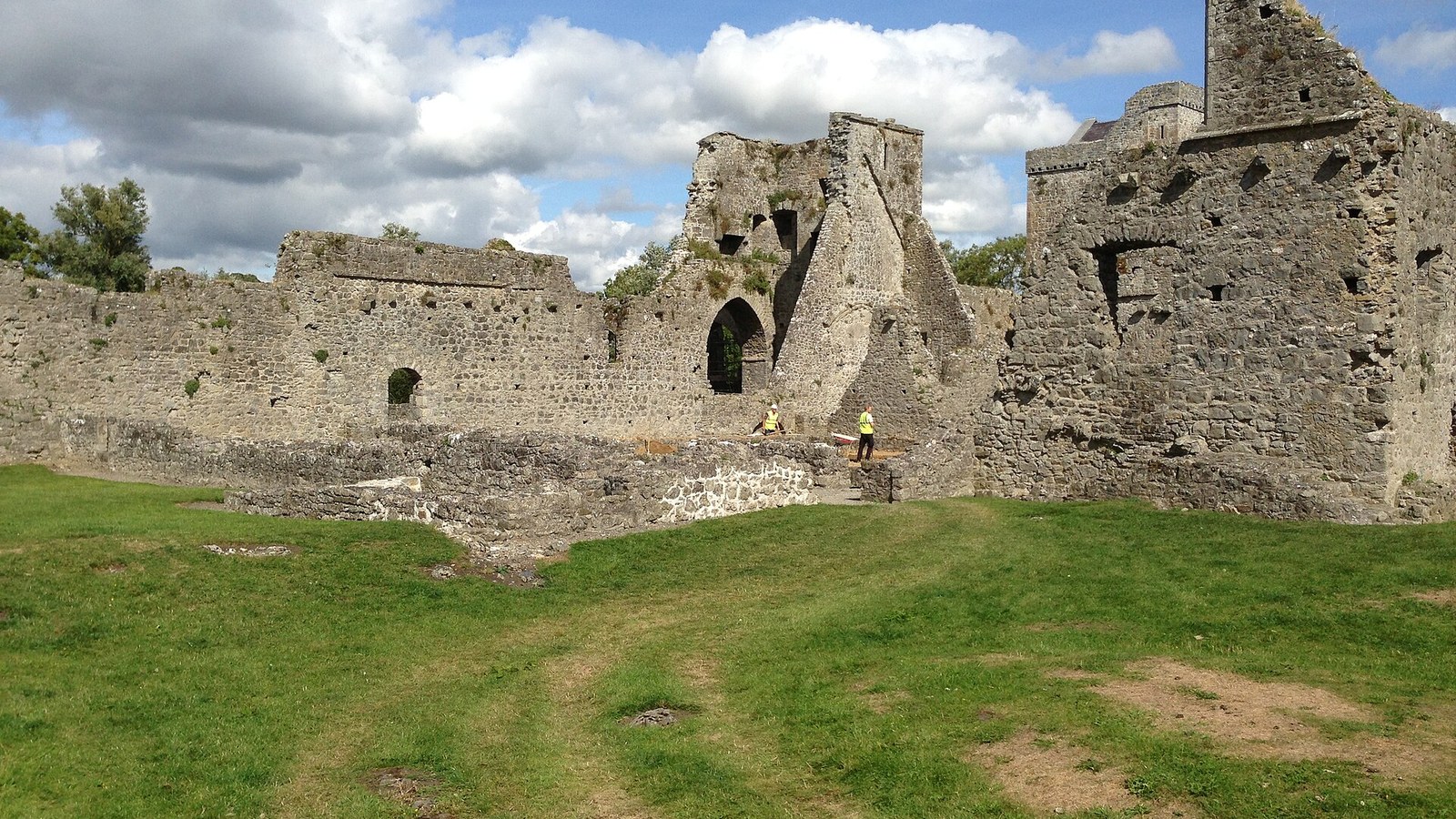
Kells Priory is one of the largest and least-visited medieval complexes in Ireland. An Augustinian priory founded around 1193, it grew over the following two centuries into a fortified town within a town — a walled compound containing a church, multiple towers, a mill, and accommodation for monks, guests, and tradespeople. The enclosing wall stretches for over 500 metres and stands, in places, to its original height of 8 metres.
Attackers burned and damaged it multiple times during the fourteenth and fifteenth centuries, but the Tudor suppression of monasteries in the sixteenth century ended its function. By 1600, it stood roofless and deserted. What stands today is a remarkably complete shell — towers, wall, arch, gateways — all original medieval stone. It sits beside the King’s River on the edge of the village of Kells, 35 km from Kilkenny city. Entry is free.
4. Doe Castle, County Donegal — The Fortress the MacSweeneys Held for 200 Years
Official visitor information for Doe Castle →
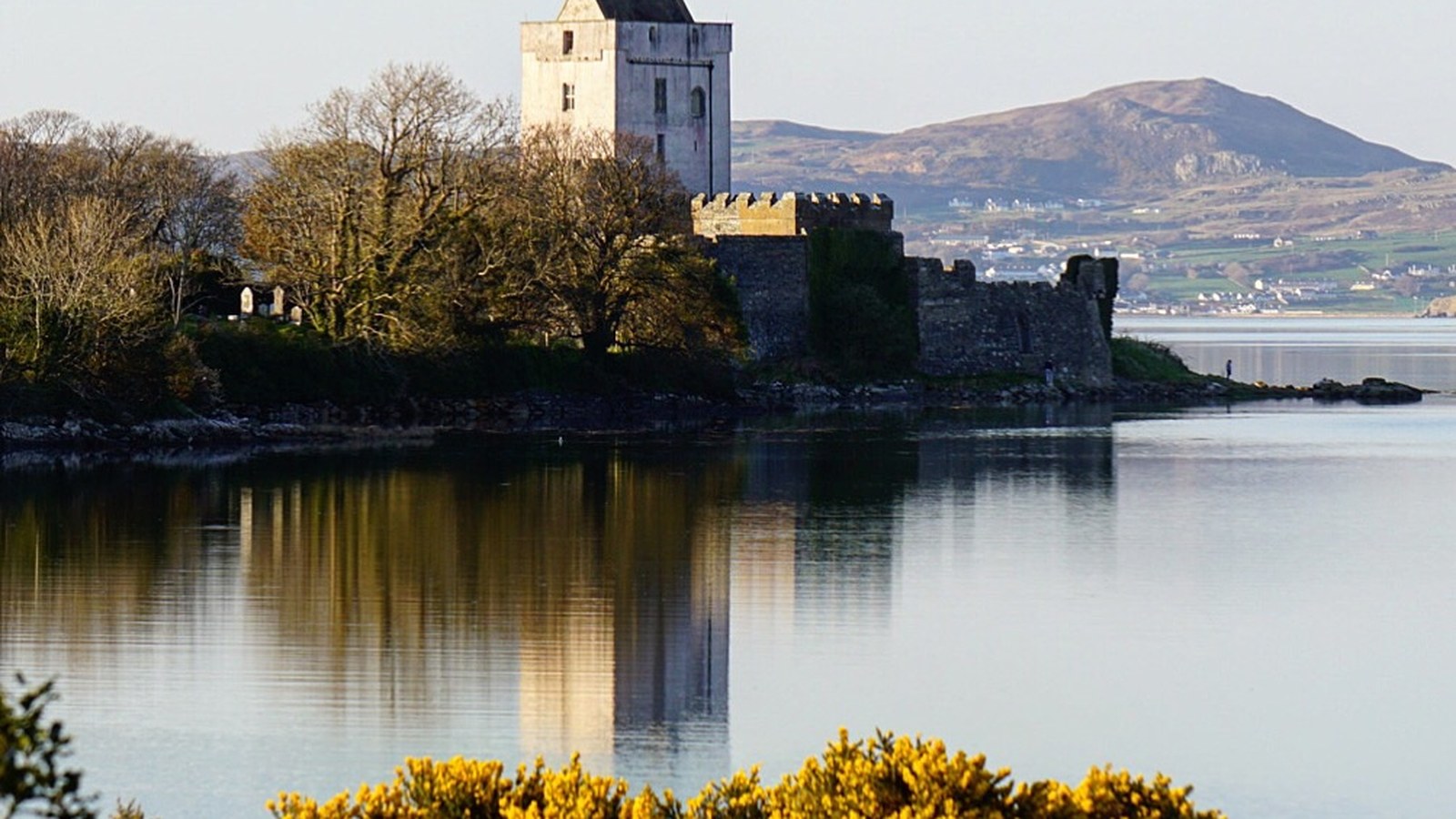
Doe Castle stands on a narrow promontory jutting into Sheep Haven Bay in northwest Donegal, surrounded on three sides by the Atlantic and cut off on the fourth by a rock-cut ditch. The MacSweeney clan, descendants of Scots mercenaries who came to Ireland in the fourteenth century, built it and held it for over 200 years. The phrase carved above its doorway — “My hope is in God” — still reads clearly in the stone.
The MacSweeneys were gallowglass warriors — professional soldiers who fought for Irish chieftains throughout Ulster. Their castle reflects both their resources and their strategic thinking. No wheeled artillery could approach across the surrounding water and rock. English forces took it eventually in the 1600s, but not without difficulty. Today, the castle stands in good condition — it was repaired by a private owner in the nineteenth century — and offers one of the most dramatic medieval views in Donegal from its seaward walls. Access is managed by the OPW and entry is free.
5. Ballyloughan Castle, County Carlow — The Abandoned Gatehouse
Official visitor information for Ballyloughan Castle →
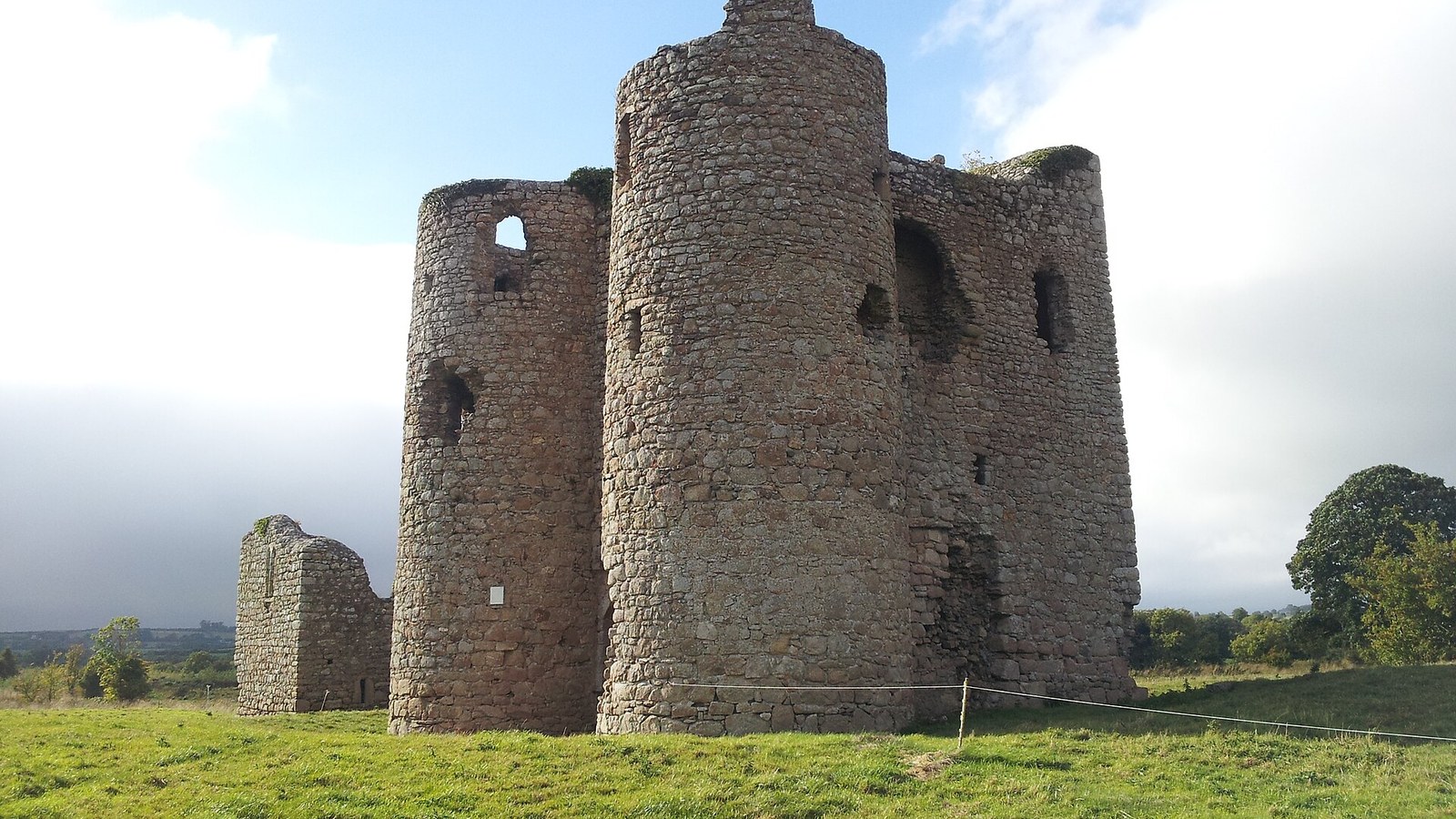
Ballyloughan is not famous, which is precisely what makes it worth knowing. The Carew family built this small Anglo-Norman castle around 1300, then abandoned it within a generation and never repaired it. What survives is its gatehouse — two square towers flanking a pointed archway — standing intact in a farmer’s field, unmarked by any tourist signage, surrounded only by grazing cattle.
Why the family abandoned it so quickly remains uncertain. Some historians suggest the Carew family moved their primary residence, others that the castle proved impractical. Whatever the reason, Ballyloughan preserves a snapshot of fourteenth-century Anglo-Norman castle design in a form that managed to avoid the later damage that more prominent castles received. It is freely accessible from the road, with no barriers or admission fee. Few visitors make the turn.
6. Kilcolman Castle, County Cork — Where Edmund Spenser Wrote the Faerie Queene
View Kilcolman Castle on Google Maps →
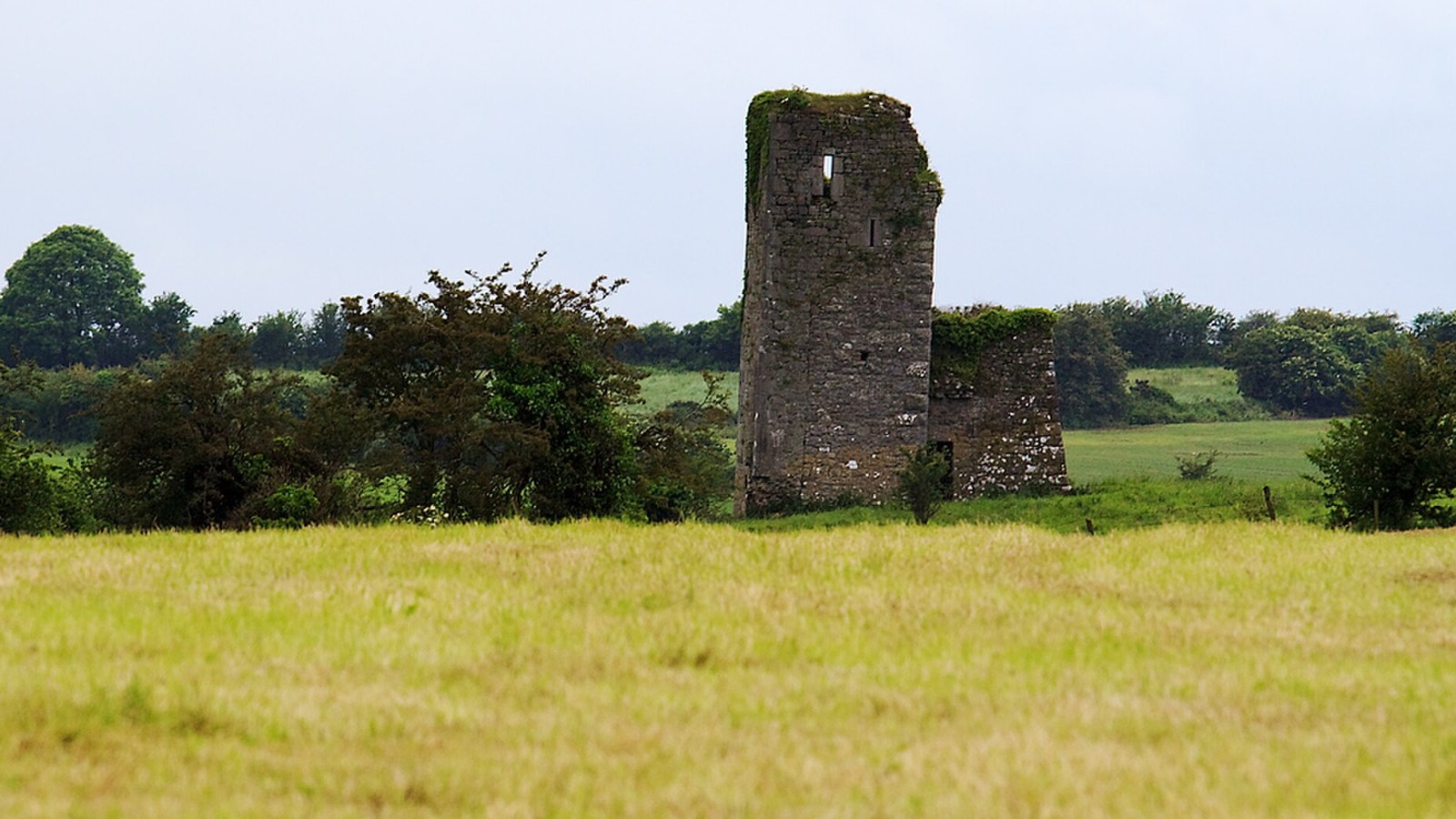
Kilcolman Castle in north County Cork was the home of Edmund Spenser, the Elizabethan poet, from 1589 to 1598. English authorities granted Spenser the confiscated castle following the Munster plantation — the forced settlement of English colonists on land that English forces had seized from Irish chieftains after the Desmond rebellions. He composed most of his epic poem The Faerie Queene in these rooms and hosted Sir Walter Raleigh here in 1589.
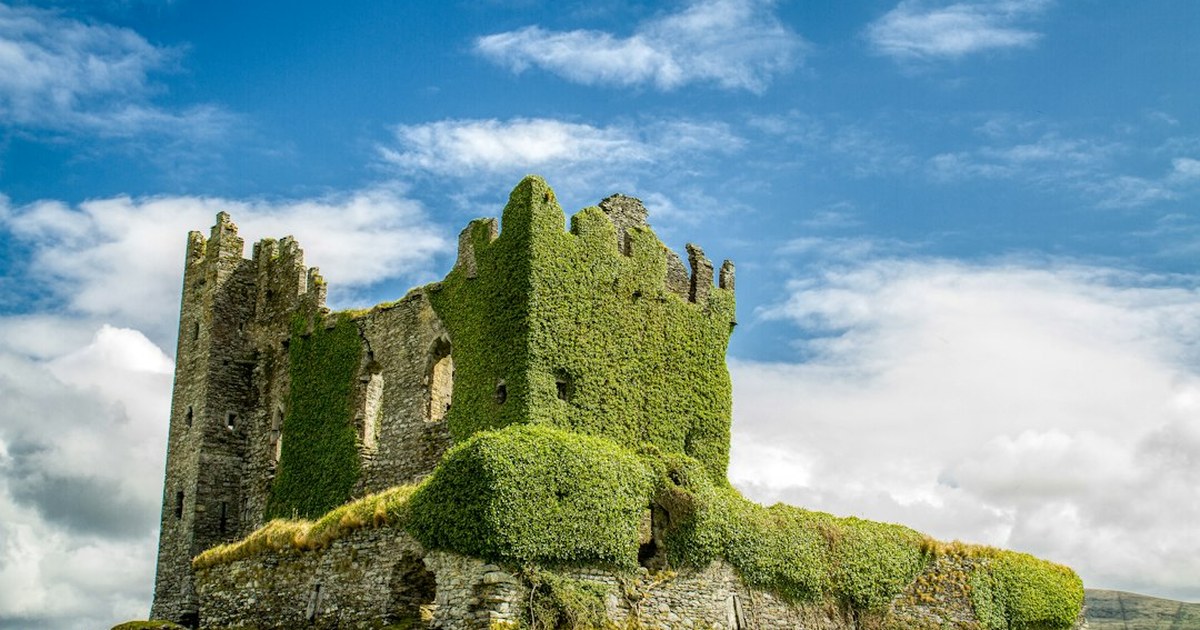
In 1598, the Nine Years’ War reached Munster. Irish forces under the command of rebel chieftains burned Kilcolman as part of a widespread assault on English settlements. Spenser fled to Cork, then to London, where he died in January 1599. The fire destroyed his manuscripts and possessions. The tower house stonework survived the burning, which stands today in a field near Doneraile — a ruin that carries the strange double history of being both a site of English colonial history and of Irish resistance. Access is free from the road.
☘️ Enjoying this? 64,000+ Ireland lovers get stories like this every week. Subscribe free →
7. Ardmore Round Tower and Cathedral, County Waterford — The Oldest Site in Ireland
Official visitor information for Ardmore Round Tower →
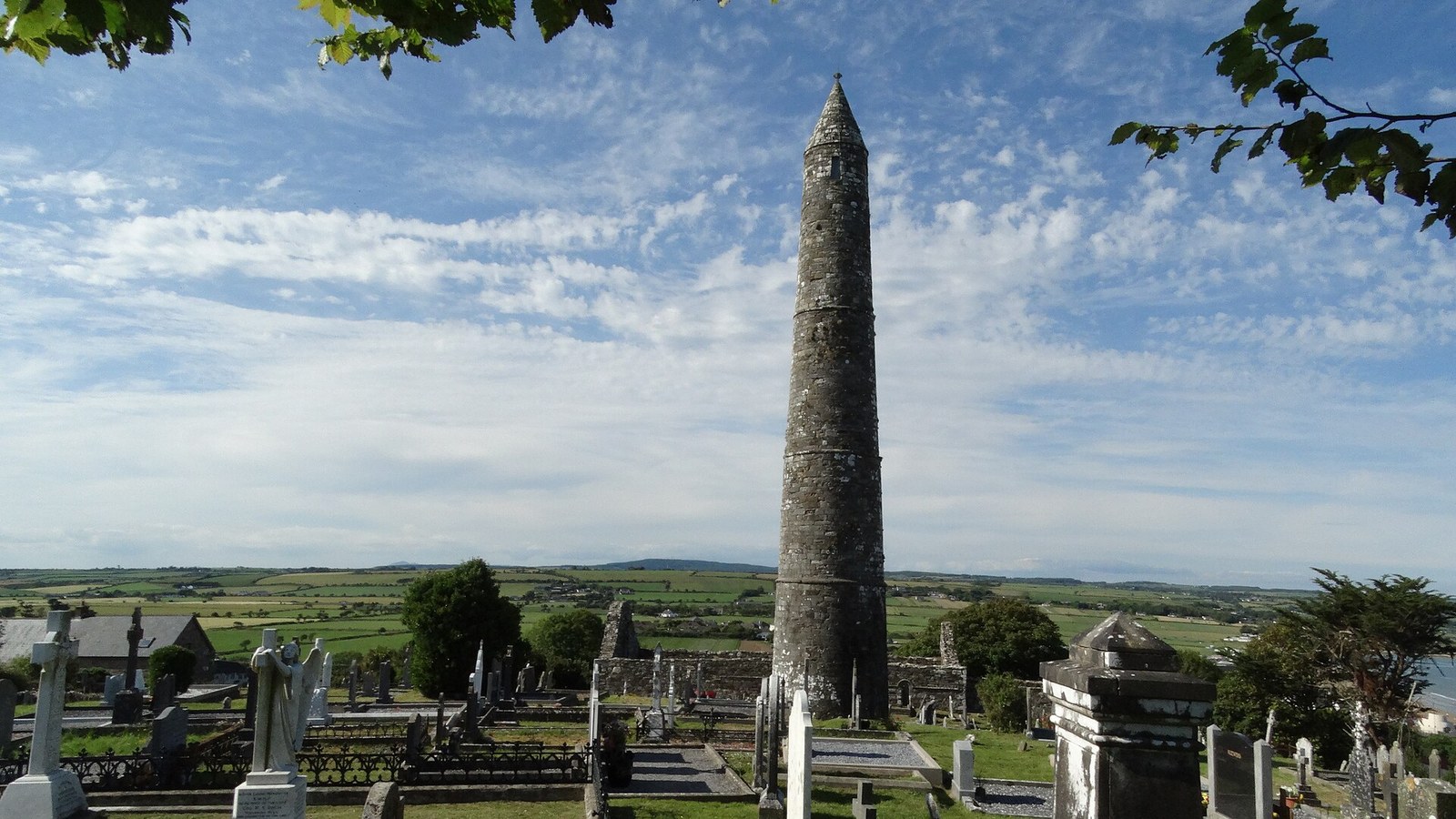
The monastery at Ardmore, on the Waterford coast, may be the oldest Christian settlement in Ireland. St. Declan is said to have established a monastic community here before St. Patrick’s mission, sometime in the fifth century CE. The round tower, standing 30 metres tall and dating from around 1150 CE, is one of the best-preserved in Ireland. The adjacent cathedral ruins include Romanesque carved panels on their west wall that remain among the finest examples of twelfth-century stone carving in the country.
What makes Ardmore particularly dramatic is the setting. The ruins stand on a cliff above Ardmore Bay, with the Atlantic visible beyond them. The graveyard surrounding the cathedral contains headstones dating back several centuries. Many Irish-American families with Waterford roots have ancestors buried here or in the townlands immediately surrounding the site. The OPW manages the complex, which is freely accessible.
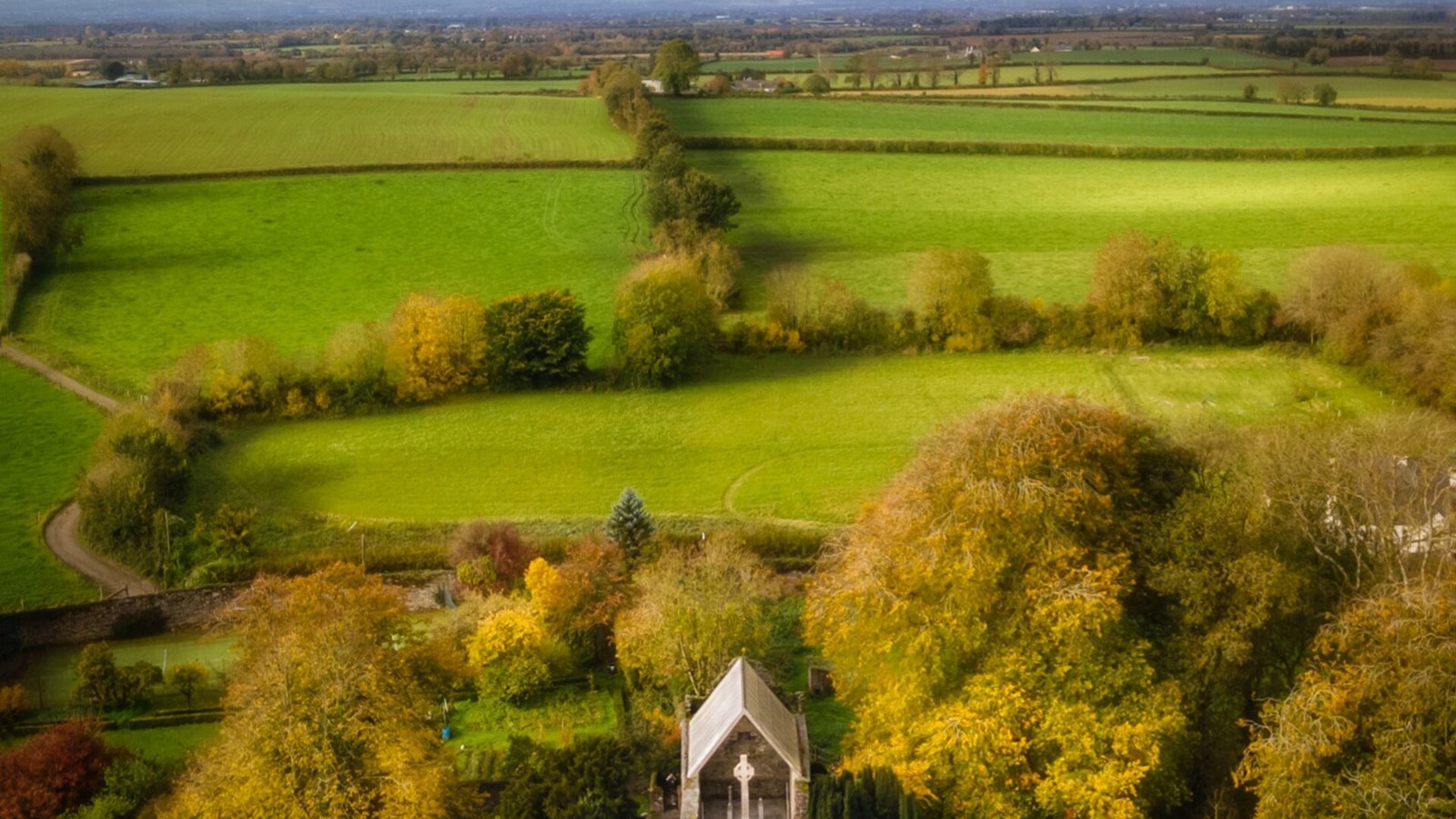
8. Moone High Cross and Abbey, County Kildare — The Most Complete Early Christian Site
Official visitor information for Moone High Cross →
Moone Abbey in County Kildare preserves the tallest and most complete high cross in Ireland: the Moone High Cross, standing 5.3 metres tall and carved around the eighth century CE. The cross depicts Old and New Testament scenes in a compressed, geometric style that reflects Columban monastic art at its most assured. It stands within the ruins of an early medieval monastic settlement that also includes the remains of a thirteenth-century tower.
The contrast between the centuries is visible in stone: the delicate ninth-century carvings alongside the solid medieval walls of a much later construction. The site was used as a burial ground until the twentieth century, and old headstones still lean against the tower walls. Moone is 50 km south of Dublin and freely accessible year-round. The high cross alone makes the detour worthwhile.
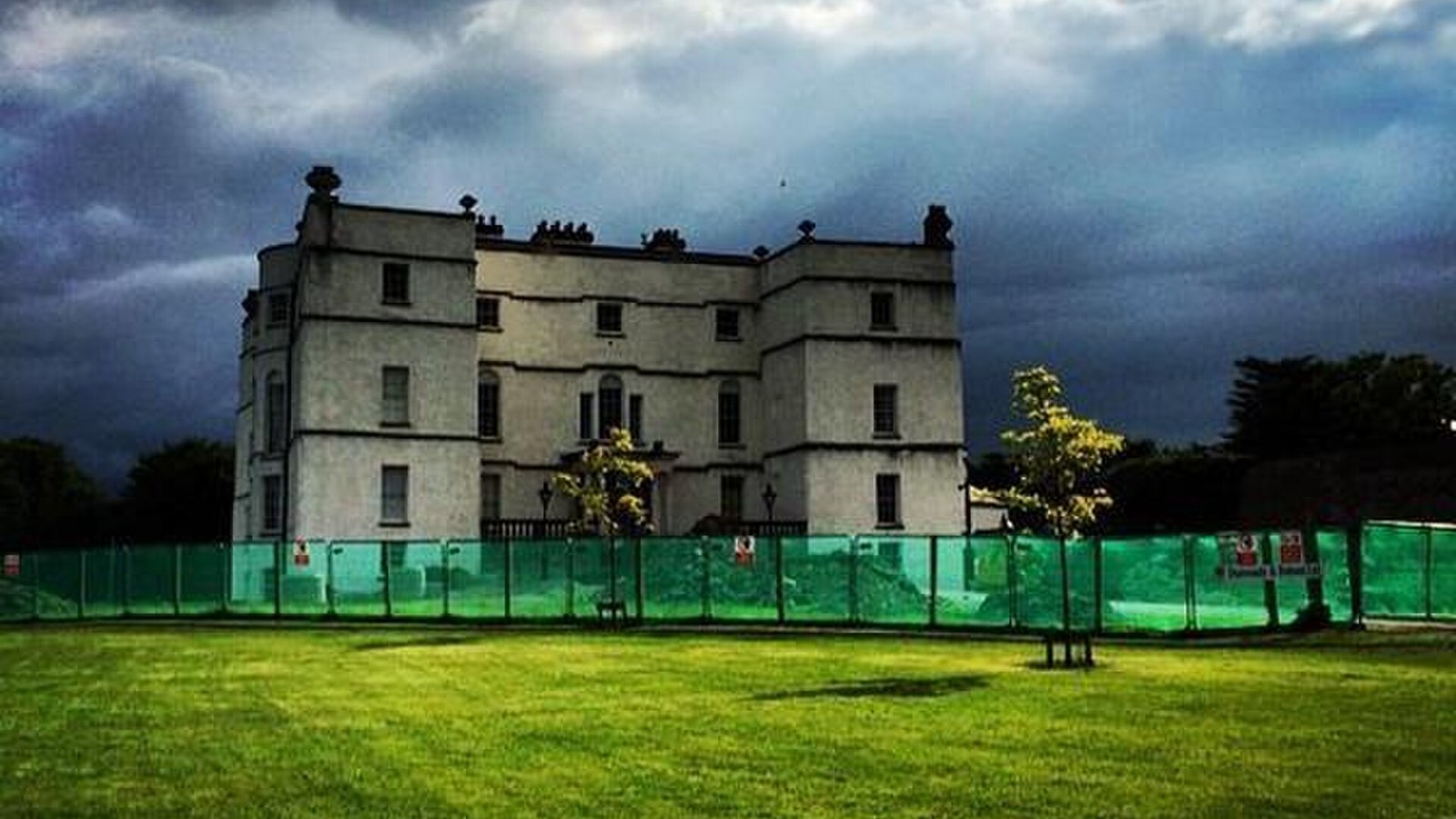
9. Rathfarnham Castle Outbuildings, County Dublin — The Georgian Ghost Behind the Walls
Official visitor information for Rathfarnham Castle →
Rathfarnham Castle itself is not ruined — the main structure survives and is managed by the OPW. But the surrounding outbuildings and walled garden, visible from outside the perimeter, present a different picture: collapsed walls, empty windows, derelict stables, and a sense of what the estate looked like in the century before restoration funding arrived. The juxtaposition of the maintained interior and the atmospheric exterior gives Rathfarnham a dual character that most heritage sites lack.
The castle itself was built around 1585 and passed through several notable owners, including Adam Loftus, the Archbishop of Dublin, and later the Jesuit Order, which acquired it in 1913 as a house of studies and retreat house (not a boys’ school until Coláiste Eoin opened there in 1970). Nearby, on Grange Road, Patrick Pearse ran his own school, St. Enda’s, at The Hermitage from 1910 until his execution after the 1916 Rising — a separate property, now the Pearse Museum. The castle grounds are in south County Dublin, accessible by bus, and free to walk through.
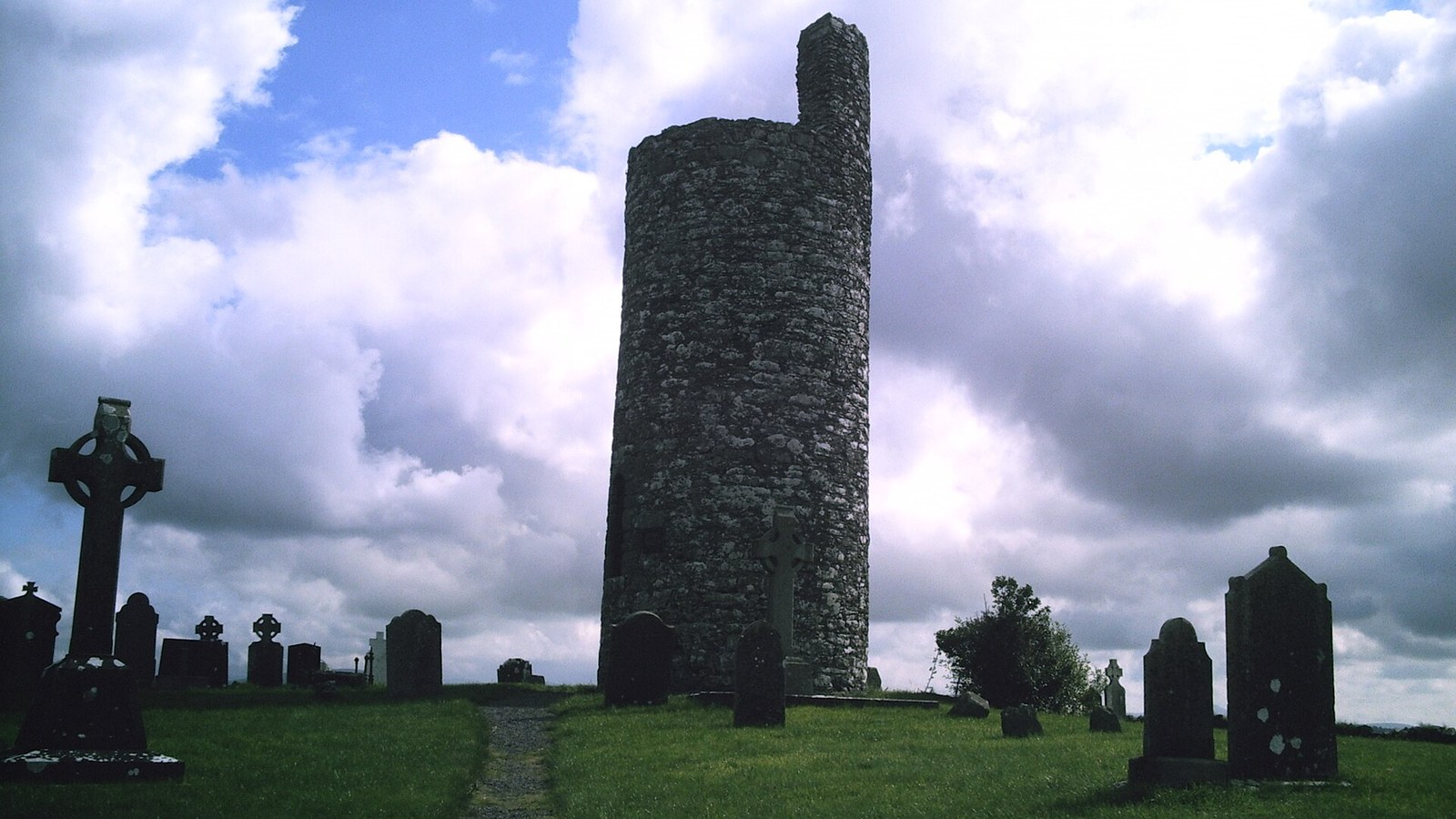
10. Old Kilcullen Church and Crosses, County Kildare — The Viking-Era Ruins Above the Plains
Official visitor information for Old Kilcullen Round Tower →
The hilltop above the village of Kilcullen in County Kildare holds what remains of one of the most important early medieval Christian settlements in Leinster. The site includes the ruins of a Romanesque church, the remains of a round tower, and several decorated high crosses — all dating from different periods between the eighth and twelfth centuries CE. A Viking attack in 978 CE destroyed the earlier settlement, and the current ruins represent a rebuilding effort in the eleventh and twelfth centuries.
The site occupies a natural hill with views over the Kildare plains — the same strategic position that made it valuable both to monks seeking visibility and to raiders seeking a target. Three carved granite cross fragments survive in good condition. Access is free from a small car park on the hill road. Almost no tourist infrastructure marks the site, which means you will often have it entirely to yourself.
Planning a Visit: Practical Notes
Most of the sites on this list are freely accessible without admission fees or advance booking. This distinguishes them from major visitor attractions like Blarney or Kilkenny, which charge entrance fees and draw large crowds. Here are the practical details for visiting several of these ruins:
- Leap Castle, Offaly — private property, check current access via local tourism boards; approximately 130 km from Dublin
- Rock of Dunamase, Laois — free access, no facilities; 75 km from Dublin via the N7
- Kells Priory, Kilkenny — free access beside the village of Kells; 40 km from Kilkenny city
- Doe Castle, Donegal — free access managed by OPW; 220 km from Dublin
- Ballyloughan Castle, Carlow — visible from road, free access; 100 km from Dublin
- Kilcolman Castle, Cork — visible from road near Doneraile; 240 km from Dublin
- Ardmore, Waterford — free OPW access; 200 km from Dublin
- Moone, Kildare — free access; 50 km from Dublin
- Old Kilcullen, Kildare — free access from roadside car park; 50 km from Dublin
Many of these sites stand in or near historic townlands — the ancient land divisions that Irish families called home for centuries. If your ancestors came from Offaly, Laois, Kilkenny, or Carlow, there is a real chance that the same stone walls in these ruins were visible from your family’s home fields for generations. Our free Irish townlands ancestry research guide can help you trace your family’s specific townland and connect it to the wider history of the area. Read it free here.
What is the most dramatic castle ruin in Ireland?
Leap Castle in County Offaly is widely considered Ireland’s most dramatic and atmospheric ruin, famous for the oubliette filled with human bones discovered in 1909 and its centuries of violent history. The Rock of Dunamase in County Laois, standing 46 metres above the Laois plains and deliberately destroyed by Cromwellian artillery in 1650, is a strong rival for sheer visual drama.
Are Irish castle ruins free to visit?
Most Irish castle ruins are freely accessible, particularly smaller sites managed by the OPW (Office of Public Works) or simply standing on open land near public roads. Major managed attractions like Blarney, Kilkenny, and the Rock of Cashel charge admission fees. Sites like Kells Priory, the Rock of Dunamase, Doe Castle, and Moone High Cross are free and can be visited without booking.
What destroyed so many Irish castles?
The two main causes of Irish castle destruction were Cromwellian siege warfare between 1649 and 1652, and the deliberate slighting (demolition) of fortifications by English forces to prevent their use in future rebellions. The Williamite wars of the 1690s caused additional destruction. Many castles were also simply abandoned and left to decay after the Tudor and Cromwellian confiscations transferred land from Irish clans to English settlers.
How many castle ruins does Ireland have?
Ireland has approximately 3,000 castles and castle ruins, making it one of the most castle-dense countries in the world relative to its size. The density of ruins reflects both the intensity of medieval fortress-building and the destruction wrought by centuries of warfare, confiscation, and abandonment. Most of these ruins are small tower houses rather than large fortresses.
☘️ Join 64,000+ Ireland Lovers
Every weekday morning, get Ireland’s hidden gems, local secrets, and travel inspiration — the kind you won’t find in any guidebook.
Subscribe free — enter your email:
📲 Know someone who’d love this? Share on WhatsApp →
Free forever · Unsubscribe anytime
Tours & experiences you might love


Powered by Viator. Some links are affiliate links — we may earn a small commission at no extra cost to you.
Secure Your Dream Irish Experience Before It’s Gone!
Planning a trip to Ireland? Don’t let sold-out tours or packed attractions spoil your journey. Iconic experiences like visiting the Cliffs of Moher, exploring the Rock of Cashel, or enjoying a guided walk through Ireland’s ancient past often sell out quickly—especially during peak travel seasons.

Booking in advance guarantees your place and ensures you can fully immerse yourself in the rich culture and breathtaking scenery without stress or disappointment. You’ll also free up time to explore Ireland’s hidden gems and savour those authentic moments that make your trip truly special.
Make the most of your journey—start planning today and secure those must-do experiences before they’re gone!