

There is a phrase in Irish that most visitors learn before they even touch down in Dublin: céad míle fáilte — a hundred thousand welcomes. It is printed on tea towels and painted on pub walls, so often repeated that it can start to feel ceremonial. But spend any real time in Ireland, and you begin to understand that this is not sentiment. Irish hospitality is structural. It is woven into how people speak to strangers, how villages function, how a country of five million manages to feel, somehow, as though everyone already knows your name.
The Ancient Roots of Irish Hospitality
The warmth you encounter in Ireland is not accidental. It has deep roots in Brehon Law — the ancient legal code that governed Irish society for centuries before English colonisation. Under Brehon Law, hospitality was not merely a virtue. It was a legal obligation. Every household of means was required to offer food, shelter, and protection to any traveller who arrived at the door. To turn away a stranger was not rudeness. It was a crime.
The bruidean — the public hostel maintained along major routes — ensured that no traveller went without rest or sustenance. The Irish word fleadh, meaning a great feast or communal celebration, captures the same spirit. In early Irish society, abundance was not something to be hoarded. It was something to be shared.
This tradition did not die with the old laws. It became habit. And then it became character.
What Makes Irish Hospitality Different
Many countries claim to be friendly. What distinguishes Irish hospitality is its quality of attention. The Irish do not merely tolerate the presence of strangers — they are genuinely curious about them.
Ask someone on a Galway street for directions and you will, more often than not, receive a conversation. Where are you from? What has brought you here? Are you visiting family? Have you tried the chowder at the market? The question behind the question is always the same: Who are you, and what is your story?
This is not a cultural performance. It is the residue of centuries of oral tradition — a society that passed its history through storytelling rather than text. The Irish have always understood that the most interesting thing in any room is another human being.
The Pub as a Levelling Space
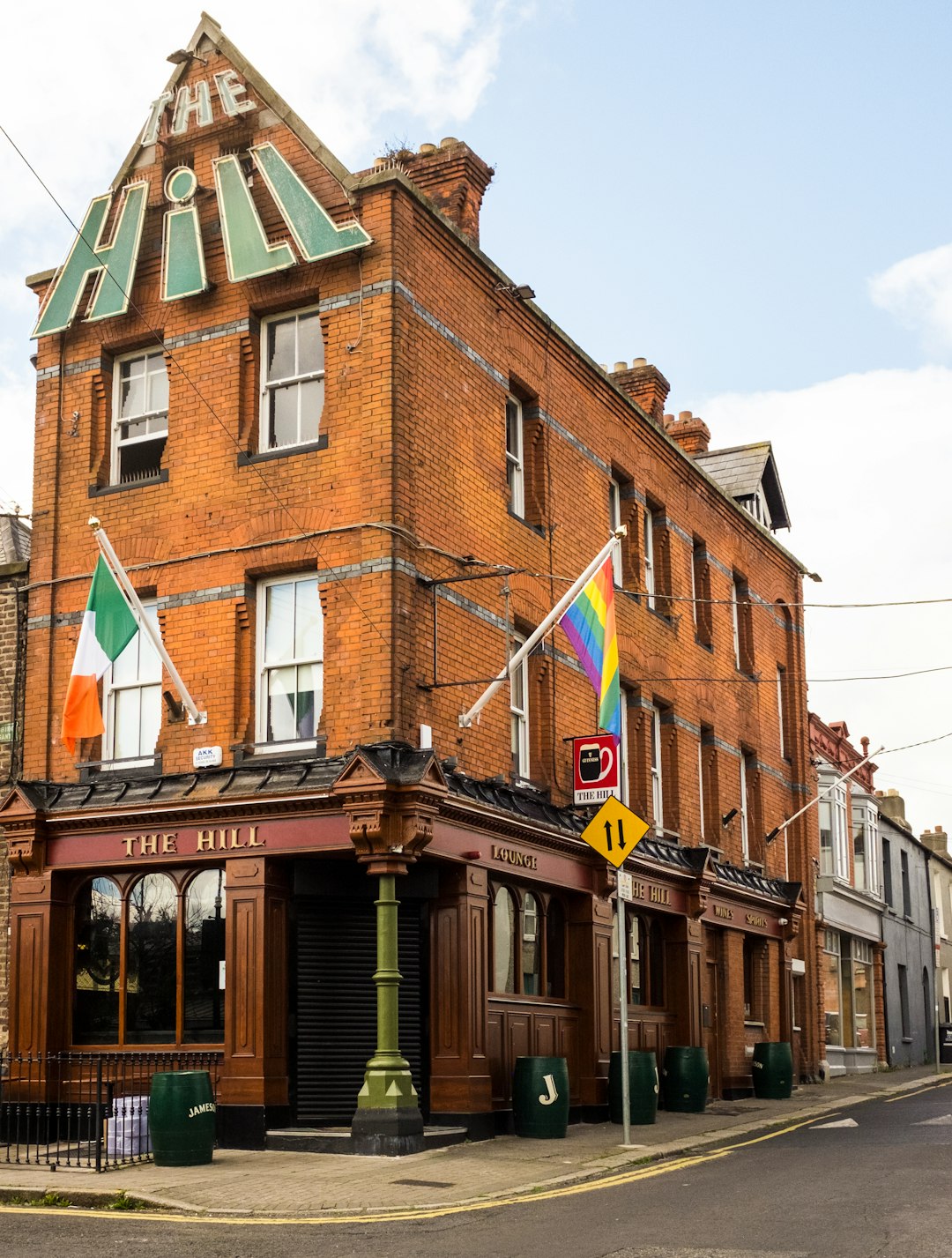
Nowhere is this more visible than in the traditional Irish pub. Unlike bars in many other countries, the Irish pub is not primarily a venue for getting drunk. It is a living room that belongs to everyone. Farmers sit beside professors. Fishermen debate with accountants. A visitor from Chicago can find themselves in a three-hour conversation about the meaning of home with someone they will never see again.
The geography of the pub encourages this. The long bar with its fixed stools. The absence of televisions in many traditional establishments. The acoustics that carry voices without amplifying them into noise. The Irish pub was designed — perhaps unconsciously — to produce conversation.
Why Ireland Makes the World Feel Smaller
Part of the answer lies in the diaspora. Approximately 70 million people worldwide claim Irish descent. The great emigrations of the 19th and 20th centuries scattered Irish families across America, Australia, Britain, and Argentina. What this means in practice is that in almost every corner of the world, someone is carrying a piece of Ireland with them — a surname, a story, a grandmother’s recipe for brown bread.
When people arrive in Ireland for the first time, they often report a strange sensation: the feeling of having been here before. For many, this is not imagination. It is ancestral memory made physical — the landscape their great-grandmother described from a kitchen in Boston, made suddenly, startlingly real.
This is why Ireland has a unique gift for shrinking the world. It is one of the few places on earth where a traveller can arrive as a stranger and leave with a genuine sense of belonging. Not because Ireland is small — though it is — but because Ireland has been taking in the world, and sending pieces of itself out into it, for so long that the two have become inseparable.
The Pace That Makes Connection Possible
There is another ingredient in the warmth of Ireland that rarely gets mentioned: time. The pace of life in rural Ireland — and even in many of its towns — is slower than in most Western countries. Not sluggish. Not unproductive. But unhurried in a way that leaves genuine room for the unexpected.
In a world that has become relentlessly efficient, Ireland’s willingness to pause — to allow a conversation to develop without checking a phone, to linger over a meal, to sit in comfortable silence with a stranger — is something close to radical. Connection requires time. Ireland makes time.
The Kindness Found in Small Things
It is not always the grand gesture. The Irish hospitality that stays with most visitors is made of small things. The farmer who stops to offer an impromptu tour of his land because you looked at it longingly from the road. The woman in the post office who asks if you found what you were looking for and, when you say you are lost, calls her cousin who lives near where you are trying to get. The chef who comes out of the kitchen to mention that the mushrooms on your plate were picked that morning on the hill behind the restaurant.
These things happen in Ireland with a frequency that visitors find remarkable. Not because the Irish are performing warmth, but because the social fabric is genuinely oriented towards other people.
Where to Feel Irish Hospitality Most Strongly
If you want to experience Irish hospitality at its most concentrated, there are places that seem to amplify it.
Dingle, County Kerry — A fishing town on the far western edge of Europe with a year-round population of under 2,000, where every visitor is, in some sense, known. The pubs here — Dick Mack’s, Foxy John’s, An Droichead Beag — are community centres as much as drinking establishments. Conversations begin without preamble and end without urgency.
Westport, County Mayo — Consistently recognised as one of Ireland’s friendliest towns. The kind of place where the person at the bar will ask where you are headed and, depending on your answer, may insist on guiding you there themselves.
The Aran Islands — The most preserved expression of ancient Irish community life. On Inis Mór, Inis Meáin, and Inis Oírr, the old customs of hospitality — feeding strangers, sharing boats, keeping doors unlocked — are still lived rather than merely remembered.
The Wild Atlantic Way — Not a town but a state of mind. The communities strung along Ireland’s western coast live with the understanding that the sea connects rather than separates. Visitors who arrive from distant places are received not as outsiders but as proof that the world still knows where Ireland is.
How to Let Ireland’s Warmth Find You
The best advice for experiencing Irish hospitality is deceptively simple: slow down. Do not move as tourists are often encouraged to move — from attraction to attraction, ticking items off a list. Go to the same café two mornings in a row. Sit at the bar rather than a table. Ask questions without expecting efficiency in return. Accept offers you might otherwise politely decline.
Ireland rewards the unhurried. The warmth is there for anyone who arrives. But you have to leave room for it to find you. Part of that is choosing your itinerary carefully — our Ireland planning guide is the best place to start building a trip with enough breathing space to actually experience the country, not just photograph it. And if you are drawn to places where community life still moves at its own pace, you might also enjoy what visitors actually take home from a trip to Ireland — because it is rarely what they expected.
There are many things to say about Ireland — its landscapes, its history, its music, its food. But the thing that keeps people returning, and that stays with them longest after they leave, is the feeling that here, in this particular corner of the world, the world got a little smaller and considerably kinder. That is not sentiment. It is a tradition. And it has been waiting to welcome you.
☘️ Join 64,000+ Ireland Lovers
Every weekday morning, get Ireland’s hidden gems, local secrets, and travel inspiration — the kind you won’t find in any guidebook.
Subscribe free — enter your email:
Already subscribed? Download your free Ireland guide (PDF)
📲 Know someone who’d love this? Share on WhatsApp →
Love more? Join 43,000 Scotland lovers → · Join 29,000 Italy lovers → · Join 7,000 France lovers →
Free forever · Unsubscribe anytime
Tours & experiences you might love


Powered by Viator. Some links are affiliate links — we may earn a small commission at no extra cost to you.
Secure Your Dream Irish Experience Before It’s Gone!
Planning a trip to Ireland? Don’t let sold-out tours or packed attractions spoil your journey. Iconic experiences like visiting the Cliffs of Moher, exploring the Rock of Cashel, or enjoying a guided walk through Ireland’s ancient past often sell out quickly—especially during peak travel seasons.

Booking in advance guarantees your place and ensures you can fully immerse yourself in the rich culture and breathtaking scenery without stress or disappointment. You’ll also free up time to explore Ireland’s hidden gems and savour those authentic moments that make your trip truly special.
Make the most of your journey—start planning today and secure those must-do experiences before they’re gone!