

There is no bandleader at a proper Irish trad session. No stage, no set list, and no tickets. Just a group of musicians in a pub corner, playing tunes they have known for years, and an audience that may or may not be paying attention. That is exactly the point.
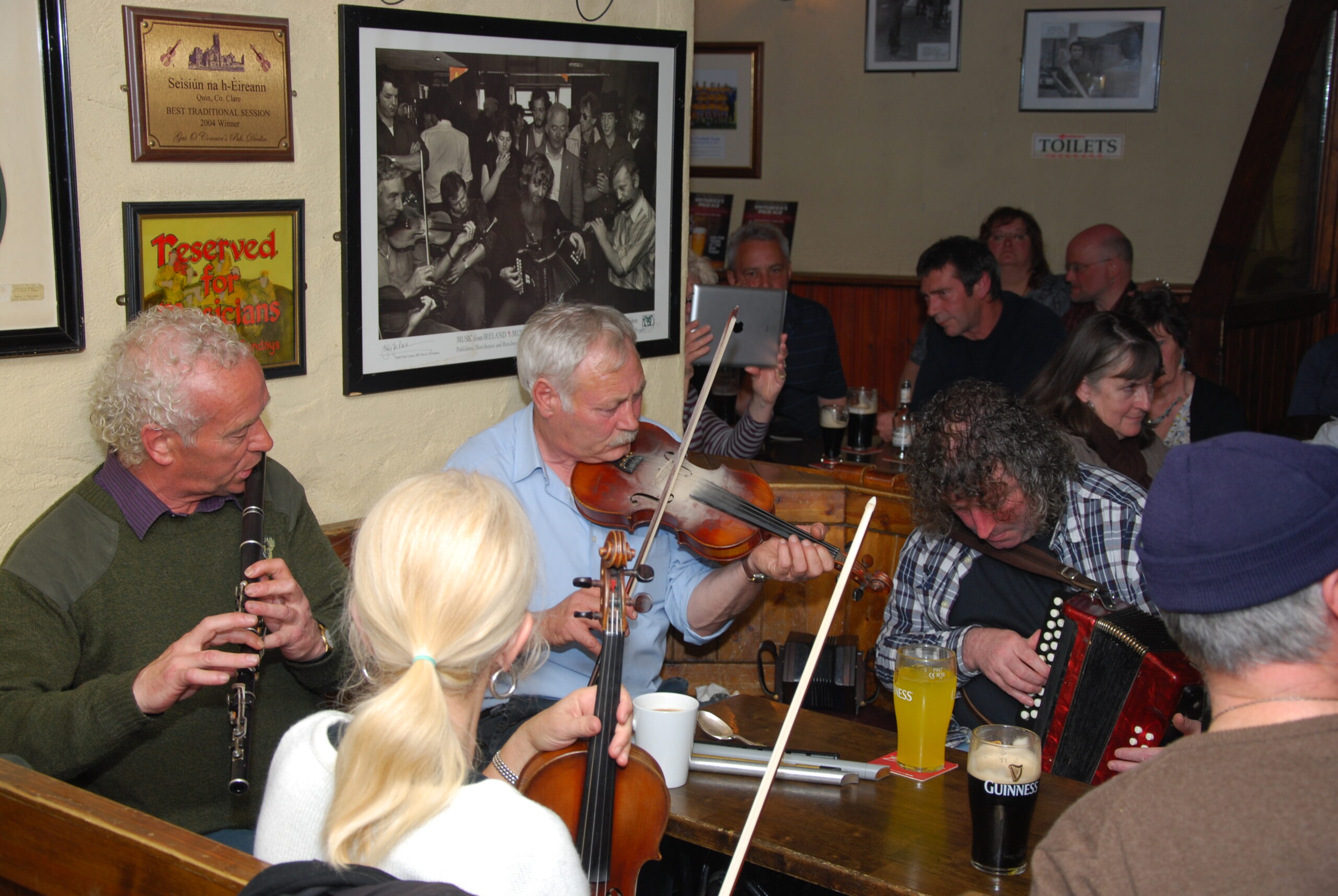
The trad session — known simply as a seisiún in Irish — is one of the most distinctive musical traditions in the world. It has survived centuries of suppression, emigration, and cultural change. Today it is thriving, in Ireland and across the Irish diaspora. If you are visiting Ireland and you sit down at the wrong pub on the wrong night, you might miss it entirely. But if you find one, you will not forget it.
This guide explains what a trad session actually is, how it works, what instruments you will hear, and where to find genuine sessions across Ireland.
Want more guides to Irish culture, music, and travel? Join the Love Ireland newsletter — free, weekly, and written by people who actually live here.
What Is a Trad Session?
A session is an informal gathering of traditional Irish musicians who play together in a pub or community space. There is no performance in the theatrical sense. Musicians sit in a circle or along a wall, playing for each other as much as for any audience present.
Sessions are built around tunes rather than songs. Most tunes are instrumental — reels, jigs, hornpipes, polkas, and slow airs — and each one tends to be played multiple times through before the group moves on to the next. A reel runs in 4/4 time at a brisk pace. A jig is in 6/8 time and has a rolling, bouncing feel. A hornpipe is similar to a reel but with a heavier, dotted rhythm.
Tunes are learned by ear, not from written music. A player who shows up at a session is expected to know the tunes from memory. This is not a jam session where musicians improvise freely or take extended solos. It is a collective act of playing known tunes together, with small variations but no departure from the shared melody.
How a Session Works
Sessions are self-organising. Someone starts a tune — usually a more experienced or senior musician — and others join in if they know it. If you do not know it, you listen. There is no embarrassment in sitting quietly. Learning by listening is part of the tradition.
Sets of tunes are played back-to-back without a break, typically two or three tunes grouped together. The group will run through each tune two or three times before moving to the next. Between sets, musicians chat, have a drink, and catch up. The atmosphere is relaxed and social.
Singing does happen at sessions, though it depends on the pub and the night. At some sessions, someone may call for a song and the room falls quiet while a single voice performs an unaccompanied ballad. This is called a sean-nós song if it is in the old Irish style — highly ornamented, often in the Irish language. At other sessions, singing is kept separate or does not happen at all.
Bodhrán players, beware. The frame drum has a complicated reputation at sessions. Played well, it is a welcome addition. Played badly — and it is easy to play badly — it can disrupt the entire session. If you bring a bodhrán, be honest with yourself about your skill level.
The Instruments You Will Hear
The core melodic instruments at a trad session are the fiddle, tin whistle, uilleann pipes, and wooden flute. The concertina and button accordion are common additions, particularly in certain regional styles — the Sligo fiddle style sounds different from the Clare style, for example, and the same is true across all instruments.
The uilleann pipes deserve a mention of their own. These are the Irish bellows-blown bagpipes — softer and more complex than Scottish Highland pipes, played seated with the bellows tucked under the right arm. They are expensive, difficult to master, and produce a sound unlike anything else. Hearing a skilled uilleann piper up close at a session is an experience that is hard to describe and harder to forget.
On the rhythm and harmony side, you will often find a guitar, bouzouki, or mandola providing accompaniment. These instruments keep a steady rhythmic pulse and add harmonic depth without competing with the melody. The bodhrán, when present, fills the same role on the percussion side.
Banjo — typically the four-string Irish tenor banjo rather than the five-string American version — is also common and can cut through a loud session with clarity. You may also hear harps, though the wire-strung Irish harp is less common at pub sessions than the nylon-strung concert harp.
The History Behind the Music
Irish traditional music has roots going back centuries, tied to dance, community gatherings, and the seasonal rhythms of rural life. The céilí — a social gathering involving set dancing — was one of the primary settings for this music. The pub session as we know it today is partly a product of twentieth-century revival movements, particularly the founding of Comhaltas Ceoltóirí Éireann in 1951, an organisation that works to preserve and promote Irish traditional music.
The folk revival of the 1960s, led by groups such as The Chieftains, Planxty, and The Bothy Band, brought Irish trad to international audiences and sparked renewed interest at home. Today, organisations like Comhaltas run regular sessions and competitions — the Fleadh Cheoil, held annually in different Irish towns, is the largest traditional music festival in the world, drawing hundreds of thousands of visitors.
The music has also travelled with the Irish diaspora. There are active trad sessions in Boston, Chicago, New York, London, Sydney, and cities across the world. But there is still something different about hearing it in Ireland itself — in a small pub on a wet Tuesday night in County Clare, with musicians who have been playing together for thirty years.
Discover more about Irish culture, festivals, and places to visit. Subscribe to the Love Ireland newsletter — free every week.
Session Etiquette for Visitors
If you are a visitor rather than a musician, there are a few things worth knowing before you pull up a stool near the session.
Do not sit in the session circle unless you are playing. The seats closest to the musicians are for musicians. Sit at the adjacent tables, or at the bar, and enjoy the music from a respectful distance.
Keep conversation at a reasonable level. Sessions take place in pubs, and pubs are social places. You do not need to sit in complete silence. But talking loudly over the music is poor form, particularly during a slow air or a song.
Do not request songs or tunes. This is not a paid performance. The musicians decide what gets played. Shouting “Whiskey in the Jar” at a group of session musicians is not likely to go down well.
Applause is fine but not required. Some sessions get polite applause between sets; others do not. Follow the lead of the people around you. A quiet nod of appreciation is always appropriate.
If you are a musician and want to join in, ask one of the musicians during a break. Most sessions welcome competent players who know the tunes. If you are unsure of a tune, play quietly or not at all — listening is never wrong.
Where to Find a Genuine Session in Ireland
Sessions happen across Ireland every week, but some locations are particularly well known.
County Clare is widely considered the heartland of Irish trad. The town of Ennis has multiple sessions running on most nights of the week. Doolin, a small village on the Wild Atlantic Way, built its reputation almost entirely around its trad sessions — see our deeper look at whether Doolin or Dingle deserves the title of trad capital. The pubs there — Gus O’Connor’s, McGann’s, and Fitzpatrick’s — have been drawing musicians and listeners for decades.
Galway city has a strong session scene, particularly in the West End around Dominick Street. Monroe’s Tavern, on Dominick Street, is one of the most respected session venues in the city. The Crane Bar, also in the West End, has hosted sessions for decades.
Dublin has sessions scattered across the city, though quality varies considerably. The Cobblestone in Smithfield is one of the most authentic and consistently respected session pubs in the capital. Hughes’ Bar on Chancery Street is another long-standing venue. The Merry Ploughboy in Rathfarnham offers a more structured evening of trad with dinner included, which suits visitors who want a guaranteed experience.
County Kerry — particularly Dingle, Tralee, and Killarney — has a healthy session culture. The Dingle Peninsula has strong connections to sean-nós singing as well as instrumental music.
Sligo and Roscommon are worth seeking out if you are interested in the distinctive east Connacht fiddle style. Sligo town has several reliable session venues.
For a full pub-by-pub rundown, see our guide to where to find Ireland’s best trad sessions. Otherwise, the best way to find a session is to ask at your accommodation, check the local tourist office, or simply walk into a pub and ask the barman. Most Irish pub staff will know exactly which nights a session runs and in which pubs. Sessions listed on national platforms like The Session website (thesession.org) are also a useful resource.
When to Go
Sessions run year-round, though summer brings more of them as the tourist season increases demand. August is particularly good — the Fleadh Cheoil na hÉireann, if it is in the region you are visiting, turns entire towns into one extended session for a full week. Local festivals like the Ennis Trad Festival in November are also worth planning around, along with County Kerry’s strong sean-nós singing tradition.
Weekends naturally have more sessions than weekdays, but mid-week sessions in dedicated music pubs are often less crowded and more intimate. If you are trying to avoid the tourist rush, a Tuesday or Wednesday session in Doolin or Ennis will have a very different atmosphere from the same pub on a Saturday night in July.
The Irish trad session has been described as the closest thing Ireland has to a national living room. It is free to attend, open to all, and unchanged in its essential nature despite everything that has happened to the country around it. If you are visiting Ireland and you have not yet sat in a pub and listened to a proper session, put it at the top of your list.
Get our free weekly guide to Ireland’s music, culture, food, and travel. Subscribe to the Love Ireland newsletter here.
☘️ Join 64,000+ Ireland Lovers
Every weekday morning, get Ireland’s hidden gems, local secrets, and travel inspiration — the kind you won’t find in any guidebook.
Subscribe free — enter your email:
Already subscribed? Download your free Ireland guide (PDF)
📲 Know someone who’d love this? Share on WhatsApp →
Love more? Join 43,000 Scotland lovers → · Join 29,000 Italy lovers → · Join 7,000 France lovers →
Free forever · Unsubscribe anytime
Tours & experiences you might love


Powered by Viator. Some links are affiliate links — we may earn a small commission at no extra cost to you.
Secure Your Dream Irish Experience Before It’s Gone!
Planning a trip to Ireland? Don’t let sold-out tours or packed attractions spoil your journey. Iconic experiences like visiting the Cliffs of Moher, exploring the Rock of Cashel, or enjoying a guided walk through Ireland’s ancient past often sell out quickly—especially during peak travel seasons.

Booking in advance guarantees your place and ensures you can fully immerse yourself in the rich culture and breathtaking scenery without stress or disappointment. You’ll also free up time to explore Ireland’s hidden gems and savour those authentic moments that make your trip truly special.
Make the most of your journey—start planning today and secure those must-do experiences before they’re gone!