

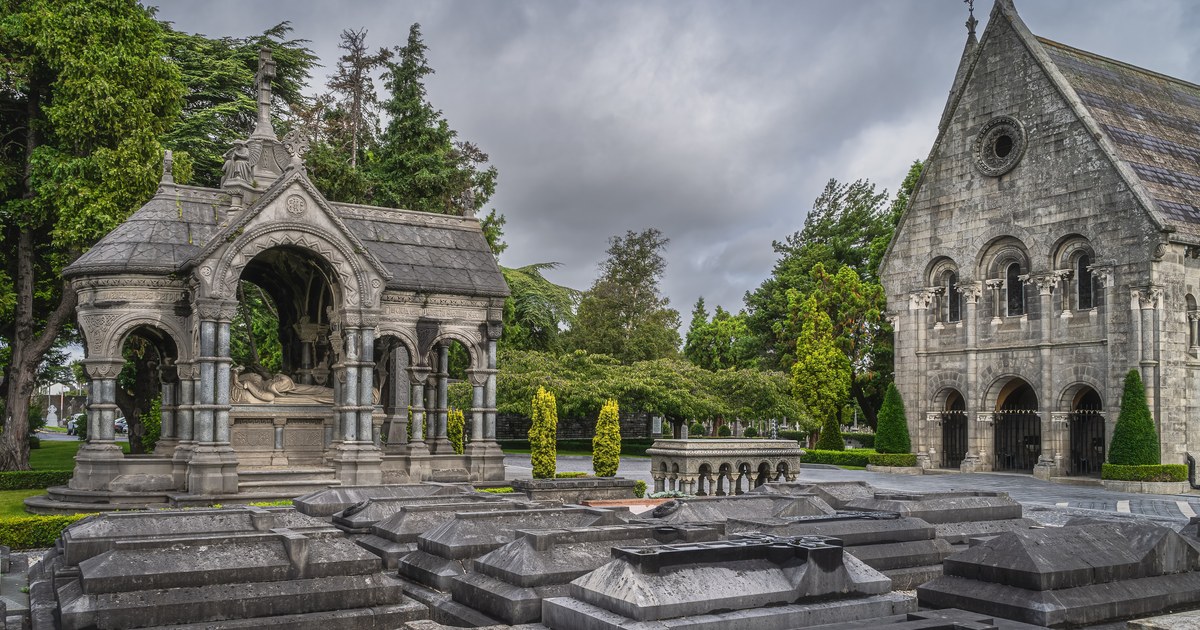
Irish Genealogy has all Roman Catholic registers for Dublin City online, as transcripts to about 1900 with some record images to about 1880, plus Church of Ireland registers, most with images to about 1900. Glasnevin burial records start in 1828.
Last checked: November 2026. Every fact below comes from the official page linked in Sources. This page gives no fees or waiting times; follow the links for those.
Which church records are online for County Dublin?
Irish Genealogy has all Roman Catholic baptism, marriage and burial registers for Dublin City, some in transcript only up to about 1900 and some with record images to about 1880. St Paul's, Arran Quay is not included; its transcript is at RootsIreland. Source: Irish Genealogy: record sources.
It also has Church of Ireland registers for Dublin City, most with images to about 1900. Source: Irish Genealogy: record sources.
Where are County Dublin burial and graveyard records?
Glasnevin Cemetery has 1.5 million burial records from 1828, through the Dublin Cemeteries Trust. Fingal County Council covers north County Dublin. Source: Irish Genealogy: graveyards.
What do the national records add?
Civil registration of births, deaths and marriages started in 1864, and of non-Catholic marriages in 1845 (see civil records), and the census is online for 1901, 1911 and 1926 (see census records). Both cover County Dublin, so search them alongside the church records above.
Where are the gaps for County Dublin?
- St Paul's, Arran Quay is not in the Irish Genealogy Roman Catholic registers.
Common questions
Are Dublin parish records online? Yes. Irish Genealogy has all Roman Catholic registers for Dublin City, with St Paul's, Arran Quay the exception, and most Church of Ireland registers with images to about 1900.
When do Glasnevin records start? In 1828. Glasnevin has 1.5 million burial records through the Dublin Cemeteries Trust, according to the Irish Genealogy graveyards page.
This page is part of Irish family records by county. See also Catholic parish registers.