

Stand beside an ogham stone and you are looking at the oldest writing in Ireland. These narrow pillars of rock, marked with notches and lines along their edges, contain real messages — names, claims, and stories carved by real people over 1,500 years ago.
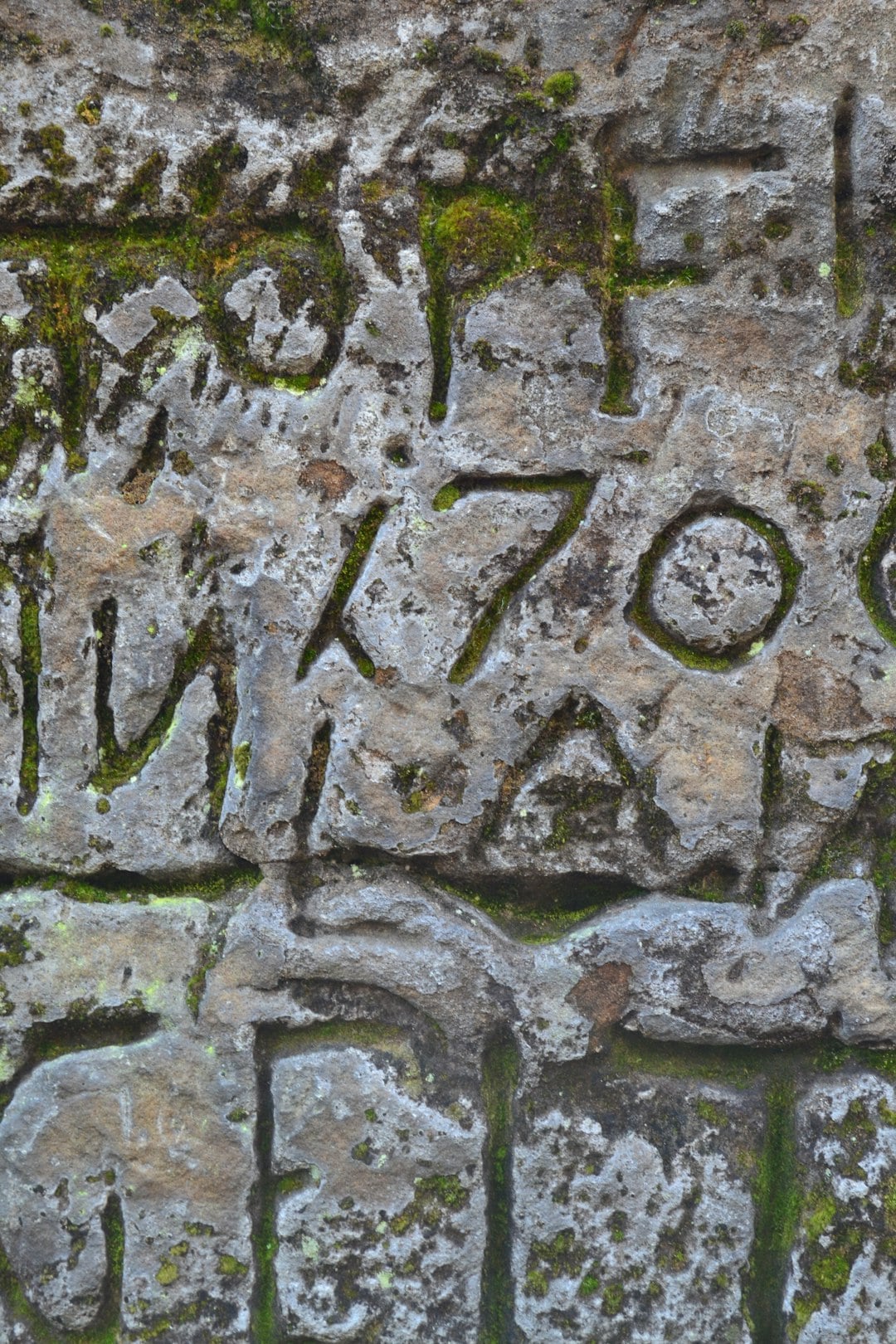
What Is Ogham?
Ogham (pronounced OH-am) is Ireland’s oldest written language. It consists of simple marks — strokes above, below, or across a central line — that form an alphabet of 25 characters.
Most ogham inscriptions appear along the edge of a standing stone. The marks run from bottom to top, reading upward like a message climbing toward the sky.
Scholars believe ogham developed around the 4th century AD, possibly influenced by early contact with Roman writing. But unlike Latin, ogham has a character all its own — angular, minimal, and carved in stone.
Where the Stones Are Found
Ireland has more than 400 surviving ogham stones. The greatest concentration sits in Munster — particularly Kerry, Cork, and Waterford.
The Dingle Peninsula in County Kerry has one of the densest clusters. Drive along the narrow roads and you will pass stones that have stood in farmyards, against walls, and beside old church ruins for centuries.
Some stones have been moved indoors for protection. The largest outdoor collection is around Kilmalkedar Church near Dingle, where several inscribed stones stand in the churchyard within walking distance of each other.
If you are planning a trip, the Love Ireland trip planning guide covers Kerry and the Wild Atlantic Way in detail.
What Do They Say?
Most ogham inscriptions follow a simple formula: a person’s name, followed by their father’s name, and sometimes a tribal affiliation.
A typical reading: “Of Luguid, son of Maqqas-Decceda.” Not poetry — but a declaration of identity and belonging.
Many names on ogham stones have no modern equivalents. They belong to an Ireland before Christianity, before surnames, before written records of any other kind. These stones are the only surviving voices of those people.
Some inscriptions remain partially unread. Rain, lichen, and centuries of Irish weather have worn certain carvings to near-invisibility.
☘️ Enjoying this? 64,000+ Ireland lovers get stories like this every week.
Thinking about it for retirement? If you’ve started thinking seriously about retiring there, our complete our full Retire in Ireland guide covers the visa, healthcare, cost-of-living, and the regions worth shortlisting.
The Stones That Survived
Ogham stones survived in Ireland partly because they were too heavy to move and partly because later generations repurposed them.
Some were built into early Christian churches as building material. Others became cornerstones for field walls. A few were used as grave markers centuries after they were first carved.
It is not unusual to find an ogham stone doing double duty — standing beside a holy well or incorporated into a medieval church wall, its ancient letters still legible if you know how to read them.
Learning to Read Ogham
The ogham alphabet is not difficult to learn. Each character is a set of notches: one to five strokes on either side of a central line, or crossing it diagonally.
Several museums across Ireland display ogham stones with full explanations. The National Museum of Ireland in Dublin holds fine examples with interpretation panels.
Many visitors try to find their own name in ogham script — a surprisingly absorbing exercise that ends with a new appreciation for the people who used it every day.
Guided ogham stone tours on the Dingle Peninsula are available if you want expert context alongside the standing stones.
Ireland’s Living Legacy in Stone
Every ogham stone is a signature. Someone stood where you now stand, chipped their identity into rock, and trusted that stone would last.
They were right.
The names are still there. The marks still readable. The people behind them — farmers, chieftains, ordinary men and women of 4th to 7th century Ireland — still present in some way, pressed into the landscape they called home.
If you visit Ireland and walk past a standing stone without pausing to look for those notched edges, you may be walking past the oldest piece of writing you will ever encounter.
☘️ Your Irish family has a story waiting to be found.
Discover where your Irish ancestors came from — their county, their name, their story. Our free step-by-step guide walks you through every record, DNA tool, and ancestry archive. Join 64,000+ readers staying connected to Ireland.
Claim Your Free Irish Ancestry Guide →Get the free guide
Enter your email and we will send you straight to the download.
Love more? Join 43,000 Scotland lovers → · Join 30,000 Italy lovers → · Join 7,000 France lovers →
Free forever · · Unsubscribe anytime
Tours & experiences you might love


Powered by Viator. Some links are affiliate links — we may earn a small commission at no extra cost to you.
Secure Your Dream Irish Experience Before It’s Gone!
Planning a trip to Ireland? Don’t let sold-out tours or packed attractions spoil your journey. Iconic experiences like visiting the Cliffs of Moher, exploring the Rock of Cashel, or enjoying a guided walk through Ireland’s ancient past often sell out quickly—especially during peak travel seasons.

Booking in advance guarantees your place and ensures you can fully immerse yourself in the rich culture and breathtaking scenery without stress or disappointment. You’ll also free up time to explore Ireland’s hidden gems and savour those authentic moments that make your trip truly special.
Make the most of your journey—start planning today and secure those must-do experiences before they’re gone!