

It was past midnight when the O’Brien family heard it. A high, keening cry from somewhere beyond the yard. Not wind. Not an animal. Those who had heard it before recognized the banshee’s cry, and already knew what was coming. By morning, the eldest son was dead.
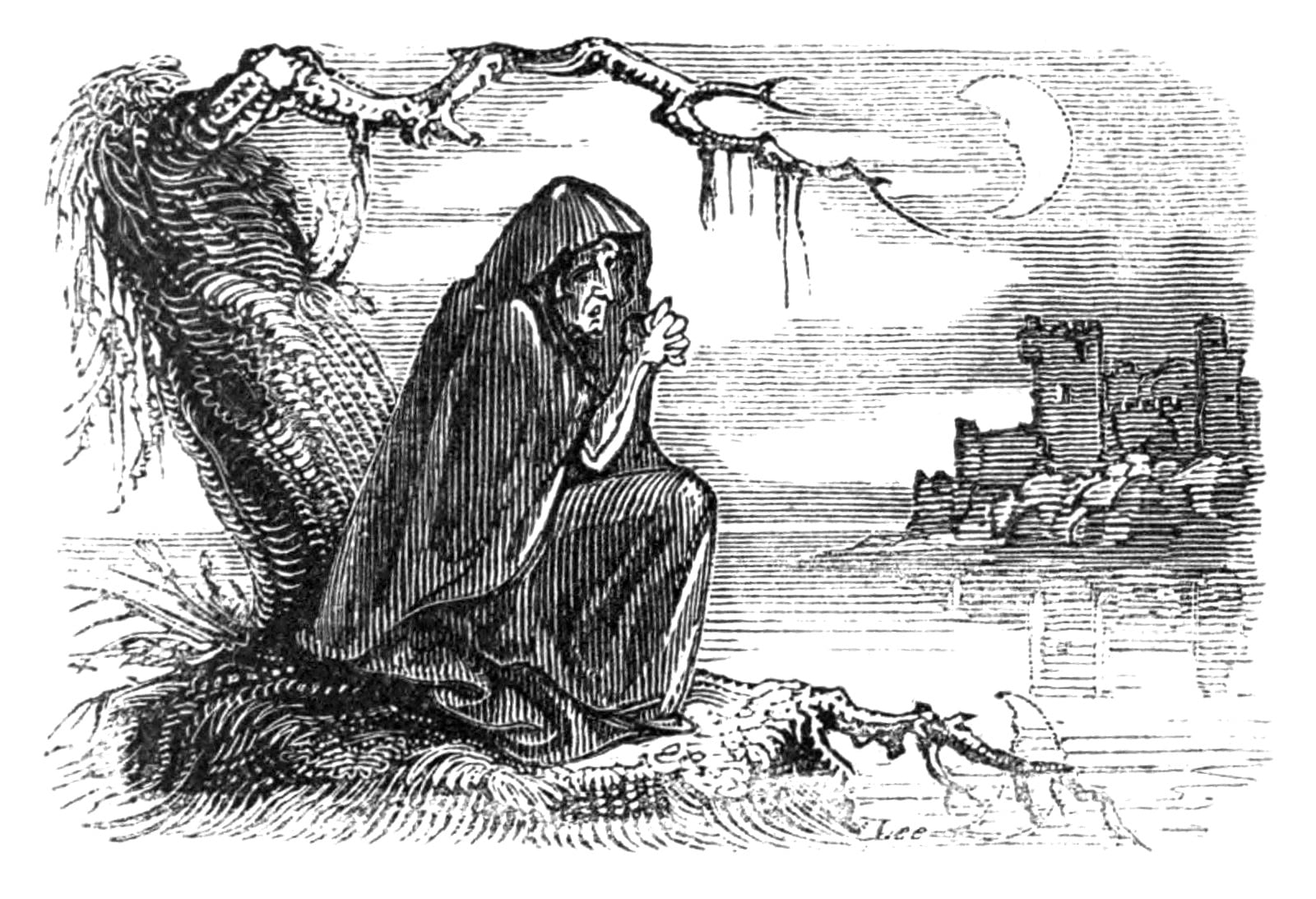
What the Banshee Actually Is
The word “banshee” comes from the Irish bean sídhe — literally “woman of the fairy mound.” She is not a ghost. She does not cause death. She is a mourner, a spirit from the Otherworld who carries word of an approaching death to the family it concerns.
That distinction matters deeply. In Irish tradition, the banshee is a sign that your family has deep enough roots in the Otherworld to warrant her attention. She weeps so the living can prepare.
She has been part of Irish life for over a thousand years, mentioned in medieval texts and in countless folk accounts collected by Lady Gregory and W.B. Yeats across Connacht and beyond.
Why She Doesn’t Follow Every Family
This is the part that surprises most people. The banshee does not appear for everyone.
She attaches herself to specific Gaelic Irish families — those whose surnames trace back to ancient Irish stock. The families she follows most often carry names beginning with Ó or Mac: O’Brien, O’Connor, O’Neill, O’Grady, O’Sullivan, MacNamara. Families with roots stretching back to the Gaelic aristocracy.
If your family arrived in Ireland after the Plantations or came from English or Scottish stock, you may not have a banshee at all. This gives the legend an unusual quality — she is not a universal warning. She is a personal one, bound to blood and lineage.
Some families believe they share a single banshee across generations. Others hold that each branch of the family has its own.
☘️ Enjoying this? 64,000+ Ireland lovers get stories like this every week. Subscribe free →
Thinking about it seriously?
If you’ve started actually planning a move, our complete the full Move to Ireland guide walks through every step, every cost, and the paperwork that catches most people out.
What She Looks Like
There is no single description of the banshee. She appears differently to different people, and even across different counties, her appearance shifts.
In some accounts she is a young woman with flowing red or white hair, her face beautiful and stricken with grief. In others she is an old crone — hollow-cheeked, wild-eyed, dressed in grey rags.
One detail appears almost universally: the silver comb. The banshee combs her long hair as she keens. And there is a warning that has passed through generations — if you find a silver comb on the ground in Ireland, do not pick it up. It might be hers.
Her cry — the caointeadh — is described as something between a woman sobbing and the long wail of wind across a bog. Those who have heard it say you know immediately it is not natural. It rises and falls. It carries through walls.
Where She Has Been Heard
Accounts of the banshee have been recorded across every province of Ireland, but Connacht and Munster carry the most.
W.B. Yeats documented multiple sightings in County Sligo. Lady Gregory gathered dozens of first-hand accounts from the west of Ireland — farmers, landowners, and priests who described hearing her before the death of a relative. These were not treated as tall tales. They were treated as plain fact.
She is often heard near water — at rivers, beside streams, at the edges of loughs. Some accounts place her in the hawthorn trees that mark the boundaries of old farmland, the same trees no Irish person would ever cut down for fear of angering the fairy world. In rare cases, she is glimpsed in daylight. But her preferred hour is the deep of night.
What the Banshee Says About Irish Culture
The banshee belongs to a wider tradition in Irish life — one that treats death as something to be acknowledged openly, even welcomed into conversation.
In the same tradition that produced the Irish wake, the keening woman at the graveside, and the rituals that surrounded a death in an Irish house, the banshee represents a world that did not look away from mortality.
She also connects to the deep Irish belief that the Otherworld sits close to this one — that Ireland’s ancient gods and spirits never fully departed, but went underground, into the mounds, into the rivers, into the trees. The banshee is one of the ways they still make themselves known.
Does Anyone Still Believe in Her?
More than you might expect.
In rural Ireland, the banshee is not generally brought up as a joke. Older families speak of her matter-of-factly. There are people alive today who will tell you, without embarrassment, that their family has heard her — and that when she came, someone died.
The Irish diaspora carried the belief around the world. Irish-American families in Boston, Chicago, and New York kept the stories alive, passing them down the way you pass down a surname.
She has become one of the most recognised pieces of Irish folklore abroad. But in her homeland, she was never just a story. She was a relationship — a bond between an ancient family and the world beyond the edge of sight.
The banshee is still out there, in the dark hours, in the counties where the old names still hold. If your name begins with Ó or Mac, somewhere in the Otherworld, she already knows yours.
☘️ Join 64,000+ Ireland Lovers
Every Friday, get Ireland’s hidden gems, local secrets, and travel inspiration — the kind you won’t find in any guidebook.
Subscribe free — enter your email:
Love more? Join 43,000 Scotland lovers → · Join 30,000 Italy lovers → · Join 7,000 France lovers →
Free forever · · Unsubscribe anytime
Tours & experiences you might love


Powered by Viator. Some links are affiliate links — we may earn a small commission at no extra cost to you.
Secure Your Dream Irish Experience Before It’s Gone!
Planning a trip to Ireland? Don’t let sold-out tours or packed attractions spoil your journey. Iconic experiences like visiting the Cliffs of Moher, exploring the Rock of Cashel, or enjoying a guided walk through Ireland’s ancient past often sell out quickly—especially during peak travel seasons.

Booking in advance guarantees your place and ensures you can fully immerse yourself in the rich culture and breathtaking scenery without stress or disappointment. You’ll also free up time to explore Ireland’s hidden gems and savour those authentic moments that make your trip truly special.
Make the most of your journey—start planning today and secure those must-do experiences before they’re gone!
Subscribe Free