

In the late 1990s, workers on an Irish road project received some unusual instructions. A section of the new N18 motorway in County Clare needed to change course. Not because of an obstacle you could see, measure, or dig around. But because of something the land had long considered settled.
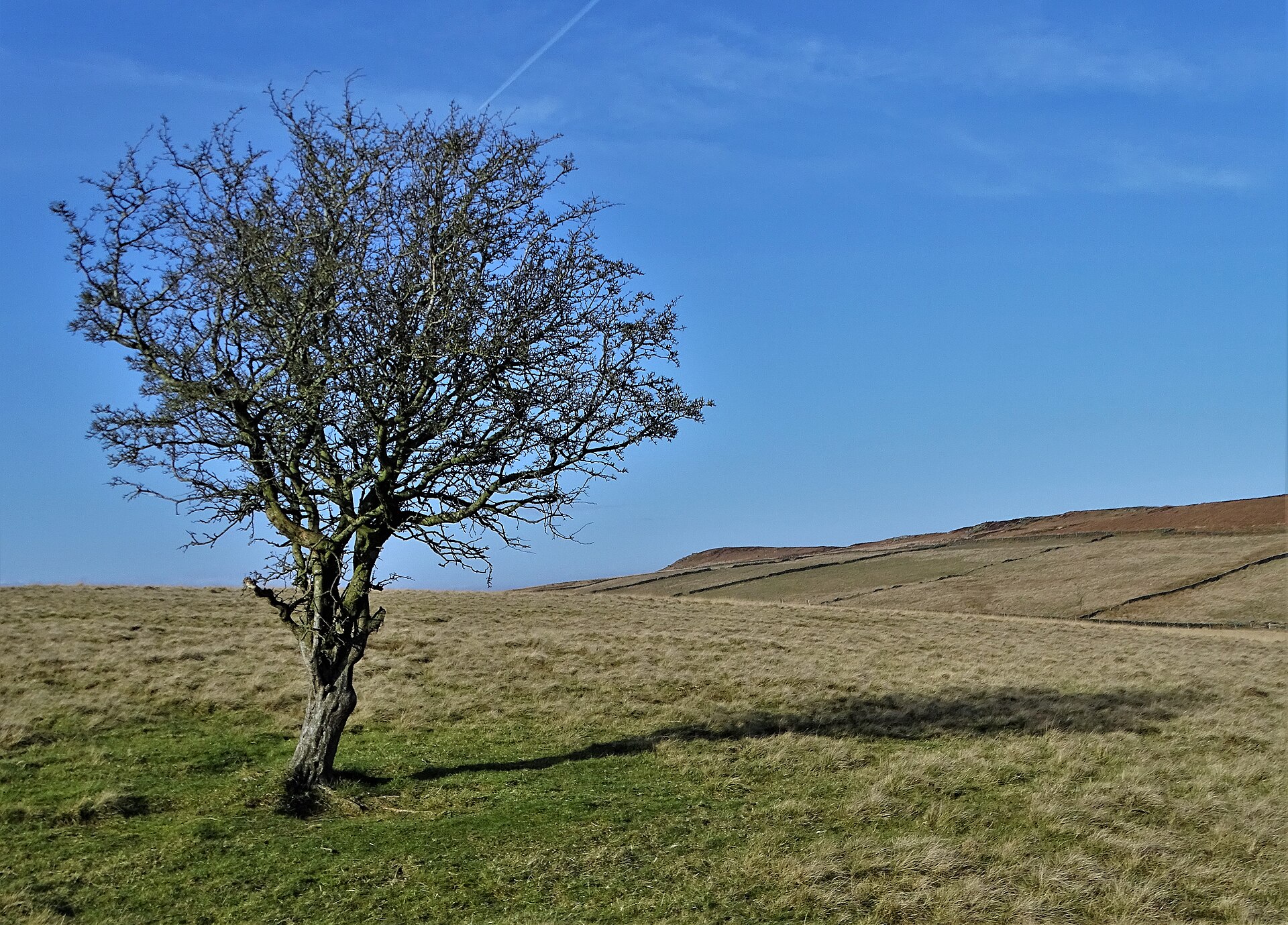
There was a lone hawthorn tree in the way. And in Ireland, you don’t remove a lone hawthorn tree.
What Is a Fairy Path?
A bealach sí — a fairy path — is an invisible route believed to run between two places of power. Fairy forts, ancient mounds, holy wells, the sea. In Irish tradition, these paths are the roads the fairy folk travel at night, connecting one stronghold to another across the landscape.
You cannot see them. They leave no trace in the grass. But local knowledge marks them precisely — passed down through the generations as surely as the name of a townland or the boundary of a field.
The paths tend to run east to west, following the arc of the sun. They cross fields, pass over bogs, move through townlands, and sometimes travel directly through the middle of a house. That last part, as many an old Irish family could tell you, is where the trouble begins.
Certain signs in the landscape point to a path’s route. A lone hawthorn tree standing in the open with no obvious reason for being there. A gap in a hedgerow that every farmer leaves unplugged, year after year, with no explanation given. The soft hollow in a field that never floods and never dries out. These are markers. Older than any fence.
The Signs Your House Is in the Way
If a home stands across a fairy path, tradition holds that no peace comes with it.
Doors that won’t stay shut. Draughts in sealed rooms. Animals that refuse to settle in barns built along the route. Sleep becomes restless. A low feeling of unease settles in — the sense that you are an inconvenience in something far older than your walls.
In older accounts, people described a wind moving through the room on still nights. The fairy host, passing through. Not around. Through.
The traditional remedy was straightforward: open the front door and the back door at the same time, and let whatever was passing — pass. Some families built their homes with doors directly opposite each other for exactly this reason.
Not everyone believed in fairies, exactly. But there was broad agreement that disturbing an old arrangement was never wise. The Irish phrase for it was ná bí ag briseadh an tsean-rud — don’t be breaking the old thing.
The Road That Bent for a Fairy Tree
The N18 story is the most public modern example of fairy path logic applied to civil engineering.
A lone hawthorn tree at Latoon, County Clare stood directly in the path of a planned motorway. Hawthorn trees — also called whitethorns or fairy thorns — are among the most protected trees in Irish tradition. A lone thorn standing in open ground is believed to mark the junction of fairy paths, or to serve as a meeting point between one world and another.
Seanchaí and storyteller Eddie Lenihan made the case clearly: disturbing the tree would bring misfortune to the road and to those who used it. He gathered enough public support that the engineers took notice. The road was redesigned around the tree. It still stands today in the centre of a grass verge, entirely undisturbed.
It was not presented as superstition in the local community. It was presented as common sense.
☘️ Enjoying this? 64,000+ Ireland lovers get stories like this every week.
Thinking about it for retirement? If you’ve started thinking seriously about retiring there, our complete our full Retire in Ireland guide covers the visa, healthcare, cost-of-living, and the regions worth shortlisting.
Why Modern Ireland Still Respects the Paths
Belief in the physical reality of fairies has largely faded. But respect for fairy paths has not disappeared — it has simply changed form.
Developers and planners working in rural Ireland still occasionally consult local people about which fields “have something about them.” Road alignments have been quietly adjusted. Planning permissions rerouted without much public discussion. Certain field corners have remained unbuilt-on for generations, not because of any legal protection, but because everyone locally knows not to go there.
There is a particular Irish logic at work. It isn’t fear, exactly. It is something closer to the understanding that certain arrangements between people and landscape are very old, and unpicking them lightly has a history of going badly. The paths aren’t on any official map. But people know where they run.
Where You Can Still Sense Them
County Clare is one of the richest counties in Ireland for fairy path tradition. Driving across the Burren — that extraordinary limestone plateau between Galway Bay and the Atlantic — you’ll notice lone hawthorn trees standing in the middle of open fields, untended and untouched. Nobody planted them. Nobody would ever cut them down.
The Boyne Valley in County Meath, home to Newgrange and a landscape thick with ancient earthworks, is another place where the old paths feel close. Ring forts survive on hillsides throughout Connacht and Munster, untouched by the plough for centuries. The invisible lines running between them are as real to local people as any road.
If you’re planning a trip to Ireland, pay attention as you move through the countryside. Notice the lone thorns standing in open fields. Notice the earthworks on every hillside. Notice the strange kink in a country road that seems to go nowhere in particular — and ask a local why it bends there.
The answer, more often than you might expect, is very old indeed.
There is something quietly remarkable about a country that looked at progress and decided the old arrangement still stands. Ireland didn’t need to believe in fairies to protect what they left behind. It was enough that the land had always been this way, and that changing it felt wrong. Some wisdom is older than any reason we could give for it.
☘️ Join 64,000+ Ireland Lovers
Every Friday, get Ireland’s hidden gems, local secrets, and travel inspiration — the kind you won’t find in any guidebook.
Subscribe free — enter your email:
Already subscribed? Download your free Ireland guide (PDF)
Love more? Join 43,000 Scotland lovers → · Join 30,000 Italy lovers → · Join 7,000 France lovers →
Free forever · · Unsubscribe anytime
Tours & experiences you might love


Powered by Viator. Some links are affiliate links — we may earn a small commission at no extra cost to you.
Secure Your Dream Irish Experience Before It’s Gone!
Planning a trip to Ireland? Don’t let sold-out tours or packed attractions spoil your journey. Iconic experiences like visiting the Cliffs of Moher, exploring the Rock of Cashel, or enjoying a guided walk through Ireland’s ancient past often sell out quickly—especially during peak travel seasons.

Booking in advance guarantees your place and ensures you can fully immerse yourself in the rich culture and breathtaking scenery without stress or disappointment. You’ll also free up time to explore Ireland’s hidden gems and savour those authentic moments that make your trip truly special.
Make the most of your journey—start planning today and secure those must-do experiences before they’re gone!
Subscribe Free