

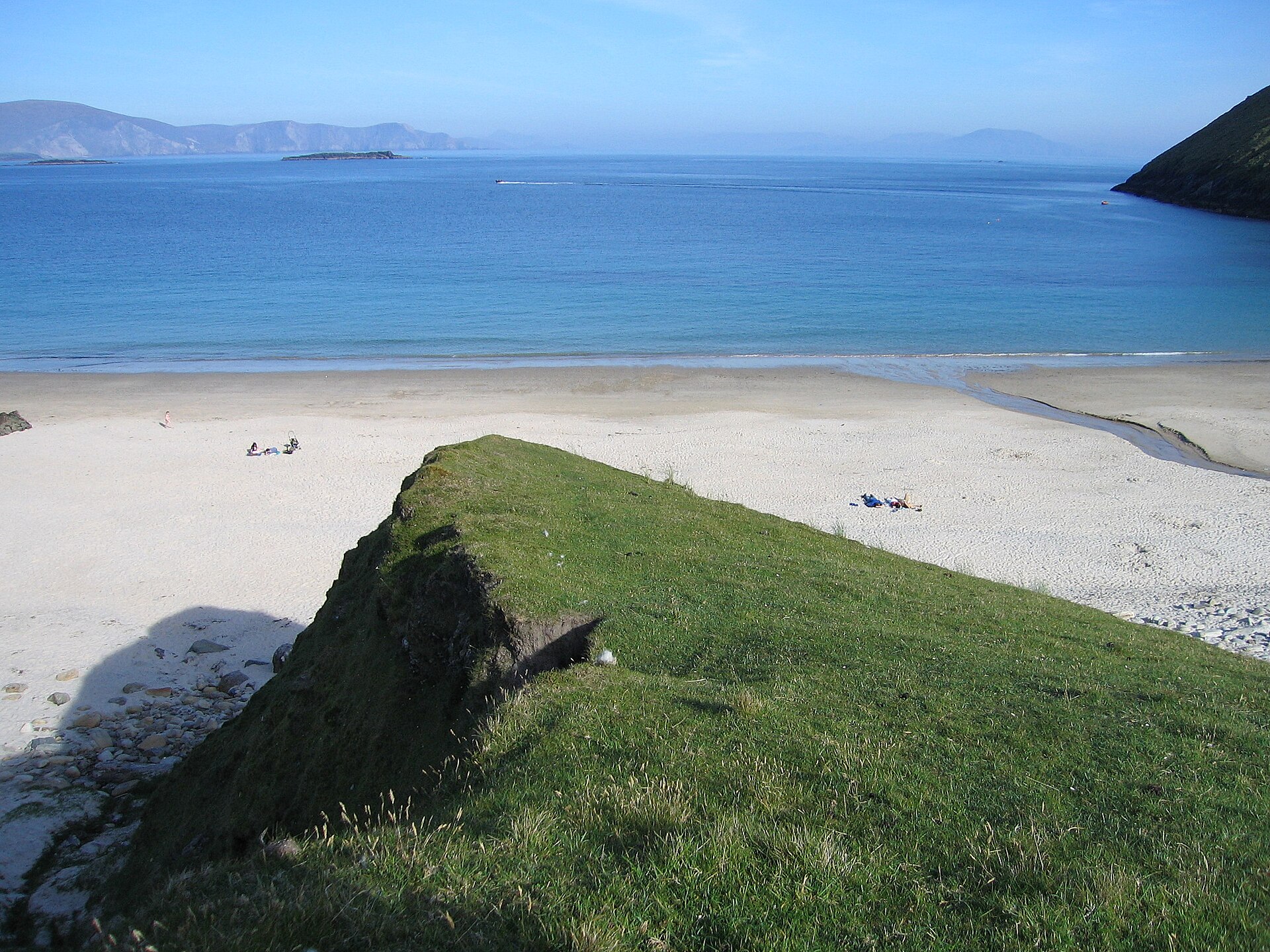
What Makes an Irish Beach Worth the Journey?
Ireland has never really needed a marketing campaign. The light alone — that particular Atlantic silver that turns an ordinary Tuesday afternoon into something you’ll sketch in your memory for years — does the work. But if you’re planning a trip from the States and want to know which beaches deserve a full day of your precious itinerary, the Blue Flag programme is as good a starting point as any. Awarded annually by the Foundation for Environmental Education, Blue Flags recognise beaches that meet strict standards on water quality, safety, environmental management, and public facilities. Think of them less as a tourist gimmick and more as a quality guarantee backed by science.
Ireland consistently ranks among the top Blue Flag nations in the world, and the beaches earning those awards range from wild Atlantic headlands where the spray comes in sideways to gentle, sun-warmed strands where toddlers paddle while grandparents read paperbacks. This guide picks out the beaches actually worth knowing by name — organised by region, honest about character, and useful whether you’re arriving with a surf board, a pushchair, or just a good waterproof jacket.
How Beaches Earn a Blue Flag
Every year, beaches apply afresh — there’s no permanent status, which keeps standards genuinely high. The assessment covers four categories: water quality (tested regularly against EU Bathing Water Directive standards), environmental education and information (notice boards, maps, local ecology displays), environmental management (no-dumping policies, dog restrictions in season, accessible facilities), and safety and services (lifeguard cover, first-aid equipment, clear emergency information). A beach can lose its flag if water quality dips — and some beloved beaches have done exactly that in rainy years when agricultural run-off spikes. So while this guide celebrates Ireland’s finest shores, always check blueflag.org or the EPA’s bathing water website before you swim, especially after heavy rain.
Kerry: The Gold Standard of Irish Beaches
Kerry holds more Blue Flags than any other county in Ireland — routinely around 16 in a single season — and a glance at the map explains why. The Iveragh and Dingle peninsulas reach into the Atlantic like fingers, generating an almost absurd quantity of west-facing coastline. The water is cold (expect 14–17°C in high summer), the scenery is operatic, and the beaches themselves vary wildly in personality.
Inch Beach
Inch is the one that stops cars. Driving the Dingle Peninsula, you round a bend above Dingle Bay and suddenly there it is: a four-mile sand spit pushing out into the water like nature showing off. The strand is wide enough at low tide that you feel genuinely small on it, backed by dunes riddled with marram grass and the kind of silence that makes you lower your voice. It’s a surf beach — lessons are available at the beach car park — but it’s also perfectly walkable, and the light in the late afternoon turns the whole thing amber. The café in the car park does a restorative bowl of chowder.
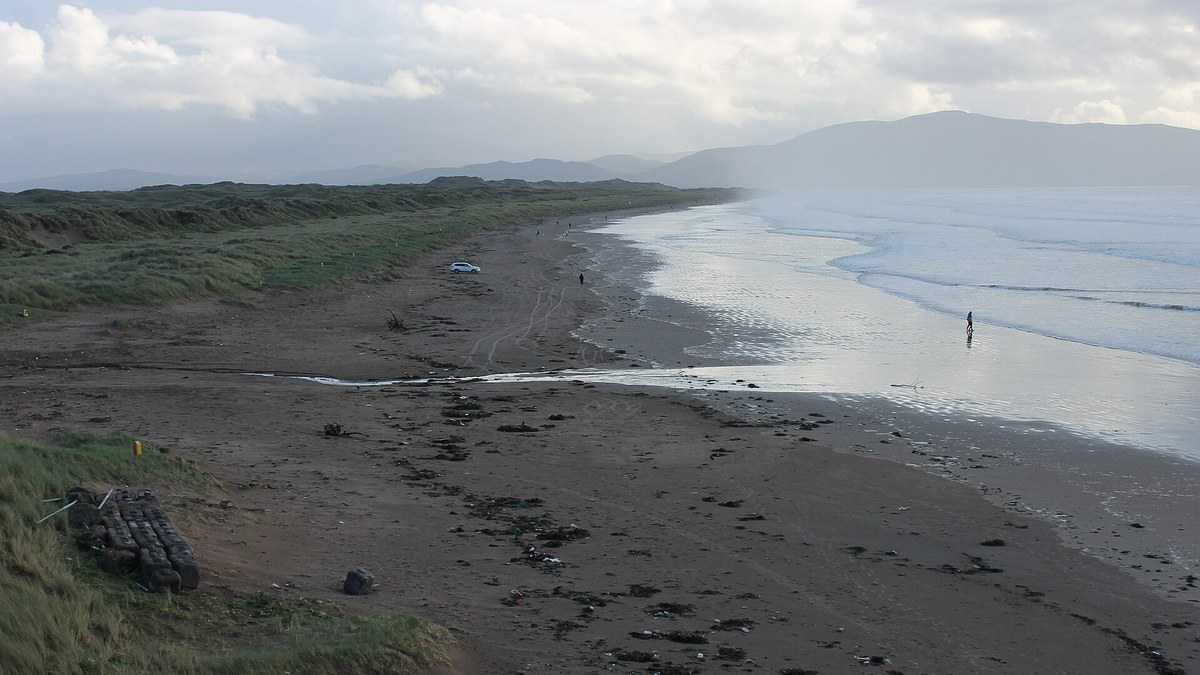
Derrynane
Tucked behind Derrynane National Historic Park on the Ring of Kerry, this crescent of pale sand is sheltered enough to feel almost Mediterranean on a calm summer’s day — which is not something you can say about many Irish beaches. The water is clear over white sand, the dunes are protected, and at low tide you can wade across to Abbey Island, a small tidal island with the ruins of a monastic settlement. It’s beloved by families precisely because it’s protected from the worst Atlantic swell, making it genuinely swimmable for children. The nearby village of Caherdaniel is tiny but has a couple of good pubs.
Ballybunion
North Kerry’s great seaside town has two beaches divided by dramatic sea cliffs: the Men’s Strand (the main family beach, long and sandy with a traditional promenade feel) and the Ladies’ Strand (wilder, facing more open Atlantic). The town itself is old-school Irish seaside — amusements, fish and chips, golf on a famous links course that Bill Clinton once played. The cliffs between the two beaches are honeycombed with caves you can explore at low tide. It’s not pristine wilderness; it’s glorious, slightly chaotic Irish seaside, and all the better for it.
Cork: Dramatic Headlands and Hidden Strands
Cork’s coastline is arguably the most varied in Ireland — deep harbours, dramatic peninsulas, and some beaches so hidden that locals guard them jealously. The county consistently earns around 12 Blue Flags alongside a strong showing of Green Coast awards for undeveloped, ecologically rich shores.
Barleycove
At the very tip of the Mizen Peninsula, as far southwest as Ireland goes, Barleycove is the kind of beach that makes grown adults go quiet. A long, clean arc of sand backed by dunes and a shallow tidal lagoon, with the Atlantic piling in at one end and a wooden boardwalk crossing the estuary from the car park. Swimming is excellent when conditions allow, but this is also a beach for walking, for photography, for simply sitting on the dunes watching the light move across the water. The nearest town is Crookhaven, where the pub has a terrace looking out over the harbour.
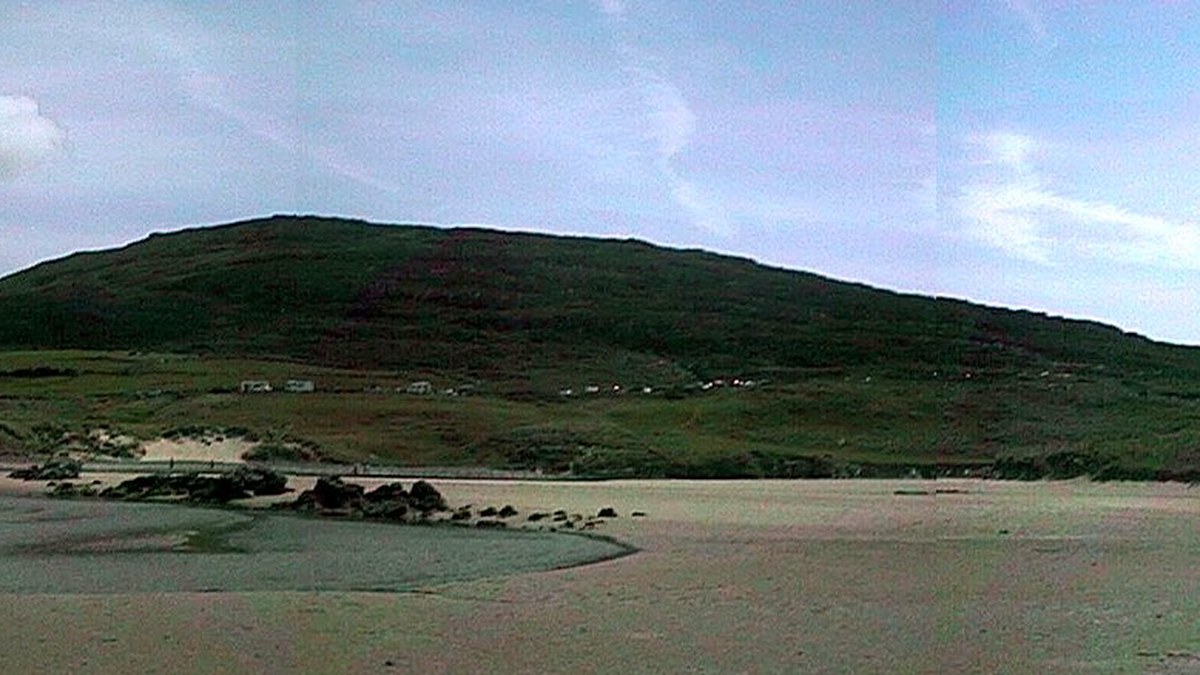
Inchydoney
Near Clonakilty in west Cork, Inchydoney is West Cork’s most popular beach — and on a sunny August weekend, you’ll see why. Two beaches divided by a low headland, both with good surf and a wide sweep of sand. The Inchydoney Island Lodge and Spa sits on the hill above, which tells you something about the clientele, but the beach itself is accessible and democratic. Clonakilty town, five minutes’ drive away, is one of the most pleasant small towns in Ireland — excellent restaurants, good music, a proper market.
Garrylucas
A quieter option near Kinsale, Garrylucas is a small, sheltered cove that rarely gets the crowds of its neighbours. The sand is fine, the water clear, and the surrounding farmland gives it an intimate, almost private feel. Kinsale itself — fifteen minutes away — is famous for its food scene and should anchor at least one night of any Cork itinerary.
Mayo: Wild Beauty on the West Coast
Mayo is less visited than Kerry or Galway but rewards those who make the detour with some of the most dramatic coastal scenery on the island. With around 11 Blue Flag beaches in recent seasons, the county punches well above its tourist profile.
Keem Bay, Achill Island
Getting to Keem requires driving to the western end of Achill Island — itself connected to the mainland by a bridge — and then following a single-track road along cliff edges that will have your passengers gripping the door handles. The reward is one of Ireland’s most photographed beaches: a tiny, intensely blue horseshoe bay hemmed in by cliffs where basking sharks occasionally cruise the surface in summer. The swimming is wonderful, the scenery is outrageous, and there’s a simple beach café. Come early in the day to find a parking space.
Old Head Beach, Louisburgh
Not to be confused with Cork’s Old Head of Kinsale, this Mayo gem sits near the foot of Croagh Patrick — Ireland’s holy mountain — and looks out across Clew Bay towards its famous scattering of drumlins (the legend counts 365 islands, one for every day of the year). The beach is sandy, relatively sheltered, and backed by green fields running up towards the mountain. It’s a place that earns the word magical without embarrassment.
Donegal: The Untamed North
Donegal’s coast is for people who find Kerry too crowded and Clare too accessible. This is the raw Atlantic at its most uncompromising — massive beaches with breaking surf, sea temperatures that make Kerry feel tropical, and skies that can turn from brilliant to bruised in twenty minutes. And it is absolutely magnificent.
Rossnowlagh
Rossnowlagh is the gentlest introduction to Donegal’s coast — a long, south-facing strand in Donegal Bay that catches enough shelter to make it a reliable surf beach. The waves here are consistent and forgiving enough to have supported a surf club since the 1960s, making it one of Ireland’s oldest surfing spots. The beach is broad and clean, with a small strip of cafés and a good hotel on the dunes. Families and surfers coexist happily here in a way that doesn’t always happen on more exposed strands.
Portsalon, Fanad Peninsula
Portsalon on Lough Swilly was once voted the second most beautiful beach in the world by a travel magazine, and while such rankings should be taken lightly, the description isn’t entirely absurd. The sand is a pale, almost white blonde, the water above it turns extraordinary shades of green and blue on bright days, and the Fanad Peninsula headland rises behind it. The beach faces the sheltered waters of Lough Swilly rather than the open Atlantic, which makes swimming more predictable. The drive from Letterkenny alone — following the western shore of the lough — is worth making. One caveat for 2026: Portsalon lost its Blue Flag this year after water quality was classified ‘good’ rather than ‘excellent’ and the beach saw erosion damage — Donegal County Council is aiming to win the flag back for 2027, and the beach remains well worth visiting, just not currently flying blue.
Murder Hole Beach (Boyeeghter Bay)
Its name is dramatic; so is the journey. Reaching Boyeeghter Bay requires a walk of roughly twenty minutes through bog and rough terrain near Melmore Head in the Rosguill Peninsula. There are no facilities, no lifeguards, and no certainty of another human being when you arrive. What you do find is a small, almost impossibly beautiful cove with clear Atlantic water and no noise except the sea. This is not a swimming beach for the faint-hearted — currents can be strong, and the isolation means help is far away — but for a walk and a photograph and the particular joy of a place that demanded effort, it’s peerless.
Clare, Galway, and the Burren Coast
The Wild Atlantic Way swings north through Clare and Galway, passing some of Ireland’s most distinctive coastal landscapes — the limestone pavements of the Burren meeting the sea, and Galway Bay’s famous light that has inspired more songs than can be counted.
Lahinch, Clare
Lahinch is Ireland’s surf capital in all but official title. The town is built around its beach — a long, west-facing strand at the bottom of a bowl of hills — and the surf culture here is genuine and deep-rooted. Beginners take lessons in the whitewater at the south end; experienced surfers head for the reef. The promenade has good cafés, there’s a famous links golf course, and the town has enough life year-round to visit outside high summer. The Cliffs of Moher are twenty minutes up the coast.
Trá an Dóilín (Coral Strand), Galway
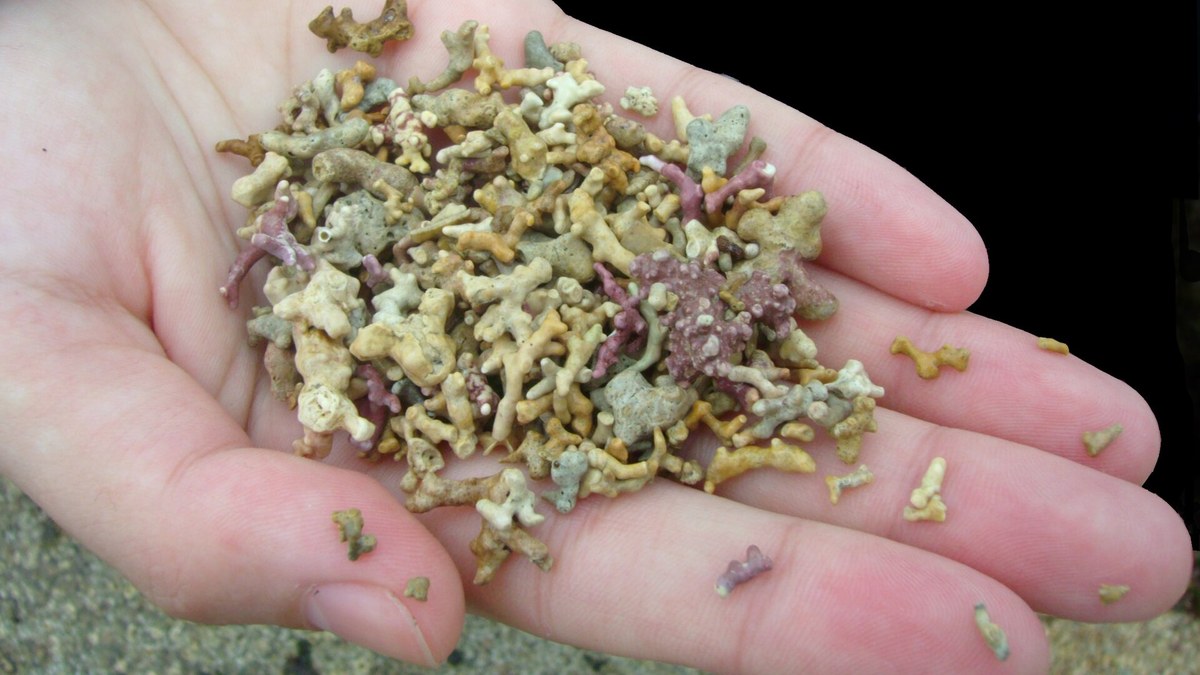
Near Carraroe in Connemara, this beach is unlike anything else in Ireland. The sand is composed almost entirely of maerl — fragments of coral-like red algae — giving it a pinkish-white appearance that looks frankly implausible under summer light. It’s small, it’s photogenic, and it sits in the middle of Connemara’s Irish-speaking heartland, where you’re likely to hear as much Irish as English. Swimming is good in calm conditions, and the whole area rewards slow exploration.
The East Coast: Wexford, Wicklow, and Dublin
The Irish Sea coast is warmer, calmer, and more accessible from Dublin — which makes it enormously popular with city families in summer. Don’t overlook it.
Curracloe, Wexford
Curracloe is Wexford’s finest beach — an eleven-mile stretch of dune-backed sand that Steven Spielberg famously used to double as Normandy’s Omaha Beach in Saving Private Ryan. The real thing is considerably more pleasant: clean, wide, and well-managed, with good lifeguard cover in summer. Wexford town is nearby, and the Wexford Wildfowl Reserve at the northern end of the beach is worth a detour for birdwatchers.
Brittas Bay, Wicklow
An hour south of Dublin, Brittas Bay is where half the capital decamps on a hot weekend. Five kilometres of clean sand backed by high dunes, decent facilities, and a car park that fills by 10am on a sunny August Saturday. Come on a weekday, or in June before schools finish, and it’s genuinely beautiful — wide, clean, and with that particular ease that comes from a beach confident in its own quality.
Portmarnock, Dublin
Portmarnock is Dublin’s finest strand — a long, northward-curving beach on a peninsula north of the city, with views across to Howth Head and Ireland’s Eye. It’s a proper swimming beach with lifeguards, a promenade, and easy DART train access from the city centre. No dramatic scenery, no wild cliffs — just a very good, very reliable beach that happens to be half an hour from one of Europe’s most enjoyable cities.
Planning Your Irish Beach Trip
Best months to visit
June, July, and August are the peak beach months, with the longest daylight hours (sunset past 10pm in June), the warmest sea temperatures, and lifeguard cover on designated beaches. May and September are often excellent — quieter, frequently sunny, and with the added pleasure of having most beaches largely to yourself. Avoid high-summer weekends on beaches near Dublin and Cork city if crowds bother you.
Swimming safety
Ireland’s beaches vary dramatically in swimming safety. Blue Flag beaches have lifeguard cover in the peak season (typically late June to August), clearly marked safe swimming zones, and emergency information. Always swim between the flags. Many of the wild Donegal and Kerry beaches in this guide are unwatched — treat them accordingly. The Irish Water Safety authority’s website lists lifeguarded beaches by county. Sea temperatures peak around 17°C in August — cold by American standards, but perfectly swimmable with a little resolve.
The Wild Atlantic Way
Most of the western beaches in this guide sit along or near the Wild Atlantic Way, a 2,500km signed driving route from Donegal to Cork. It’s genuinely one of the world’s great coastal drives, and organising your itinerary around it makes logistical sense. Hire a car — public transport to most of these beaches is limited to nonexistent — and allow more time than you think you need. The road signs are good; the temptation to stop every twenty minutes is better.
Frequently Asked Questions
Do I need to pay to access Irish beaches?
The beaches themselves are free. Car parking at popular beaches typically costs a few euros in season — Inch Beach, Barleycove, and Keem Bay all have pay-and-display car parks. A few remote beaches have honesty boxes for maintenance contributions.
Are the beaches really that cold?
Honestly, yes — but manageably so. Irish Sea temperatures on the east coast peak around 17–18°C in August; Atlantic beaches on the west typically reach 15–17°C. Wetsuits extend the season and make the experience significantly more comfortable, and surf schools provide them. Wild swimming has become hugely popular in Ireland in recent years, and the enthusiasm is infectious once you’ve committed to getting in (see our guide to Ireland’s best wild swimming spots).
When is the best time to avoid crowds at Kerry beaches?
Aim for weekdays in June or the first two weeks of September. Irish school summer holidays run from late June to early September, and Kerry’s most famous beaches — Inch, Derrynane — fill quickly on sunny July weekends. Early mornings are reliably peaceful even in high season.
How do I find out if a specific beach currently holds a Blue Flag?
Check blueflag.org for the current year’s award list, or the Irish EPA’s bathing water quality map at epa.ie. Awards are announced each spring, and the lists update annually — a beach that held its flag last year may not hold it this year, and vice versa. Water quality results are published throughout the swimming season and are the most reliable guide to current conditions.
☘️ Join 64,000+ Ireland Lovers
Every weekday morning, get Ireland’s hidden gems, local secrets, and travel inspiration — the kind you won’t find in any guidebook.
Subscribe free — enter your email:
Already subscribed? Download your free Ireland guide (PDF)
📲 Know someone who’d love this? Share on WhatsApp →
Love more? Join 43,000 Scotland lovers → · Join 29,000 Italy lovers → · Join 7,000 France lovers →
Free forever · Unsubscribe anytime
Tours & experiences you might love


Powered by Viator. Some links are affiliate links — we may earn a small commission at no extra cost to you.
Secure Your Dream Irish Experience Before It’s Gone!
Planning a trip to Ireland? Don’t let sold-out tours or packed attractions spoil your journey. Iconic experiences like visiting the Cliffs of Moher, exploring the Rock of Cashel, or enjoying a guided walk through Ireland’s ancient past often sell out quickly—especially during peak travel seasons.

Booking in advance guarantees your place and ensures you can fully immerse yourself in the rich culture and breathtaking scenery without stress or disappointment. You’ll also free up time to explore Ireland’s hidden gems and savour those authentic moments that make your trip truly special.
Make the most of your journey—start planning today and secure those must-do experiences before they’re gone!