

Most entrance gates are built to impress visitors on their way to something bigger. At Ballysaggartmore, the gate is the thing. The towers, turrets, and ornamental bridge that mark the entrance to this estate in County Waterford are so elaborate that many visitors assume they are the ruins of a castle. They are not. They are a gateway to a house that was never built.
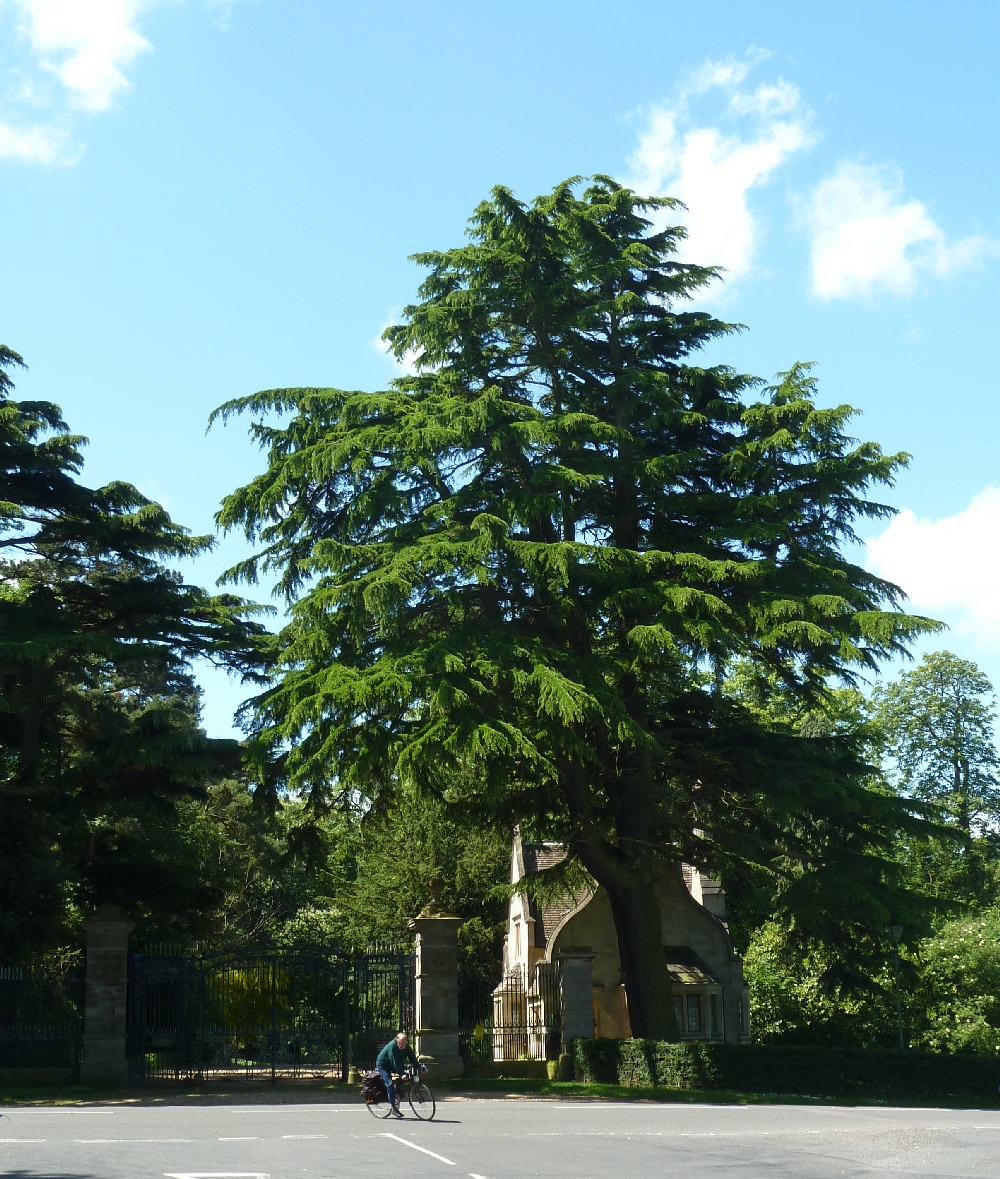
Built around 1834, Ballysaggartmore Towers stand in woodland near the town of Lismore in County Waterford. Today they are open to the public, free of charge, and form part of a peaceful forest walk managed by Coillte, Ireland’s state forestry body. Getting there is straightforward, getting lost in the story of why they exist is even easier.
Want more hidden gems like this delivered to your inbox? Subscribe to our free Ireland newsletter — thousands of readers get Ireland stories, travel tips, and heritage features every week.
Who Built Ballysaggartmore Towers?
The estate at Ballysaggartmore was owned by Arthur Kiely-Ussher, a landlord from a well-established Anglo-Irish family. In the mid-19th century, it was not unusual for wealthy landowners to undertake ambitious building projects on their estates. The entrance lodge and gate were often the first statement a visitor encountered, and they were expected to signal the status of the owner within.
Kiely-Ussher, by most accounts, took this idea further than most. He commissioned a Gothic Revival entrance complex that included two sets of gate towers, a decorative bridge over a small river, and a connecting stretch of walled avenue. The stonework is detailed, the towers are battlemented, and the archways are wide enough for a horse-drawn carriage to pass through comfortably. Every element was designed to suggest that something magnificent lay beyond.
The problem was that nothing did. By the time the entrance complex was completed, the funds originally set aside for the main house had been exhausted. The grand mansion that the gate was supposed to lead to was never built. What stands today is the entrance to an absence — a threshold that goes nowhere in particular, except into the trees.
The Gothic Revival Style Explained
☘️ Your Irish family has a story waiting to be found.
Discover where your Irish ancestors came from — their county, their name, their story. Our free step-by-step guide walks you through every record, DNA tool, and ancestry archive. No experience needed.
Claim Your Free Irish Ancestry Guide →Gothic Revival was one of the defining architectural movements of 19th-century Ireland and Britain. It drew on the visual language of medieval castles and cathedrals — pointed arches, crenellated battlements, narrow lancet windows — and applied them to new buildings. The style was fashionable among the Anglo-Irish gentry and was used for everything from country houses to churches to gate lodges.
At Ballysaggartmore, the style is applied with confidence. The main towers are square and heavily battlemented. The archway beneath them uses a pointed Gothic form. The bridge is similarly decorated, with low stone walls and a gentle curve that carries the estate road over the river. Ivy and moss have worked their way into the stone over the decades, which gives the complex a genuinely medieval feel, even though it dates only to the mid-Victorian period.
There is also a smaller gate lodge on the estate, believed to have been built slightly earlier than the main towers. It is less dramatic but shows the same attention to ornamental stonework. Historians believe the smaller lodge was completed first, possibly as a trial run before the main entrance was commissioned.
The Story Behind the Unbuilt House
The popular version of the Ballysaggartmore story holds that Kiely-Ussher’s wife pushed for a grander estate than the family’s means could support. Whether or not that is entirely accurate, the financial reality is not in dispute. The entrance was built. The house was not. The family’s finances did not recover sufficiently to complete the project.
This kind of over-reach was not unusual in 19th-century Ireland. Many landlord families spent heavily on visible status symbols — grand entrances, estate walls, ornamental gardens — while the underlying finances were less stable than the stonework suggested. The Great Famine of the 1840s accelerated the decline of many such estates, and Ballysaggartmore was one of them.
By the later decades of the 19th century, the estate had changed hands and the ambition that produced the towers had long since faded. The land eventually passed into state ownership, and the woodland surrounding the towers was planted and managed as commercial forest. The towers themselves were preserved as a heritage feature.
Ireland is full of stories like this — ambition, history, and landscape all in one place. Join our free newsletter and get a new Ireland story in your inbox every week.
Visiting Ballysaggartmore Today
Access to Ballysaggartmore Towers is free. The site is managed by Coillte and sits just outside Lismore, which is itself a worthwhile destination in County Waterford. There is a small car park near the entrance, and from there a network of forest trails fans out through the woodland.
The main towers are a short walk from the car park along a well-maintained path. The route takes you past the decorative bridge over the river before arriving at the gate complex itself. The full circular loop around the estate takes about an hour at an easy pace, though many visitors spend longer around the towers photographing the stonework and the surrounding trees.
The site is suitable for families, though some of the paths can be muddy after rain. Waterproof footwear is advisable in autumn and winter. Dogs are welcome on leads. There are no facilities on site — no café, no toilets — so it is worth stopping in Lismore town before or after your visit.
Lismore itself is worth an hour or two. Lismore Castle sits above the town on a rocky outcrop beside the River Blackwater and has been associated with the Dukes of Devonshire since the 18th century. The town also has a heritage centre, a cathedral, and a good selection of pubs and cafés along the main street.
What to Look For at the Towers
When you arrive at the main gate, take a moment to look at the detail in the stonework. The battlements are well-preserved and the corbelling beneath them is carefully finished. The archway itself still has the slots and hinges where the original iron gates would have hung — though the gates themselves are long gone.
The bridge over the river is particularly photogenic. It is best viewed from the bank below rather than from the road above, which requires a short detour off the main path. Early morning light works well here, and the sound of the river makes it one of the quieter and more atmospheric spots on the walk.
Look also at the way the towers relate to the surrounding woodland. The trees are close on either side, and in summer the canopy closes in overhead, giving the approach a tunnel-like quality that makes the towers appear suddenly rather than gradually. It is a good piece of design, even if what lay beyond was never completed.
Getting There
Ballysaggartmore Towers are located approximately 3km west of Lismore town centre in County Waterford. From Lismore, take the R666 road towards Ballyduff and follow the signs for Ballysaggartmore. The car park is on the left-hand side of the road and is clearly marked.
Lismore is about 55km from Waterford city and around 45km from Fermoy in County Cork. There is no reliable public transport directly to the site, so a car is the practical option for most visitors. The nearest train station is Waterford, from where you would need to hire a car or take a taxi for the remainder of the journey.
The site is open year-round and there is no admission charge. Coillte occasionally carries out forestry work in the area, which may affect access on specific days, but this is rarely an issue for general visitors.
A Gate Worth Travelling For
Ballysaggartmore is one of those places that rewards visitors who take the time to look into it before they go. On the surface, it is a nice woodland walk with some unusual old stonework. Once you know the story — the ambition, the expense, the house that never came — it becomes something else. A monument to over-reach, built in stone, standing in the trees of County Waterford while the house it was meant to herald exists only in the original plans.
Ireland has no shortage of places where history and landscape meet in unexpected ways. Ballysaggartmore is one of the better examples of that, and the fact that it costs nothing to visit makes it an easy addition to any itinerary in the south-east of the country.
Discovered a hidden gem in Ireland? We’d love to hear about it. Subscribe to the Love Ireland newsletter for more stories, guides, and heritage features from across the island.
Thinking about it seriously?
If you’ve started actually planning a move, our complete the full Move to Ireland guide walks through every step, every cost, and the paperwork that catches most people out.
Tours & experiences you might love


Powered by Viator. Some links are affiliate links — we may earn a small commission at no extra cost to you.
Secure Your Dream Irish Experience Before It’s Gone!
Planning a trip to Ireland? Don’t let sold-out tours or packed attractions spoil your journey. Iconic experiences like visiting the Cliffs of Moher, exploring the Rock of Cashel, or enjoying a guided walk through Ireland’s ancient past often sell out quickly—especially during peak travel seasons.

Booking in advance guarantees your place and ensures you can fully immerse yourself in the rich culture and breathtaking scenery without stress or disappointment. You’ll also free up time to explore Ireland’s hidden gems and savour those authentic moments that make your trip truly special.
Make the most of your journey—start planning today and secure those must-do experiences before they’re gone!
Subscribe Free