

In the woods outside Lismore in County Waterford, there is a magnificent Gothic gateway — twin towers, ornamental battlements, an arched bridge over a rushing river. It is the grandest kind of entrance, built to impress. The only problem is that there is nothing behind it.
No mansion. No grand house. Just a path winding into the trees.
Ballysaggartmore Towers is one of the strangest and most compelling places in Ireland. The story behind it is a cautionary tale about ambition, money, and the particular folly of building the front door before you have worked out where the money for the rest of the house is coming from.
It is also completely free to visit. And it is well worth the trip.
Love stories like this? Get them in your inbox every week.
Subscribe to the Love Ireland newsletter — it’s free.
The Man Who Built the Gate and Forgot the House
Arthur Kiely-Ussher was a County Waterford landlord in the 1830s. He had inherited a substantial estate at Ballysaggartmore, near Cappoquin, and wanted to announce his status in the most visible way possible. His wife, it is said, was particularly keen to outdo the neighbouring Devonshire estate at Lismore Castle, which sat prominently above the River Blackwater just a few miles away.
The plan was to build a great house — a mansion worthy of the estate. But first, Kiely-Ussher would need an entrance. A proper one. The kind that announced the grandeur of what lay within.
He engaged his head gardener, John Smyth, to draw up the designs, and construction began. The result was extraordinary: two Gothic towers flanking the main gate, complete with turrets and battlements, connected by a decorative bridge over the Owennashad River. A second, smaller gate lodge was also built nearby. The stonework was elaborate. The ambition was obvious.
By the time the entrance was finished — no later than 1834 — the money was gone. The mansion was never built. Kiely-Ussher had spent everything on the gate.
What remains today is the entrance to nothing — a perfectly preserved piece of Gothic theatre pointing into an empty woodland.
What You Will Actually See
☘️ Your Irish family has a story waiting to be found.
Discover where your Irish ancestors came from — their county, their name, their story. Our free step-by-step guide walks you through every record, DNA tool, and ancestry archive. No experience needed.
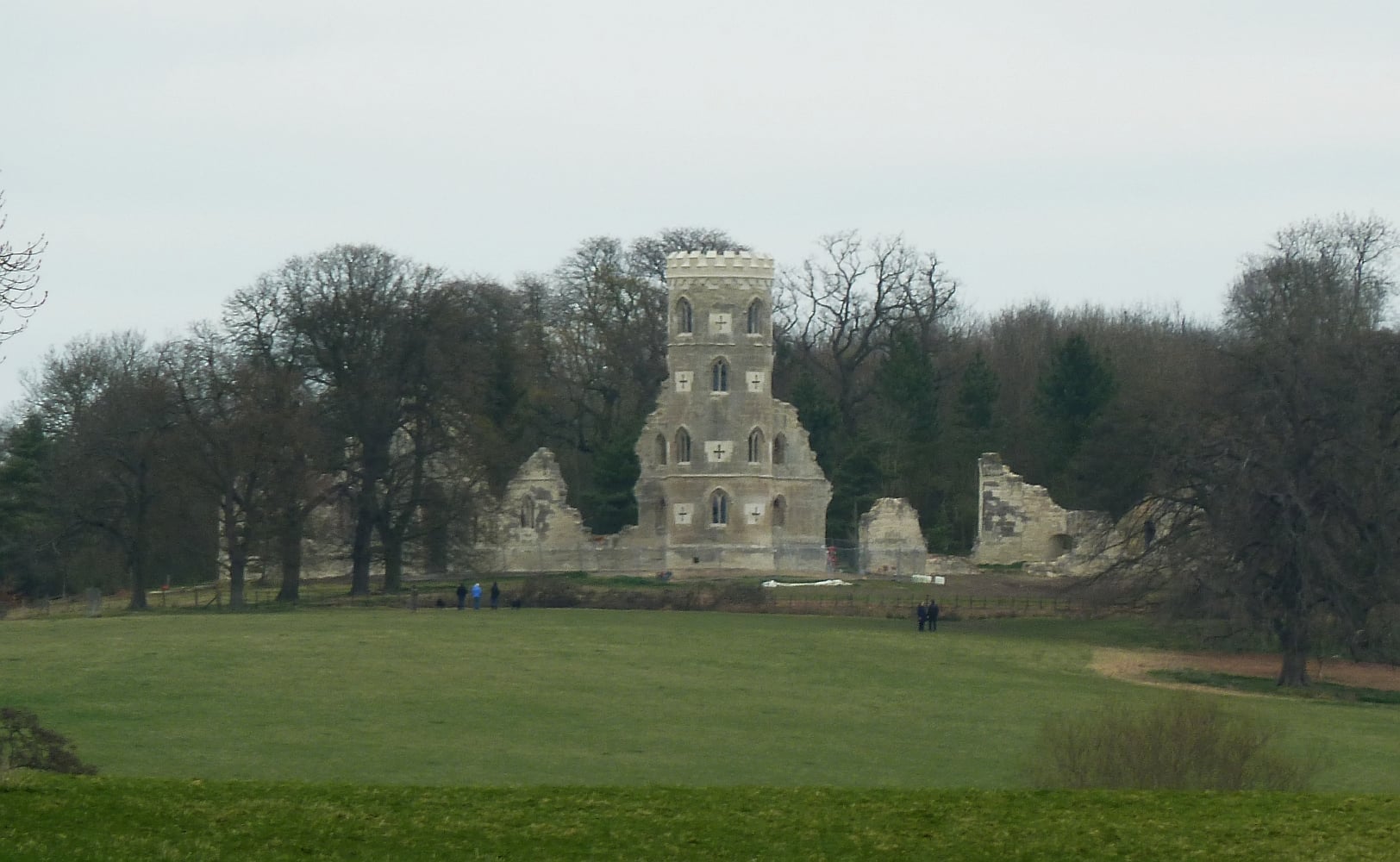
Claim Your Free Irish Ancestry Guide →The main towers are the centrepiece. They rise above the treeline and look, at first glance, every bit like the entrance to a castle. The stonework is detailed — pointed arches, crenellated parapets, the kind of Gothic ornamentation that was fashionable among the Anglo-Irish gentry in the mid-19th century. The bridge beside the gate crosses the river in a single elegant arch.
Walk through the gate and you are in a woodland. Coillte, the Irish state forestry company, manages the land now and has kept it open to the public at no charge. The paths are well-maintained and clearly marked. A loop walk of roughly 2 kilometres takes you through the trees, past the river, and by the second smaller gate lodge further along the track.
The second lodge is less dramatic than the main towers but worth seeing in its own right. It is a compact Gothic structure, now roofless and overgrown, and gives a sense of the original scale of the planned estate.
The woodland itself is pleasant throughout the year, but particularly good in spring and autumn. The Owennashad River runs fast after rain, and the combination of old stonework and heavy tree cover gives the site an atmosphere that is hard to manufacture and impossible to fake.
There are no cafes, no visitor centres, no gift shops. You park at the small car park on the Ballyduff road, walk in, and see it as it is. That simplicity is part of what makes it worth visiting.
The Famine Context
It is impossible to visit Ballysaggartmore without thinking about what happened here during the Great Famine. The towers themselves predated that catastrophe — they were completed in the 1830s, more than a decade before the Famine struck Ireland between 1845 and 1852, killing more than one million people and forcing a further million or more to emigrate. But the estate was not untouched. Hundreds of tenant farmers were evicted from the Ballysaggartmore lands in 1847, one of the largest clearances in County Waterford during those years.
County Waterford was not spared. The contrast between the elaborate Gothic stonework and the fate of the tenants who lived nearby during those years is stark, and it is a contrast that visitors to the site often find themselves thinking about.
This is not to say the towers should not be visited — they should. But knowing the period in which they were built adds a layer to the experience that a straightforward curiosity story does not fully capture.
Ireland has no shortage of stories like this — places that reward a closer look.
Join thousands of Ireland lovers and get one in your inbox each week. Free.
Getting There
Ballysaggartmore Towers is located about 2.5 kilometres west of Lismore in County Waterford. The easiest approach is by car.
From Lismore, take the R666 road west towards Ballyduff. After roughly 2–3 kilometres, you will see a small car park on the left-hand side of the road. There is signage, though it is not prominent — if you reach the village of Ballyduff, you have gone too far.
Lismore itself is well connected by road. From Waterford city, allow around 50 minutes. From Cork city, the drive is approximately one hour via the N72. From Dungarvan, you are looking at around 20 minutes.
There is no public transport directly to the site. Lismore has a bus connection to Waterford and Dungarvan, but from Lismore you would need a taxi or bicycle to reach the towers.
The car park is free. The site is open year-round during daylight hours. Dogs are welcome on leads.
What to Combine It With
Lismore is one of the finest small towns in Ireland and well worth a few hours of your time. Lismore Castle dominates the skyline above the Blackwater — it is not generally open to the public, but the castle gardens are open seasonally and are excellent. The town itself has good food options, an independent bookshop, and the Lismore Heritage Centre which covers the town’s considerable history.
The Blackwater Valley is good walking and cycling country, with waymarked trails passing through the riverside woodland and the hills above Lismore.
Cappoquin, a few kilometres to the east, is a small riverside town with some good food. Mount Melleray Abbey, a working Cistercian monastery, is nearby and worth a stop if you are interested in religious heritage.
For a longer trip, the Waterford Greenway — a 46-kilometre off-road cycling and walking trail from Waterford city to Dungarvan — is one of the best greenways in the country and gives good reason to spend a night or two in the county.
Practical Information
Address: Ballysaggartmore, Lismore, County Waterford
Admission: Free
Parking: Free car park on site
Walk length: Approximately 2 km loop
Terrain: Woodland paths, some uneven ground — sturdy footwear recommended
Dogs: Welcome on leads
Managed by: Coillte
Facilities: None on site — no toilets, cafe, or visitor centre
The site is accessible year-round, but paths can be muddy after prolonged rainfall. The walk is not suitable for buggies or wheelchairs due to uneven terrain. There is no mobile signal in parts of the woodland, so download a map before you go if you plan to use one.
Why It Is Worth the Visit
Ballysaggartmore is not Ireland’s most famous attraction. It does not appear on every itinerary. But it has something that most sites do not: a story that is both very funny and quietly tragic, and a physical place that delivers exactly what the story promises.
You drive down a country road, park in a small car park, walk through trees, and then suddenly there it is — a full Gothic gateway, towers and all, standing in the middle of a forest. Behind it: nothing but woodland and birdsong.
That moment of recognition — the comedy and the sadness of it all landing at once — is the kind of thing you remember. It costs nothing to experience it. It takes about 40 minutes if you do the full loop. And it is the sort of place that reminds you why County Waterford is worth exploring properly, not just passing through on the way somewhere else.
If you go, take your time at the main gate. Look at the stonework. Think about what was planned and what was built. Then walk through and see the trees beyond.
It is, as one-line summaries of places go, hard to beat: the gate was finished. The house never was.
Want more hidden corners of Ireland like this?
Subscribe to the Love Ireland newsletter — free, weekly, and always worth reading.
Thinking about it for retirement?
If you’ve started thinking seriously about retiring there, our complete our full Retire in Ireland guide covers the visa, healthcare, cost-of-living, and the regions worth shortlisting.
Tours & experiences you might love


Powered by Viator. Some links are affiliate links — we may earn a small commission at no extra cost to you.
Secure Your Dream Irish Experience Before It’s Gone!
Planning a trip to Ireland? Don’t let sold-out tours or packed attractions spoil your journey. Iconic experiences like visiting the Cliffs of Moher, exploring the Rock of Cashel, or enjoying a guided walk through Ireland’s ancient past often sell out quickly—especially during peak travel seasons.

Booking in advance guarantees your place and ensures you can fully immerse yourself in the rich culture and breathtaking scenery without stress or disappointment. You’ll also free up time to explore Ireland’s hidden gems and savour those authentic moments that make your trip truly special.
Make the most of your journey—start planning today and secure those must-do experiences before they’re gone!
Subscribe Free