

Nine of the fifty-six men who signed America’s Declaration of Independence in 1776 were born in Ireland. Another dozen carried Irish blood through their parents. When the Continental Congress gathered in Philadelphia that sweltering July, the voice of Ireland rang louder in that room than almost any other nation on earth — and yet this remarkable chapter of history remains one of the best-kept secrets of the Irish diaspora.
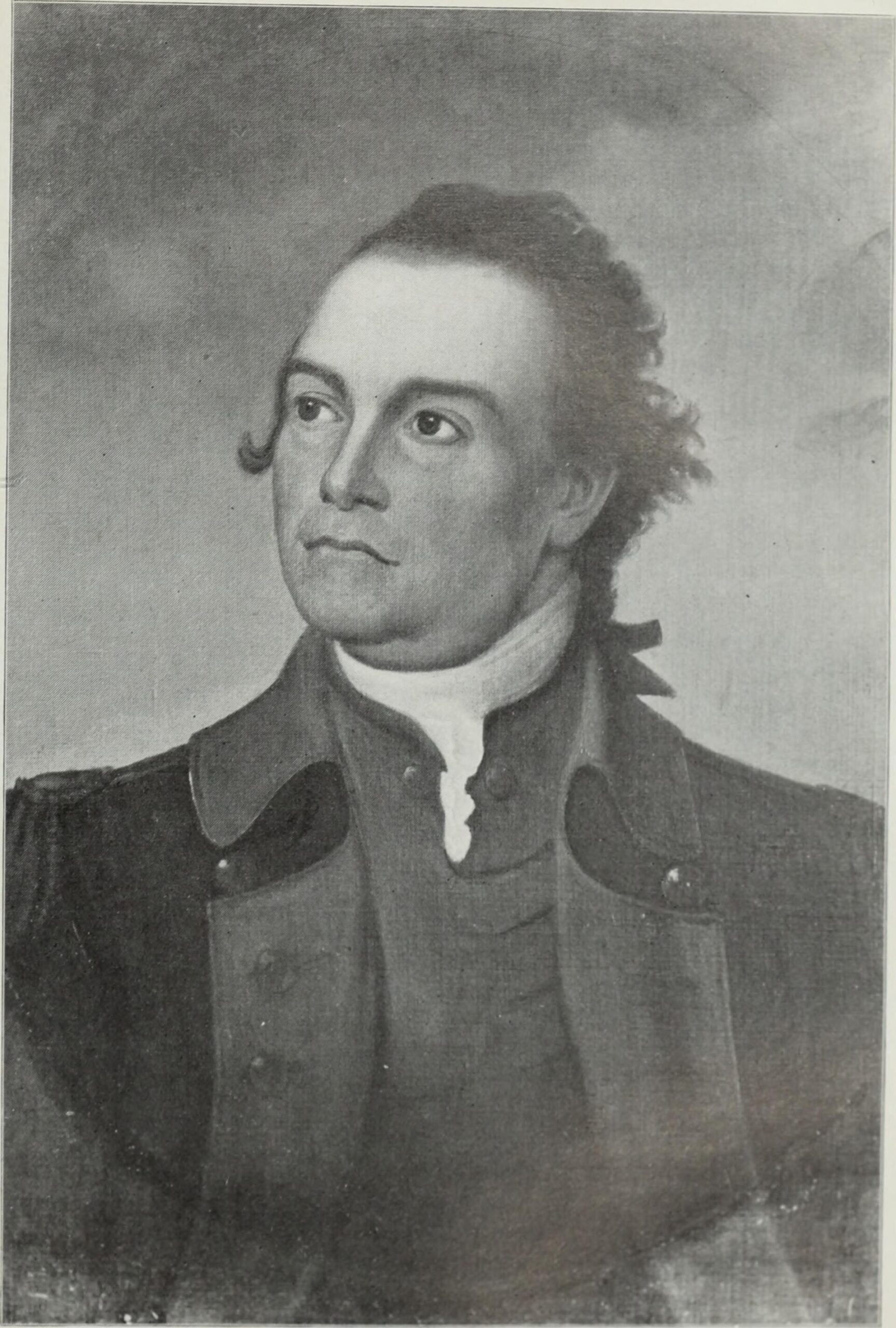
As America counts down to its 250th Independence Day on 4th July 2026, there has never been a better moment to explore who these Irish men actually were — where they came from, why they left, and why their names deserve to be spoken alongside Washington and Jefferson in every Irish home.
The Irish signers of the Declaration of Independence
The phrase “Irish signer” covers two overlapping groups: those born on Irish soil, and those whose parents or grandparents emigrated from Ireland. Between them, they shaped the document that changed the world. Here are the key figures, and the Irish counties that produced them.
Matthew Thornton — County Londonderry (Derry)
Matthew Thornton was born in Wigan, Lancashire, in 1714, but his family emigrated from County Londonderry when he was just three years old. He grew up speaking with the cadences of the Ulster Scots community in New Hampshire, became a physician, and eventually served as the last man to sign the Declaration — affixing his name on 4th November 1776, four months after the vote. He is buried in Merrimack, New Hampshire, where a roadside plaque commemorates his Ulster roots. He was 62 years old when he signed, making him one of the oldest signatories.
George Taylor — County Antrim
George Taylor arrived in America around 1736, aged roughly 20, as an indentured servant — one of tens of thousands of Ulster Scots who crossed the Atlantic in desperate circumstances. Born in County Antrim (the same county that produced the Dark Hedges and the Giant’s Causeway), he worked off his indenture in Pennsylvania’s iron industry, eventually becoming a wealthy ironmaster. His ironworks supplied cannon and shot to the Continental Army. Taylor signed the Declaration in August 1776 but died just 18 months later, in February 1778, reportedly exhausted by the demands of the revolutionary cause. He was the only signer to arrive in America as an indentured servant.
James Smith — Dublin
James Smith was born in Dublin around 1719 — the exact date is unrecorded, a common frustration for anyone tracing Irish ancestry from this era. His family emigrated when he was a child, settling in Pennsylvania. Smith became a lawyer and a fiery advocate for independence, often delivering speeches that left Congress members in no doubt where he stood. He lived to the remarkable age of 93, dying in 1806, and remains one of the least-celebrated of the Irish signers despite his Dublin birth. His portrait hangs in the Independence Hall collection in Philadelphia.
Charles Carroll — Irish Catholic Heritage
Charles Carroll of Carrollton was the wealthiest man in colonial America at the time of the signing, with an estate valued at approximately £100,000 — the equivalent of tens of millions today. His family’s Irish Catholic roots ran deep: his grandfather, Charles Carroll the Settler, had emigrated from County Offaly in the 1680s, fleeing the Penal Laws that stripped Irish Catholics of land, education, and political rights. Carroll was the only Catholic signer and the last surviving signatory, dying in 1832 at the age of 95. He took particular pride in signing his full name — “Charles Carroll of Carrollton” — to make clear he was personally accountable and could not be confused with any other Charles Carroll.
Edward Rutledge — Irish Ancestry, South Carolina
Edward Rutledge, the youngest signer at just 26 years old when he signed in 1776, came from a family with strong Irish roots. His father, Dr John Rutledge, had emigrated from County Tyrone in the north of Ireland. Edward became a lawyer in South Carolina and initially opposed independence — he wanted more time — but eventually voted in favour and signed. He later became Governor of South Carolina. At 26 years and approximately 4 months old, he remains the youngest person ever to sign the Declaration of Independence.
☘️ Enjoying this? 64,000+ Ireland lovers get stories like this every week.
Thinking about it seriously?
If you’ve started actually planning a move, our complete the full Move to Ireland guide walks through every step, every cost, and the paperwork that catches most people out.
Subscribe free →
Why so many Irish men were in America by 1776
The presence of so many Irish-born men among the Founders was not coincidence. Between 1717 and 1776, an estimated 250,000 Ulster Scots emigrated to North America — one of the largest voluntary migrations of the 18th century. They left for a cluster of interconnected reasons.
The Penal Laws, introduced in Ireland after 1691, made life extraordinarily difficult for both Catholics and Protestant Dissenters (the Presbyterian communities of Ulster). Catholics were barred from owning land above a certain value, practising their faith openly, or entering the professions. Presbyterians, though Protestant, were similarly excluded from public office by the Test Act of 1704, which required all officeholders to take Anglican communion. Many saw America as the only place where they could own land, worship freely, and build a life without interference from a distant government — a sentiment that translated directly into revolutionary fervour when Britain began taxing the colonies.
Rack-renting — the practise of charging ever-higher rents for farmland — devastated the Ulster linen trade in the 1770s. When a series of bad harvests coincided with rising rents between 1770 and 1775, tens of thousands of families made the crossing. Many settled in Pennsylvania, Virginia, and the Carolinas, where land was available and Ulster communities already existed. These were not rootless wanderers; they were skilled tradespeople, farmers, and professionals who arrived with ambitions and grievances.
That legacy is still visible every 4th of July — see our piece on Irish Americans and the 4th of July for how deep the connection runs.
The broader Irish influence on American independence
Beyond the nine Ireland-born signers, Irish influence on the revolutionary movement was pervasive. General Richard Montgomery, born in County Dublin in 1738, was the first general officer of the Continental Army to be killed in action, dying at the Battle of Quebec on 31st December 1775 — six months before the Declaration was signed. Montgomery’s death turned him into a martyr of the revolution.
Hercules Mulligan, born in County Antrim in 1740, operated as a spy for George Washington from his tailor’s shop in New York City. He gathered intelligence from British officers who came for fittings, passing information that may have saved Washington’s life on at least two occasions. When Washington entered New York after the British evacuation in 1783, his first visit was to Mulligan’s shop — a public acknowledgement of his debt.
John Sullivan, born in New Hampshire to parents from County Limerick, served as a Major General and led the Sullivan–Clinton Campaign of 1779. The Presbyterian minister John Witherspoon, though Scottish-born, had deep Ulster connections and signed the Declaration as a New Jersey delegate. He was the only clergyman to sign.
If you are tracing your own Irish-American heritage, our complete Ireland travel planning guide can help you identify the counties your ancestors came from — many of which produced the very men who shaped American independence.
Visiting the Irish homelands of the Declaration signers
For Irish-Americans tracing their roots ahead of the 4th July 2026 celebrations, the counties that produced the Declaration signers offer some of Ireland’s most rewarding heritage travel.
County Antrim — George Taylor and Hercules Mulligan
County Antrim stretches from Belfast to the famous Giant’s Causeway along Ireland’s north-east coast. The Dark Hedges — the beech tree avenue planted by the Stuart family in the 1700s, roughly the same era as Taylor’s birth — is one of the most photographed natural features in Ireland. The Ulster American Folk Park in Omagh (County Tyrone, but easily combined with an Antrim visit) recreates the world that Ulster emigrants left behind, with original thatched cottages and replica ship decks. Adult admission is in the low-teens (£) — check the Ulster American Folk Park’s official ticket page for the current price and any seasonal offers before you go.
County Londonderry — Matthew Thornton
The walled city of Derry/Londonderry is the only fully intact walled city in Ireland and one of the finest examples of plantation-era architecture in the world. The walls, built between 1613 and 1619, stand 8 metres high and 9 metres wide in places. The Tower Museum tells the story of the city and its people in detail, including the Ulster emigration waves. A heritage trail linking areas associated with the Ulster Scots migration has been developed with support from Tourism Ireland and is signposted throughout the city.
Dublin — James Smith
Dublin city centre, where James Smith was born around 1719, is now one of Europe’s most visited capitals. The genealogy reading rooms at the National Library of Ireland, just off St Stephen’s Green, hold records stretching back to the 1600s and are free to use. Staff can help visitors trace ancestors from any Irish county. Reading-room hours vary slightly across the week and are shorter on Saturdays — check the National Library of Ireland’s current opening hours before you go. Trinity College Dublin, founded in 1592, is a 10-minute walk and houses the Book of Kells — Ireland’s most treasured manuscript, created by monks around 800 AD.
If you are planning a heritage trip around these counties, our guide to tracing your Irish-American heritage can help you turn the visit into a genuine homecoming.
What the Irish signers believed
It is worth pausing on why these Irish emigrants — men who had crossed an ocean, built new lives, and in many cases prospered — were willing to risk everything for a political principle. The answer lies in what they had left behind.
Men like Matthew Thornton and George Taylor had direct, personal experience of what it meant to live under laws designed to keep certain people in their place. They had seen land confiscated, worship restricted, and opportunity strangled by a distant legislature that felt no obligation to represent their interests. When the British Parliament began asserting the right to tax the colonies without representation, these men recognised the pattern immediately. They had seen it before — in Derry, in Antrim, in Dublin.
Thomas Jefferson acknowledged this connection in a letter written in 1825, just a year before his death: “Our ancestors were the Irish and English and Scotch, from whom we have all that is manly in our constitutions.” The naming of the Irish first was not accidental.
Frequently asked questions about the Irish signers of the Declaration of Independence
How many Irish signers of the Declaration of Independence were there?
Nine of the fifty-six signers of the Declaration of Independence were born in Ireland, making Ireland the most represented non-American birthplace among the signatories. A further eight to twelve signers had Irish parents or grandparents, meaning Irish heritage influenced approximately a third of the men who signed.
Which county in Ireland produced the most signers of the Declaration of Independence?
County Antrim produced at least two confirmed signers — George Taylor and, through family connection, others with Ulster Scots roots. The Ulster provinces of Antrim, Londonderry, and Tyrone collectively produced the greatest concentration of Irish-born Declaration signers, reflecting the large-scale Presbyterian emigration from Ulster between 1717 and 1775.
What is the best place in Ireland to learn about Irish-American heritage?
The Ulster American Folk Park in County Tyrone is widely regarded as Ireland’s finest museum dedicated to the Irish-American emigrant story, with original buildings and interactive exhibits covering the emigration waves of the 18th and 19th centuries. The National Library of Ireland in Dublin is the best resource for genealogy research, offering free access to historical records and expert guidance.
Was there an Irish signer of the Declaration of Independence from a Catholic background?
Yes — Charles Carroll of Carrollton was the only Catholic signer of the Declaration of Independence. His family’s roots traced back to County Offaly in the Irish Midlands, and he was acutely aware that, as a Catholic, he faced particular risks by putting his name to an act of rebellion against the Crown. He lived to be 95 and was the last surviving signer, dying in 1832.
☘️ Join 64,000+ Ireland Lovers
Every weekday morning, get Ireland’s hidden gems, local secrets, and travel inspiration — the kind you won’t find in any guidebook.
Subscribe free — enter your email:
📲 Know someone who’d love this? Share on WhatsApp →
Love more? Join 43,000 Scotland lovers → · Join 29,000 Italy lovers → · Join 7,000 France lovers →
Free forever · Unsubscribe anytime
Tours & experiences you might love


Powered by Viator. Some links are affiliate links — we may earn a small commission at no extra cost to you.
Secure Your Dream Irish Experience Before It’s Gone!
Planning a trip to Ireland? Don’t let sold-out tours or packed attractions spoil your journey. Iconic experiences like visiting the Cliffs of Moher, exploring the Rock of Cashel, or enjoying a guided walk through Ireland’s ancient past often sell out quickly—especially during peak travel seasons.

Booking in advance guarantees your place and ensures you can fully immerse yourself in the rich culture and breathtaking scenery without stress or disappointment. You’ll also free up time to explore Ireland’s hidden gems and savour those authentic moments that make your trip truly special.
Make the most of your journey—start planning today and secure those must-do experiences before they’re gone!
Subscribe Free