

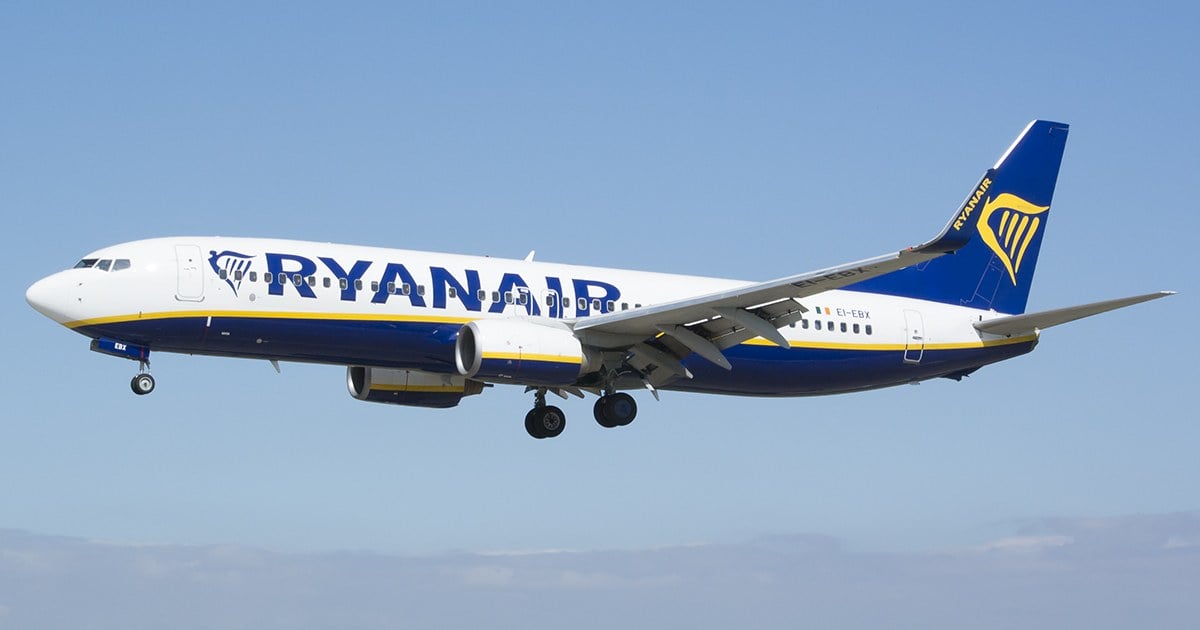
How Ryanair Made Flying Between European Cities Cheaper Than the Train
In May 1986, a small Irish airline announced it would fly between Dublin and London for £99 return. British Airways, at the time, was charging £209 for the same route. Aer Lingus, Ireland’s national carrier, panicked so thoroughly that it immediately slashed its own fare to £95 — undercutting the upstart that had forced the price war in the first place.
The upstart was Ryanair. And what happened next — across the following four decades — would change not just how Europeans fly, but where they go, how often they travel, what cities they discover on long weekends, and whether European railways can ever hope to compete with the machine O’Leary built.
The story starts badly. And then it starts again, in a Dallas restaurant, with a man drinking Michael O’Leary under the table.
A Good Idea, Executed Badly
Tony Ryan was already one of the most influential figures in global aviation before he started an airline. As the founder of Guinness Peat Aviation — a leasing company that at its peak owned or managed more commercial aircraft than any entity on earth — Ryan had made an enormous fortune understanding the economics of flight. So when he incorporated a new carrier in November 1984, alongside business partners Christopher Ryan and Liam Lonergan, the theory was sound: break the cosy cartel that kept Dublin-London fares artificially high, undercut the flag carriers, and let the market do the rest.
On July 8, 1985, Ryanair’s first commercial flight departed Waterford Airport on a 15-seat Embraer Bandeirante turboprop, bound for London Gatwick. The cabin crew wore jeans and polo shirts. The return fare was £99. In its first full year of operation, the airline carried 82,000 passengers. (Waterford wasn’t the only small Irish airfield with an improbable story — Ireland West Airport Knock has an even stranger one.)
By 1990, it had lost over £20 million.
The problem was not the price. The problem was the promise behind the price. Ryanair in its early years tried to be both cheap and good — a low-fare airline with first-rate service, a contradiction that proved financially catastrophic. The airline expanded rapidly, adding routes and aircraft, burning through Tony Ryan’s personal wealth in the process. By the time the company employed Michael O’Leary — joining in 1988 from the accounting firm KPMG, initially as Tony Ryan’s financial advisor — it was close to collapse. O’Leary’s original recommendation was blunt: shut it down. The airline was unsalvageable.
Ryan disagreed. Instead, he sent O’Leary to Dallas.
The Road to Damascus, Via a Four-Day Hangover
Southwest Airlines had been operating since 1971, flying short routes across Texas with a stripped-back model that conventional wisdom said couldn’t work at scale. No assigned seats. No hot meals. No connecting flights through expensive hub airports. One type of aircraft, maintained by crews who could fix any plane in the fleet. Turnarounds so fast — 25 minutes from landing to departure — that the same aircraft could fly five or six legs a day instead of two or three.
O’Leary watched Southwest operate at Love Field in Dallas and described the experience with the kind of bluntness that would later become his public trademark: “We went to see Herb Kelleher and Southwest, and it was like the road to Damascus.”
Kelleher — Southwest’s co-founder, a larger-than-life Texan lawyer turned aviation revolutionary — took O’Leary to dinner. O’Leary later recalled the evening in detail, or rather the lack of it: “I don’t remember anything about the dinner because he drank me under the table. I can’t remember anything except I was violently sick and hungover for about four days afterwards.”
By O’Leary’s own account, the meal was a revelation regardless of what was consumed at it. The model he saw at Southwest was not a cheaper version of conventional aviation. It was a fundamentally different business. Southwest wasn’t merely cutting costs — it was eliminating entire categories of cost that legacy airlines had always assumed were structural requirements. And it was printing money while its competitors scratched their heads.
O’Leary returned to Ireland and told Tony Ryan that Ryanair could be saved — but not as it was. It would have to become something else entirely.
The Ruthless Rebuild
In 1991, with the Southwest model as its blueprint, Ryanair recorded its first profitable year. The profit was £293,000 — barely a rounding error given what had come before — but it was proof the machine worked.
O’Leary took the CEO role formally in 1994 and began a restructuring that looked, from the outside, like a controlled demolition. The airline’s network was cut from 23 routes to just 4. The main base relocated from Luton to London Stansted. Free food and drinks vanished. Seat assignments vanished. Checked baggage vanished (or rather, became something you paid for separately). The fleet was standardised entirely on the Boeing 737, first with used 737-200s purchased in 1995, later with a landmark 1998 order for 45 new 737-800s worth two billion dollars — a bet that looked enormous at the time and, given what followed, turned out to be almost comically cheap.
Ryanair’s turnaround times dropped to 25 minutes, matching what O’Leary had watched Southwest do in Dallas. Irish airlines had been taking at least an hour and fifteen minutes to turn a plane around. The difference meant Ryanair’s aircraft could fly significantly more hours per day than its competitors — the same iron asset generating more revenue simply because it sat on the ground less often.
By 1997, the airline floated on the Dublin and NASDAQ stock exchanges, raising $150 million. That year it carried 3.73 million passengers. It also launched its first routes into continental Europe — Stockholm-Bromma, Oslo-Torp, Paris-Beauvais, Brussels-Charleroi — each of them sharing something important in common. None of them were quite where they claimed to be.
The Airport That Wasn’t Frankfurt
Paris-Beauvais is roughly 85 kilometres north of Paris. Oslo-Torp is about 110 kilometres from Oslo city centre. And Frankfurt-Hahn, the airport Ryanair began using in 1999, sits in the Moselle Valley — about 120 kilometres west of Frankfurt.
This is the move that changed everything, and it is worth pausing on it. Secondary and regional airports across Europe were desperate for traffic. The economics of running an airport are brutal if your runways sit half-empty: the infrastructure costs are fixed regardless of whether planes land or not. A converted Cold War airbase in the Moselle valley — Frankfurt Hahn had served as a US Air Force facility before becoming a civilian airport in 1993 — would rather take a low-fare carrier on aggressive terms than watch its facility earn nothing.
Ryanair understood this leverage precisely. Secondary airports offered landing fees 30 to 60 percent lower than major hubs. Some were willing to go further. When Ryanair made Brussels South Charleroi Airport a base in 2001, the deal included a 50 per cent reduction in landing fees and a handling charge of just one euro per passenger — along with financial support for pilot accommodation, training, and recruitment. The European Commission spent years investigating whether this constituted illegal state aid. Ryanair ultimately won that battle in court, but the case illuminated the underlying mechanics: small airports were effectively paying Ryanair to exist, because the alternative was a facility that served almost no one.
Frankfurt Hahn illustrated the model’s cultural absurdity as well as its financial logic. The airport was not in Frankfurt. It was not particularly near Frankfurt. But it was named Frankfurt-Hahn, and a generation of travellers learned to accept this geographical looseness as the price of a very cheap ticket. The airport served just 7,000 passengers in its first year of civilian operation. Within a few years of Ryanair’s arrival, it was processing millions.
How You Make Money When the Ticket Costs Almost Nothing
If you have ever booked a Ryanair flight and watched the final price climb steadily past the advertised headline fare as you added bags, chose a seat, paid for priority boarding, and bought travel insurance, you have participated in what the industry calls ancillary revenue — and Ryanair turned it into an art form.
The fundamental insight is this: the seat is the loss leader. The seat gets you to the website and into the booking flow. Everything else generates the margin. In its fiscal year 2024, Ryanair’s ancillary revenue reached €4.3 billion, representing roughly 32 per cent of total group revenue. That is not a side business. That is a substantial portion of the business, selling car rentals, hotel rooms, priority lanes, and luggage tags to people who originally came for a flight.
Combined with unit costs approximately half those of the airline’s closest competitors — driven by the standardised fleet, the aggressive airport deals, the fast turnarounds, and the relentless elimination of anything that costs money and nobody absolutely requires — the model generated profits that bewildered the legacy carriers it was undercutting. In fiscal year 2025, Ryanair posted a profit after tax of €1.6 billion.
The low-cost carriers as a whole — Ryanair, easyJet, Wizz Air and their siblings — held about 1.6 per cent of European flight capacity in 1998. By 2022, that share had risen to 32.5 per cent. What had been a curiosity became the dominant form of short-haul aviation on the continent.
What Ryanair Actually Invented
Ryanair did not invent cheap flights. Southwest had been doing that in Texas since 1971, and Freddie Laker had attempted something similar on transatlantic routes in the late 1970s before his Skytrain collapsed. What Ryanair invented, or at least perfected and scaled in a way nobody had managed before in Europe, was the weekend city break as a mass-market phenomenon.
Before the budget revolution, flying to continental Europe from Ireland or Britain was something you planned carefully and did occasionally. The economics demanded it. When the cheapest return fare on the Dublin-London route required the equivalent of several days’ wages, spontaneous travel stayed local. When that fare collapsed — and when Ryanair added routes not just to Paris and Amsterdam but to Bergamo, Bari, Carcassonne, Katowice, and Paderborn — something shifted.
The 2004 enlargement of the European Union accelerated this dramatically. As citizens of Poland, Hungary, the Czech Republic, and the Baltic states gained the right to work across the EU, low-cost carriers followed the migration routes in reverse, offering cheap connections back to Warsaw, Krakow, Riga, and Tallinn. Those routes, initially serving economic migrants, turned into two-way channels of tourism.
Krakow became the exemplar. A medieval city in southern Poland that most Western European tourists would have struggled to locate on a map in 1995, it transformed into one of Europe’s most visited short-break destinations after budget flights made it genuinely accessible. Nearly 2.6 million foreign visitors arrive each year, around 17 per cent of them British. The city’s stag and hen party economy — an entire sub-industry of bars, nightlife, and group entertainment built partly on the specific economics of cheap flights and cheap beer — is a direct and somewhat chaotic monument to what Ryanair made possible.
The same pattern played out across the continent. Cities with good regional airports but previously no affordable connections to the major populations of northwestern Europe suddenly had them. Hotel bookings followed. Restaurant menus appeared in English. New hostels opened. The weekend city break, once an occasional luxury, became something you could do on a Wednesday evening if you saw a sale fare.
What Didn’t Survive the Revolution
European railways are still grappling with the consequences. A 2023 analysis of 112 European routes found that flights were cheaper than trains on 79 of them. On average across the routes studied, rail tickets cost roughly twice as much as the equivalent flight. On some routes, the gap was reported to be as wide as 26 times.
The reasons are structural and, for railways, maddening. Airlines pay neither kerosene tax nor VAT on international flights — a set of exemptions totalling tens of billions of euros annually across the industry, according to campaign groups — while rail operators must pay fuel or energy taxes, VAT, and track access charges. Ryanair in particular benefited from secondary airport deals that further depressed the true cost of its operations. The competitive playing field was not level, and rail lost ground it has spent years trying to reclaim.
The irony is that O’Leary himself seems to have found the public hostility his airline attracts faintly amusing. He built his career on the premise that people want to pay as little as possible to get from one place to another, and four decades of evidence confirmed the hypothesis. When a €10,000 investment in Ryanair’s 1997 IPO was worth more than €1 million by 2024, it suggested that the market, at least, had made its judgment.
By 2024, Ryanair was carrying 197 million passengers a year — more than any single full-service carrier in Europe. The airline that nearly shut down in 1990, that was rebuilt from a Dallas restaurant conversation O’Leary can’t fully remember, now flies more people annually than most countries have as their entire population.
The Smaller World
There is something genuinely useful in what happened. However unglamorous the experience of boarding a Ryanair flight through a secondary airport with a carefully measured carry-on bag, the underlying effect was that Europe got smaller. Cities that were remote became reachable. People who couldn’t afford to travel began travelling. Cultures that had been separated by cost were connected by the banal mechanism of cheap plastic seats and metered overhead bins.
Krakow’s old town is now packed with visitors in a way that occasionally dismays the people who live there. The trains between major European cities run half-empty on some routes because flying undercuts them on price. And somewhere in the Moselle Valley, a converted Cold War airbase handles several million passengers a year under the name of a city that is nowhere nearby.
It is an odd legacy, and a large one. The man who built it has never been widely loved. But the trips it made possible — the first weekend in Krakow, the cheap hop to Porto, the spontaneous long weekend in Seville — those turned out to matter quite a lot to quite a lot of people.
Not bad for a business model absorbed during a dinner nobody can remember.
☘️ Join 64,000+ Ireland Lovers
Every weekday morning, get Ireland’s hidden gems, local secrets, and travel inspiration — the kind you won’t find in any guidebook.
Subscribe free — enter your email:
Get the free guide
Enter your email and we will send you straight to the download.
📲 Know someone who’d love this? Share on WhatsApp →
Love more? Join 43,000 Scotland lovers → · Join 29,000 Italy lovers → · Join 7,000 France lovers →
Free forever · Unsubscribe anytime
Tours & experiences you might love


Powered by Viator. Some links are affiliate links — we may earn a small commission at no extra cost to you.
Secure Your Dream Irish Experience Before It’s Gone!
Planning a trip to Ireland? Don’t let sold-out tours or packed attractions spoil your journey. Iconic experiences like visiting the Cliffs of Moher, exploring the Rock of Cashel, or enjoying a guided walk through Ireland’s ancient past often sell out quickly—especially during peak travel seasons.

Booking in advance guarantees your place and ensures you can fully immerse yourself in the rich culture and breathtaking scenery without stress or disappointment. You’ll also free up time to explore Ireland’s hidden gems and savour those authentic moments that make your trip truly special.
Make the most of your journey—start planning today and secure those must-do experiences before they’re gone!