

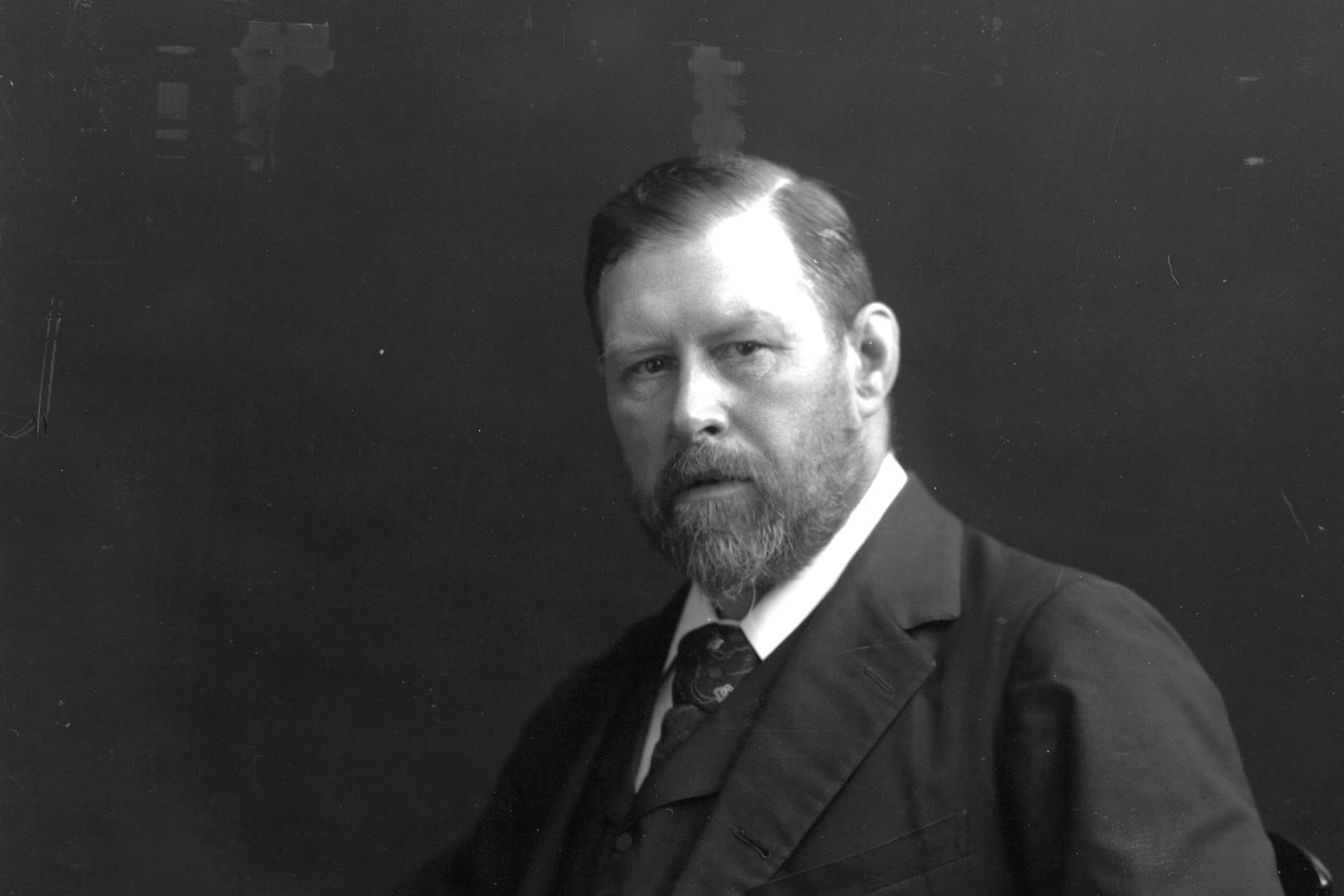
Did Bram Stoker Ever Visit Transylvania? How an Irish Civil Servant Invented It From a Library Book
On August 8, 1890, Bram Stoker walked into the lending library on Whitby’s quayside and asked for a book almost nobody read. William Wilkinson’s An Account of the Principalities of Wallachia and Moldavia had been sitting on those shelves for decades — published in 1820 by a British consul who had served in Bucharest and wanted the world to know about it. The world, by and large, had not complied. Then Stoker arrived, found the book, and opened it to a passage about a fifteenth-century prince notorious for impaling his enemies on wooden stakes. At the bottom of the page, in a footnote, Wilkinson had written a single explanatory line: Dracula in the Wallachian language means Devil.
Stoker wrote the word down. Then he went back through all his working notes — pages filled with the name “Count Wampyr” — and crossed it out, every instance, replacing it with the one he’d just found in the footnote. The novel he had been building for years had found, in a single afternoon in a Yorkshire library, its villain’s name.
He had never set foot in Transylvania. He would never go. Everything he knew about the place came from borrowed books. The most famous Transylvania in the English language was built almost entirely by a Dublin civil servant who got most of his research done between theatrical tours.
The Clontarf boy who shouldn’t have survived
Abraham “Bram” Stoker was born on November 8, 1847, at 15 Marino Crescent in Clontarf — a stretch of coastline just north of Dublin Bay that was, in his day, still more village than suburb. He was the third of seven children born to Abraham Stoker Sr., a civil servant at Dublin Castle, and Charlotte Thornley Stoker, a woman from County Sligo who had survived things that permanently changed how she saw the world.
For the first seven years of his life, Bram was confined to bed with a mysterious illness. Doctors were not confident he would survive it. He was treated with bloodletting — the standard Victorian approach to most things that couldn’t be explained — and spent his early childhood largely horizontal, listening. Charlotte had stories.
She had grown up in Sligo during the cholera epidemic of 1832, an outbreak that killed an estimated 1,500 townspeople in approximately six weeks. She had witnessed the plague carts, the mass graves, the grim practicality of burying victims alive to prevent the disease from spreading further. She later wrote about what she had seen in a piece titled Experiences of the Cholera in Ireland. Long before she committed it to paper, though, she told her bedridden son about it in the kind of detail that bedridden children remember.
She also told him about the Great Famine — about skeletal people moving through the countryside like the living dead, about a world coming apart at the seams. Young Bram absorbed all of it. The imagery of bodies that would not stay buried, of death that contaminated the living, of a countryside stalked by something that looked human but wasn’t: this entered his imagination when he was too young to know what he was going to do with it.
At seven, he recovered. So completely and so inexplicably that he went on to become a champion athlete at Trinity College Dublin, where he enrolled in 1864 and graduated six years later with a Bachelor of Arts. He served as President of the College’s Philosophical Society, where he proposed a young Oscar Wilde for membership. Both men, as it happened, would later end up pursuing the same woman — the celebrated Dublin beauty Florence Balcombe, whom Wilde described as possessing the most perfectly beautiful face he had ever seen. Stoker won. They married in 1878 and headed for London.
The dutiful clerk in the Castle
Before London, there were the civil service years.
Stoker joined the Irish civil service in 1866 and soon found himself working as a clerk in the Petty Sessions courts at Dublin Castle, following his father into the same institution. He was good at it, eventually rising to Inspector of Petty Sessions — overseeing the magistrates’ courts that handled everything from minor crimes to the bureaucratic machinery of everyday Irish life. His first published book was not a novel. It was The Duties of Clerks of the Petty Sessions of Ireland, a practical guide for civil servants navigating the same system he worked within. It covered salary scales and regulations. It was not, by any measure, a page-turner.
But Stoker was also writing fiction on the side, and working as an unpaid drama critic for the Dublin Evening Mail. He published his first short story, “The Crystal Cup,” in 1872, just a year after establishing himself at the Castle. The civil service held him, but not entirely.
What broke the hold was Henry Irving.
Irving was the dominant theatrical figure of the era — the first actor ever to receive a knighthood, a performer of such controlled intensity that audiences wept, gasped, and came back. Stoker became obsessed with him. He reviewed Irving’s Dublin performances and corresponded with him at length. When Irving invited him to London in 1878 as Acting Manager of the Lyceum Theatre, Stoker accepted. He left Dublin Castle, married Florence Balcombe, and moved within weeks — trading the quiet authority of the magistrates’ courts for one of the most pressurised jobs in Victorian theatre.
What Whitby gave him
At the Lyceum, Stoker wrote up to fifty letters a day on Irving’s behalf. He managed tours to America, to Scotland, across Britain — the scheduling, the accounting, the logistical demands of keeping a grand theatrical operation running for an imperious and extravagant star. He did this for twenty-seven years. In whatever time remained, he was quietly building Dracula.
The summer of 1890 found him exhausted after a grinding Scottish tour with Irving. He took a holiday in Whitby, arriving at Mrs Veazey’s guesthouse at 6 Royal Crescent. He had a week alone before his family joined him, and he used it like a writer uses solitude: he walked, he talked to people, he looked at things carefully.
He walked the 199 steps up to Whitby Abbey — the Gothic ruin that dominates the East Cliff. He sat for long hours in the churchyard of St Mary’s, which would become, in the novel, the scene of Lucy Westenra’s first night-time encounter with the Count. He talked to local fishermen and coastguards about a shipwreck they remembered well: a Russian schooner called the Dmitry had run aground at Tate Hill Sands, carrying silver sand. In Dracula, the ship becomes the Demeter. He read headstones and found a name — Swales — that he lifted directly into the novel. He was a meticulous borrower.
And then there was the library, and the footnote, and the word that changed everything.
The date Stoker made his discovery — August 8 — became the date in the novel’s fictional timeline when Count Dracula’s ship runs aground at Whitby. It is either a lovely coincidence or proof that Stoker had a more precise sense of irony than he’s usually given credit for.
The sources he actually used
When Stoker’s working notes were eventually acquired by the Rosenbach Museum in Philadelphia — around 120 pages in total, dated from 1890 to 1897 — scholars finally had a clear picture of what had gone into the novel. It was extensive, meticulous, and covered a remarkable geographic range for a man who never left Britain.
Emily Gerard was the source he leaned on most heavily for Transylvanian detail. Gerard was a Scottish travel writer who had married an Austrian army officer and spent time in Transylvania in the early 1880s. Her 1885 essay “Transylvanian Superstitions” and her 1888 book The Land Beyond the Forest: Facts, Figures and Fancies from Transylvania gave Stoker what he needed about the region’s vampire folklore — including the specific customs he wove into the novel, and the word nosferatu, which Gerard had introduced to English-language readers. Her descriptions of how Romanian villagers responded to suspected vampire presence appear in passages of the novel almost verbatim.
He also used Sabine Baring-Gould’s Book of Were-Wolves, published in 1865, along with accounts by other travellers and historians. At the Whitby Museum, he consulted maps to plot Jonathan Harker’s overland route from London deep into the Carpathians — a journey that existed, in complete and precise geographic detail, only in Stoker’s notebook. He had never seen any of it.
The original 541-page manuscript, when Stoker finally handed it in, bore the handwritten title The Un-Dead. Somewhere between submission and publication — Dracula appeared in print on May 26, 1897, published by Archibald Constable & Company — the title changed to the name of the character, the one Stoker had found in a Whitby footnote seven years earlier.
The Irish thread running through it
Stoker belongs to a specific Irish literary tradition that includes Charles Maturin, Joseph Sheridan Le Fanu, Oscar Wilde, and Elizabeth Bowen — writers from Protestant Irish families producing dark, unsettled fiction in the shadow of a changing Ireland. Le Fanu’s Carmilla, published in 1871, had established the vampire as a Gothic literary device twenty-six years before Stoker refined and globalised it. Ireland’s own vampire folklore runs deeper still — long before Stoker ever opened Wilkinson’s book, the Irish had a 1,500-year-old Irish vampire legend of their own, the tale of Abhartach.
But the Irish material in Dracula goes deeper than literary lineage. Researcher Dr Marion McGarry has traced a specific parallel between the novel’s imagery and the Sligo cholera outbreak that shaped Charlotte Stoker’s imagination. The first cholera victim in Sligo died on August 11, on a night preceded in contemporary accounts by an unusual storm — thunder and lightning, a close and oppressive atmosphere. Count Dracula makes his first English landfall under almost identical conditions. The bodies buried alive in Sligo churchyards to halt contagion become, filtered through a generation of bedtime storytelling and a novelist’s sensibility, the undead rising from theirs. The local belief that Sligo clergy were immune to cholera feeds into the novel’s logic about crucifixes and holy water repelling what the rational world cannot explain.
It is not a direct line. Literature rarely works that way. But Charlotte Stoker spent years filling her son’s confined imagination with images of death that would not stay where it was put — bodies that crossed boundaries they should have respected, communities upended by forces they couldn’t name — and the novel he eventually wrote is saturated with exactly those preoccupations. The darkness in Dracula is, at least partly, the darkness of a nineteenth-century Irish childhood.
Bram Stoker died in London on April 20, 1912, leaving an estate valued at £4,664. He had spent his adult life managing someone else’s theatre, writing letters for someone else’s career, and building — in the margins of everything else — the book that would outlast both Henry Irving and the Lyceum itself. He constructed the most famous version of Transylvania in the English-speaking imagination without ever having to pack a bag. There is something very Irish about that: doing enormous creative work with whatever comes to hand, borrowing what you need, and making something indelible out of secondhand materials and your mother’s stories. If Stoker’s Dublin roots have you curious about the rest of the country he left behind, our guide to planning a trip to Ireland is a good place to start.
☘️ Join 64,000+ Ireland Lovers
Every weekday morning, get Ireland’s hidden gems, local secrets, and travel inspiration — the kind you won’t find in any guidebook.
Subscribe free — enter your email:
Get the free guide
Enter your email and we will send you straight to the download.
📲 Know someone who’d love this? Share on WhatsApp →
Love more? Join 43,000 Scotland lovers → · Join 29,000 Italy lovers → · Join 7,000 France lovers →
Free forever · Unsubscribe anytime
Tours & experiences you might love


Powered by Viator. Some links are affiliate links — we may earn a small commission at no extra cost to you.
Secure Your Dream Irish Experience Before It’s Gone!
Planning a trip to Ireland? Don’t let sold-out tours or packed attractions spoil your journey. Iconic experiences like visiting the Cliffs of Moher, exploring the Rock of Cashel, or enjoying a guided walk through Ireland’s ancient past often sell out quickly—especially during peak travel seasons.

Booking in advance guarantees your place and ensures you can fully immerse yourself in the rich culture and breathtaking scenery without stress or disappointment. You’ll also free up time to explore Ireland’s hidden gems and savour those authentic moments that make your trip truly special.
Make the most of your journey—start planning today and secure those must-do experiences before they’re gone!