

There is a specific moment that happens on the cliff path at the Cliffs of Moher. You are walking — maybe focused on the view, maybe watching where you put your feet — and then you breathe in. The air carries salt from the Atlantic and something sweet and slightly coconut-like from the yellow gorse bushes along the path. For a second, you stop. Not because anything dramatic happened. Just because the combination of those two smells, right there, in that wind, is something your brain logs as a memory before you have time to think about it.
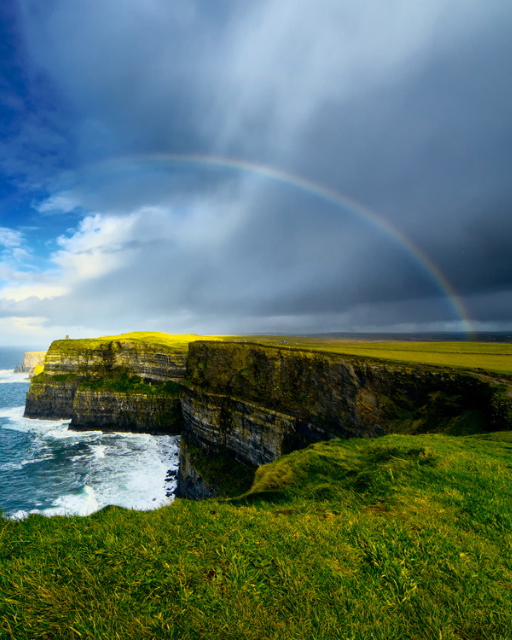
This article explains what creates that experience, what the walk itself is actually like, and everything practical you need to know before you go.
What Is Gorse and Why Does It Smell So Strong?
Gorse (also called furze or whin in different parts of Ireland) is a spiky evergreen shrub with small bright yellow flowers. It grows wild across the west of Ireland, particularly on exposed coastal ground, and blooms for much of the year — you can find it flowering at almost any time, though it is at its most intense in spring and early summer.
The scent comes from the flowers. Many people compare it to coconut or vanilla. It is not subtle. On a warm afternoon when there is still a bit of wind, the smell from a stretch of gorse in full bloom can carry for 50 metres or more. Combined with the sharp saltiness from the ocean, it creates a combination that feels specific to this stretch of Irish coastline.
Gorse also makes a sound. On dry days, the seed pods pop in the heat — a quiet clicking that you hear if you stand still near the bushes. Most walkers never notice it. If you stop for a moment and listen, you often catch it.
The Cliff Path Walk — What to Expect
The official Cliffs of Moher trail is part of the Burren and Cliffs of Moher UNESCO Geopark. The full coastal trail between Doolin and Liscannor stretches roughly 18 kilometres and takes most people five to six hours to complete at a moderate pace. The section that most visitors walk is shorter: the looped path around the visitor centre itself, extending north towards Doolin or south towards Hag’s Head. As of 2026, note that the southern coastal path towards Hag’s Head is closed for safety works with no confirmed reopening date, and the northern path from Doolin only runs as far as Surfers Path — check the official Cliffs of Moher site for the current trail status before you go.
The path is mostly unpaved and uneven. Some sections are very close to the cliff edge, with drops of up to 214 metres to the sea below. There are no handrails along most of the route. The terrain is grassy and can be muddy after rain, which is common on this part of the Clare coast.
The most-walked section — north from the visitor centre along the cliff edge — is roughly 2 kilometres and takes about 45 minutes each way. This stretch passes O’Brien’s Tower, a 19th-century observation tower that still stands at the highest point of the cliffs.
Where to Start and How Far to Go
Most people start at the main visitor centre, located off the R478 road near the village of Liscannor. There is a large car park, though the charge isn’t a parking fee alone — it’s a per-person admission ticket that includes parking (from around €8 per adult booked online off-peak in 2026, rising to about €12 at peak times or €15 if you pay at the gate — check the official site for current pricing). The visitor centre has toilets, a café, and an exhibition area explaining the geology of the cliffs.
From the car park, you walk through the visitor centre and out onto the cliff-side path. Within a few minutes, you are on the edge. The path north towards O’Brien’s Tower is well-trodden and easy to follow. Most visitors walk to the tower, take in the view, and walk back. That is a sensible plan. The tower is the highest accessible viewpoint at around 214 metres.
If you want to go further, the path north towards Doolin gets quieter and rougher, though it currently only runs as far as Surfers Path before you have to turn back — the final stretch into Doolin is closed. The coastal path south towards Hag’s Head is fully closed as of 2026 for safety works, with no confirmed reopening date, so it isn’t currently walkable from the visitor centre. Check the official Cliffs of Moher website for the latest trail status before you set off.
Want practical guides to walking and exploring Ireland, sent directly to your inbox? Subscribe to the Love Ireland newsletter — free, weekly, no spam.
The Best Stretch for the Scent
Gorse grows thickly on both sides of the visitor centre, but the stretch long considered best for it — heading south towards Hag’s Head — is currently closed for safety works, with no confirmed reopening date as of 2026. Until it reopens, the most reliable stretch for the scent is the path heading north from the visitor centre towards Doolin (open as far as Surfers Path) and the looped path around the visitor centre and O’Brien’s Tower itself, both of which run through dense gorse along the exposed cliff edge.
Warm, still days in late spring and early summer — May and June — give you the strongest smell. The flowers are at their peak and the sun draws out the scent. That said, if you visit at any time of year, there will usually be some gorse in bloom somewhere along the path. The plant is remarkably persistent.
Mornings tend to be less windy on this part of the Clare coast. The smell is more concentrated before the afternoon Atlantic winds pick up. If you want the full experience rather than the scent getting blown straight past you, aim for a morning visit on a mild day.
When to Walk the Path
The cliffs are open year-round and accessible at any time of day, though the visitor centre has set opening hours (roughly 8am–9pm from May to August, shorter outside peak season — check the official site for the current schedule). The cliff path itself does not close.
Summer (June–August) is the busiest period. The car park can fill up early in the day, and the northern stretch of the path near O’Brien’s Tower gets crowded by mid-morning. If you visit in summer, arriving before 9am or after 4pm makes a significant difference to how many people you share the path with.
Spring and autumn offer a good balance. The weather is unpredictable, but that is true at any time of year on the Clare coast. Off-season visits mean fewer people and the same views. September and October in particular can bring clear, calm days with excellent visibility out over the Atlantic.
Winter visits are quiet and atmospheric. The light is low, the waves are larger, and the wind is significant. Dress for it. Waterproofs and sturdy shoes are essential in any season, but in winter they are non-negotiable.
Planning a trip to the west of Ireland? Our newsletter covers walks, villages, and things most visitors never find. Sign up here — it’s free.
What to Bring
- Waterproof jacket — the weather can change fast and rain comes off the Atlantic with almost no warning
- Sturdy walking shoes or boots — trainers work on dry days, but after any rain the path is muddy and slippery in places
- Water and a snack — if you are going beyond the O’Brien’s Tower section, there is nothing along the path
- A windproof layer — the cliff edge is exposed and the wind can be biting even in summer
- Cash or card — for the entry/parking fee (cheaper booked online in advance than paying at the gate)
The visitor centre sells snacks and hot drinks, but there is nothing else along the trail. Doolin, at the northern end of the full route, has pubs and cafés if you are doing the point-to-point walk.
Mobile signal is patchy on parts of the trail. If you are walking a longer section alone, let someone know your plans before you set off.
Other Things You Notice Along the Way
Salt and gorse are not the only things working on your senses on this walk.
The sound of the Atlantic hitting the cliff base carries up the rock face. You do not always hear it right away — the wind can carry it away from you — but in a lull, or when you get close to the edge and look straight down, you hear the impact of the waves on the rock below. On a rough day, you feel it too.
The birds are worth paying attention to. Razorbills, puffins (present late April to early August), choughs, and guillemots are all regular along this section of coast. Choughs — the small red-billed crow native to Ireland’s west coast — are often seen around the cliff tops. They make a high-pitched call that carries well in the wind. Puffins, if you spot them, are almost always on or near the cliff ledges rather than flying overhead.
The grass along the path is a different colour from inland grass. The salt air and wind exposure give it a bleached, scrubby quality. In places it gives way to bare rock, and you can see the layered geology of the cliffs in the stone underfoot — the same sandstone and shale formation that is exposed in the cliff face below.
Getting to the Cliffs of Moher
The cliffs are in County Clare, roughly 75 kilometres from Galway city and about 35 kilometres from Ennis. By car, the most common route from Galway follows the N67 along the coast through Kinvara and Ballyvaughan, then south through the Burren to the R478. This route takes around an hour and a half from Galway and passes through some of the best scenery in the west of Ireland.
Bus services run from Galway and Ennis, with seasonal schedules that change year to year. The Bus Éireann website and the Cliffs of Moher visitor centre website both publish current timetables. In summer, there are also dedicated tourist buses running day trips from Galway.
If you are coming from the Aran Islands by ferry, Doolin is the landing point. From Doolin, you can walk part of the cliff trail south towards the visitor centre, though as of 2026 this route only runs as far as Surfers Path before a closure forces you to turn back — it does not currently connect through to the visitor centre. Check the official Cliffs of Moher website for the latest trail status before planning a through-walk.
The west of Ireland has more than the famous spots. Our newsletter covers the places worth knowing about, including coastal walks, seasonal events, and practical travel advice. Subscribe here and we’ll send it to you weekly.
One Last Thing
The stop-in-your-tracks moment on the cliff path is not something you can guarantee. The wind direction, whether the gorse is in bloom, the temperature, and how much Atlantic spray is in the air all change from day to day. But the conditions that produce it exist along this path more reliably than almost anywhere else on the Irish coast.
The cliffs are worth visiting for the view. The walk is worth doing for everything else.
Tours & experiences you might love


Powered by Viator. Some links are affiliate links — we may earn a small commission at no extra cost to you.
Secure Your Dream Irish Experience Before It’s Gone!
Planning a trip to Ireland? Don’t let sold-out tours or packed attractions spoil your journey. Iconic experiences like visiting the Cliffs of Moher, exploring the Rock of Cashel, or enjoying a guided walk through Ireland’s ancient past often sell out quickly—especially during peak travel seasons.

Booking in advance guarantees your place and ensures you can fully immerse yourself in the rich culture and breathtaking scenery without stress or disappointment. You’ll also free up time to explore Ireland’s hidden gems and savour those authentic moments that make your trip truly special.
Make the most of your journey—start planning today and secure those must-do experiences before they’re gone!