

The Cliffs of Moher need no introduction. Rising 214 metres above the Atlantic and stretching eight kilometres along County Clare’s wild coastline, they stop visitors in their tracks every single day. The wind, the scale, the sheer drop to the sea below — nothing quite prepares you for it (see our full Cliffs of Moher guide for the complete visitor picture).
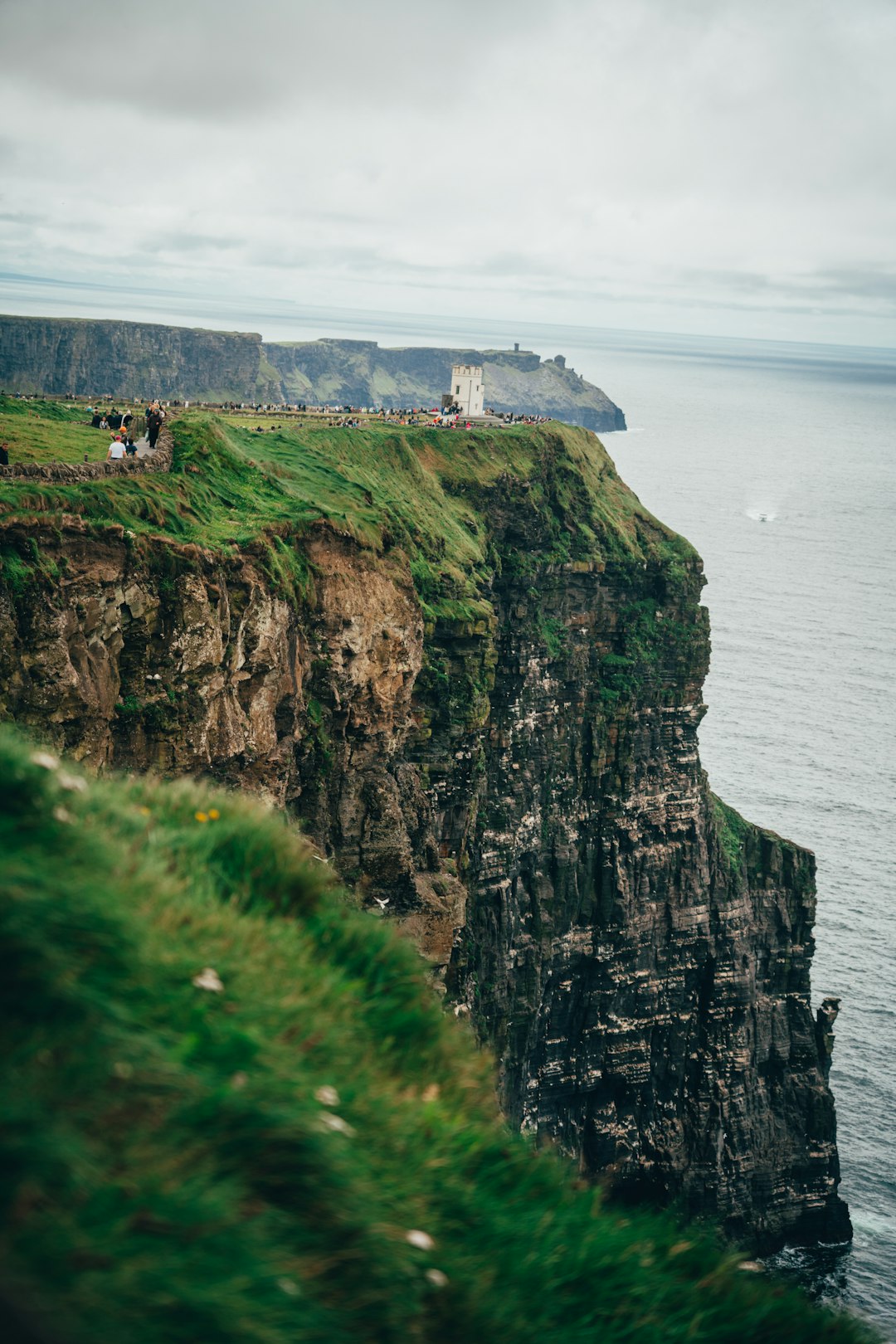
But there is something at the highest point of the cliffs that most visitors barely glance at: O’Brien’s Tower, a small round stone tower, six metres tall, solid and unassuming. Most people assume it is some ancient watchtower or perhaps a navigational relic left by the monks or the Normans.
It was built in 1835 by a local landowner who wanted to impress women.
Cornelius O’Brien: The Man Behind O’Brien’s Tower
Cornelius O’Brien was born in 1782 to one of County Clare’s most prominent landowning families. He served as Member of Parliament for County Clare and devoted much of his long life to what he earnestly called “improvement.”
He built roads through the barren west Clare countryside. He funded a temperance hall. He encouraged the fishing industry, established schools, and generally presented himself as the benevolent moderniser of the region. He was also, by the standards of his era, a man of considerable wealth and no shortage of self-regard.
Inscriptions bearing his name and the dates of his local improvements can still be found carved into the rock near the cliff edge. Cornelius O’Brien was not, by any measure, a modest man.
What He Was Actually Trying to Do
By the 1830s, the Cliffs of Moher were beginning to attract a small trickle of visitors. Painters and poets had discovered them. Travellers on the fashionable western touring routes sometimes ventured this far.
O’Brien — who owned the land above the cliffs — saw an opportunity. He had the tower constructed at the highest point, positioned to take full advantage of the panoramic view along the coast. According to local accounts, he built it specifically so that ladies of his acquaintance would have a proper viewing platform. Somewhere sheltered from the worst of the Atlantic gale. Somewhere a gentleman could bring his guests and allow them to enjoy the scenery in relative comfort.
Whether this was purely social hospitality or something closer to courtship is a question historians have been content to leave pleasingly unresolved. Either way, O’Brien understood the power of spectacle. He knew that standing on the edge of the world with the right view behind you made an impression.
The tower originally doubled as a teahouse, fitted with a large round table and ironwork seating, so O’Brien’s guests could take refreshments while admiring the view.
Before the Car Parks and the Visitors Centre
It is easy to forget, standing in the car park with its shuttle buses and coffee kiosks, how remote the Cliffs of Moher once were. There was no proper road. The path to the cliff edge was used by fishermen checking lobster pots and farmers moving cattle between fields. The cliffs were not a destination — they were simply where the land ran out.
O’Brien changed that. By building his tower and creating a formal viewing point, he effectively invented the Cliffs of Moher as a tourist attraction. His road-building projects made access possible. His tower gave visitors something to walk towards. The landscape was already extraordinary; O’Brien turned it into an experience worth travelling for.
At the southern end of the cliffs, the older Moher Tower at Hag’s Head still stands — a Napoleonic-era signal station built to watch for invasion from the sea. That one had a military purpose. O’Brien’s tower had an entirely different kind of ambition behind it.
☘️ Enjoying this? 64,000+ Ireland lovers get stories like this every week. Subscribe free →
What You Can See From the Top
Stand at O’Brien’s Tower on a clear day and the scale of the view is genuinely startling. To the north, the cliffs continue their ragged, dramatic edge towards Galway Bay. To the west, there is nothing but open Atlantic all the way to North America.
On the horizon to the north-west, the Aran Islands sit low and grey against the water — three limestone islands that look, from up here, impossibly small against all that ocean. If you’re planning to visit the Aran Islands, the view from the cliffs gives you a sense of just how far out into the Atlantic they sit.
The cliffs themselves are made of layers of mudstone and siltstone laid down 320 million years ago when this part of the world sat beneath a warm tropical sea. The colours shift with the light — black and brown in rain, silver-green in low sun, deep ochre in the long summer evenings. Puffins nest in the cliff face each spring. Red-billed choughs wheel along the edge. The sound, when the wind drops enough to hear it, is Atlantic waves on rock: a deep, rhythmic percussion that has been playing here for longer than the island has had people on it.
The Cliffs as Part of a Wider Journey
The cliff path runs for five kilometres and connects to the village of Doolin to the north, where ferries cross to the Aran Islands in summer. The full walk, edge to edge, takes most people two to three hours and offers constant shifts in perspective as the cliff height rises and falls along the coast.
Just to the north of the cliffs lies the Burren, one of the most extraordinary landscapes in Europe — a vast limestone plateau where wildflowers from the Arctic and the Mediterranean grow side by side. Spend a morning at the Cliffs of Moher and an afternoon in the Burren, and you have seen two of Ireland’s most distinctive and completely different landscapes in a single day. For the full picture of the county, see our County Clare travel guide, covering the Cliffs, the Burren and Doolin.
If you’re working out how to fit this into a broader trip, the Ireland trip planning hub has practical guides on itineraries, getting around, and what to prioritise. The west of Ireland — Clare, Galway, Mayo — rewards slow travel more than almost anywhere else in the country.
The Legacy O’Brien Left Behind
Cornelius O’Brien died in 1857, twenty-two years after he built his tower. He could not have imagined what the cliffs would eventually become. He probably envisaged a modest flow of well-dressed visitors, carriages along his improved roads, perhaps a mention in a few travel journals.
He could not have foreseen the more than a million visitors who come every year. The shuttle buses. The film crews. The couples who grip the safety railings against the wind and laugh into each other’s faces because the scale of it all is simply too much to process quietly.
O’Brien’s Tower is now staffed as a visitor centre. For a small fee, you can climb the stairs and take in the full panorama from the top. On a clear summer afternoon, there will usually be a queue.
The tower is still there, exactly where he put it, still round and stone and solid at the highest point of the cliffs. In that, at least, his ambition was completely justified. He wanted to leave something permanent on this particular stretch of coastline. He built it to make an impression, and nearly two centuries later, it still does.
The view was always spectacular. O’Brien just made sure you’d have somewhere to stand while you took it in.
☘️ You Might Also Love
☘️ Join 64,000+ Ireland Lovers
Every Friday, get Ireland’s hidden gems, local secrets, and travel inspiration — the kind you won’t find in any guidebook.
Free forever · Unsubscribe anytime · No spam
☘️ Want More Hidden Ireland?
Join 64,000+ subscribers who discover Ireland’s best-kept secrets every week.
Subscribe Free — Join the Community →
Free forever · Unsubscribe anytime · No spam
📥 Free Download: Ireland Travel Planning Guide
Our most popular resource — itineraries, insider tips, and the 50 places you must not miss.
Tours & experiences you might love


Powered by Viator. Some links are affiliate links — we may earn a small commission at no extra cost to you.
Secure Your Dream Irish Experience Before It’s Gone!
Planning a trip to Ireland? Don’t let sold-out tours or packed attractions spoil your journey. Iconic experiences like visiting the Cliffs of Moher, exploring the Rock of Cashel, or enjoying a guided walk through Ireland’s ancient past often sell out quickly—especially during peak travel seasons.

Booking in advance guarantees your place and ensures you can fully immerse yourself in the rich culture and breathtaking scenery without stress or disappointment. You’ll also free up time to explore Ireland’s hidden gems and savour those authentic moments that make your trip truly special.
Make the most of your journey—start planning today and secure those must-do experiences before they’re gone!