

In 1900, nine out of every ten whiskeys drunk on Earth were Irish. By 1980, two distilleries were left in the entire country. This episode covers how that happened, and how Irish whiskey came back.
Watch the full episode, then read on below for the complete story and practical visiting details.
In 1900, nine out of every ten whiskeys drunk on Earth were Irish. Not Scottish. Not American. Irish. Dublin alone had thirty-seven distilleries. Belfast had another twenty. Irish whiskey wasn’t just popular — it was the world’s spirit.
By 1980, there were two distilleries left in the entire country. Two. The industry hadn’t declined. It had been annihilated — by politics, by pride, and by a series of catastrophic decisions that nearly erased four hundred years of craft from history.
This is the story of how Irish whiskey died… and how it came back from the dead. (For the full written deep-dive on the collapse and revival, see our companion guide: Why Did Irish Whiskey Almost Disappear?)
To understand the collapse, you need to understand the empire.
In the 1800s, Irish whiskey was royalty. When British soldiers returned from India, they drank Irish. When Americans wanted sophistication, they ordered Irish. Dublin’s distilleries were industrial cathedrals — John Power’s alone produced a million gallons a year.
The Irish had something the Scots didn’t: pot still whiskey, made with a blend of malted and unmalted barley that created this rich, oily, almost honeyed character. They triple-distilled for smoothness while the Scots double-distilled. And they refused — absolutely refused — to use those newfangled column stills the Scots were embracing.
That refusal was about quality. Irish distillers considered column-still whiskey an abomination, a shortcut, beneath them. They were probably right about the quality. But that pride became a chain around their neck.
By the 1870s, Irish whiskey was the most exported spirit on the planet. Jameson, Power’s, Tullamore — these weren’t brands. They were institutions.
And then everything fell apart.
The first blow was self-inflicted.
When the Scots started blending cheaper column-still grain whiskey with their single malts, Irish distillers could have competed. Instead, they published pamphlets. They took out newspaper advertisements declaring that blended whiskey wasn’t really whiskey at all. They lobbied Parliament. And while they were lobbying, Johnnie Walker and Dewar’s were building global empires.
Then came 1919. And 1920. And three disasters arrived at once.
Irish independence meant war — and Britain was their biggest customer. Overnight, Irish whiskey was the enemy’s drink. The British Empire shut its doors.
American Prohibition closed the other massive market. But here’s the twist that really killed them: Scottish distillers sold their whiskey to bootleggers. The Irish refused. Again, pride. Again, principle. And when Prohibition ended, Americans had spent thirteen years drinking Scotch. They’d forgotten Irish whiskey existed.
The final blow was the trade war. Ireland imposed tariffs on British goods. Britain retaliated. Suddenly Irish whiskey couldn’t enter Britain, Canada, Australia, or anywhere else in the Commonwealth. The Empire didn’t just close its doors — it locked them.
By 1966, the surviving distilleries were so desperate they merged into one company just to survive. The greatest whiskey industry in history had consolidated into a single entity: Irish Distillers. By the 1980s, they operated exactly two facilities. Midleton in Cork. Old Bushmills in Antrim.
Four hundred years of tradition. Thirty-seven distilleries in Dublin alone. Reduced to two.
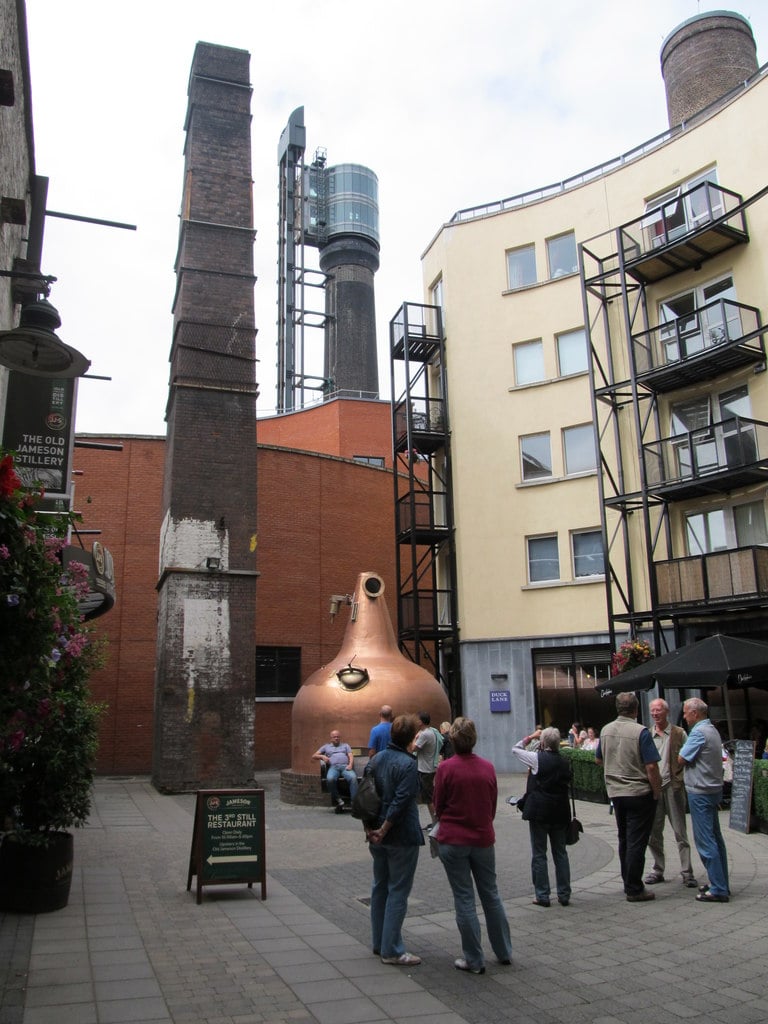
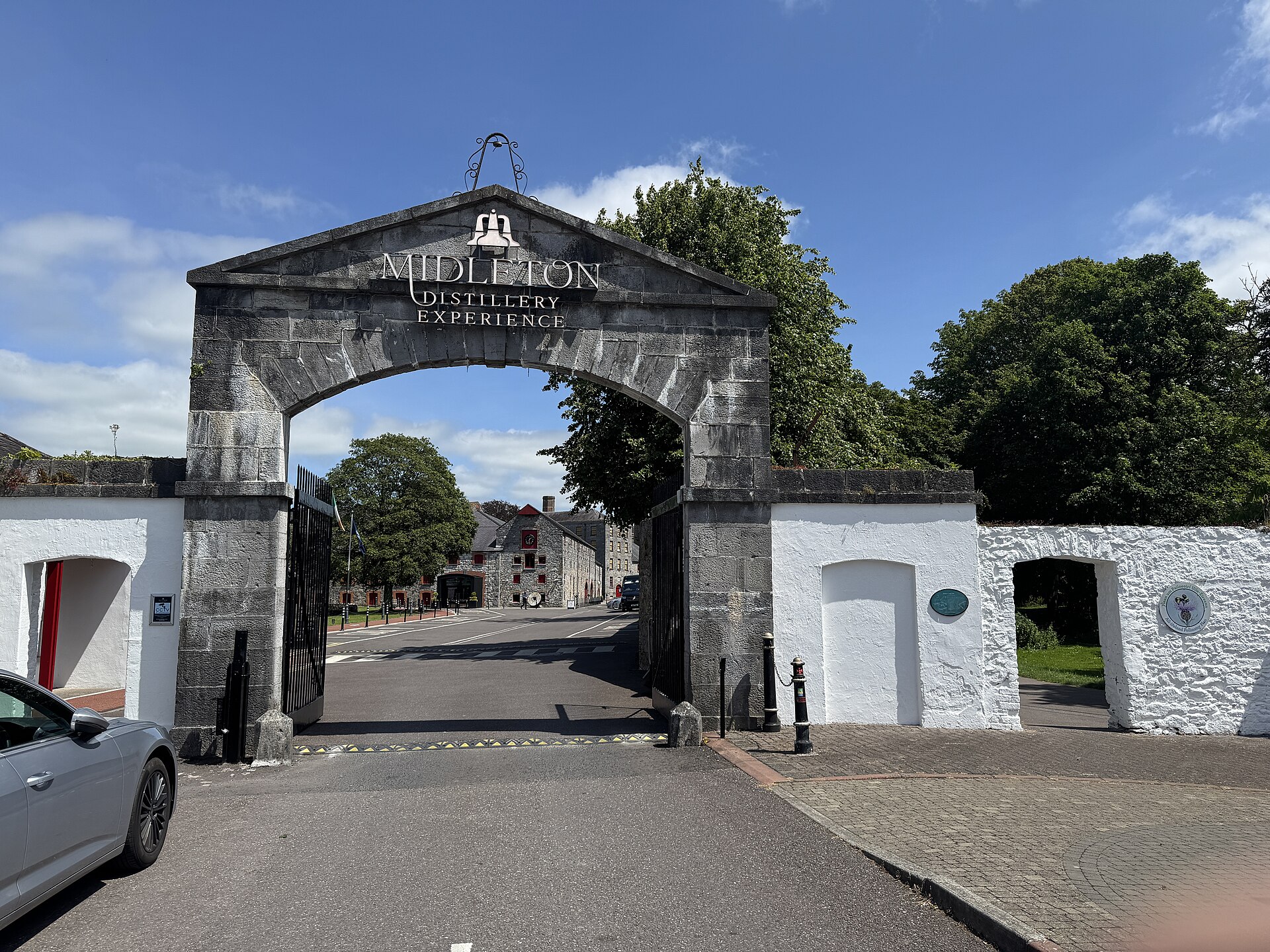
The revival started slowly. Quietly. And then it exploded. Today, Ireland has over forty operational distilleries. Forty. From two to forty in three decades. And unlike the old days, when the distilleries were closed industrial facilities, these new ones want you inside. Jameson Bow Street in Dublin is where you start. Not for the whiskey — though it’s solid — but for the building itself. This is the original 1780 distillery, right in the heart of the city, where they’ve turned copper and stone into a proper experience. The blending class is worth your time. You learn to actually build your own bottle. But if you want to see whiskey being made — really made — you drive forty-five minutes northwest to Slane. The Conyngham family opened this in 2017 on their estate grounds. The stills are running. The barley’s Irish. And the castle behind you has been there since the 1700s. This isn’t heritage theatre. It’s a working distillery that happens to be gorgeous. Kilbeggan is the oldest. They’ve been making whiskey on this site since 1757. Not continuously — they closed in 1954 and reopened in 2007 — but the water wheel still works. The wooden mash tun is still there. Walking through Kilbeggan feels like walking backwards through time. Tullamore, same region, different feel. This is where Tullamore D.E.W. comes from, and they opened a new distillery in 2014 after being made in Cork for sixty years. If you’ve ever ordered a whiskey with ginger — and you have — it was probably this one. Down in Cork, Midleton is the giant. This is where Jameson, Redbreast, Green Spot, and Powers are actually made. One facility, multiple brands, genuine scale. The old distillery is a museum. The new one, next door, is one of the largest pot-still operations on the planet. And then there’s Dingle. Small. Remote. On the Wild Atlantic Way where the rain comes sideways. They released their first whiskey in 2016 and it was immediately oversubscribed.
Right. You’re standing at a bar. You want to order Irish whiskey. Here’s what actually matters. (For brand-by-brand recommendations, see our guide to the best Irish whiskey brands to try.)
Forget age statements. A twelve-year-old Irish whiskey isn’t automatically better than a young one. Redbreast 12 is spectacular. So is Writers’ Tears, which has no age statement at all. Age means time in a barrel. It doesn’t mean quality.
What you’re looking for is pot still. If someone says “single pot still Irish whiskey,” that’s the old style — the stuff that made Ireland famous. It’s made with malted and unmalted barley in a copper pot still. Redbreast, Green Spot, Yellow Spot, Powers John’s Lane — these are the flag bearers.
Single malt means only malted barley — same as Scotch. Tyrconnell, Dingle, Bushmills 10 Year. Different character. Lighter, sometimes fruitier.
Blends are exactly what they sound like: grain whiskey mixed with pot still or malt. Jameson, Tullamore D.E.W., Paddy. These are the everyday whiskeys. Nothing wrong with them. But if you want to understand what makes Irish whiskey Irish, you need to try pot still.
When you’re tasting, forget swirling the glass like it’s wine. Add a few drops of water — not ice, water. Ice numbs everything. Water opens it up. Smell before you sip. And when you sip, let it sit on your tongue. You’re looking for that characteristic softness, that triple-distilled smoothness, and underneath it, depending on the whiskey, honey, vanilla, orchard fruit, or something almost creamy.
The single best accessible bottle to start? Green Spot. It’s been made the same way since the 1920s, it’s widely available, and it tastes like the whole history of Irish whiskey in one glass.
Here’s what I want you to take from this.
Forty years ago, Irish whiskey was a museum piece. A historical footnote. Two distilleries, a handful of brands, and fading memories of what used to be the world’s favourite spirit.
Today, there are more distilleries in Ireland than there have been in a century. Kilbeggan’s water wheel is turning again. There’s whiskey ageing in barrels at Dingle that won’t be ready until 2030. The revival isn’t coming. It happened. And it’s still happening.
If you’re planning a trip to Ireland, build a day around this. Pick one distillery — Slane for beauty, Kilbeggan for history, Dingle for remoteness — and go see what they’re making. This isn’t about drinking. It’s about understanding.
And next week, we’re going somewhere you’ve walked past a hundred times and never noticed.
Full guide linked below. See you next Monday.
Never miss an episode. Bob’s next long-form episode drops every Monday on our YouTube channel. Subscribe to the free Love Ireland newsletter and we’ll let you know the moment a new one is live: https://loveireland.substack.com/subscribe
☘️ Join 64,000+ Ireland Lovers
Every weekday morning, get Ireland’s hidden gems, local secrets, and travel inspiration — the kind you won’t find in any guidebook.
Subscribe free — enter your email:
📲 Know someone who’d love this? Share on WhatsApp →
Free forever · Unsubscribe anytime
Tours & experiences you might love


Powered by Viator. Some links are affiliate links — we may earn a small commission at no extra cost to you.
Secure Your Dream Irish Experience Before It’s Gone!
Planning a trip to Ireland? Don’t let sold-out tours or packed attractions spoil your journey. Iconic experiences like visiting the Cliffs of Moher, exploring the Rock of Cashel, or enjoying a guided walk through Ireland’s ancient past often sell out quickly—especially during peak travel seasons.

Booking in advance guarantees your place and ensures you can fully immerse yourself in the rich culture and breathtaking scenery without stress or disappointment. You’ll also free up time to explore Ireland’s hidden gems and savour those authentic moments that make your trip truly special.
Make the most of your journey—start planning today and secure those must-do experiences before they’re gone!