

Most people arrive at the Cliffs of Moher mid-morning, once the coach parks have filled up and the visitor centre queues have formed. They get a fine view. But the people who arrive before 8am, when the Atlantic fog is still sitting thick on the clifftops, get something else entirely.
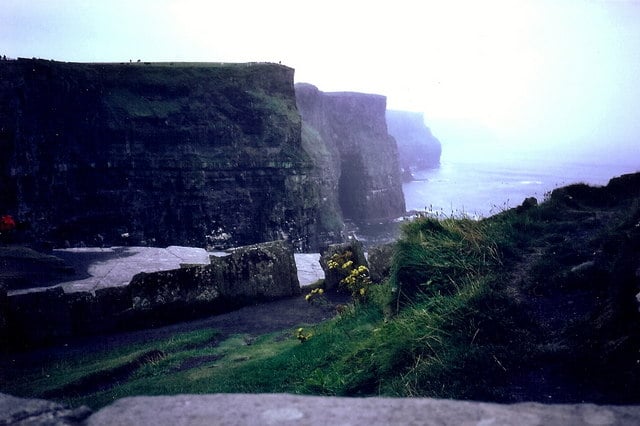
That slow reveal — fog thinning, then breaking, then pulling back to show the full face of the cliffs above 200 metres of open ocean — is one of the strangest and most memorable things you can watch in Ireland. It happens quickly when it happens. One minute you can see ten metres ahead. Five minutes later you can see County Clare stretching east behind you and the Aran Islands floating in the bay.
This guide covers what the early-morning experience at the Cliffs of Moher is actually like, when to go, how to get there, and what to expect from the fog itself.
Why Fog Is So Common at the Cliffs
The Cliffs of Moher sit on the Atlantic coast of County Clare, facing directly west into the open ocean. There is no land between here and North America. That exposure is what makes the views so dramatic — and it is also why sea fog forms so reliably, particularly in the warmer months.
Sea fog happens when warm, moist air moves over cooler ocean water. The Atlantic off the west coast of Ireland stays relatively cold even in summer. When the air temperature rises faster than the water temperature, fog condenses low over the surface and gets pushed inland by the prevailing westerly wind. At the Cliffs, that fog hits the 214-metre cliff face and either rises over the top or clings to the rock and the grass above.
On a foggy morning, the fog does not stay forever. As the sun climbs and the land heats up, the temperature difference that created the fog begins to equalise. The fog thins from the top down. You can often watch it happen in real time — patches of blue sky appearing above while the base of the cliffs is still completely obscured, then the rock face emerging section by section as the minutes pass.
This process can take twenty minutes. It can take two hours. It can also reverse: a fog that seemed to be clearing can thicken again if the wind drops. Patience is the key thing to have with you.
When to Visit for the Best Morning Light
The clearest early mornings at the Cliffs of Moher tend to fall in May, June, and September. In July and August the weather can be foggy without clearing, particularly if there is a strong westerly wind. In spring and early autumn the fog is more likely to be a temporary morning feature that burns off by mid-morning.
Sunrise times vary significantly across the season. In June, sunrise is around 5:10am. In September it is closer to 6:50am. The golden hour light at the Cliffs — when the low sun hits the red-brown sandstone face — is worth setting an alarm for. The colour of the rock changes noticeably in that warm light compared to the flat light of midday.
If you want to watch the fog lift, arrive at or just before sunrise. The process of burning off typically begins within an hour or two of sunrise. By 9am, on most mornings, the fog has largely cleared.
Want more practical guides to Ireland’s west coast? Subscribe to our free weekly newsletter — out every week, straight to your inbox.
Getting There Early: Practical Logistics
The Cliffs of Moher are on the R478, about 6km from Liscannor and 20km from Ennis. The Cliffs of Moher Visitor Centre opens at 8am for most of the year (9am only in the winter months of November to February) — but the cliff path itself has no gate, so early risers can be on site well before the centre opens, and some visitors park on the roadside earlier still.
If you are coming by car from Galway, the drive takes approximately 1 hour 15 minutes via the N67. From Ennis it is around 40 minutes. There is a large car park at the visitor centre; parking charges apply during opening hours. Early arrivals before the centre opens sometimes find parking more straightforward.
There is no public transport that runs early enough to reach the Cliffs before sunrise. If you are relying on buses, the first services from Galway and Ennis do not arrive until late morning. An early-morning visit essentially requires a car or a pre-booked taxi from your nearest town.
Cycling is possible from Doolin, which is 7km to the north. The coastal road is narrow and can be very misty in the morning, so lights and high-visibility kit are sensible.
Where to Stand for the Best View
The main viewing area at the visitor centre is directly above the highest section of the cliffs, which reach 214 metres at their peak near O’Brien’s Tower. This is where most visitors photograph from, and the view south along the cliff face is excellent from here.
If you walk north from the main viewing area towards O’Brien’s Tower and continue past it, the cliff path opens up and the crowds thin considerably. The views from the path beyond the tower give you a longer perspective south along the full extent of the cliffs.
The path south from the visitor centre towards Hag’s Head is quieter still. This is a 7km walk to the southern tip and takes around two hours each way. The fog, if it is still present, often sits differently along this section — sometimes clearing earlier at the southern end where the cliffs are lower and the terrain less sheer.
Whichever spot you choose, stay behind the stone walls and safety barriers. The barriers exist because the ground beyond them is unstable. People have died at the Cliffs of Moher. The path feels wide and solid; the edge does not always look as close as it is.
What to Wear and Bring
Wind at the Cliffs of Moher is not optional. The exposed position on the Atlantic coast means that even on a calm day inland, the clifftop can have a persistent wind. On days with a strong westerly, it can be difficult to hold an umbrella open.
A waterproof jacket is the single most important item. Even if the fog has cleared, spray from the ocean below and residual mist in the air will make a non-waterproof layer damp within twenty minutes. Layers underneath are sensible — early mornings on the west coast in spring and autumn can be cold, often below 10°C before sunrise.
Footwear matters more than people expect. The cliff path is mostly well-maintained grass and compacted gravel, but in wet conditions the grass sections become slippery. Waterproof walking boots or sturdy trainers with good grip are far more comfortable than flat shoes.
Bring a flask of something hot. There is nowhere to buy food or drink before the visitor centre opens at 9am, and a warm drink while you wait for the fog to lift makes a real difference. Binoculars are worth packing if you have them — on a clear morning you can see all three Aran Islands from the cliff path, and the cliff face below sometimes has gannets and razorbills on the rock ledges.
Planning a trip to County Clare? Get our free Ireland newsletter with travel tips, local picks, and itinerary ideas every week.
What to Do After the Fog Clears
If you arrive early and the fog lifts by 9am or 10am, you have most of the day ahead of you. The surrounding area is worth staying in.
The Burren is directly to the north and east — a limestone landscape unlike anywhere else in Europe. The Burren National Park covers about 15 square kilometres of karst limestone — it’s the smallest of Ireland’s national parks, and the spring wildflowers from April to June are genuinely unusual: Mediterranean plants growing alongside alpine species in the same thin soil. There are no admission charges; the land is open to walk.
Doolin is 7km north and is the main hub for ferries to the Aran Islands. Crossings run in summer from early morning; the journey to Inis Mór takes about 30 to 40 minutes depending on sea conditions. The islands are worth a full day if you have the time.
Lahinch and Liscannor to the south both have cafés and pubs that are well used to visitors. Lahinch also has a surf school if the day takes a different turn.
One Final Thought
The Cliffs of Moher appear on millions of photographs. You already know what they look like. What photographs do not convey is the scale of the silence before the fog lifts — the sound of the ocean coming up from somewhere below, invisible, while you stand on the edge of a field that ends in nothing you can see.
That particular experience belongs to the people who get there early. It costs nothing extra. It requires only an early alarm and the willingness to stand still in the cold for a while.
On most mornings, it is worth it.
Coming to Ireland and not sure where to start? Subscribe to our free newsletter for weekly inspiration, practical guides, and honest recommendations from people who know the country well.
☘️ Join 64,000+ Ireland Lovers
Every weekday morning, get Ireland’s hidden gems, local secrets, and travel inspiration — the kind you won’t find in any guidebook.
Subscribe free — enter your email:
📲 Know someone who’d love this? Share on WhatsApp →
Free forever · Unsubscribe anytime
Tours & experiences you might love


Powered by Viator. Some links are affiliate links — we may earn a small commission at no extra cost to you.
Secure Your Dream Irish Experience Before It’s Gone!
Planning a trip to Ireland? Don’t let sold-out tours or packed attractions spoil your journey. Iconic experiences like visiting the Cliffs of Moher, exploring the Rock of Cashel, or enjoying a guided walk through Ireland’s ancient past often sell out quickly—especially during peak travel seasons.

Booking in advance guarantees your place and ensures you can fully immerse yourself in the rich culture and breathtaking scenery without stress or disappointment. You’ll also free up time to explore Ireland’s hidden gems and savour those authentic moments that make your trip truly special.
Make the most of your journey—start planning today and secure those must-do experiences before they’re gone!