

There’s a saying among people who’ve visited Ireland more than once: the first trip is a holiday. The second is something else.
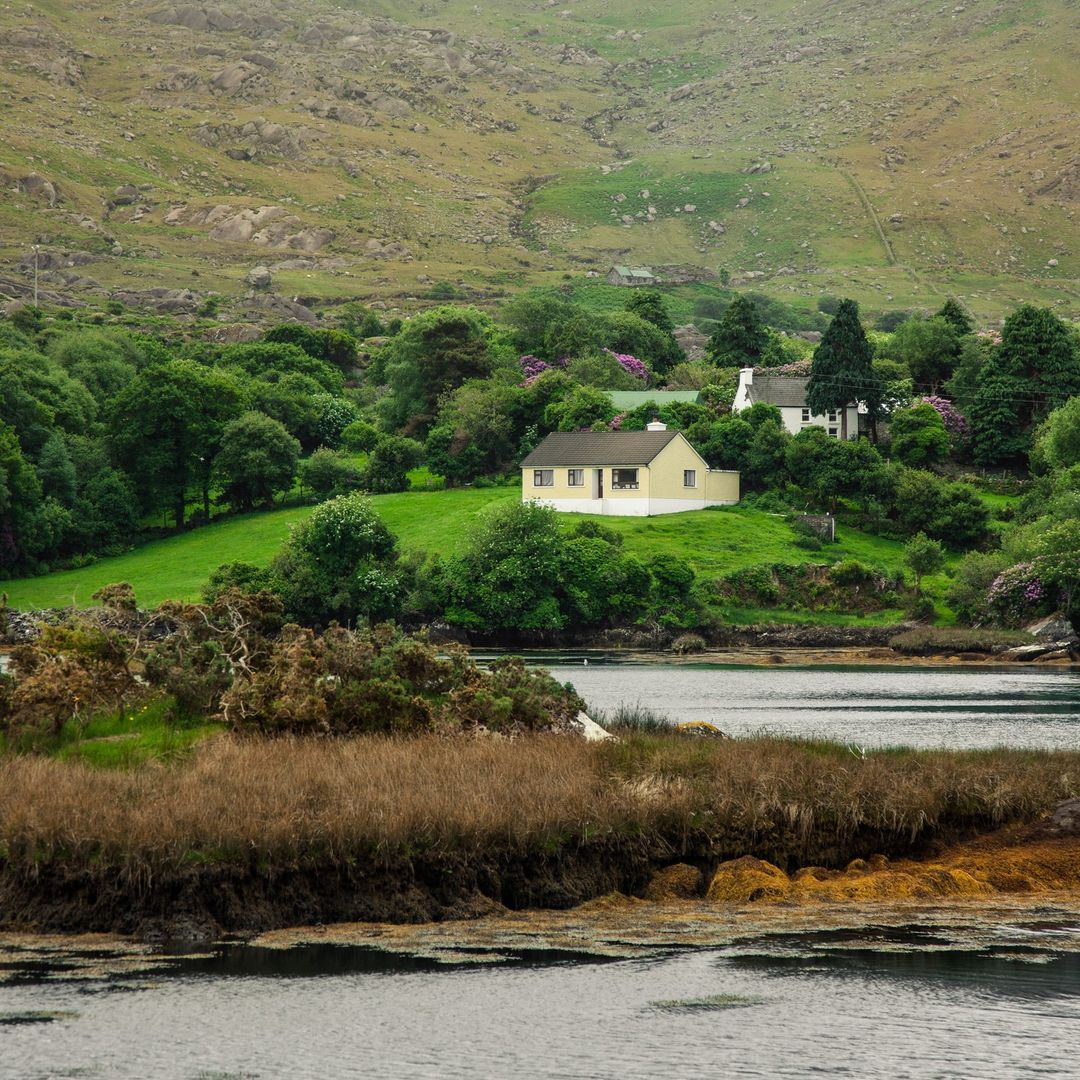
It’s hard to explain to someone who hasn’t been. Ireland doesn’t announce itself loudly. There are no signs telling you this moment matters. But a gate left slightly open on a country lane, or sweet peas climbing a stone wall on a September afternoon — these things have a way of settling in.
And they don’t leave.
This is a look at why visitors keep returning to Ireland — and why, in the end, some of them stop.
What September Does to Ireland
August in Ireland is green and busy. October turns amber and quiet. September sits between the two — the days are still long — sunset is a little after 8pm at the start of the month and around 7pm by the end — but the tourist rush has thinned out. Accommodation prices drop. Roads are calmer. The countryside looks the way it does in photographs that somehow never quite capture it.
The light in September is lower than in summer. It catches things differently: the moss on a dry stone wall, the colour of water in a Connemara lake, the shadows behind a whitewashed cottage. Photographers call it the golden hour, and in September the low sun brings that soft light into the early evening, well before dark.
The weather is no guarantee, of course. This is Ireland. But September is often one of the more settled months — warmer than April, less wet than November, and without the crowds of July. If you’re considering your first trip or planning a return, September is worth serious thought. Our guides to why September is one of the best times to visit Ireland and to September festivals, markets and cultural events cover the practical detail.
Love Ireland? Get it in your inbox.
Stories, guides, and practical advice for anyone who can’t stop thinking about Ireland — delivered free every week.
The Cottage Garden in September
The image that stays with many visitors isn’t a famous landmark. It’s smaller than that.
It’s a cottage garden in September — the kind with sweet peas still going against an old stone wall, a low wooden gate, and a path that looks like it’s been walked for decades. These gardens are common across rural Ireland. They’re not manicured. They’re not the result of a landscaping plan. They’re what happens when someone tends to the same patch of ground for long enough.
Sweet peas are a late-summer flower in Ireland. By September they’re winding down, but they’re still flowering — deep purples, soft pinks, and whites. They climb whatever’s near them. In a cottage garden, that’s usually an old timber post or a section of stone wall that’s been there longer than anyone can remember.
There’s something in the combination — the age of the stone, the delicacy of the flower, the slight lean of a gate that hasn’t been rehung properly — that reads as deeply human. Someone lives here. Someone has lived here. The garden is a record of that.
Why the Image Stays
Ireland has a lot of well-documented attractions. The Cliffs of Moher. The Ring of Kerry. The Book of Kells in Trinity College Dublin. These are worth seeing. They’re on the list for good reasons.
But they’re also managed experiences. You arrive with a crowd. You take the same photograph everyone takes. You leave having seen something remarkable, but through a frame everyone else has used.
The cottage garden is different because you find it yourself. You’re driving a back road because the GPS took you wrong, or because you wanted to avoid the main route. You slow down. You see it. Nobody told you it would be there.
That’s what sticks. Not the planned moment, but the unplanned one.
Ireland is full of these. A pub in a village with no sign outside. A beach at the end of a track you almost didn’t turn onto. A conversation with a farmer at a gate who knows your great-grandmother’s townland by an old name that never made it onto a modern map. You can’t plan for any of it. But if you give yourself enough time and move slowly enough, it tends to happen.
The Visitors Who Keep Coming Back
Repeat visits are a big part of Irish tourism. Many people who visit once go back at least once more, and plenty go back repeatedly.
The reasons visitors give are consistent:
- The landscape, which changes dramatically across relatively small distances
- The pace, which is slower than most of western Europe
- The people, who tend to talk to strangers more readily than in comparable countries
- Family connections, for the large diaspora communities in the US, UK, Canada, and Australia
But underneath all of those practical reasons is something harder to name. Ireland produces an emotional response in many visitors that they weren’t expecting. They don’t know quite what to do with it, so they go back.
This isn’t unique to people with Irish ancestry. Visitors from countries with no particular historical connection to Ireland report the same thing. The landscape does something. The pace does something. The accumulation of small, unplanned moments does something.
Never miss an Ireland story.
Our free weekly newsletter covers the places, the people, and the hidden corners that keep visitors coming back. Join thousands of readers who never quite left Ireland.
What It Costs to Go in September
September is one of the better-value months to visit Ireland. Compared to peak summer, you’ll find:
Flights: Fares are often lower than in July or August, though how much depends on your route and how early you book. Compare a few dates before you commit.
Accommodation: Hotels and B&Bs in popular areas like Killarney, Galway, and Dingle often see rates ease once the school holidays end in late August. Some guesthouses offer late-availability deals.
Attractions: Queues at popular sites like the Cliffs of Moher and Glendalough tend to be shorter than in July and August. Some smaller attractions that are overwhelmed in summer become properly manageable.
The roads: Driving in rural Ireland in September is a genuinely different experience to August. Certain routes — particularly in Kerry and Connemara — can get very congested with campervans and coaches in peak season. In September, there is usually more room to move.
Planning a September Visit
If you’re going for the first time, a week is a minimum. Two weeks lets you move slowly enough to find the things that aren’t on the itinerary.
A few practical pointers:
Base yourself outside the cities. Dublin is worth a day or two, but the Ireland that stays with people is the rural one. A cottage or farmhouse B&B in the west — Clare, Galway, Mayo — puts you close to the landscape that produces the images people carry home.
Hire a car. Public transport in rural Ireland is limited. A car gives you the freedom to take wrong turns and stop when something catches your eye. The cottage garden moment doesn’t happen on a coach tour.
Pack for rain. Even in September. A waterproof layer means a shower doesn’t end a walk. It means you can sit outside a pub in the rain, which Ireland treats as entirely normal behaviour.
Leave gaps in the plan. A schedule that’s timed to the hour will be a frustration in Ireland. Things take longer than expected. A conversation at a shop goes on for twenty minutes. A road is closed and the diversion turns out to be the better road anyway. Build in time for this — our guide to slow travel in Ireland explains why fewer stops make for a better trip.
Why Some People Just Stop Going
Some visitors go back to Ireland year after year. Some go once, carry it with them for a decade, and then go back. And some, after several visits, just stop going.
That’s not a sad ending. It’s an honest one.
There’s a point at which Ireland isn’t a destination any more. It’s a reference point. You measure other places against it without meaning to. You find yourself comparing a garden wall in Tuscany to one in County Clare, not because Clare is better but because Clare got there first.
That’s what a September afternoon on a quiet road does. It arrives when you’re not expecting it. A cottage, a stone wall, sweet peas winding down for the year, a gate that’s always slightly open. It settles in.
And it doesn’t quite leave.
If you haven’t been, that’s what you’re going for. Not the famous things — though see those too. The unscheduled moment when the light is low and you slow down for no reason you can explain.
That’s Ireland. And it keeps.
Planning a trip to Ireland?
Our free weekly newsletter is full of practical guides, hidden gems, and the kind of local knowledge that doesn’t make it onto the big travel sites. Subscribe and we’ll help you make the most of it.
Tours & experiences you might love


Powered by Viator. Some links are affiliate links — we may earn a small commission at no extra cost to you.
Secure Your Dream Irish Experience Before It’s Gone!
Planning a trip to Ireland? Don’t let sold-out tours or packed attractions spoil your journey. Iconic experiences like visiting the Cliffs of Moher, exploring the Rock of Cashel, or enjoying a guided walk through Ireland’s ancient past often sell out quickly—especially during peak travel seasons.

Booking in advance guarantees your place and ensures you can fully immerse yourself in the rich culture and breathtaking scenery without stress or disappointment. You’ll also free up time to explore Ireland’s hidden gems and savour those authentic moments that make your trip truly special.
Make the most of your journey—start planning today and secure those must-do experiences before they’re gone!