

There’s a moment most visitors to Ireland experience — usually on their first or second day — when something unexpected happens. A stranger in a shop asks where they’re from and genuinely wants to know. A farmer waves from a tractor on a single-track road. A barman pulls up a stool and begins a conversation that lasts three hours. And somehow, in the middle of this ordinary moment in an extraordinary country, the whole world feels smaller. And a little kinder. That’s what it means when people say visiting Ireland feels like coming home — even if you’ve never set foot here before.
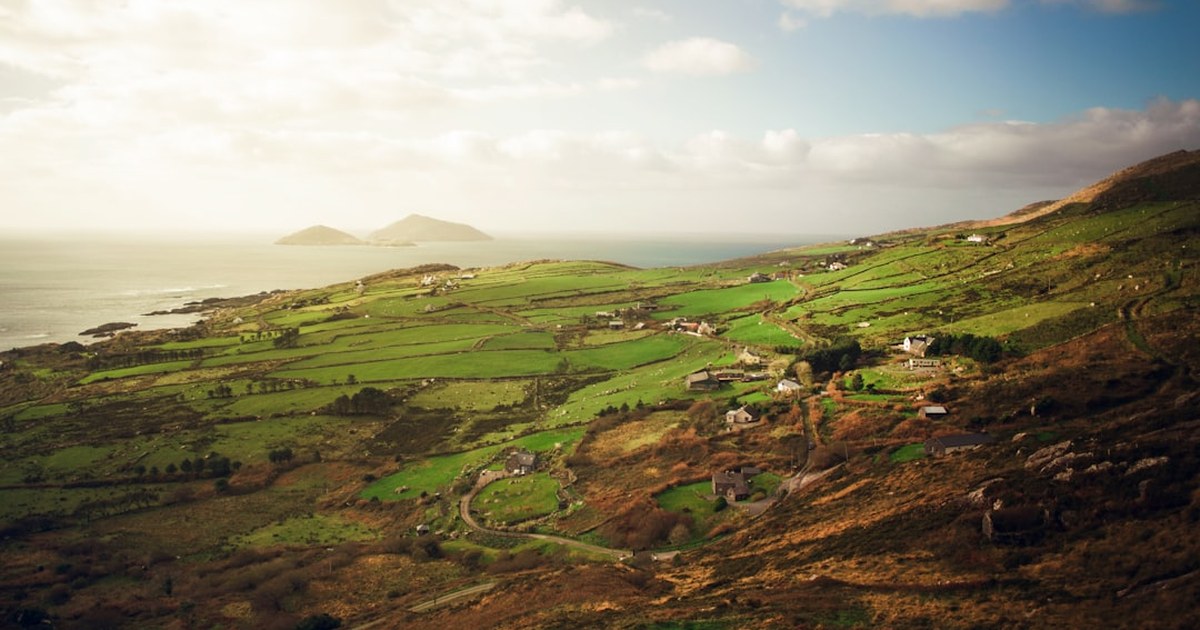
That’s the Ireland effect. It’s not manufactured for tourists. It’s not on any itinerary. It’s woven into the fabric of daily life across every townland, village, and city in the country — and it’s precisely why so many visitors leave Ireland already planning their return.
The Lost Art of Talking to Strangers
In most corners of the modern world, talking to someone you don’t know is considered unusual at best. In Ireland, it’s simply what you do.
The Irish have an extraordinary capacity for chat — not small talk in the awkward, weather-only sense, but genuine, curious, unhurried conversation. Ask for directions and you’ll likely receive a brief autobiography and a recommendation for a nearby café. Stand at a bar and you’ll be included in whatever discussion is already underway. Queue at a post office and you’ll leave knowing something you didn’t know before.
Why This Matters More Than You Think
This isn’t accidental friendliness. It’s a living tradition. Ireland’s storytelling culture — rooted in the ancient practice of the seanchaí, the travelling storytellers who carried knowledge and history from village to village — placed enormous value on human exchange. The seanchaí didn’t just recite tales; they held communities together through the act of shared listening and speaking.
That impulse didn’t disappear. It migrated to kitchens, pub corners, and footpaths. You can feel it in the particular way an Irish person gives their full attention when you’re speaking — not glancing at a phone, not half-listening. Just present. It’s one of the things visitors remember long after the landscapes have blurred into one another.
A Landscape That Demands You Slow Down
Ireland’s topography is not in a hurry, and it doesn’t let you be either.
The light changes hourly on the west coast. Mist moves across the Connemara bogs like something alive. The Cliffs of Moher at dusk don’t ask you to photograph them — they ask you to simply stand there and feel small in the best possible way. The Dingle Peninsula, where the road narrows to a whisper and the Atlantic fills your entire field of vision, has a way of resetting something in the human nervous system that modern life tends to disrupt.
The Villages That Restore You
Much of Ireland’s power to make the world feel smaller is concentrated in its villages — places that exist at a scale the human being was built for. Streets where you can see from one end to the other. Pubs where the owner knows your name by your second visit. Harbours where someone will always stop to tell you what they caught that morning.
Kenmare, Westport, Dingle, Ennistymon, Adare — these aren’t museum pieces preserved for visitors. They’re living communities that happen to be extraordinarily beautiful and extraordinarily welcoming. Spending even a single afternoon in one is enough to recalibrate your sense of what the world can feel like when it’s built around people rather than efficiency.
The Pub: The World’s Greatest Social Equaliser
No institution captures the Irish talent for making the world feel smaller quite like the traditional pub.
The Irish pub — the real Irish pub, not the theme park exports you’ll find in airport terminals — is not a drinking venue with furniture. It is, at its heart, a social technology. A place engineered over centuries to lower barriers, mix people, and generate warmth. The dim lighting, the close tables, the communal music — none of this is accidental.
A Tuesday evening session in a Doolin pub can easily seat you beside a farmer, a software engineer from Dublin, a Canadian who arrived three days ago and hasn’t been able to bring himself to leave, and an 80-year-old man who remembers the same session from sixty years back and considers it largely unchanged. None of this feels forced. None of it requires introduction. It simply happens.
The Craic Defies Translation
The Irish word craic is frequently mistranslated as “fun” — but that sells it short. Craic is the particular electricity that fills a room when good conversation, good music, and genuine warmth collide. You don’t plan for craic. You don’t book it. You simply find yourself in the middle of it, wondering how long you’ve been laughing.
The Diaspora Who Find Their Way Back
For the millions of Irish descendants scattered across America, Australia, the United Kingdom, and beyond, a first trip to Ireland is rarely a holiday. It’s a reckoning.
Something shifts when you see the landscape your great-great-grandparents walked — when you spot a surname on a pub sign that matches your own, when you hear an accent that rhymes with a grandparent’s voice you thought you’d forgotten. Ireland has a remarkable gift for making the diaspora feel that they have, after a very long journey, simply come home.
If you’re tracing Irish roots or planning a heritage journey, the 7-day Irish ancestry itinerary and our explainer on the Irish townland system are good places to start, and the Love Ireland planning guide pulls together itineraries, driving advice, where to stay and heritage resources for the rest of your trip.
The Quiet Moments Nobody Tells You About
Every travel article about Ireland mentions the scenery, the pubs, the coastline. Fewer talk about the quiet moments that are equally unforgettable.
The morning you wake up in a farmhouse B&B and find a full Irish breakfast waiting and a host who asks — with genuine curiosity — how you slept and where you’re going next. The afternoon a dog adopts you for half a mile along a coastal path, tail going, completely certain you’re friends. The evening you end up at a kitchen table talking about things that felt important with people you’d never met that morning.
These moments don’t appear in brochures. They don’t need to. Ireland generates them reliably, without effort, for anyone willing to show up and pay attention.
How to Experience Ireland at Its Most Human
Ireland’s warmth is not distributed evenly across tourist hotspots and selfie queues. To feel it fully, you need to go where the pace allows for it.
Some practical suggestions for making the most of your time in Ireland (and if you want something more hands-on, see the skills visitors actually learn on a trip to Ireland):
- Choose small accommodation — guesthouses, farmhouse B&Bs, and family-run hotels will give you far more access to genuine Irish warmth than large chains
- Drive the smaller roads — the R roads and the boreen laneways take longer, but they’re where Ireland lives
- Eat in the local café, not the tourist restaurant — the menus are shorter and the conversations longer
- Attend a trad session — not as an audience member, but as someone who sits nearby, nurses a drink, and lets the music do its work (our guide to the Irish trad session explains the etiquette)
- Give yourself at least one unplanned afternoon — no sights, no schedule, nowhere to be. Just walk. You’ll find something.
Why Ireland Does This to People
Ask anyone who has visited Ireland what they’ll remember most and — almost universally — the answer isn’t a place. It’s a person. A conversation. A feeling they weren’t expecting.
Ireland has a way of making the world feel smaller and kinder because it has never entirely industrialised its human relationships. There is still, in the everyday fabric of Irish life, a genuine interest in other people. A willingness to be interrupted by kindness. A cultural permission to linger.
In a world that often feels vast, loud, and impersonal, that is not nothing. That is, in fact, everything.
Whether you’re planning your first visit or your fifteenth, Ireland will not be what you expected. It will be warmer, slower, stranger, funnier, and more human than any expectation. Go and see for yourself.
Love Ireland? Join 169,000+ readers who do.
Every weekday, our free newsletter brings you hidden gems, local stories, heritage deep-dives, and the Ireland most visitors never find. No fluff — just the Ireland worth knowing.
☘️ Join 64,000+ Ireland Lovers
Every weekday morning, get Ireland’s hidden gems, local secrets, and travel inspiration — the kind you won’t find in any guidebook.
Subscribe free — enter your email:
Already subscribed? Download your free Ireland guide (PDF)
📲 Know someone who’d love this? Share on WhatsApp →
Love more? Join 43,000 Scotland lovers → · Join 29,000 Italy lovers → · Join 7,000 France lovers →
Free forever · Unsubscribe anytime
Tours & experiences you might love


Powered by Viator. Some links are affiliate links — we may earn a small commission at no extra cost to you.
Secure Your Dream Irish Experience Before It’s Gone!
Planning a trip to Ireland? Don’t let sold-out tours or packed attractions spoil your journey. Iconic experiences like visiting the Cliffs of Moher, exploring the Rock of Cashel, or enjoying a guided walk through Ireland’s ancient past often sell out quickly—especially during peak travel seasons.

Booking in advance guarantees your place and ensures you can fully immerse yourself in the rich culture and breathtaking scenery without stress or disappointment. You’ll also free up time to explore Ireland’s hidden gems and savour those authentic moments that make your trip truly special.
Make the most of your journey—start planning today and secure those must-do experiences before they’re gone!