

Living in County Donegal means big skies, wild Atlantic coastline and a close-knit community at the north-west tip of Ireland. About 167,000 people live in the county, which covers roughly 4,800 square kilometres. If you want dramatic scenery, a living Irish-language culture and a slower pace, Donegal is one of the most rewarding places in Ireland to settle.
This guide looks at daily life in Donegal. It covers the towns, the landscape, the language and the practical side of getting around. It is about the place, not the paperwork. For anything official, check the relevant government site first.
Why living in County Donegal appeals to so many people
Donegal is Ireland’s fourth-largest county by area, yet it has a small population. That means space. You can walk a beach in the morning and see more seals than people. The scenery is huge, from sea cliffs to bog and mountain.
Newcomers often mention the same things. Neighbours know each other, music sessions are common and the weather changes by the hour. Winters are wet and windy, so be honest with yourself about that before you commit.
- Coastline: the Wild Atlantic Way runs along the whole county, with beaches, headlands and island views.
- Mountains: Errigal, at 751 metres, is the highest peak in Donegal and a landmark for miles.
- Culture: Donegal has one of the largest Gaeltacht areas in Ireland, where Irish is spoken every day.
- Distance: Dublin is a long drive away, usually around four hours by road.
Letterkenny, Donegal Town and Ballyshannon
Letterkenny is the largest town in the county, with about 22,000 people. It has the main shopping centres, a busy hospital and a campus of Atlantic Technological University. Many families choose to live in or near the town because most daily needs are covered.
Donegal Town is smaller and more relaxed. Its triangle-shaped square leads to Donegal Castle, a fortified house the O’Donnell clan built in the 1470s. Ballyshannon, in the south, sits on the River Erne and is known for its music. Local news is easy to follow on Donegal Daily.
Glenveagh National Park
North of Letterkenny, Glenveagh National Park covers about 16,000 hectares of mountains, lakes and woodland. Glenveagh Castle stands beside the lake and was built in the 1870s. Red deer roam the glens. Locals walk here all year round, so it feels like a back garden rather than a tourist stop.
☘️ Enjoying this? 64,000+ Ireland lovers get stories like this every week. Subscribe free →
The Wild Atlantic Way, cliffs and beaches
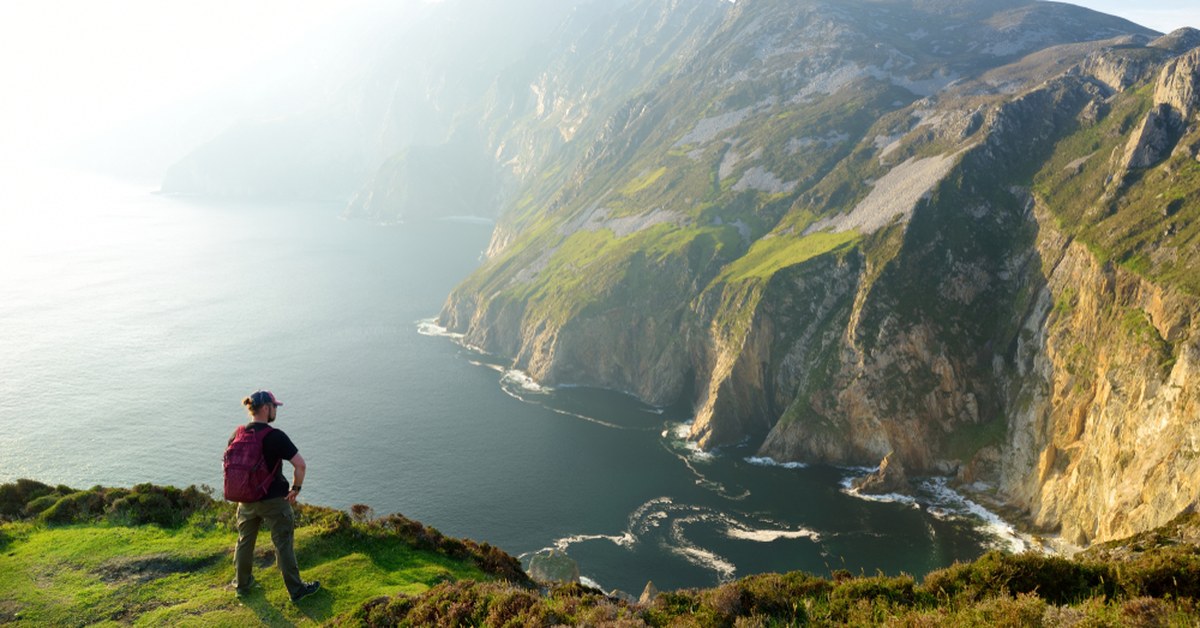
The coast is the reason many people fall for Donegal. The Slieve League cliffs rise about 600 metres above the Atlantic. They are among the highest sea cliffs in Europe. You can walk the clifftop paths on a clear day. Locals go back again and again because the light changes the view every time.
Further north, Fanad Head Lighthouse guards the entrance to Lough Swilly. Malin Head marks the most northerly point on the Irish mainland. Along the west coast, quiet beaches such as Silver Strand and Maghera are rarely crowded. You can plan a longer route with the Wild Atlantic Way site.
Language and heritage
Glencolmcille Folk Village recreates rural life in a small cluster of thatched cottages. The nearby Gaeltacht communities keep Irish alive through schools, radio and music. If you want to learn the language, there are summer courses and evening classes. Newcomers who try a few words are warmly welcomed.
Getting around and daily life
Donegal is rural, so most households run at least one car. Roads are good on the main routes and narrow on the coast. There are no train stations in the county. Buses link the larger towns, and you can check timetables on the Bus Éireann website. Rail travellers usually go to Derry or Sligo and continue by road. Check the Irish Rail site for routes to the west and north.
Donegal Airport at Carrickfinn is small but handy for short flights. Many residents also use Derry’s airport, which is close to Letterkenny. For services, planning and local notices, see Donegal County Council.
What to weigh up before you move
- Weather: expect rain, wind and short winter days.
- Distance: hospitals, airports and big shops can be an hour or more away.
- Community: small villages reward people who join in with clubs and events.
- Work: remote work suits many newcomers, while local jobs cluster around Letterkenny.
Spend a week in the county in late autumn or winter before you decide. That is when daily life shows, and it is also when the landscape looks its most dramatic.
If you are weighing up a bigger move, our full Move to Ireland guide walks through the questions to ask yourself. For a deeper look at cost of living, retirement and what surprises newcomers, see our longer guide to living in County Donegal. You can also compare Donegal with our living guides for County Sligo, County Leitrim and County Mayo. Our where to live in Ireland overview and the planning hub can help you build a longer trip.
Frequently asked questions
What is it like living in County Donegal?
It is wild, friendly and spacious. About 167,000 people share a large county, so communities are close and the coast and mountains are never far away.
What is the biggest town in Donegal?
Letterkenny is the largest town, with about 22,000 people. Donegal Town and Ballyshannon are smaller but have plenty of character.
How far is Donegal from Dublin?
Most of the county is around four hours from Dublin by road. The far north and west can take longer.
Is County Donegal worth visiting?
Yes. Visitors enjoy Slieve League, Glenveagh National Park, Fanad Head and the quiet Atlantic beaches, often with very few crowds.
☘️ Join 64,000+ Ireland Lovers
Every weekday morning, get Ireland’s lesser-known corners, local stories and secrets, straight to your inbox.
Subscribe free — enter your email:
Already subscribed? Download your free Ireland guide (PDF)
📲 Know someone who’d love this? Share on WhatsApp →
Free forever · Unsubscribe anytime
Tours & experiences you might love


Powered by Viator. Some links are affiliate links — we may earn a small commission at no extra cost to you.
Secure Your Dream Irish Experience Before It’s Gone!
Planning a trip to Ireland? Don’t let sold-out tours or packed attractions spoil your journey. Iconic experiences like visiting the Cliffs of Moher, exploring the Rock of Cashel, or enjoying a guided walk through Ireland’s ancient past often sell out quickly—especially during peak travel seasons.

Booking in advance guarantees your place and ensures you can fully immerse yourself in the rich culture and breathtaking scenery without stress or disappointment. You’ll also free up time to explore Ireland’s hidden gems and savour those authentic moments that make your trip truly special.
Make the most of your journey—start planning today and secure those must-do experiences before they’re gone!