

Dingle is a small harbour town on the south-west coast of County Kerry. Fewer than 2,000 people live there, yet it welcomes visitors from all over the world every year. So why is Dingle so popular? The short answer is a mix of wild scenery, lively pubs, fresh seafood and a strong Irish-language culture. This guide explains each reason and gives practical tips for planning your own trip.
Where Is Dingle?
Dingle (An Daingean in Irish) sits on the Dingle Peninsula, which stretches out into the Atlantic Ocean. It is north of the better-known Ring of Kerry. The town is about 50 kilometres from Tralee, and the drive takes roughly an hour. Killarney is around 65 kilometres away, so the two make an easy pair on a Kerry trip.
The peninsula is the westernmost part of mainland Ireland. That position gives it big skies, sea views and weather that changes quickly. Pack a waterproof jacket, even in summer.
The Famous Hardware Pubs
☘️ Join 64,000+ Ireland Lovers
Every weekday morning, get Ireland’s hidden gems, local secrets, and travel inspiration — the kind you won’t find in any guidebook.
Subscribe free — enter your email:
Already subscribed? Download your free Ireland guide (PDF)
📲 Know someone who’d love this? Share on WhatsApp →
Free forever · Unsubscribe anytime
One of the oddest and most charming things about Dingle is its hardware pubs. In a few places, you can walk into what looks like an ordinary shop, with tools, boots and buckets on the shelves, and find a bar at the back. Years ago, this was common in rural Ireland. A shopkeeper would also hold a pub licence, so farmers could buy supplies and have a drink in the same visit.
Dingle keeps this tradition alive. Foxy John’s on Main Street is the best-known example, and you can still buy hardware there while you wait for your pint. Dick Mack’s is another much-loved spot, with a history linked to leatherwork and footwear. Visitors often stop to take photos of the shopfronts before they go inside.
These pubs are popular because they feel real. They are not set up for tourists. They are everyday businesses that have kept going, and the locals who drink there are happy to chat.
Live Music in the Pubs
Dingle has a famous reputation for traditional Irish music. For a town of its size, it has a very large number of pubs, and many host live sessions most nights in high season. Musicians often play fiddles, tin whistles, accordions and bodhráns, and you do not need a ticket. Arrive early to get a seat, since the best sessions fill up quickly.
Most pubs are on or near Main Street, Strand Street and Green Street, so you can walk between them in a few minutes. Many also serve food in the early evening, which is helpful if you want to eat and then listen to music.
Get our free Ireland travel tips by email: subscribe to the Love Ireland newsletter.
The Dingle Peninsula Coastline
The Kerry coastline is the main reason many people make the trip. Beyond the village, the land runs out into cliffs, beaches, small islands and green hills. Some highlights are:
- Slea Head Drive: a loop of about 47 kilometres that starts and ends in Dingle. It passes beaches, ancient stone huts and views across to the Blasket Islands.
- Conor Pass: one of the highest mountain roads in Ireland. It is narrow in places, so take your time and let faster cars pass.
- Inch Beach: a long sandy beach that is popular for walking and surfing lessons.
- Ventry Beach: a wide, calm bay that suits families.
- Gallarus Oratory: a small dry-stone chapel whose exact age is debated by historians (estimates range from the 8th to the 12th century), and it still stands without mortar.
The drive around Slea Head can take as little as two hours without stops, but most people spend half a day or more. There are many places to pull over and walk. Take care on the roads, which are narrow and busy with coaches in summer.
Film Locations and the Blasket Islands
The peninsula has appeared on screen several times. The 1970 film Ryan’s Daughter was shot around Dingle, and parts of a Star Wars film were later shot near Slea Head. Fans still visit those spots, although you should always respect private land and farm gates.
The Blasket Islands lie just off the western tip. The largest, Great Blasket, was home to a small Irish-speaking community until 1953. Writers from the island left a famous record of island life. In good weather, boats run from Dingle and from Dunquin to the island. Check the sailing times ahead, because the sea can stop trips at short notice.
Fresh Seafood and Local Food
Dingle is a working fishing port, and the food reflects it. Restaurants serve fresh fish, shellfish, chowder and crab claws, often landed that same week. Fish and chips on the pier is a classic treat. Booking is wise for dinner in summer, as small restaurants fill up.
Dingle is also known for its ice cream, made with local milk, and for its small-batch distillery, which offers tours. The town hosts a food festival in the early autumn, which draws plenty of visitors who like to eat well.
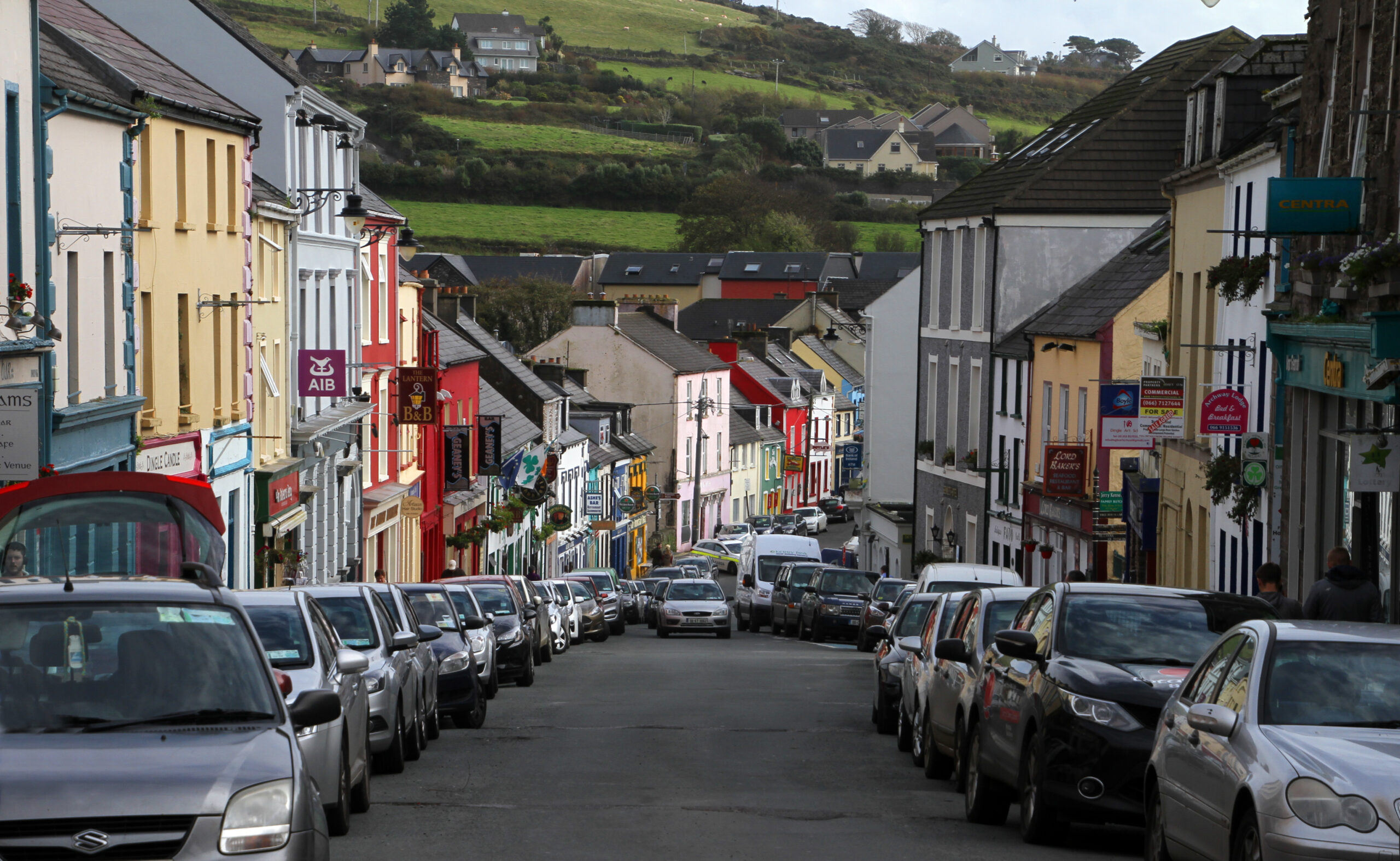
Colourful Streets and a Walkable Town
As the photo above shows, Dingle’s streets are painted in bright yellows, blues and reds. Shopfronts, pubs and cafés line the roads, and the whole centre is easy to cover on foot. You can walk from the harbour to the top of Main Street in a few minutes.
Between the pubs, you will find craft shops, bookshops, jewellers and small galleries. It is a good place to pick up gifts that were made in Ireland rather than imported.
The Irish Language
Dingle is part of the Kerry Gaeltacht, an area where Irish is spoken daily. You will see road signs in Irish, and you may hear locals speaking it in shops and pubs. Many students come here in summer to study the language. Do not worry if you only speak English. Everyone will speak it with you, but learning a few words, like “go raibh maith agat” (thank you), is always welcome.
Dolphin Spotting and Boat Trips
For nearly four decades, Dingle was famous for Fungie, a friendly dolphin who lived in the harbour. He disappeared in 2020, but the harbour is still a great place to look for marine life. Boat trips go out to look for dolphins, seabirds and sometimes whales, depending on the season. Ask at the pier for times and prices.
Planning a Kerry trip? Join our free newsletter for itinerary ideas.
When Is the Best Time to Visit?
Summer, from June to August, has the longest days and the most music, but it is also the busiest and most expensive time. May, June and September are often a good balance. The weather is mild, daylight is long, and the crowds are smaller. Winter is quiet and many places close, but you may find a cosy pub with a turf fire and few other visitors.
Practical Tips for Visiting Dingle
- Book early. Rooms in summer sell out months ahead, so reserve as soon as your dates are fixed.
- Hire a car if you can. Public buses run from Tralee, but a car gives you freedom on the peninsula.
- Drive carefully. Roads are narrow, and sheep sometimes wander onto them.
- Bring layers. Weather can go from sun to rain within an hour.
- Stay two or three nights. One day is not enough for the drive, the pubs and the beaches.
- Check opening hours. Some pubs, shops and boat trips run shorter hours outside summer.
So, Why Is Dingle So Popular?
Dingle works because it offers a lot in a small space. You can spend the morning on a wild coastal road, the afternoon on a beach, and the evening in a pub that sells wellies and pints under the same roof. The scenery is dramatic, the food is fresh, the music is good, and the people are friendly. That mix is hard to beat.
Never miss an Ireland guide: subscribe to our free newsletter today.
Tours & experiences you might love


Powered by Viator. Some links are affiliate links — we may earn a small commission at no extra cost to you.
Secure Your Dream Irish Experience Before It’s Gone!
Planning a trip to Ireland? Don’t let sold-out tours or packed attractions spoil your journey. Iconic experiences like visiting the Cliffs of Moher, exploring the Rock of Cashel, or enjoying a guided walk through Ireland’s ancient past often sell out quickly—especially during peak travel seasons.

Booking in advance guarantees your place and ensures you can fully immerse yourself in the rich culture and breathtaking scenery without stress or disappointment. You’ll also free up time to explore Ireland’s hidden gems and savour those authentic moments that make your trip truly special.
Make the most of your journey—start planning today and secure those must-do experiences before they’re gone!