

Griffith’s Valuation is the most important genealogy record available for tracing Irish ancestors before the Famine. Compiled between 1847 and 1864, it lists every landowner and tenant in Ireland by name, along with the townland they lived in, the size of their land, and what they paid in rent. If your Irish ancestors lived in Ireland at any point in the mid-nineteenth century, there is an excellent chance their names appear in this record — available online for free, right now.
What Is Griffith’s Valuation?
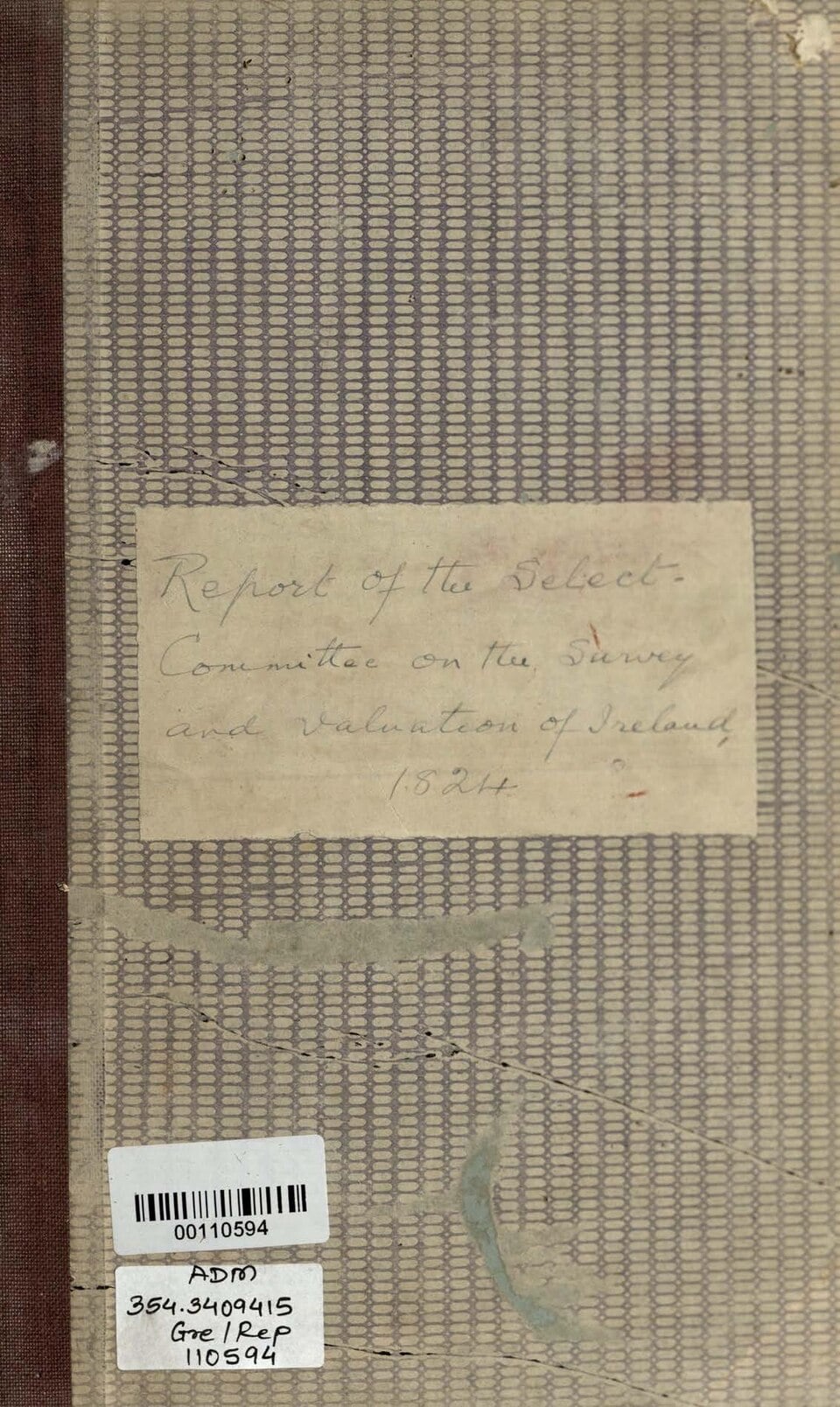
Griffith’s Valuation — officially called the Primary Valuation of Ireland — was a survey of land and property carried out between 1847 and 1864 under the direction of Sir Richard Griffith. Its original purpose was to establish a standard for local taxation. But it has become something far more valuable: the closest thing researchers have to a census for nineteenth-century Ireland.
Watch: Do You Qualify for an Irish Passport?
Tracing your Irish family? If one of your grandparents was born in Ireland, you may be able to become an Irish citizen. This 14-minute guide explains who qualifies, what it costs and how long it takes. Thinking of making the move? Get the free Moving to Ireland checklist.
The survey covers all 32 counties of Ireland. It records the name of every person who occupied land or buildings of rateable value, the name of the person from whom they leased the property, the townland and county, the area of the property in acres, and the rateable annual value in pounds. Griffith’s team published the complete survey between 1847 and 1864. It captures a snapshot of Ireland before, during, and after the Great Famine.
More than 2.9 million individual records appear across the roughly 300 volumes that make up the full survey. For the Irish diaspora in America, Australia, Canada, and the United Kingdom, it is often the first record that places a surname in a specific townland. That is the piece of information that makes everything else possible.
Why Griffith’s Valuation Matters for Irish Genealogy
Irish genealogy is notoriously difficult to research. The Public Record Office fire of 1922 destroyed most nineteenth-century census records for Ireland. The 1821, 1831, 1841, and 1851 censuses — which would have been the primary sources for that era — are almost entirely gone. Griffith’s Valuation filled that gap. It arrived at exactly the right time. The survey covers the years when most Irish emigrants left for America and the colonies.
Three qualities make it especially useful for genealogists:
- It names tenants, not just landowners. Even the poorest Irish farmer who leased a small plot appears by name. This was unusual for any nineteenth-century record.
- It identifies the exact townland. A townland is a small administrative division of land, often covering just a few hundred acres. Knowing which townland your ancestors came from is the key to finding church records, estate papers, and emigration lists.
- You can cross-reference it with the Tithe Applotment Books, which cover the 1820s and 1830s. This lets you trace a family in the same place across three or four decades.
How to Search Griffith’s Valuation for Free
The complete Griffith’s Valuation is available online at no cost. The primary resource is AskAboutIreland.ie, maintained by the Irish government, which provides free access to a fully searchable digitised version of the complete valuation. Here is how to use it.
Step 1: Go to AskAboutIreland.ie
Visit askaboutireland.ie/griffith-valuation and click the “Search the Valuation” button. You do not need to create an account or pay anything. The site is completely free.
Step 2: Enter the surname you are searching
Type in the surname you want to find. Try alternative spellings — valuers anglicised Irish names inconsistently. “O’Brien” might appear as “O’Brien”, “OBrien”, or simply “Brien”. “Murphy” might appear as “Morphy” or “Morphey”. If your first search returns nothing, try a simplified spelling of the name.
Step 3: Narrow by county if you know it
If you know the county your ancestors came from, select it from the dropdown menu. This dramatically reduces the number of results. Common Irish surnames like Murphy, Kelly, and Brennan each appear thousands of times across the country. Filtering by county gives you a manageable list to work through.
Step 4: Read the entry carefully
Each result shows the person’s name, the county, the barony, the parish, the townland, and the valuation details. Write down the townland name exactly as it appears. This is the most important piece of information in the record. Irish genealogy organises everything by townland, parish, and county.
The valuation also shows the “Immediate Lessor” — the person your ancestor paid rent to. This helps you identify which landlord estate the family belonged to. That estate likely holds separate records — rent books, eviction notices, and land transfer papers.
☘️ Enjoying this? 64,000+ Ireland lovers get stories like this every week. Subscribe free →
What to Do After You Find Your Ancestor
Finding your surname in Griffith’s Valuation is the starting point, not the end. Once you have a townland, you can work through the chain of records that surrounds it.
Check the Tithe Applotment Books (1823–1837)
Local officials compiled the Tithe Applotment Books in the 1820s and 1830s as part of a land tax assessment. They cover most of rural Ireland and list the names of tenants in each townland. If the same surname appears in both the Tithe Books and Griffith’s Valuation at the same townland, you have strong evidence that a family lived there continuously across two or three decades. The Tithe Books are available free at the National Archives of Ireland.
Search Catholic Parish Registers
Once you know the townland, you can identify the civil parish. Civil parishes in Ireland broadly correspond to Church of Ireland parishes, but Catholic parishes often covered several civil parishes. The National Library of Ireland’s Catholic Parish Register collection is free and covers baptisms, marriages, and sometimes burials from roughly the 1820s to 1880s. These registers survived the 1922 fire because they were held by local parishes rather than stored centrally in Dublin.
Use the 1926 Irish Census
The Irish government released the 1926 Census to the public in April 2026. It is now freely searchable at nationalarchives.ie. It covers the entire Republic of Ireland and includes approximately 3 million individual records. If your family remained in Ireland after independence, the 1926 census adds another generation to your research — bridging the gap between the 1911 census and the present.
Understanding Irish Townlands
Townlands are the smallest administrative division in Ireland. There are approximately 61,000 townlands across the island, ranging in size from a few acres to several hundred. Most Irish families in the nineteenth century identified themselves by their townland rather than by a street address. When an emigrant wrote home or named their place of origin in an American city directory, they often gave their townland name — not their parish or county. For a deeper dive into how townlands work and how to use them in your research, see our complete guide to Irish townlands for the diaspora.
Knowing your ancestor’s townland opens up a remarkable amount of additional research:
- Estate records: Many landlord estates kept detailed rent books, eviction records, and correspondence. The National Library of Ireland holds thousands of estate papers organised by county and parish.
- Ordnance Survey maps: Surveyors completed the first large-scale Ordnance Survey of Ireland in the 1840s, right alongside Griffith’s Valuation. These maps mark individual houses and farm buildings. You can often pinpoint your ancestor’s house on a 180-year-old map using the Irish Townland and Historical Map Viewer.
- Townlands.ie: The website townlands.ie lets you look up any Irish townland by name and find its county, barony, civil parish, and GPS coordinates. This is essential when working with Griffith’s Valuation entries.
Griffith’s Valuation and the Great Famine
Griffith’s team carried out most of the survey during and right after the Great Famine of 1845 to 1852. This timing gives it a particular significance. Some names in counties like Mayo, Cork, and Galway represent families on the verge of emigration or who had just faced eviction. Valuers wrote other entries just months after a family had left for America.
The valuers recorded what they found on the ground. In some townlands in the west of Ireland, the records note empty plots, ruined cabins, or land that had reverted to the landlord after clearances. These notations are among the most direct documentary evidence of what happened during the Famine at a local level.
If your ancestors emigrated between 1845 and 1860 — the peak Famine emigration period — there is a chance their names do not appear in Griffith’s Valuation because they left before the survey reached their county. In that case, the Tithe Applotment Books from the 1820s and 1830s become your primary alternative. Cross-referencing both records gives you the best chance of placing a family in a specific townland.
Other Places to Access the Valuation
AskAboutIreland.ie is the best free resource, but other platforms also carry the data:
- IrishGenealogy.ie — the official Irish government genealogy portal, which links to a range of free records including Griffith’s Valuation
- FindMyPast — a subscription service that includes Griffith’s Valuation alongside civil registration records, ship manifests, and other Irish records
- Ancestry.com — includes a digitised version of the valuation with surname indexing, accessible with a subscription
- RootsIreland.ie — provides county-by-county genealogy databases compiled by local heritage centres, with access to records that supplement the valuation
Tips for Getting the Most From Your Search
Griffith’s Valuation is a powerful resource, but it rewards careful reading. Here are the most common mistakes people make when searching it:
- Assuming spelling is consistent. English-speaking valuers wrote Irish names phonetically. A valuer might record “Ó Briain” as “O’Brien”, “OBrien”, “O’Brian”, or “Obrian”. Always try multiple spellings.
- Expecting to find women by their married name. Married women rarely appear in Griffith’s Valuation unless they were heads of household. A widowed mother or an unmarried woman running a farm might appear, but a wife in a household headed by her husband usually will not.
- Forgetting that the same townland name can appear in multiple counties. Ireland has several townlands with identical names in different counties. Always confirm which county your result refers to before continuing.
- Looking only in one parish. Large families often spread across several neighbouring townlands. If you find one branch in a townland, search the surrounding townlands in the same parish for other family members.
Planning a Heritage Visit to Ireland
Finding your ancestor’s townland in Griffith’s Valuation is the beginning of a journey that can end in Ireland itself. Many Irish-American families have stood on the exact land their great-great-grandparents farmed, found the local church where they were baptised, and walked a graveyard where earlier generations are buried.
The Cobh Heritage Centre in County Cork offers genealogy research support for visitors tracing their emigrant ancestors. County heritage centres in Clare, Galway, Mayo, and Kerry offer personalised research services for people visiting from abroad. Most will work with you before your trip to identify specific records worth searching during your visit.
For a full walkthrough of Irish genealogy records from the 1800s to the present, read our complete guide to tracing your Irish ancestry, which covers Griffith’s Valuation, the 1926 Census, civil registration records, and DNA testing in one place.
Frequently Asked Questions About Griffith’s Valuation
Is Griffith’s Valuation free to access online?
Yes. The full Griffith’s Valuation is free to search at AskAboutIreland.ie, maintained by the Irish government. You do not need to create an account. Other platforms such as FindMyPast and Ancestry.com also carry the records but require a paid subscription to access them.
What years does Griffith’s Valuation cover?
Griffith’s team carried out the survey between 1847 and 1864. They visited different counties at different times. County Dublin was among the first, in 1847. Some western counties did not receive their visit until the early 1860s. The date of your county’s survey matters. It determines which families the valuers found still in Ireland — important if your ancestors emigrated during the Famine years.
Why does Griffith’s Valuation matter more than census records for Irish genealogy?
The 1922 destruction of the Public Record Office in Dublin wiped out almost all nineteenth-century census records. The 1821, 1831, 1841, and 1851 censuses survived only in fragments. Griffith produced and published the Valuation before this disaster. Officials stored multiple copies across different locations, so it survived intact. For the mid-nineteenth century, it is the most comprehensive surviving record of the Irish population.
What should I do if I cannot find my surname in Griffith’s Valuation?
Try alternative spellings first. If that does not help, your ancestors may have emigrated before the survey reached their county, may have been landless labourers with no rateable property (and therefore not recorded), or may have lived in a household recorded under a different surname. In these cases, the Tithe Applotment Books and Catholic parish registers are the next step to try.
How do I use a townland from Griffith’s Valuation to find more records?
Once you have a townland name, visit Townlands.ie to identify the civil parish and county. Then search Catholic parish registers for that parish at the National Library of Ireland’s free register service at registers.nli.ie. Cross-reference with the Tithe Applotment Books to extend the family timeline back into the 1820s. This chain of records gives you a continuous documentary picture of your family in one place across several decades.
☘️ Join 64,000+ Ireland Lovers
Every weekday morning, get Ireland’s hidden gems, local secrets, and travel inspiration — the kind you won’t find in any guidebook.
Subscribe free — enter your email:
📲 Know someone who’d love this? Share on WhatsApp →
Free forever · Unsubscribe anytime
Tours & experiences you might love


Powered by Viator. Some links are affiliate links — we may earn a small commission at no extra cost to you.
Secure Your Dream Irish Experience Before It’s Gone!
Planning a trip to Ireland? Don’t let sold-out tours or packed attractions spoil your journey. Iconic experiences like visiting the Cliffs of Moher, exploring the Rock of Cashel, or enjoying a guided walk through Ireland’s ancient past often sell out quickly—especially during peak travel seasons.

Booking in advance guarantees your place and ensures you can fully immerse yourself in the rich culture and breathtaking scenery without stress or disappointment. You’ll also free up time to explore Ireland’s hidden gems and savour those authentic moments that make your trip truly special.
Make the most of your journey—start planning today and secure those must-do experiences before they’re gone!