

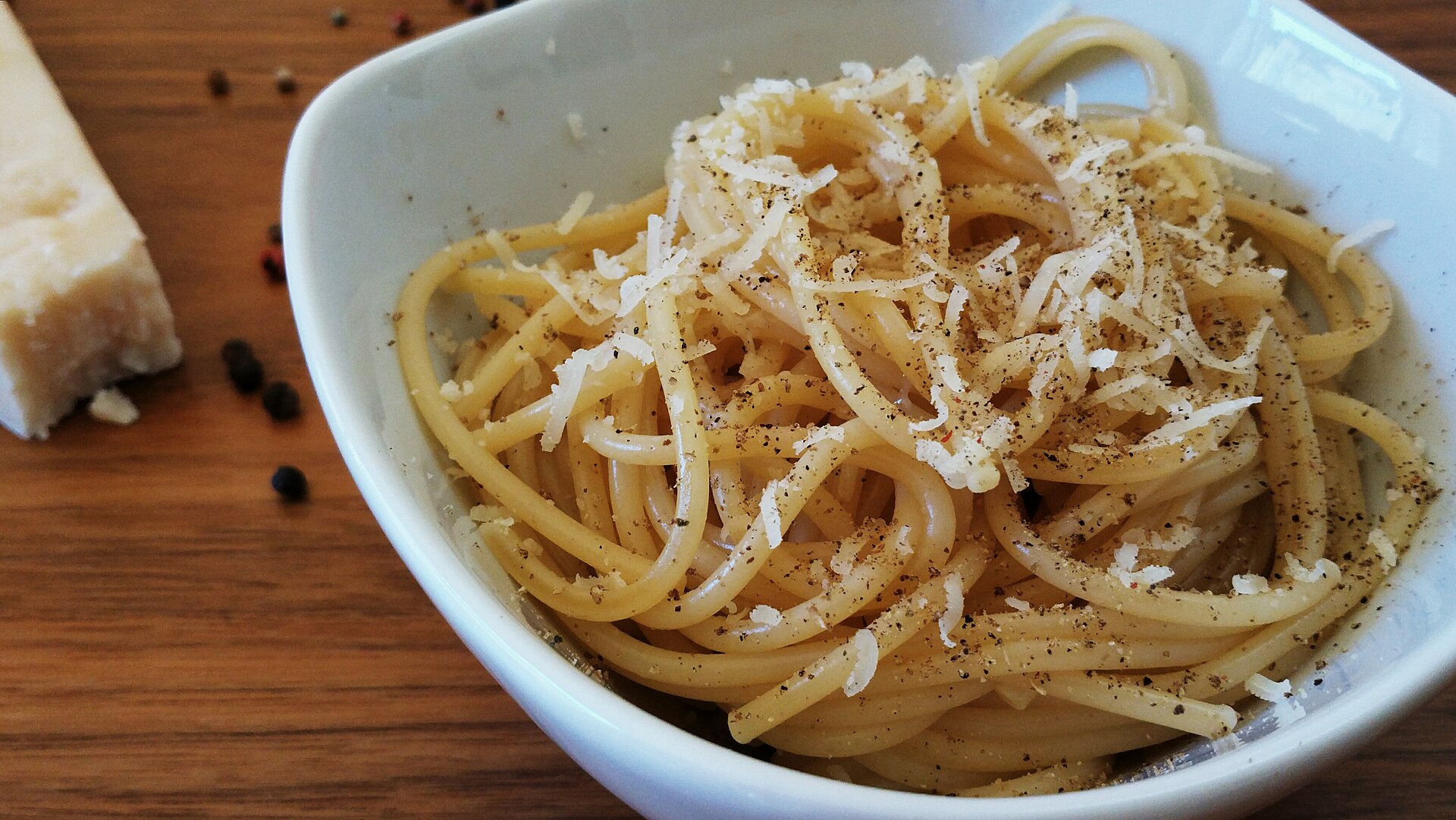
Three ingredients. That is all cacio e pepe asks of you. Pasta, pecorino romano, and black pepper. No cream, no butter, no garlic. Just those three things, combined in the right way, to produce a sauce that is silky, sharp, and deeply satisfying.
And yet, ask anyone who has tried it at home and they will tell you the same story: somehow it went wrong. The cheese clumped. The sauce turned grainy. The whole thing seized up in the pan. If that has happened to you, you are in good company — and this guide will show you exactly where things go wrong and how to fix them.
☘️ Love Irish food, culture, and travel? Our free newsletter goes out every weekday with the best of Ireland — recipes, heritage, places, and stories worth knowing. Subscribe free here.
What Exactly Is Cacio e Pepe?
Cacio e pepe is a Roman pasta dish. The name translates simply as “cheese and pepper” — which is an accurate description. Traditionally it is made with tonnarelli, a thick square-cut spaghetti, or with spaghetti itself. The sauce comes entirely from finely grated pecorino romano cheese emulsified with starchy pasta water and coated with a generous amount of coarsely cracked black pepper.
It is a dish that dates back centuries in Roman cooking. Shepherds in the Lazio region would carry dried pasta, aged pecorino, and black pepper on long journeys because all three kept well without refrigeration. The dish they made from those three staples became one of Italy’s most beloved classics.
Today it appears on trattoria menus across Rome, and increasingly in home kitchens far beyond Italy — including plenty of Irish ones. It is quick, cheap, and once you understand the technique, entirely reliable. (If you like mastering Italian classics at home, our guide to making gelato at home that rivals Italy is worth a look too.)
Why It Goes Wrong: The Science in Simple Terms
The sauce in cacio e pepe is an emulsion — a stable suspension of fat, protein, and water. Think of it like a very simple cheese sauce that has no roux, no cream, and no butter holding it together. Instead, it depends entirely on the starchy pasta cooking water to create the right environment for the cheese to melt smoothly rather than clump.
When cheese hits water that is too hot, the proteins seize and the fats separate. You get rubbery lumps swimming in greasy liquid. When the starch content of the water is too low — because you used too much water, or the pasta was not cooked in enough of it — there is not enough starch to keep the emulsion stable, and again, you get a broken sauce.
This is why the method matters. Once you follow it correctly, the result is consistent every time.
The Ingredients You Need
For two people, you will need:
- 200g spaghetti or tonnarelli — a standard pack portion for two. Dried pasta, not fresh.
- 80g pecorino romano, finely grated — this is non-negotiable. Pecorino romano is a hard, salty, sharp sheep’s milk cheese from Lazio. It is available in most good supermarkets and delis in Ireland.
- 1.5 teaspoons black pepper, coarsely cracked — not pre-ground. Use a mortar and pestle or the coarse setting on a pepper grinder. The pepper needs texture.
- Fine salt — for the pasta water only.
Some recipes add a small amount of parmesan alongside the pecorino. This works well if you find pure pecorino too sharp for your taste. A mix of 60g pecorino and 20g parmesan gives a slightly milder, nuttier result. But for the classic version, pecorino alone is correct.
One tip on Irish sourcing: sheep’s milk cheese is well produced on this island. Knockanore, Killeen, and a number of smaller artisan producers make aged sheep’s cheeses that work well here if you want a local alternative — Cork’s English Market is a reliable place to find them. They will not give you the exact flavour of Roman pecorino, but the texture and fat content are close enough to emulsify properly.
The Method, Step by Step
Step 1: Cook the pasta in less water than usual. Use a smaller pot than you normally would. The goal is very starchy cooking water. Use about 1.5 litres for 200g of pasta rather than the usual 3-4 litres. Salt the water well — it should taste like mild seawater.
Step 2: Toast the pepper. While the pasta cooks, put a large, wide frying pan or sauté pan over a medium heat. Add the cracked black pepper and toast it dry for about 60 seconds until fragrant. Remove from the heat.
Step 3: Prepare your cheese paste. While the pasta is still cooking, take about 4 tablespoons of the hot (not boiling) pasta water and mix it into your finely grated pecorino in a bowl. Stir vigorously until you get a smooth, thick paste. It should look like thick cream cheese. This step is key — you are pre-melting the cheese into water before it ever hits the hot pan.
Step 4: Cook the pasta until just under done. Drain it about 2 minutes before the packet says it is ready. Keep a large mug of the starchy cooking water to one side — do not throw it away.
Step 5: Finish in the pan. Return the pan with the toasted pepper to a medium-low heat. Add 2 ladlefuls of pasta water and let it bubble briefly. Add the drained pasta and toss it in the peppered water. Let it cook for another minute or two, tossing regularly, until the pasta is just cooked through and the water has reduced slightly.
Step 6: Off the heat, add the cheese paste. Take the pan fully off the heat. Wait 30 seconds for the temperature to drop slightly. Then add your cheese paste in one go and toss everything together quickly, adding splashes of pasta water as needed to loosen the sauce. Work fast. The sauce should cling to the pasta in a glossy, creamy coating.
Serve immediately in warm bowls. Add a little extra grated pecorino and a final crack of pepper on top.
☘️ Enjoying this? We cover Irish food, travel, heritage, and culture every weekday in our free newsletter. Thousands of Ireland lovers read it each morning. Join them here — it’s free.
The Most Common Mistakes
Not grating the cheese finely enough. If the cheese is coarsely grated, it will not melt evenly. Use the fine side of a box grater, or a microplane if you have one. The cheese should be almost powdery.
Adding cheese to a hot pan. This is the single most common reason the dish fails. High heat makes the proteins in pecorino snap and curdle. Always take the pan off the heat before adding the cheese mixture.
Not making the paste first. Many recipes say to just sprinkle the cheese into the pan with some pasta water and stir. This works for professionals who do it daily. For home cooks, pre-mixing the cheese into a paste gives you much more control and a far higher success rate.
Using too much water to cook the pasta. As noted above, low water volume = high starch content. This is what keeps the sauce stable. If your pasta water looks clear, there is not enough starch in it.
Using pre-ground pepper. Fine ground pepper disappears into the sauce and the dish loses its distinctive bite. Crack the pepper yourself. The texture is part of what makes this dish work.
Variations Worth Knowing
Once you have the basic method down, there are a few variations that are worth trying.
Add a small knob of butter. This is not traditional, but it makes the sauce slightly richer and more forgiving if your emulsion is a little loose. Use good butter — Irish butter like Kerrygold is ideal here. Its higher fat content adds body without making the sauce heavy.
Use a mix of pecorino and parmesan. As mentioned above, this softens the sharpness of pure pecorino. Good if you are cooking for people who find very salty cheese overwhelming.
Try it with rigatoni. The classic version uses long pasta, but short tubes like rigatoni catch the sauce inside and give a different eating experience. Both are correct — it is a matter of preference.
What to Serve With It
Cacio e pepe is a complete dish on its own. It is not a side dish or a starter — it is the meal. In Rome, it is traditionally eaten as a primo, a first course, followed by something meat-based. At home, most people serve it as a main.
A simple green salad alongside works well — something undressed or with just lemon and olive oil, to cut through the richness of the cheese. Crusty bread to mop the bowl is not a bad idea either, though the Romans would likely disagree.
A glass of dry white wine — something crisp and acidic — pairs well. Or, for a very Roman approach, a light red like a Cesanese del Piglio from Lazio.
Frequently Asked Questions
Can I use parmesan instead of pecorino? You can, but the result will be quite different. Parmesan is less salty and less sharp than pecorino romano. It also emulsifies slightly differently. You can use it, but the dish will taste more like a mild cheese pasta and less like the authentic Roman original.
Can I add cream? Technically yes, but this is not cacio e pepe. Cream bypasses the emulsion technique entirely and produces a completely different sauce. If you want a creamy pasta with minimal effort, cream works fine. If you want to learn the real method, skip it.
Why does my sauce keep breaking? The most likely cause is that the pan was too hot when you added the cheese. Let the pan cool for longer — a full 30 to 45 seconds off the heat — before adding the cheese paste. Also check that your cheese was grated finely enough.
Can I reheat leftovers? Cacio e pepe does not reheat well. The emulsion breaks and the cheese clumps. It is best eaten immediately. If you have leftovers, your best option is to add a splash of water and stir it over very low heat, though it will not be quite the same.
Is this suitable for vegetarians? The dish itself has no meat. However, traditional pecorino romano is made with animal rennet, which some vegetarians avoid. Check the label — some versions use vegetarian rennet, and most Irish sheep’s milk cheeses do as well.
☘️ Want more like this? Our free daily newsletter covers Irish food, travel, culture, and heritage — practical and worth reading. Subscribe free and join the community.
☘️ Join 64,000+ Ireland Lovers
Every weekday morning, get Ireland’s hidden gems, local secrets, and travel inspiration — the kind you won’t find in any guidebook.
Subscribe free — enter your email:
Already subscribed? Download your free Ireland guide (PDF)
📲 Know someone who’d love this? Share on WhatsApp →
Love more? Join 43,000 Scotland lovers → · Join 29,000 Italy lovers → · Join 7,000 France lovers →
Free forever · Unsubscribe anytime
Tours & experiences you might love


Powered by Viator. Some links are affiliate links — we may earn a small commission at no extra cost to you.
Secure Your Dream Irish Experience Before It’s Gone!
Planning a trip to Ireland? Don’t let sold-out tours or packed attractions spoil your journey. Iconic experiences like visiting the Cliffs of Moher, exploring the Rock of Cashel, or enjoying a guided walk through Ireland’s ancient past often sell out quickly—especially during peak travel seasons.

Booking in advance guarantees your place and ensures you can fully immerse yourself in the rich culture and breathtaking scenery without stress or disappointment. You’ll also free up time to explore Ireland’s hidden gems and savour those authentic moments that make your trip truly special.
Make the most of your journey—start planning today and secure those must-do experiences before they’re gone!