

The Facebook post about Templar sites in France struck a chord with a lot of people. But Ireland has its own Templar story, and it has been quietly overlooked for far too long.
The Knights Templar were active in Ireland from the late 12th century until the Order’s suppression in the early 14th century. They received land grants from Norman lords following the invasion of 1169, established preceptories in several counties, and held real influence before being brought down in one of history’s most dramatic legal purges.
This guide covers what historians know about the Templars in Ireland, which sites have a verified connection to the Order, and what you can actually see on the ground today.
Enjoy Irish history? Our free newsletter covers heritage, travel, and culture across Ireland every week. Subscribe here — it’s free.
Who Were the Knights Templar?
The Order of the Poor Fellow-Soldiers of Christ and of the Temple of Solomon — known as the Knights Templar — was founded around 1119 in Jerusalem. Their original purpose was to protect Christian pilgrims travelling to the Holy Land.
Over the following two centuries, they became one of the most powerful military and financial institutions in Europe. They developed early banking networks, built a network of fortified preceptories across the continent, and accumulated significant wealth and landholdings. At their height, the Templars held property in England, Scotland, France, Spain, Portugal, and Ireland.
How the Templars Came to Ireland
The Templars arrived in Ireland in the wake of the Norman invasion, which began in 1169 under Richard de Clare — known as Strongbow. As Norman lords established control over large parts of Leinster and Munster, the Templars received land grants that allowed them to fund their operations in the Holy Land through Irish rents and agricultural income.
The first documented Templar presence in Ireland dates to around 1177, when the Order received lands from Henry II as part of his efforts to extend English control over the island. By the mid-13th century, the Templars had established preceptories in several counties.
It is worth noting what these Irish houses actually were. The Templars in Ireland were primarily administrators and landholders, not an active military force. Their Irish properties served as income-generating estates rather than military bases. That income helped fund operations elsewhere in Europe and the Middle East.
The Main Templar Sites in Ireland
Several locations across Ireland have documented connections to the Knights Templar. Here are the most significant.
Clontarf, Dublin
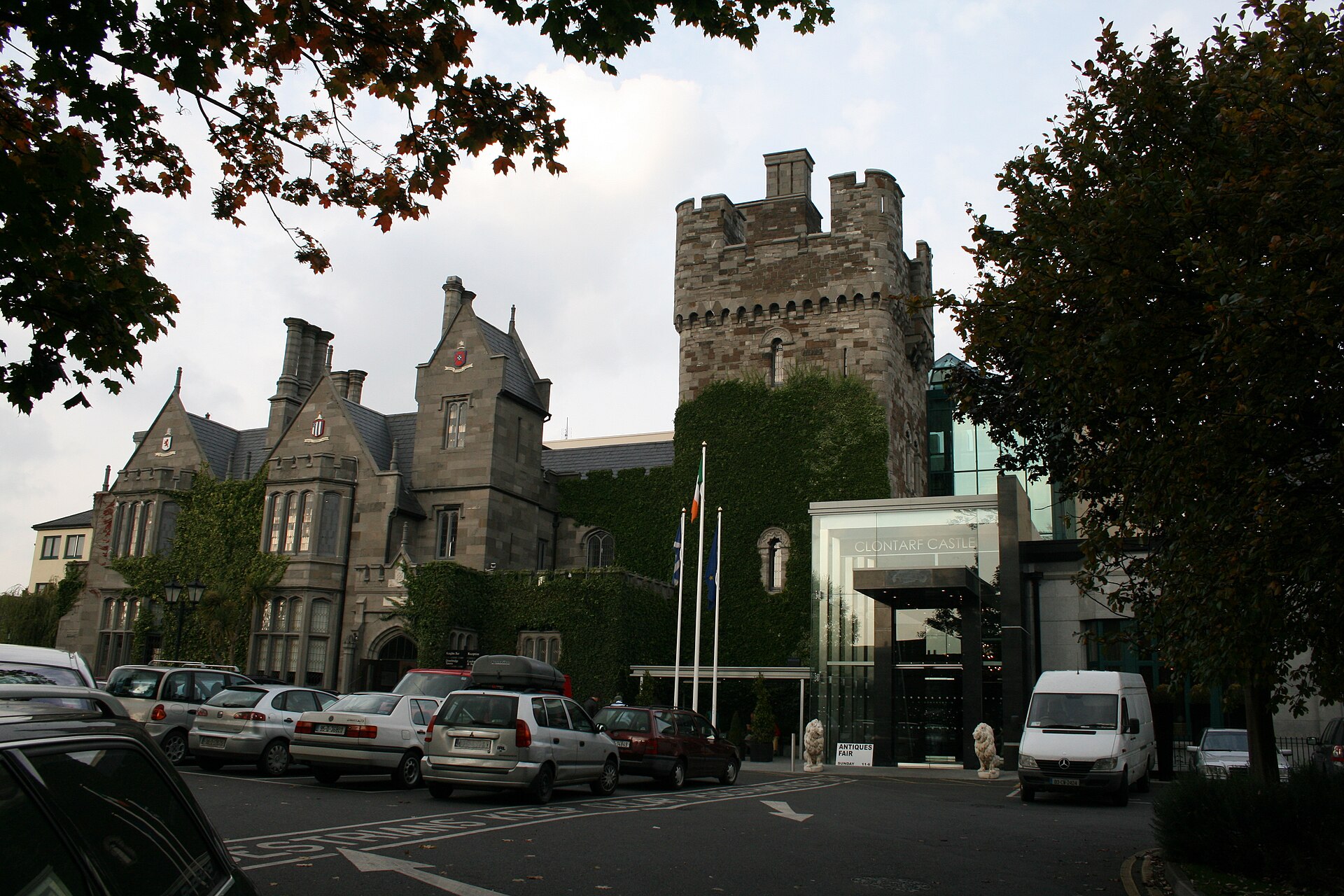
Clontarf, now a residential suburb on Dublin’s northside, was one of the most important Templar holdings in Ireland. The Order received lands here in the late 12th century, and the area remained under Templar control until the suppression.
Today, Clontarf Castle Hotel occupies the site. The current building dates from the 19th century — a Victorian-era structure that replaced whatever the Templars used. There is no medieval structure visible today, but the historical connection is well documented. The location is also famous as the site of the 1014 Battle of Clontarf, where Brian Boru defeated the Viking forces, though that battle predates the Templars by over a century.
Kilsaran, County Louth
Kilsaran, in County Louth, was the site of a Templar preceptory and one of the more significant Irish Templar houses. It served as a centre for managing the Order’s landholdings in Ulster.
There are limited visible remains at the site today. The location has been absorbed into the surrounding agricultural landscape over the centuries. What remains amounts to fragments rather than a complete structure, but Kilsaran is worth knowing about if you are serious about tracing Templar history in Ireland.
Crooke, County Waterford
The area around Waterford Harbour has a documented Templar connection. The Templars held land at a place called Crooke (sometimes Crook), and a preceptory operated in the general area.
Waterford is also linked — via a disputed etymology — to the phrase “by hook or by crook.” The saying may originate from plans to approach the harbour via Hook Head peninsula on one side, or the village of Crook on the other. Some researchers connect Crook to the Templar presence there, though this remains a matter of debate rather than settled history.
The city of Waterford itself is one of Ireland’s oldest, with a well-preserved medieval quarter centred on the Viking Triangle. It is worth visiting regardless of the Templar connection.
More Irish history, straight to your inbox. Join thousands of readers who get our free Ireland newsletter each week. Sign up free here.
The Suppression and What Happened in Ireland
In 1307, King Philip IV of France — heavily in debt to the Templars — moved against the Order. He pressured Pope Clement V to act, and on 13 October 1307, Templars across France were arrested en masse. The charges included heresy, blasphemy, and corruption. Many were tortured into confessions. In France, dozens were burned at the stake.
The arrests spread across Europe. In Ireland, they came in 1308. What followed was notably different from the French experience.
The Irish Templars largely escaped the worst of it. Trials were held and confessions were extracted, but no executions of Irish Templars are recorded in the historical sources. Those who appeared before the ecclesiastical courts received penances and were either released or absorbed into other religious orders.
Historians have suggested this relative leniency reflects the practical realities of medieval Ireland. Central authority was weaker than in France, and local lords had little appetite for carrying out a French king’s agenda. The Irish Church also moved more slowly than its continental counterparts.
The Order was formally dissolved by Pope Clement V at the Council of Vienne in 1312. In Ireland, as across Europe, Templar properties were transferred to the Knights Hospitaller.
The Hospitallers and Kilmainham
The Knights Hospitaller — the Order of St John — took over most of the former Templar holdings in Ireland following the suppression. Their main Irish base was at Kilmainham, on the western edge of Dublin.
Kilmainham Priory became one of the most important Hospitaller sites in Ireland, and the Prior of Kilmainham was a significant political figure in medieval Irish society. The priory itself no longer stands — the site is now occupied by Kilmainham Gaol, the famous 19th-century prison where leaders of the 1916 Easter Rising were executed.
Standing inside Kilmainham Gaol today means standing on ground that has seen many centuries of Irish history, from the medieval religious orders through to British colonial justice. The gaol requires a pre-booked ticket, available through the OPW (Office of Public Works) website.
Visiting Templar-Connected Ireland Today
If you want to trace Ireland’s Templar connections yourself, here is a practical outline of where to go.
Dublin: Start at Clontarf — it is easily accessible by DART from the city centre. Then head across the city to Kilmainham Gaol. Both are full days in themselves if you factor in the surrounding area. Book Kilmainham tickets in advance; it sells out regularly.
County Louth: Kilsaran is a short drive from Drogheda. The town of Drogheda itself has significant medieval heritage, including St Laurence’s Gate — one of the best-preserved medieval town gates in Ireland — and the Millmount Museum, which covers the area’s long history.
County Waterford: Waterford’s Viking Triangle is the place to start. Reginald’s Tower, one of the oldest civic buildings in Ireland, sits at the edge of the medieval city. The Medieval Museum on Cathedral Square gives strong context for the period when the Templars were active in the area. Entry fees are modest and the exhibitions are well done.
County Meath: Trim Castle — the largest Anglo-Norman castle in Ireland — was not a Templar site, but it dates from the same era (construction began around 1173) and gives excellent physical context for what Norman military architecture looked like in Ireland. The castle is managed by the OPW, and guided tours run seasonally. It is one of the most impressive medieval structures in the country.
The Templars are one thread in a much larger tapestry of medieval Irish history. But for anyone who has wondered whether Ireland has its own answer to the Templar sites of France and Portugal — it does. The evidence is quieter, less dramatised, and sometimes harder to find. That, in many ways, makes it more interesting.
Planning a trip to Ireland? Our free newsletter shares hidden history, travel tips, and local knowledge every week. Join free — subscribe here.
☘️ Join 64,000+ Ireland Lovers
Every weekday morning, get Ireland’s hidden gems, local secrets, and travel inspiration — the kind you won’t find in any guidebook.
Subscribe free — enter your email:
📲 Know someone who’d love this? Share on WhatsApp →
Free forever · Unsubscribe anytime
Tours & experiences you might love


Powered by Viator. Some links are affiliate links — we may earn a small commission at no extra cost to you.
Secure Your Dream Irish Experience Before It’s Gone!
Planning a trip to Ireland? Don’t let sold-out tours or packed attractions spoil your journey. Iconic experiences like visiting the Cliffs of Moher, exploring the Rock of Cashel, or enjoying a guided walk through Ireland’s ancient past often sell out quickly—especially during peak travel seasons.

Booking in advance guarantees your place and ensures you can fully immerse yourself in the rich culture and breathtaking scenery without stress or disappointment. You’ll also free up time to explore Ireland’s hidden gems and savour those authentic moments that make your trip truly special.
Make the most of your journey—start planning today and secure those must-do experiences before they’re gone!