

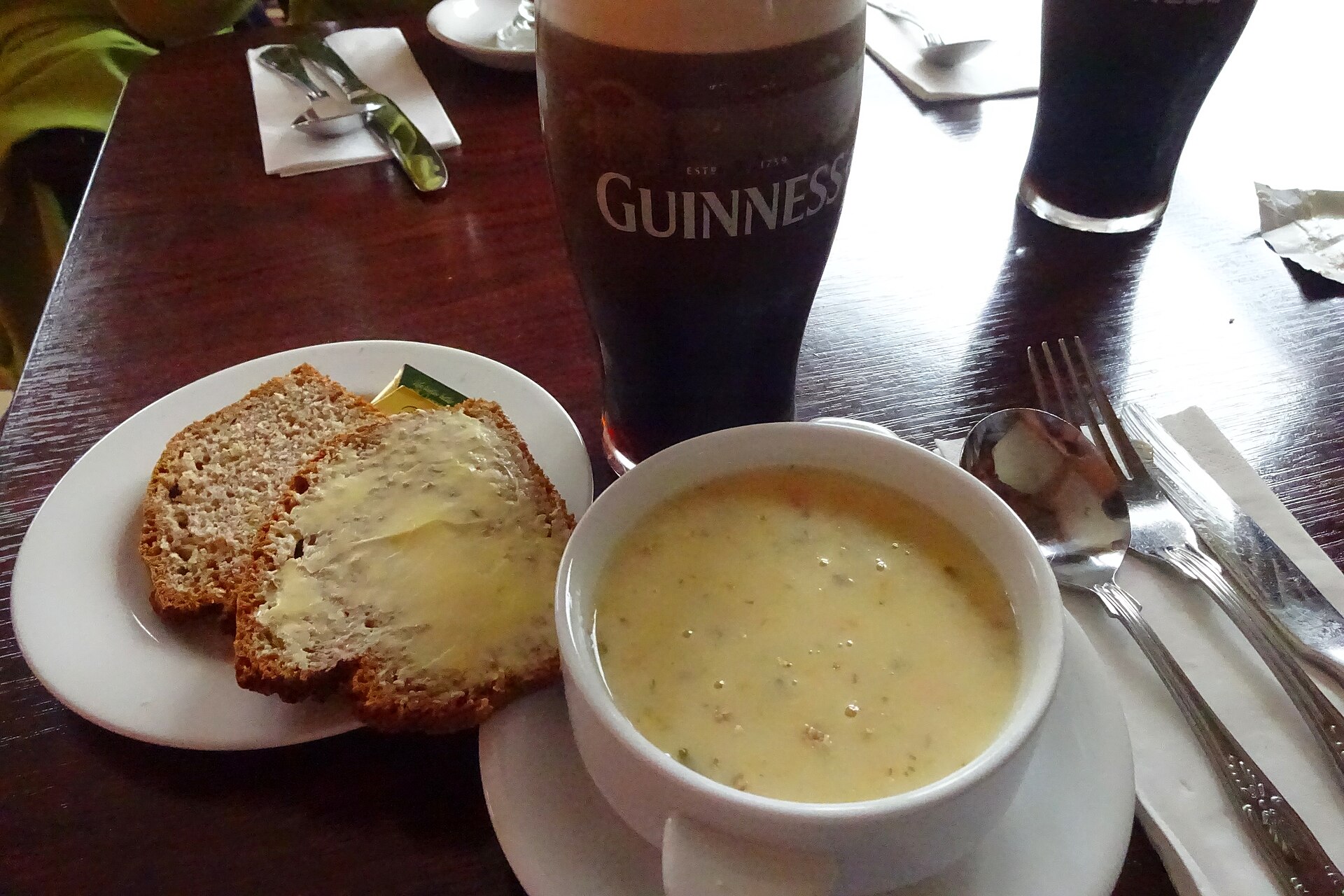
Walk into almost any pub along Ireland’s coastline on a cold day and you will see a bowl of seafood chowder on the menu. It arrives thick and cream-white, with chunks of fish and shellfish sitting just below the surface. A wedge of brown bread lands beside it. This is not a dish invented for tourists. It has been part of coastal Irish life for as long as fishermen have been bringing in catches from the Atlantic.
If you have ever eaten a bowl and wondered what exactly gives it that depth — that savoury, slightly smoky richness that you cannot quite identify — this article has the answer, the recipe, and a few places in Ireland where the chowder is worth going out of your way for.
Why Irish Seafood Chowder Stands Apart
Chowder is not uniquely Irish. New England has its own version. France has bisque. But Irish seafood chowder has a character that sets it apart from both.
The base is a cream broth, not a tomato broth. The seafood is fresh — typically a mix of whatever is in season, often including salmon, haddock, prawns, and mussels. Potatoes are standard, adding body to the bowl. The seasoning is restrained. There is no heavy use of spice.
What makes it distinctly Irish is the geography behind it. Ireland has over 3,000 kilometres of coastline (the Ordnance Survey Ireland estimate is around 3,171km). Fishing has been central to coastal communities in counties like Clare, Donegal, Mayo, Kerry, and Cork for centuries. The chowder you eat in a pub in Dingle or Dunmore East reflects that — the ingredients have often come off a boat the same morning.
But the freshness of the seafood is only part of the story. There is a second ingredient that explains the depth.
The Ingredient That Makes the Difference
Ask a cook in a west-coast fishing village what makes their chowder different and most will point to one thing: smoked fish.
Smoked haddock or smoked salmon added to the pot alongside fresh fish gives Irish seafood chowder its characteristic depth. The smoking process creates compounds that dissolve into the cream broth during cooking, producing a flavour that is savoury, slightly earthy, and impossible to replicate with fresh fish alone.
It is not a new technique. Smoking fish was a preservation method long before refrigeration existed. Coastal communities in Connemara, Donegal, and Cork smoked their catches to extend shelf life through winter. The flavour that produced became a signature, not just a necessity.
Today, smoked haddock and smoked salmon are widely available in Irish supermarkets and fishmongers. Using them in your chowder is the single biggest difference between a good bowl and an exceptional one.
Want more Irish food, travel, and culture delivered to your inbox?
Join thousands of Ireland lovers who read our free weekly newsletter every week.
The Classic Recipe
This recipe serves four and takes around 35 minutes from start to finish. It uses a mix of smoked and fresh fish, which gives the broth its characteristic richness.
Ingredients
- 200g smoked haddock (or smoked salmon), skin removed, cut into chunks
- 300g fresh salmon or cod fillet, cut into chunks
- 150g raw king prawns, peeled
- 200g mussels, cleaned (or use pre-cooked)
- 3 medium potatoes, peeled and diced small (roughly 1cm cubes)
- 1 medium onion, finely diced
- 2 sticks of celery, finely sliced
- 2 cloves of garlic, minced
- 30g butter
- 1 tbsp plain flour
- 500ml fish stock (fresh or from a cube)
- 250ml double cream
- 100ml whole milk
- 1 bay leaf
- Salt and white pepper
- Fresh flat-leaf parsley, chopped, to serve
- Brown soda bread, to serve
Method
- Melt the butter in a large heavy-bottomed pot over a medium heat. Add the onion and celery and cook gently for 6–8 minutes until soft but not coloured. Add the garlic and cook for one further minute.
- Stir in the flour and cook for 90 seconds, stirring constantly. This cooks out the raw flour taste and will thicken the broth.
- Gradually add the fish stock, stirring as you pour to avoid lumps. Add the milk and bay leaf. Bring to a gentle simmer.
- Add the diced potatoes. Simmer for 10–12 minutes until the potatoes are just tender when pierced with a knife.
- Reduce the heat to low. Add the cream and stir gently. Do not allow the chowder to boil after this point — a high heat will cause the cream to split.
- Add the smoked fish first. After two minutes, add the fresh fish and prawns. If using fresh mussels, add them now too. Cover and cook for 3–4 minutes, until the fish is just cooked through and any mussels have opened. Discard any mussels that remain closed.
- Taste and season with salt and white pepper. Remove the bay leaf. Ladle into warmed bowls, scatter with fresh parsley, and serve immediately with brown soda bread.
A note on timing: Seafood overcooks quickly. Pull the pot off the heat as soon as the fish is just done — it will continue cooking in the hot broth for another minute or two as you serve. Overcooked prawns turn rubbery; overcooked haddock falls apart and muddies the broth.
Where to Find the Best Chowder in Ireland
If you would rather eat it than cook it, Ireland has no shortage of places doing it well. These are spots that have earned a reputation for their chowder over years, not Instagram posts.
The Lobster Bar & Restaurant, Waterville, County Kerry. A family-run gastropub on the Ring of Kerry waterfront, serving the town for more than 50 years. Seafood chowder is one of its signature dishes.
The Brass Monkey, Howth, County Dublin. Right on Howth’s West Pier, a working fishing harbour 30 minutes from Dublin city centre, this award-winning spot is regularly singled out for having the best chowder on the pier.
O’Dowd’s Seafood Bar and Restaurant, Roundstone, County Galway. Roundstone is a small harbour village in Connemara. O’Dowd’s has been run by the same family since 1906, in a building that has served as a bar since 1840, and its home-made chowder is one of the most consistently praised bowls in the west.
Cronin’s Pub, Crosshaven, County Cork. Crosshaven sits at the mouth of Cork Harbour. The building dates to 1892, and the Cronin family has run it as a pub since 1970 — the chowder is a staple that locals and visitors come back for year after year.
The Harbour Bar, Bray, County Wicklow. Just south of Dublin on the coast, this bright blue pub opposite the seafront was voted the world’s best bar by Lonely Planet in 2010. The chowder matches the setting.
Discover Ireland’s best food, places, and hidden gems every week.
Our free newsletter is read by people who love Ireland as much as you do — from Kerry to Donegal and everywhere in between.
Tips for Getting It Right at Home
If you are making this at home for the first time, a few practical points will make the difference between a decent bowl and a genuinely good one.
Use fish stock, not water. Water will produce a thin, flavourless broth. A good fish stock — even one from a cube — adds backbone. If you have time, make a quick stock from fish trimmings, onion, bay leaf, and water in 20 minutes.
Do not skip the smoked fish. This is the step most home cooks omit because they only buy fresh. The smoked fish does not overpower the chowder — it provides the background note that makes everything else taste more like itself.
Keep the heat low after adding cream. A boiling cream-based broth will split. Once the cream goes in, you want a very gentle simmer — barely a bubble breaking the surface.
Cut the potatoes small. Large potato chunks take longer to cook and can make the broth starchy. Small dice cook evenly and blend into the texture without dominating.
Brown soda bread is not optional. In Ireland, chowder arrives with bread because you need it to work the bowl. A thick-cut slice of brown soda bread absorbs the broth and completes the meal — see our guide to Dublin Bay shellfish recipes for more coastal classics. If you cannot get Irish soda bread, a good white sourdough is a reasonable substitute.
Make it the day before if you can. Like most stews, chowder improves overnight. Reheat it gently the next day on a low heat — again, do not boil. The flavours will be noticeably better.
A Dish Rooted in Place
Irish seafood chowder is not complicated food. It does not require expensive equipment or unusual techniques. What it requires is good seafood, a proper stock, and the patience to cook it slowly on a low heat.
The fact that it has fed fishing communities along the Irish coast for generations is not incidental. It is exactly the kind of dish that comes out of practical necessity — a way to use the day’s catch, stretch it with potatoes and cream, and feed a table of people who have been out on cold water since before dawn.
That history does not make it taste better by itself. But it does explain why a bowl of it, eaten at a harbour pub in Kerry or Galway with bread and a pint, feels like something more than a meal.
More like this, every week — completely free.
From harbour-side recipes to the best coastal drives in Ireland, our newsletter covers the country without the tourist-brochure language. Join us.
Tours & experiences you might love


Powered by Viator. Some links are affiliate links — we may earn a small commission at no extra cost to you.
Secure Your Dream Irish Experience Before It’s Gone!
Planning a trip to Ireland? Don’t let sold-out tours or packed attractions spoil your journey. Iconic experiences like visiting the Cliffs of Moher, exploring the Rock of Cashel, or enjoying a guided walk through Ireland’s ancient past often sell out quickly—especially during peak travel seasons.

Booking in advance guarantees your place and ensures you can fully immerse yourself in the rich culture and breathtaking scenery without stress or disappointment. You’ll also free up time to explore Ireland’s hidden gems and savour those authentic moments that make your trip truly special.
Make the most of your journey—start planning today and secure those must-do experiences before they’re gone!