

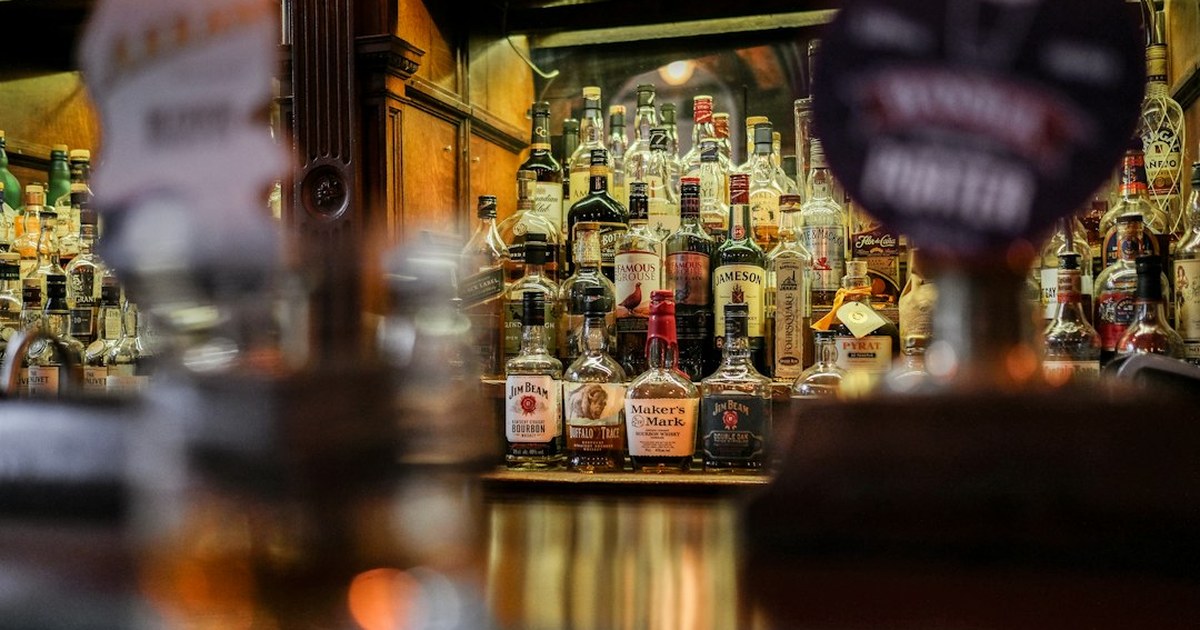
It is one of the more remarkable turnarounds in drinks history. Irish whiskey once ruled the world. Through the nineteenth century and into the early twentieth, Irish distilleries exported their spirit across the British Empire, into the United States, and throughout Europe in volumes that made Scotch whisky look like a regional curiosity. Names like Jameson, Powers, and Paddy were household words not just in Dublin but in Boston, Cape Town, and Melbourne. At its peak, Ireland had dozens of working distilleries producing a style of whiskey — typically triple-distilled, unpeated, and exceptionally smooth — that drinkers actively preferred over its Scottish rival. Then, in the space of a few brutal decades, almost all of it collapsed.
The causes stacked up like a slow-motion disaster. The United States, one of the biggest export destinations in the world, introduced Prohibition in 1920, wiping out American demand entirely for over a decade. Then, in 1932, the Anglo-Irish Trade War broke out after the new Fianna Fáil government withheld land annuity payments owed to Britain — Britain retaliated with steep tariffs on Irish goods, and Ireland responded in kind, cutting off preferential access to the UK market for most of the decade. When Prohibition ended in 1933, American drinkers discovered Scotch and Canadian whisky had filled the gap and were slow to return. Simultaneously, Irish distilleries faced a domestic market battered by economic hardship. By the 1960s, the situation had grown so dire that the three surviving major producers — John Jameson, John Power, and Cork Distilleries — merged in 1966 to form the Irish Distillers Group, essentially pooling resources to survive. Bushmills in Northern Ireland continued independently. That was more or less it. A spirit that had once filled hundreds of stills across the island was being produced, by the 1980s, in essentially two working locations: Midleton in County Cork, which Irish Distillers had opened in 1975 to consolidate production, and Bushmills in County Antrim. The Old Midleton Distillery, which had operated since 1825, closed its doors in 1975 when the new facility took over, and today that original building serves as the Jameson Experience visitor centre.
The rebuild was slow, unglamorous, and driven as much by stubbornness as by market logic. Pernod Ricard acquired Irish Distillers in 1988, bringing serious investment and distribution muscle. Jameson in particular was pushed hard into the American market, and patient work through the 1990s and 2000s eventually paid off — Jameson’s global sales figures began a rise that has not really stopped since, making it one of the fastest-growing spirits categories in the world for well over a decade. But the real turning point for diversity came with the opening of Cooley Distillery in County Louth in 1987, founded by John Teeling, which broke Irish Distillers’ effective monopoly and proved independent Irish whiskey could be commercially viable again. Cooley was eventually sold to Beam in 2012, but by then the floodgates had opened. The Dingle Distillery in County Kerry opened in 2012. Teeling Whiskey opened in Dublin’s Liberties — once the heartland of the city’s distilling industry — in 2015, the first new distillery in the capital in over a century. West Cork Distillers, Slane, Waterford, Glendalough, and dozens more followed. By the mid-2020s, Ireland had moved from two operational distilleries to well over forty, with more in planning stages across the island.
What makes this comeback particularly interesting for anyone curious about Irish pub culture is how it has changed the conversation at the bar. For decades, ordering Irish whiskey in Ireland largely meant choosing between Jameson, Powers, Paddy, or Bushmills — a short list with little variation. Today, a well-stocked Irish pub might carry expressions from Waterford’s single-farm-origin releases, peated versions from West Cork, grain whiskies from Teeling, or small-batch pot still whiskeys that echo the style Ireland was once famous for before blending became dominant. Single pot still whiskey — made from a mix of malted and unmalted barley distilled in a traditional copper pot still — is the one style genuinely native to Ireland, and its revival has been one of the more satisfying chapters in this story. Redbreast, Green Spot, Yellow Spot, and Powers John’s Lane are among the expressions bringing that historic style back to shelves and bars — see our guide to the best Irish whiskey brands for where to start.
Why It Matters Today
For anyone visiting Ireland, the whiskey revival gives pub visits a depth they simply lacked a generation ago. Distillery tours are now a legitimate part of any itinerary — the Jameson Experience at the Old Midleton Distillery in Cork is well-established, but Teeling in Dublin, Dingle on the Kerry peninsula, and Slane Castle in County Meath offer very different experiences and atmospheres. Many distilleries now have bars and tasting rooms open to visitors, and Irish pub staff in good establishments are increasingly knowledgeable about what they stock. Asking for a recommendation rather than defaulting to the familiar name on the bottle is genuinely worth doing — the answer might surprise you.
There is something quietly satisfying about drinking Irish whiskey in Ireland now, knowing the full arc of that story — the dominance, the near-extinction, and the patient work of getting back. It does not require any special expertise to appreciate. Order a pot still whiskey alongside whatever you were already planning to have, take a moment with it, and you are drinking something that was almost lost entirely. That is not a bad thing to reflect on over a quiet pint in a good Irish pub.
Tours & experiences you might love


Powered by Viator. Some links are affiliate links — we may earn a small commission at no extra cost to you.
Secure Your Dream Irish Experience Before It’s Gone!
Planning a trip to Ireland? Don’t let sold-out tours or packed attractions spoil your journey. Iconic experiences like visiting the Cliffs of Moher, exploring the Rock of Cashel, or enjoying a guided walk through Ireland’s ancient past often sell out quickly—especially during peak travel seasons.

Booking in advance guarantees your place and ensures you can fully immerse yourself in the rich culture and breathtaking scenery without stress or disappointment. You’ll also free up time to explore Ireland’s hidden gems and savour those authentic moments that make your trip truly special.
Make the most of your journey—start planning today and secure those must-do experiences before they’re gone!