

County Wicklow offers some of the most liveable landscapes in Ireland — sweeping mountain valleys, wild coastline, and small towns with genuine community life, all within 40 kilometres of Dublin. For anyone seriously considering making Ireland their home, Wicklow sits at the top of the list for good reason: you get dramatic Irish scenery without giving up access to a capital city.
Why County Wicklow Attracts People Who Want More Than a City
Wicklow is the fourth largest county in the province of Leinster by area, covering 2,024 square kilometres, yet it feels entirely different from county to county. The north is mountain and moorland — the Wicklow Mountains National Park alone spans over 200 square kilometres, making it the largest national park in Ireland. The east is coastal, with long sandy beaches and fishing harbours. The south opens into gentler valleys and farmland.
What makes this combination so appealing to people looking to relocate is the sheer range of lifestyles available within one county. You can live in a busy commuter town with cafés and restaurants, or settle in a mountain village where you know your neighbours by name. Both exist in Wicklow, and both have their loyal advocates.
The DART rail line — Dublin’s coastal railway — connects Bray to the city centre in around 40 minutes, and Greystones in under an hour. That single fact changes the calculation for anyone moving to Ireland with remote work in mind but who still wants the option of being in Dublin when needed.
If you are weighing up your options and want to understand what a move to Ireland actually involves — beyond the scenery — the full Move to Ireland guide covers what the process really looks like for Americans and others making the leap.
🇮🇪 Plan Your Perfect Ireland Trip
Join 64,000 Ireland lovers. Get weekly travel inspiration, hidden gems and local secrets — free every weekday.
The Towns Where People Choose to Live in County Wicklow
Understanding where people actually settle in Wicklow requires knowing the difference between the commuter belt towns in the north and the slower-paced communities in the south and inland.
Bray
With a population of around 33,500, Bray is Wicklow’s largest town and the most urban of the county’s settlements. It sits on the coast at the foot of Bray Head, with a long promenade, a busy main street, and a genuine town atmosphere rather than a commuter sprawl. The DART runs directly from Bray to Dublin city centre, making it a popular choice for people who want Irish seaside living with easy city access.
Greystones
Greystones has developed a strong reputation as one of Ireland’s most desirable places to live. The town has a thriving cafe culture, excellent schools, and a small working harbour. The DART terminates here, which keeps it well connected without the volume of traffic that larger commuter towns attract. Many people who relocate to Ireland from abroad specifically target Greystones for its balance of amenities and community feel.
Wicklow Town
The county town sits at the mouth of the River Vartry and offers a more traditional Irish town experience. There is a historic gaol, a working fishing harbour, and a pace of life noticeably slower than the north Wicklow commuter towns. People who settle here tend to value the sense of community and the access to both coastline and countryside.
Arklow
Further south, Arklow is a working town with a long history of boat-building and fishing. It offers lower property prices than north Wicklow, while still sitting on the coast and having rail links to Dublin. The town has a loyal local community and is often chosen by people who want to stretch their budget further while remaining in a coastal setting.
Roundwood
At 238 metres above sea level, Roundwood is Ireland’s highest village. It sits in the heart of the Wicklow Mountains, surrounded by reservoirs and forest. Life here is genuinely rural — a pub, a handful of shops, and a close-knit local community. People who choose Roundwood typically want mountain air, hiking from the door, and neighbours who look out for each other.
☘ Enjoying this? 64,000+ Ireland lovers get stories like this every week. Subscribe free
The Wicklow Mountains and What They Mean for Daily Life
The Wicklow Mountains are not a backdrop — they are a constant presence. On a clear morning you can see them from the coast. On a quiet afternoon you can be walking in them within twenty minutes of leaving a coastal town. For many people who relocate to Wicklow, the mountains become part of daily life in a way that city living never allows.
- Glendalough — the glacial valley contains a 6th-century monastic settlement founded by St Kevin. Two mountain lakes, ancient stone towers, and forest trails all sit within a single valley. It draws over 1.5 million visitors each year, but on a weekday morning in autumn, you can walk the upper lake trail in near solitude.
- The Wicklow Way — Ireland’s oldest long-distance walking trail begins in the Dublin Mountains and runs 131 kilometres south through Wicklow. Locals use sections of it for weekend walks without ever tackling the full route.
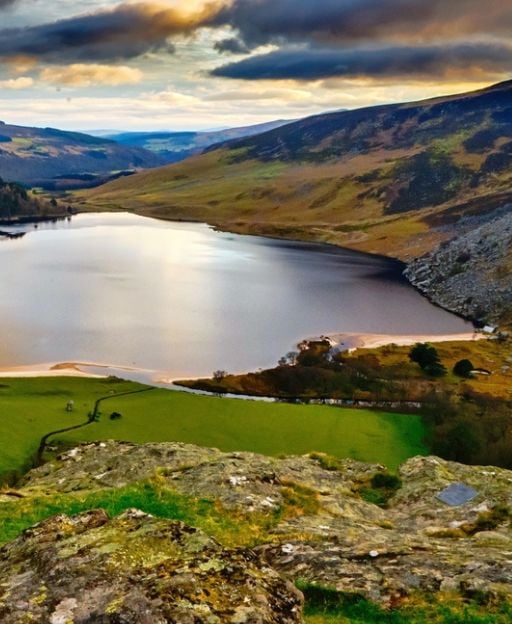
- Lough Tay — often called the Guinness Lake for its dark water and white sandy shore, this lake at Luggala is one of the most photographed spots in Ireland. The view from the road above is startling every single time.
- Sally Gap — the high mountain pass that cuts through the Wicklow Mountains, offering sweeping blanket bog views in every direction. In winter it can close in snow. In summer it becomes a favourite cycling and driving route unlike anything else near a capital city.
For people with dogs, the mountains are transformative. For runners and cyclists, they offer routes that take years to fully explore. For anyone who simply needs open space, having wild mountain country accessible within a short drive makes Wicklow a fundamentally different proposition from living in Dublin itself.
The Coastline and What Living by It Involves
County Wicklow has around 60 kilometres of coastline — more than most people realise. It runs from the southern edge of Dublin Bay all the way to the Wexford border, taking in everything from shingle beaches backed by cliffs to long sandy strands where families have been spending summer afternoons for generations.
The cliff path from Bray Head south to Greystones is used daily by walkers, runners, and cyclists, regardless of season. In summer the sea glitters and the path fills up. In November you have it largely to yourself.
Further south, Brittas Bay offers nearly five kilometres of sand backed by dunes — one of Ireland’s finest beaches. On a sunny August weekend it draws crowds from Dublin. On a weekday in May it can be almost empty. Living in Wicklow means having access to this kind of space without it being the only option available to you.
Food, Markets, and the Local Rhythm of Life
County Wicklow has long been known as a producer county. The soil and rainfall that make it green also make it genuinely productive for food. Wicklow lamb is considered among the finest in Ireland, and the county has a strong artisan food tradition supported by weekly farmers’ markets.
- Bray Farmers’ Market — runs on Saturdays at the seafront, combining local producers with artisan food stalls. It functions as a weekly social event as much as a shopping trip.
- Greystones Farmers’ Market — popular and consistent, with local cheese, bread, and seasonal produce available throughout the year.
- Local fishing — Wicklow Town and Arklow both have working fishing harbours. Fresh fish is a genuine part of local food culture rather than a marketing claim.
The cafe scene in north Wicklow has developed considerably over the past decade. Independent cafes have opened alongside specialist food shops, and the quality of everyday eating has risen to a level that makes daily life in the county feel genuinely comfortable rather than merely scenic.
Powerscourt Estate and Enniskerry: What Living Near Them Means
Powerscourt Estate sits in the hills above Enniskerry, and its gardens are consistently ranked among the finest in Europe — National Geographic placed them third in the world in 2014. For Wicklow residents, Powerscourt becomes familiar rather than special. You drive past the estate walls on your way to the mountains. You bring visiting relatives there without particularly thinking about it.
Enniskerry itself, the village closest to the estate, is one of the prettiest in Ireland. A central square of stone buildings, a waterfall within walking distance, mountains visible from the main street. It has been used as a filming location repeatedly, and for good reason. For people who move to Wicklow, it tends to become a destination for Sunday lunch rather than a place they visit as tourists.
What to Know Before You Move to County Wicklow
Wicklow is not the least expensive county in Ireland. Its proximity to Dublin means that property in the north of the county reflects the capital’s influence on the market. The further south you go, and the more rural the setting, the more the numbers change in your favour.
North Wicklow roads and the DART can be busy during the working week morning and evening. This is the direct trade-off for accessibility. People who want the quieter version of Wicklow look at the south of the county — at Arklow, at the villages around Aughrim, and at Blessington, which offers lakeside living at a considerably more accessible price point.
What Wicklow gives you that most Irish counties cannot match is genuine variety. Within a single county you can find DART-connected seaside towns, mountain villages with no traffic lights, working fishing harbours, world-class gardens, ancient monastic sites, and beaches stretching for kilometres. That range explains why Wicklow consistently appears on shortlists for Ireland’s most liveable counties for people arriving from abroad.
For a full picture of what a move to Ireland involves — the practical steps, the realistic timelines, and the emotional reality of making the leap — the Move to Ireland guide is the right place to start.
Frequently Asked Questions About Living in County Wicklow
Is County Wicklow a good place to live in Ireland?
County Wicklow is consistently regarded as one of Ireland’s most desirable places to live, particularly for people who want both mountain and coastal scenery within reach of Dublin. The north of the county has excellent DART rail connections to the capital, while the south offers a slower pace at lower cost.
How far is County Wicklow from Dublin?
The northern edge of County Wicklow begins approximately 20 kilometres south of Dublin city centre. Bray, the county’s largest town, is about 22 kilometres from the city, and the DART rail line connects Bray to central Dublin in around 40 minutes, and Greystones in under an hour.
What are the best towns to live in County Wicklow?
Greystones and Bray are the most popular choices for people relocating to Wicklow, offering coastal living with DART access to Dublin. Wicklow Town suits those who prefer a traditional Irish town at a slower pace. Arklow in the south is a working coastal town with more affordable options. Enniskerry is exceptional for those who prioritise scenery and village life above all else.
Is Wicklow expensive to live in compared to other Irish counties?
North Wicklow tends to be more expensive than many other Irish counties due to its proximity to Dublin. Property in Bray and Greystones reflects a DART commuter premium. South Wicklow — around Arklow, Aughrim, and Blessington — is considerably more affordable while still offering coastal and countryside access.
☘ Join 64,000+ Ireland Lovers
Every weekday morning, get Ireland’s hidden gems, local secrets, and travel inspiration — the kind you won’t find in any guidebook.
Subscribe free — enter your email:
Know someone who would love this? Share on WhatsApp
Love more? Join 43,000 Scotland lovers · Join 29,000 Italy lovers · Join 7,000 France lovers
Free forever · Unsubscribe anytime
Continue Planning
- Living in County Wicklow, Ireland: What the Garden of Ireland Really Looks Like
- Best Small-Batch Whiskey Distilleries to Visit on Ireland’s West Coast
- Rose of Tralee 2026: Why This Is the Best Week to Be in Kerry
Tours & experiences you might love


Powered by Viator. Some links are affiliate links — we may earn a small commission at no extra cost to you.
Secure Your Dream Irish Experience Before It’s Gone!
Planning a trip to Ireland? Don’t let sold-out tours or packed attractions spoil your journey. Iconic experiences like visiting the Cliffs of Moher, exploring the Rock of Cashel, or enjoying a guided walk through Ireland’s ancient past often sell out quickly—especially during peak travel seasons.

Booking in advance guarantees your place and ensures you can fully immerse yourself in the rich culture and breathtaking scenery without stress or disappointment. You’ll also free up time to explore Ireland’s hidden gems and savour those authentic moments that make your trip truly special.
Make the most of your journey—start planning today and secure those must-do experiences before they’re gone!