

If you’ve ever stood on a clifftop in County Clare with the Atlantic crashing below you, or sat in a slow-lit pub in Kenmare watching the rain roll in, you’ve probably had the thought. What if I just… stayed?
You’re not alone. In recent years, thousands of people — both Irish diaspora returning home and international dreamers who simply fell in love — have begun exploring Ireland as a retirement destination in earnest. And the numbers back it up: Ireland consistently ranks among Europe’s most liveable countries, with world-class healthcare, a rich cultural life, and a pace that city-weary souls find genuinely restorative.
Watch: Do You Qualify for an Irish Passport?
If one of your grandparents was born in Ireland, you may be able to become an Irish citizen. This 14-minute guide explains who qualifies, what it costs and how long it takes. Thinking of making the move? Get the free Moving to Ireland checklist.
Why Ireland? The Honest Answer
Ireland offers something genuinely rare: a country that feels both deeply rooted and surprisingly modern. The healthcare system (covered under the Health Service Executive for residents) is free at the point of use for those with a medical card, and Ireland has bilateral healthcare agreements with the UK and EU. Life expectancy here sits at 82.3 years — among the highest in the world.
Then there’s the intangible. People don’t retire to Ireland purely for the logistics — they retire here because of the conversations in village shops, the evening light over the bog, the fact that communities still exist the way they used to everywhere. Ireland is one of the few places in the English-speaking world where genuine community life hasn’t been entirely hollowed out.
Where Do People Actually Retire in Ireland?
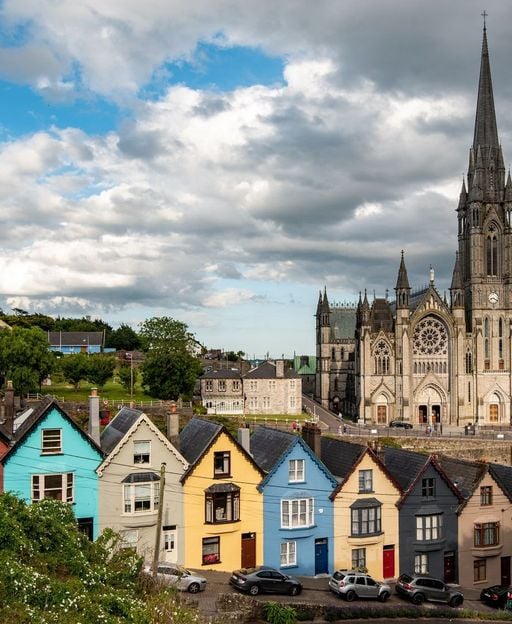
The most popular regions for those seeking a quieter life are Counties Clare, Kerry, Galway, and Donegal — each offering stunning scenery with property prices well below Dublin. West Cork in particular has become something of an unofficial expat enclave, with a thriving arts scene, excellent food culture, and villages like Skibbereen and Bantry where life genuinely moves at a different pace.
For those who want the cultural richness of a city without London or New York prices, Galway remains incomparable. It’s compact enough to walk everywhere, has a strong arts and music scene, and sits at the gateway to Connemara — one of the most dramatic landscapes in Europe.
The Practical Reality of Cost of Living
Ireland is not cheap. Dublin in particular has seen significant property price increases, with average rents in the capital now among the highest in Europe. However, outside the major cities, the picture changes substantially. A comfortable three-bedroom home in County Roscommon or Leitrim can be purchased for under €200,000, and the cost of food, services, and day-to-day living in rural Ireland remains genuinely affordable by Western European standards.
For Irish citizens and those with EU passports, residency is straightforward. For non-EU nationals, the Stamp 0 permission allows retirees with sufficient passive income (generally €50,000 per year for a couple, plus healthcare insurance) to live in Ireland. It requires renewal but is typically granted without issue to those who meet the financial threshold.
The Irish Diaspora Factor
Perhaps the most emotionally resonant reason people choose Ireland is ancestry. With over 70 million people of Irish descent worldwide — in the United States, Australia, Canada, Argentina, and beyond — many retirees aren’t discovering Ireland for the first time. They’re returning to it. They’ve grown up hearing their grandmother’s stories of Connaught, or tasting soda bread that never quite tastes the same anywhere else. Retirement becomes the moment they finally act on a feeling they’ve carried for decades.
Ireland has recently introduced citizenship by descent provisions that go back multiple generations, meaning many people who assumed they had no route to an Irish passport are discovering they qualify after all. The implications for retirement planning are significant.
Is It Really Possible?
Yes — and people are doing it every year. The dream is achievable. It requires planning, honest financial assessment, and some patience with the bureaucracy (Ireland’s civil service moves at its own gentle pace). But for those who’ve felt the pull, who’ve stood on that clifftop and felt something click into place, the question isn’t really “Can I retire in Ireland?” It’s “What am I waiting for?”
Frequently Asked Questions About Retiring in Ireland
Can a non-EU citizen retire to Ireland?
Yes. Non-EU nationals can apply for Stamp 0 permission, which allows residency in Ireland for people with sufficient passive income (typically €50,000 per year for a couple) and private health insurance. It must be renewed annually but is generally straightforward for those who qualify financially.
What is the cost of living like outside Dublin?
Significantly lower than the capital. Counties in the west and midlands offer property for €150,000–€250,000, and day-to-day costs for food, utilities, and services are comparable to or below other Western European countries outside major cities. Healthcare for residents with a medical card is free at the point of use.
Do I need to speak Irish (Gaelic) to live in Ireland?
No. Ireland is an English-speaking country. Irish (Gaeilge) is the first official language but everyday life in all parts of the country — including the Gaeltacht regions — is conducted in English. You will never need Irish to retire comfortably in Ireland.
Which part of Ireland is best for retirement?
It depends on your priorities. West Cork and Kerry offer stunning scenery and a strong international community. Galway combines culture with coastal beauty. Roscommon and Leitrim offer the best value for money in a peaceful rural setting. Anywhere along the Wild Atlantic Way provides that dramatic Atlantic landscape that draws so many people in the first place.
Thinking about it seriously?
If you’ve started actually planning a move, our complete the full Move to Ireland guide walks through every step, every cost, and the paperwork that catches most people out.
Tours & experiences you might love


Powered by Viator. Some links are affiliate links — we may earn a small commission at no extra cost to you.
Secure Your Dream Irish Experience Before It’s Gone!
Planning a trip to Ireland? Don’t let sold-out tours or packed attractions spoil your journey. Iconic experiences like visiting the Cliffs of Moher, exploring the Rock of Cashel, or enjoying a guided walk through Ireland’s ancient past often sell out quickly—especially during peak travel seasons.

Booking in advance guarantees your place and ensures you can fully immerse yourself in the rich culture and breathtaking scenery without stress or disappointment. You’ll also free up time to explore Ireland’s hidden gems and savour those authentic moments that make your trip truly special.
Make the most of your journey—start planning today and secure those must-do experiences before they’re gone!