

Ross Castle in Killarney has stood on the shore of Lough Leane since the 1400s. An ancient prophecy said it would never fall — not until a warship sailed on the lake beside it. In 1652, Oliver Cromwell’s general Edmund Ludlow decided to put that prophecy to work for him rather than against him. He brought boats overland and launched them on the water. The garrison looked out from the battlements, saw the impossible made real, and opened the gates without a fight.
Who Built Ross Castle?
The O’Donoghue Ross chieftains built the castle in the early 15th century, probably around the 1420s. They were lords of a territory called Eoghanacht Locha Léin — the land around Lough Leane — and they held that territory for centuries before any English castle builder came near Killarney.
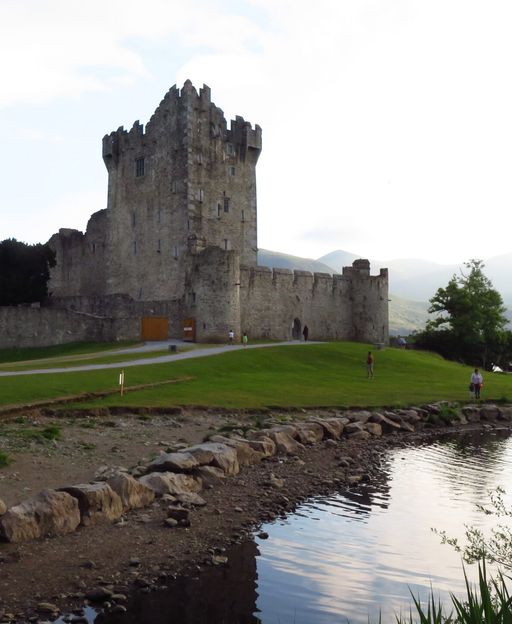
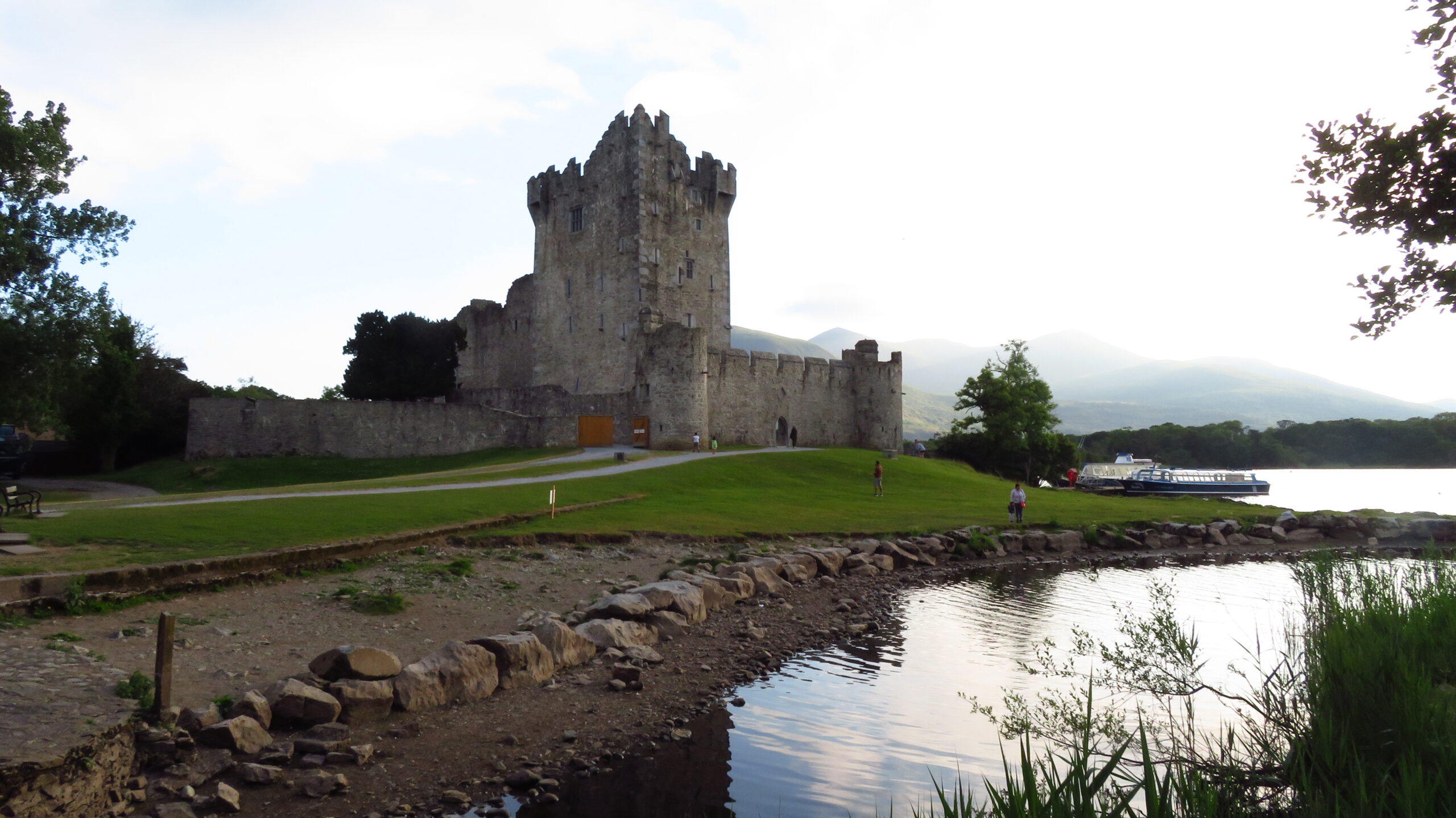
The structure they built is a classic Irish tower house: five storeys tall, with four corner turrets and a protected bawn wall running around the courtyard. The walls are more than 3 metres thick at the base. The castle sits directly on the water’s edge, the lake touching the stones of the outer wall on its eastern side. For a Gaelic chieftain in the 1400s, this was both a statement of power and a practical fortress that genuinely worked.
The O’Donoghue Ross family retained the castle through the Elizabethan era, through the Nine Years’ War, and into the 1600s. They were deeply Catholic, deeply Gaelic, and deeply resistant to the English plantation system that was steadily dismantling the old order of Irish lordship.
The Prophecy
At some point — no one knows exactly when — a prophecy attached itself to the castle. The line that passed down through generations was simple: Ross Castle would not fall until a vessel sailed upon Lough Leane. The lake was fresh water, landlocked, far from any sea. The idea of a warship appearing on it was, to anyone living in the 15th or 16th century, essentially impossible.
Prophecies like this were common in Gaelic Ireland. They gave the defenders of a place a deep and almost spiritual confidence. Blarney Castle had similar traditions. So did Cahir. A fortress with a prophecy attached to it was harder to surrender than one without — because surrender meant admitting the impossible had become real.
The Siege of 1652
By 1651, Cromwell’s forces had swept through most of Ireland. His campaign of 1649 to 1650 had included the notorious massacres at Drogheda and Wexford. By 1651, most of the country was under Parliamentary control. Ross Castle was one of the last strongholds still holding out in Munster, held by Viscount Muskerry — Donough MacCarthy — and a garrison of Confederate Catholic forces.
General Edmund Ludlow arrived to besiege the castle in the summer of 1652. He had artillery. He had a substantial army. He also had an intelligence officer who had heard the prophecy. Ludlow realised that breaking the prophecy was not just a military objective — it was a psychological one. If he could make the impossible happen, the garrison might simply collapse from dread before he had to take the walls by force.
His solution was audacious. He arranged for flat-bottomed gunboats — some accounts say small gunboats, others say floating artillery platforms — to be transported by sea to the River Laune, which feeds into Lough Leane. The boats navigated the river and entered the lake. Overnight, warships appeared on a lake that had never held a warship in recorded history.
- The castle garrison woke to find armed vessels on the water beside them
- The artillery on those boats could target the castle walls directly
- The prophecy — which had felt like protection — now functioned as a death sentence
- Viscount Muskerry negotiated a surrender rather than face bombardment
Ross Castle fell in July 1652. It was the last major stronghold to surrender in the province of Munster. The entire Confederate Catholic resistance in Kerry effectively ended that summer. The garrison marched out under the terms of the surrender and the Cromwellian settlement of Munster began.
The Ghost of O’Donoghue Ross
Long before Cromwell arrived, Ross Castle had another legend attached to it — one that locals tell to this day. The chieftain O’Donoghue Ross, it is said, did not truly die. He sank beneath the waters of Lough Leane and lives still in an enchanted kingdom beneath the surface. Every seven years, on the morning of May Day, he rises from the lake and rides across the water on a white horse, his silver-shod hooves skimming the surface.
People have claimed to see this apparition. Accounts appear in 19th-century folklore collections — riders on the shore at dawn on May Day, mist on the lake, the sound of hooves that might be water, might be something else. The story has persisted so stubbornly that even sceptical visitors sometimes rise early on the first of May and walk to the lakeshore.
Whether or not O’Donoghue Ross rides again, the legend says something important about what the castle meant to the people who built it. It was not just a military structure. It was the seat of a chieftain whose power was believed to be so deep-rooted that not even death could fully extinguish it.
What Happened to the Castle After Cromwell?
After the Cromwellian settlement, the castle passed into English hands. The Browne family — Viscounts Kenmare — held the surrounding land and used the castle as a residence for parts of the late 17th and 18th centuries. It garrisoned English troops during the Williamite wars of the 1690s. By the 19th century it had fallen out of use as a residence and began to deteriorate.
The Irish state took the castle into national care in the 20th century. Killarney National Park, which surrounds it, was established in 1932 when the Bourn Vincent Memorial Park — the former Muckross estate — came into state ownership. The castle underwent substantial restoration over the following decades and opened as a heritage attraction.
Today it stands almost fully intact: the tower house, the bawn wall, and the lakeshore setting are all essentially as they were in the 1420s. The 400-metre walk from the main park gate takes visitors through old oak woodland to reach it. From the battlements, on a clear day, you can see Macgillycuddy’s Reeks — Ireland’s highest mountain range — rising above the far shore of the lake.
☘ Enjoying this? 64,000+ Ireland lovers get stories like this every week. Subscribe free →
Visiting Ross Castle: What to Know
Ross Castle is inside Killarney National Park, about 2.5 kilometres from Killarney town centre. Most visitors walk or cycle from town along the lakeshore path. It is also accessible by car via Ross Road.
- Address: Ross Castle, Ross Road, Killarney, County Kerry, V93 E920
- Entry: €5 adults, €4 seniors/groups, €3 children/students (2026 prices)
- Season: Open 5 March to 3 November 2026, daily 09:30–17:00; guided tours only, first tour 10:00, last tour 16:55
- Tour length: Approximately 40 minutes
- Getting there from Killarney town: 2.5 km walk along the lake path, or 5-minute drive
- Jaunting cars: Traditional horse-drawn jaunting cars can take you to the castle from town
- Boat trips: Rowing boats are also available for hire on the lake
The guided tour covers the full five storeys of the tower house. Guides explain the Cromwellian siege in detail, including how Ludlow brought his boats overland and what the psychological effect on the garrison would have been. The castle interior has been furnished to represent different periods of its occupation.
What Is Nearby?
Ross Castle sits within one of Ireland’s most scenically rich areas. A short walk or cycle from the castle brings you to:
- Muckross House — a magnificent 19th-century Victorian mansion, 4 kilometres from Ross Castle, now a national museum
- Muckross Abbey — a 15th-century Franciscan friary with a vast central yew tree said to be as old as the building itself
- Torc Waterfall — a 20-metre cascade just off the park’s main road, 10-minute walk from the car park
- Ladies’ View — a viewpoint overlooking the Upper Lake and MacGillycuddy’s Reeks, 12 kilometres from Killarney town
The Castles of County Kerry: A Heritage Trail
Ross Castle is the most accessible and best-preserved of County Kerry’s tower houses, but it is far from the only one — see our roundup of Ireland’s best castles for more. Kerry was a stronghold of Gaelic Ireland longer than almost any other part of the country, and the landscape reflects that in the number of castles and fortified houses still standing.
- Ballycarbery Castle — 16th-century ruins near Cahersiveen on the Ring of Kerry, once held by the O’Connell family (ancestors of Daniel O’Connell)
- Carrigafoyle Castle — a 15th-century tower house near Ballylongford in north Kerry, partly destroyed by Elizabethan forces in 1580; now accessible across a causeway
- Rahinnane Castle — a circular fort on the Dingle Peninsula, accessible on foot across farmland, with views of the Brandon Mountain range
Each of these sites has its own story of resistance, siege, or fall. Together they trace the long process by which Gaelic Kerry — one of the last truly independent corners of the country — was brought under English control.
Frequently Asked Questions
What is the story of the prophecy about Ross Castle?
An ancient prophecy held that Ross Castle would never fall until a warship sailed on Lough Leane. When Cromwellian general Edmund Ludlow besieged the castle in 1652, he deliberately transported flat-bottomed gunboats along the River Laune and onto the lake. The garrison, seeing the prophecy fulfilled, surrendered without a prolonged siege. The castle fell in July 1652 as the last major Confederate stronghold in Munster.
Who built Ross Castle and when?
The O’Donoghue Ross chieftains built Ross Castle in the early 15th century, most likely around the 1420s. They were the Gaelic lords of the territory around Lough Leane in County Kerry and held the castle for over 200 years before the Cromwellian conquest. The tower house is five storeys tall with four corner turrets and walls more than 3 metres thick at the base.
How do I visit Ross Castle in Killarney?
Ross Castle is located 2.5 kilometres from Killarney town centre inside Killarney National Park. Entry costs €5 for adults (2026 price) and includes a guided tour. The castle is open from 5 March to 3 November 2026, daily from 09:30 to 17:00, with the first tour at 10:00 and the last at 16:55. You can walk or cycle to it from Killarney town along the lakeshore path, or drive via Ross Road.
If your family has Kerry roots, there’s a good chance your ancestors lived within sight of the castle’s battlements — our free Irish Ancestral Heritage Guide includes townland maps and records for every Kerry parish to help you trace them. Start searching your Irish roots here →
☘ Join 64,000+ Ireland Lovers
Every weekday morning, get Ireland’s hidden gems, local secrets, and travel inspiration — the kind you won’t find in any guidebook.
Subscribe free — enter your email:
📲 Know someone who’d love this? Share on WhatsApp →
Love more? Join 43,000 Scotland lovers → · Join 29,000 Italy lovers → · Join 7,000 France lovers →
Free forever · Unsubscribe anytime
Tours & experiences you might love


Powered by Viator. Some links are affiliate links — we may earn a small commission at no extra cost to you.
Secure Your Dream Irish Experience Before It’s Gone!
Planning a trip to Ireland? Don’t let sold-out tours or packed attractions spoil your journey. Iconic experiences like visiting the Cliffs of Moher, exploring the Rock of Cashel, or enjoying a guided walk through Ireland’s ancient past often sell out quickly—especially during peak travel seasons.

Booking in advance guarantees your place and ensures you can fully immerse yourself in the rich culture and breathtaking scenery without stress or disappointment. You’ll also free up time to explore Ireland’s hidden gems and savour those authentic moments that make your trip truly special.
Make the most of your journey—start planning today and secure those must-do experiences before they’re gone!