

Around 480 AD, a woman founded a religious community on the flat plains of Kildare and lit a fire. That fire kept burning for roughly 700 years. When it was finally put out, the women who came after her spent the next 450 years making sure no one forgot it had ever existed. In 1993, they lit it again.
This is the story of St. Brigid’s eternal flame — one of the oldest and most quietly remarkable threads in Irish religious history.
Who Was St. Brigid?
Brigid of Kildare is one of Ireland’s three patron saints, alongside Patrick and Colmcille. She was born around 451 AD, probably in County Louth, and died around 525 AD. Beyond those rough dates, the historical record and the legendary tradition are so thoroughly entangled that separating them is almost impossible.
What we know is that she founded a monastic community at a place called Cill Dara — the church of the oak — which became the town of Kildare. The community was unusual for its time in that it was a double monastery: both men and women lived and worshipped there, under Brigid’s authority. She served as abbess and, according to some accounts, was also ordained as a bishop — a point that has sparked considerable debate among historians and theologians ever since.
Her reputation spread across Ireland and eventually across Europe. She became associated with healing, craftsmanship, poetry, and the protection of livestock. Her name lives on today in one of Ireland’s most enduring given names. Her feast day, 1st February, falls on Imbolc — one of the old Celtic fire festivals marking the beginning of spring. That overlap between her tradition and the pre-Christian calendar was not an accident.
The Founding of the Flame
At some point after the founding of the Kildare community, an eternal flame was established there. The earliest written accounts come from Cogitosus, a monk who wrote a Life of Brigid around 650 AD — more than a century after her death. He describes the fire as already ancient and already famous.
The flame was kept burning in an enclosure that only women were permitted to enter. It was tended in rotation by nineteen nuns, each responsible for one day in a twenty-day cycle. On the twentieth day, the fire was left to Brigid herself. According to the tradition, she returned each night to tend it — and each morning, it still burned.
The number nineteen is significant. Brigid died on what would have been the nineteenth day of the cycle. So the structure of the tending schedule was itself a kind of theology: the nuns carried the work for nineteen days, and on the day that belonged to Brigid, the flame sustained itself.
Enjoy reading about Ireland’s history?
We share stories like this every week — saints, legends, hidden places, and the history that made Ireland what it is.
The Rules Around the Fire
The fire’s enclosure was not simply a physical boundary. It was described by the twelfth-century Welsh writer Giraldus Cambrensis — Gerald of Wales — in his book Topographia Hibernica, written around 1188. He visited Kildare and recorded what he found.
Gerald described a circular hedge surrounding the fire, within which no man was allowed to enter. He wrote that men who attempted to cross the boundary came to harm. The enclosure was considered sacred, presided over by Brigid and the women who served her.
Gerald himself was fascinated by the flame. He noted that despite burning for centuries, there was no ash accumulation — he attributed this to divine intervention. Whatever the true explanation, the image stuck: a fire that burned without consuming, tended by women, protected by an invisible boundary, in a field in the middle of Kildare.
The tradition drew parallels with the Vestal Virgins of Rome, who also maintained an eternal flame as a sacred duty. Whether those parallels reflect a direct cultural connection or simply a shared human impulse toward the symbolism of fire as continuity is unclear. What is clear is that the Kildare flame was taken seriously as a living spiritual institution, not merely a curiosity.
How 700 Years Came to an End
The flame’s first recorded extinguishing came in 1220, when Henry de Loundres, the Archbishop of Dublin, ordered it put out. He objected to what he called superstitious practices and wanted the flame extinguished on those grounds. The order was carried out.
It was relit not long afterwards — possibly under orders from Rome, possibly through local pressure. The records are incomplete. But it burned again, at least for a time.
The final extinguishing came during the Dissolution of the Monasteries under Henry VIII in the 1530s and 1540s. Religious houses across Ireland and Britain were suppressed, their communities dispersed, their property seized. The monastery at Kildare did not survive. The flame went out.
From the time of Brigid’s death around 525 AD to the Dissolution roughly one thousand years later, the flame had burned — with that one recorded interruption in 1220 — for approximately 700 years of continuous observance. Then it was gone.
Stories from every corner of Ireland
From ancient monasteries to living traditions, we cover the history and culture of Ireland you won’t find in a guidebook.
450 Years of Keeping the Memory Alive
After the Dissolution, Brigid’s flame existed only in written accounts and in the memory of communities that continued to venerate her. There was no flame, no enclosure, no tending schedule. But there were women who refused to let the tradition disappear entirely.
The Brigidine Sisters were founded in 1807 by Bishop Daniel Delany in Tullow, County Carlow. Their congregation took Brigid as their patron and committed to her spirituality — education, hospitality, and a particular attention to her flame as a symbol of living faith. Over the following two centuries, they kept the devotion to Brigid alive in practical ways: through teaching, through prayer, through the preservation of the stories associated with her name.
For roughly 450 years between the final extinguishing and the relighting, no flame burned in Kildare. But the story did not die. It survived in hagiographies, in folklore, in the liturgical calendar, and in the continued existence of communities — predominantly women — who saw Brigid not as a relic of the past but as a living spiritual presence.
The Relighting in 1993
In 1993, the Brigidine Sisters in Kildare relit St. Brigid’s flame in the town’s market square. The ceremony took place on 1st February — Brigid’s feast day and Imbolc — and marked the first time in over four centuries that a flame had burned in Kildare in her name.
The flame has burned there every year since. It is kept at the Solas Bhríde Centre in Kildare town — a small spirituality centre run by the Brigidine Sisters, open to visitors and pilgrims. The name means “Brigid’s light” in Irish.
The flame has since travelled further. In 2004, Brigidine Sisters Mary and Rita Minehan carried a flame from Kildare to the Glastonbury Goddess Conference in Somerset, marking a connection between Brigid’s tradition and the community at Glastonbury. On St. Brigid’s Day 2006, President Mary McAleese presided over the flame’s move to a permanent sculpture in Kildare’s Town Square, lit from the flame kept by the Brigidine Sisters at Solas Bhríde. Every St. Brigid’s Day, communities around the world request a light from Kildare to begin their own observances.
In 2023, Ireland officially added St. Brigid’s Day as a public holiday — observed on the first Monday of February, or on 1st February itself in years when that date falls on a Friday — the first new public holiday in decades. It is the only Irish public holiday named after a woman.
Visiting Kildare Today
Kildare town is about an hour south-west of Dublin by road or rail and is a straightforward day trip from the capital. The Solas Bhríde Centre is open to visitors; it is worth checking their website for current opening times before you travel, as hours vary by season.
St. Brigid’s Cathedral stands in the town centre. The current building was constructed by the Normans in the thirteenth century, but fell into ruin after the Reformation and was substantially rebuilt during a Victorian-era restoration completed in 1896; its foundations sit on the site of Brigid’s original monastery. The round tower beside it was rebuilt in the twelfth century, on the foundations of an earlier tower, and is one of the best-preserved examples in Ireland. Visitors can climb it during opening hours for a view across the Kildare plain — the same landscape Brigid would have known.
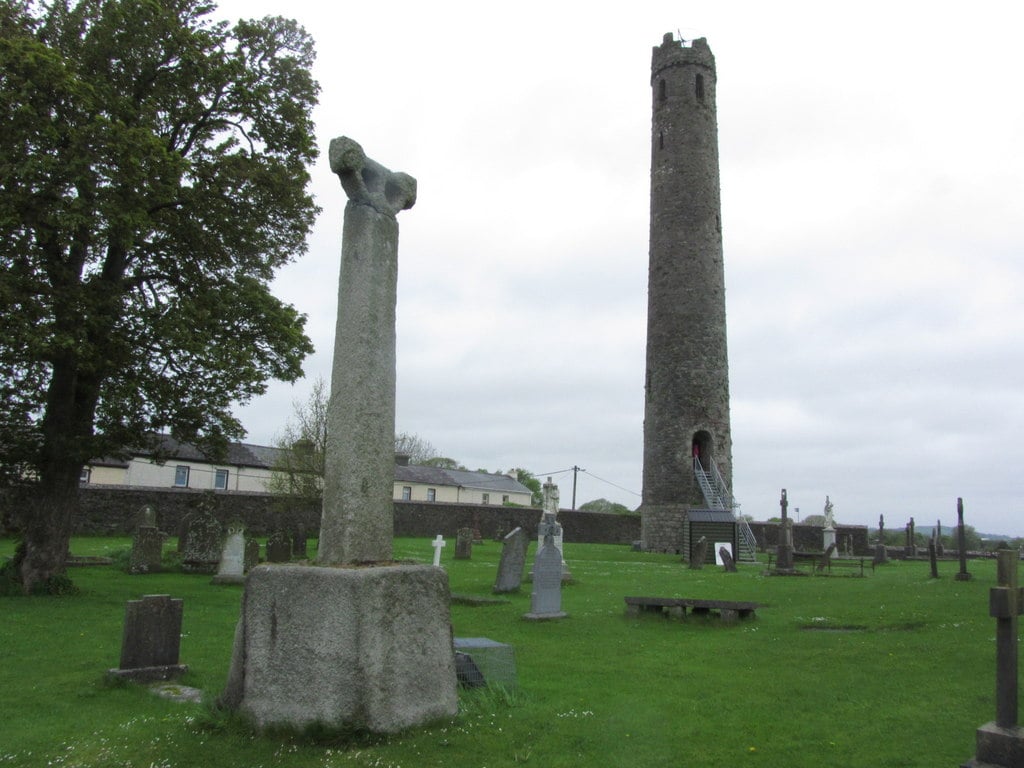
The Japanese Gardens and the Irish National Stud are also nearby, making Kildare an easy place to spend a full day. But the flame, and the story behind it, is reason enough to make the journey on its own.
A fire lit by women in the fifth century. Tended by women for seven hundred years. Kept alive in story by women for four and a half centuries after that. And relit by women in 1993, where it still burns today.
More stories from Ireland’s past and present
Every week we explore the places, people, and traditions that make Ireland worth knowing. Join thousands of readers who start their week with Love Ireland.
☘️ Join 64,000+ Ireland Lovers
Every weekday morning, get Ireland’s hidden gems, local secrets, and travel inspiration — the kind you won’t find in any guidebook.
Subscribe free — enter your email:
📲 Know someone who’d love this? Share on WhatsApp →
Free forever · Unsubscribe anytime
Tours & experiences you might love


Powered by Viator. Some links are affiliate links — we may earn a small commission at no extra cost to you.
Secure Your Dream Irish Experience Before It’s Gone!
Planning a trip to Ireland? Don’t let sold-out tours or packed attractions spoil your journey. Iconic experiences like visiting the Cliffs of Moher, exploring the Rock of Cashel, or enjoying a guided walk through Ireland’s ancient past often sell out quickly—especially during peak travel seasons.

Booking in advance guarantees your place and ensures you can fully immerse yourself in the rich culture and breathtaking scenery without stress or disappointment. You’ll also free up time to explore Ireland’s hidden gems and savour those authentic moments that make your trip truly special.
Make the most of your journey—start planning today and secure those must-do experiences before they’re gone!