
📱 The Love Ireland app is here — now on iPhoneDownload Love Ireland on the App Store
Skip to Content

The Love Ireland Guide № 008: Irish Whiskey

Sharing is caring!

Irish Whiskey — Ireland
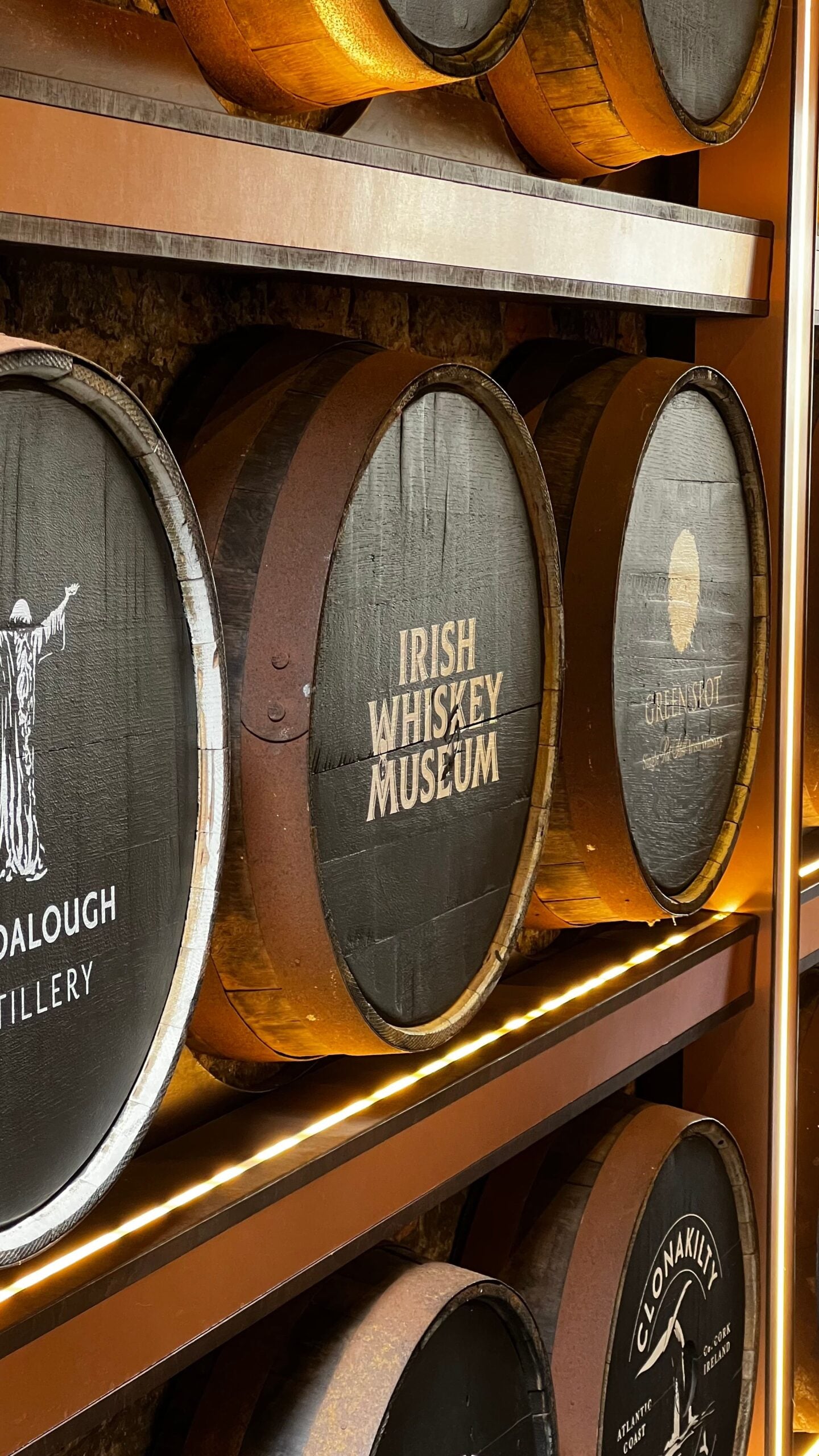
Photo by Saakshi Yadav on Pexels

The word “whiskey” comes from the Irish uisce beatha, meaning “water of life” — a phrase Irish monks likely borrowed from the Latin aqua vitae when they began distilling centuries ago. That extra “e” in “whiskey” is itself a marker of Irish (and most Irish-influenced) production, setting it apart from Scotch “whisky.” From the smoothness of a triple-distilled pot still to the revival of dozens of new distilleries across the island, Irish whiskey has one of the great comeback stories in the drinks world. This is Guide № 008 in The Love Ireland Guide series.

Get the Full Collectible Guide (Free PDF)

Irish Whiskey — in a beautifully designed, printable booklet. The Love Ireland Guide № 008.

What Makes Irish Whiskey Irish

By law, Irish whiskey must be distilled and matured on the island of Ireland — this includes both the Republic and Northern Ireland — and aged in wooden casks for a minimum of three years. Beyond geography, the category is defined by its styles rather than a single method. The most distinctive is single pot still whiskey, made from a mash of both malted and unmalted barley in a copper pot still, a style that is essentially unique to Ireland and gives a creamy, spicy character.

The other styles will be familiar to any whisky drinker: single malt (all malted barley from one distillery), grain whiskey (lighter, made in a column still), and blends that combine them. What Ireland does not require is peat. While a few Irish whiskeys are peated, the classic profile is unsmoked, which is a large part of why Irish whiskey reads as smoother and lighter to many palates.

The Triple-Distillation Question

Irish whiskey is widely associated with triple distillation, and the practice is real at several major producers — Midleton (home of Jameson and Redbreast) among them. Passing the spirit through the still three times rather than the more common two produces a lighter, cleaner distillate. It has become a signature talking point, and for good reason at the distilleries that use it.

That said, triple distillation is not a legal requirement and not universal. Some respected Irish distilleries distil twice, and a handful even experiment with other configurations. So while “triple-distilled” is a fair shorthand for the house style of the biggest names, it is a tradition and a choice rather than a rule that makes a whiskey Irish.

From Near-Death to Revival

It is easy to forget how close Irish whiskey came to disappearing. Once the dominant spirit on the world market in the 19th century, the industry was gutted in the 20th by a combination of the Irish War of Independence, a trade war with Britain, Prohibition in the United States, and the loss of Commonwealth markets. By the 1970s and 80s, the whole island was down to a tiny number of working distilleries, with production consolidated largely at Midleton and Bushmills.

The turnaround since the 2000s has been dramatic. Driven largely by the global success of Jameson, the category came roaring back, and the number of operating distilleries on the island has grown from a small handful to dozens. New and revived names — Teeling, Dingle, Waterford, and the reopened Tullamore among them — have brought single pot still and experimental whiskeys back into a market that had nearly written the category off.

Bushmills, Age, and Old Claims

The Old Bushmills Distillery in County Antrim holds a licence to distil dating to 1608, granted by King James I, and it markets itself on that basis. It is worth being precise, though: the 1608 date refers to the regional licence, while the Bushmills company itself was formally established in 1784. Both dates are genuine; they simply describe different things, and the “oldest” claim is a matter of how you count.

Age statements on the bottle refer to the youngest whiskey in that blend, not the average. A “12 Year Old” means every drop has spent at least twelve years in the cask, though older whiskeys may be included. Whiskey does not continue to age in glass, so a bottle you have kept for a decade is still whatever age it was when it was filled.

How to Drink It

There is no single correct way, but a few practical points help. Tasting neat or with a few drops of water is the way to judge a whiskey’s character — water can open up the aromas and take the edge off higher-strength bottlings. A tulip-shaped glass concentrates the aromas better than a wide tumbler, which is why distillery tastings rarely use the classic rocks glass.

Irish coffee, the famous pairing of hot coffee, sugar, whiskey, and lightly whipped cream, was popularised at Foynes in County Limerick in the 1940s, credited to chef Joe Sheridan serving cold transatlantic passengers. And if someone offers a toast, the traditional Irish sláinte (pronounced “slawn-cha”) means “health” — the correct thing to say before the first sip.

Myths Worth Retiring

Myth: All Irish whiskey is triple-distilled. It is a genuine tradition at big producers like Midleton, but it is not required by law and several Irish distilleries distil twice. It is a house style, not a national rule.

Myth: Irish whiskey is smooth because of the barley, not the peat. The lighter profile comes largely from the absence of peat smoke in the classic style (plus, at many distilleries, lighter distillation). A few Irish whiskeys are in fact peated.

Myth: Whiskey keeps ageing in the bottle. Whiskey only matures in wood. Once bottled, it stops ageing — a 12-year-old bottle stored for twenty years is still a 12-year-old whiskey.

Frequently Asked Questions

Why is Irish “whiskey” spelled with an “e”?

The spelling with an “e” is the Irish (and predominant American) convention, while Scotch, Japanese, and Canadian producers generally use “whisky” without it. Both derive from the Irish uisce beatha, “water of life.” The extra letter is a handy quick tell of a whiskey’s likely origin, though it is a convention rather than a strict law.

What is single pot still whiskey?

It is a style largely unique to Ireland, made from a mash of both malted and unmalted barley distilled in a copper pot still. The unmalted barley gives it a creamy texture and a spicy, slightly peppery character. Redbreast and the Green Spot range are among the best-known examples.

Is more expensive or older Irish whiskey always better?

Not necessarily. Age and price track scarcity and time in the cask, not a guarantee of a flavour you will prefer. Many drinkers rate mid-priced pot still and single malt bottlings very highly, and the best whiskey for you is genuinely the one you enjoy drinking — so it is worth tasting before committing to a costly bottle.

More The Love Ireland Guides

The Love Ireland Guide is a numbered series — one tightly focused subject at a time, each with its own downloadable collectible edition. Guide № 001 is Irish Soda Bread, Guide № 002 is St. Patrick’s Day, Guide № 003 is The Claddagh Ring, Guide № 004 is Guinness — The Pour, The Pint, The Ritual, Guide № 005 is Irish Pub Etiquette, Guide № 006 is Irish Slang & Hiberno-English, Guide № 007 is The Irish Wake, This is Guide № 008. More editions are on the way.

☘️ Join 64,000+ Ireland Lovers

Every week, get hidden stories, local secrets, and travel inspiration from people who live and love it.

Subscribe free — enter your email:

Loved this? Share it ☘️

Tours & experiences you might love

Dublin LGBTQ Pride Historical and Cultural Walking Tour
From $29 · Selling fast
Book now →
Authentic Dublin private car tour Top Ranked Dubliner guide Éamon
From $549 · Selling fast
Book now →
Private Tour of Ring of Kerry & Valentia Island
From $1,190 · Selling fast
Book now →
Dunmore East Sea Safari to Hook Lighthouse
From $83 · Selling fast
Book now →

Powered by Viator. Some links are affiliate links — we may earn a small commission at no extra cost to you.

Other newsletters you might like

Love Paris

Love Paris — in your inbox Iconic landmarks, hidden gems and the best places to visit in Paris. One short email, every day.

Subscribe

Irish Videos

A daily newsletter and blog celebrating Ireland — its places, culture, music, history and the stories worth sharing from the Emerald Isle.

Subscribe

Love France

Your guide to travelling in France — itineraries, regional guides, food, wine, and everything you need to plan your trip.

Subscribe

The Ultimate Ireland Travel Guide

A daily travel newsletter and blog for Ireland — landmarks, hidden gems, the Wild Atlantic Way, food and pubs, trad music, castles and practical trip-planning tips for the Emerald Isle.

Subscribe

Newsletters via the One Two Three Send network.  ·  Want your newsletter featured here? Click here

Secure Your Dream Irish Experience Before It’s Gone!

Planning a trip to Ireland? Don’t let sold-out tours or packed attractions spoil your journey. Iconic experiences like visiting the Cliffs of Moher, exploring the Rock of Cashel, or enjoying a guided walk through Ireland’s ancient past often sell out quickly—especially during peak travel seasons.

Booking in advance guarantees your place and ensures you can fully immerse yourself in the rich culture and breathtaking scenery without stress or disappointment. You’ll also free up time to explore Ireland’s hidden gems and savour those authentic moments that make your trip truly special.

Make the most of your journey—start planning today and secure those must-do experiences before they’re gone!

Sharing is caring!

DISCLAIMER

Last updated May 29, 2023


WEBSITE DISCLAIMER

The information provided by Love to Visit LLC ('we', 'us', or 'our') on https://lovetovisitireland.com (the 'Site') is for general informational purposes only. All information on the Site is provided in good faith, however we make no representation or warranty of any kind, express or implied, regarding the accuracy, adequacy, validity, reliability, availability, or completeness of any information on the Site. UNDER NO CIRCUMSTANCE SHALL WE HAVE ANY LIABILITY TO YOU FOR ANY LOSS OR DAMAGE OF ANY KIND INCURRED AS A RESULT OF THE USE OF THE SITE OR RELIANCE ON ANY INFORMATION PROVIDED ON THE SITE. YOUR USE OF THE SITE AND YOUR RELIANCE ON ANY INFORMATION ON THE SITE IS SOLELY AT YOUR OWN RISK.

EXTERNAL LINKS DISCLAIMER

The Site may contain (or you may be sent through the Site) links to other websites or content belonging to or originating from third parties or links to websites and features in banners or other advertising. Such external links are not investigated, monitored, or checked for accuracy, adequacy, validity, reliability, availability, or completeness by us. WE DO NOT WARRANT, ENDORSE, GUARANTEE, OR ASSUME RESPONSIBILITY FOR THE ACCURACY OR RELIABILITY OF ANY INFORMATION OFFERED BY THIRD-PARTY WEBSITES LINKED THROUGH THE SITE OR ANY WEBSITE OR FEATURE LINKED IN ANY BANNER OR OTHER ADVERTISING. WE WILL NOT BE A PARTY TO OR IN ANY WAY BE RESPONSIBLE FOR MONITORING ANY TRANSACTION BETWEEN YOU AND THIRD-PARTY PROVIDERS OF PRODUCTS OR SERVICES.

AFFILIATES DISCLAIMER

The Site may contain links to affiliate websites, and we receive an affiliate commission for any purchases made by you on the affiliate website using such links. Our affiliates include the following:
  • Viator

We are a participant in the Amazon Services LLC Associates Program, an affiliate advertising program designed to provide a means for us to earn advertising fees by linking to Amazon.com and affiliated websites.

This disclaimer was created using Termly's Disclaimer Generator.