

In eighteen ninety, Sullivan babies in Ireland outnumbered O'Sullivans by about six to one. Last year it was the other way round: two hundred and eighty O'Sullivans, and just twenty-seven Sullivans. The O came back.
Watch: Where Do the Most Common Irish Surnames Come From? · Published 2 November 2026 · 8 min 7 s (8:07).
Subscribe to Love Ireland on YouTube for a new plain-English guide to Ireland every week.
Ireland’s top ten surnames among babies born in 2025
Every year, Ireland’s Central Statistics Office counts babies’ surnames. These figures cover the Republic of Ireland, not a count of everyone with each surname. Every spelling counts as a separate name, so Sullivan and O'Sullivan are two different names on its list. In 2025, there were 54,120 live births in the CSO release. Murphy came first, with five hundred and fifty-seven babies. Then Kelly, O'Brien, Walsh and Byrne. The next five were Ryan, O'Connor, O'Sullivan, Doyle and McCarthy. Almost all of them are old Irish family names, and each one began somewhere on this map. For a deeper look at what these names and their meanings reveal about your own ancestors, see our guide to the origins of Irish family names.
Murphy to Byrne
Murphy, in Irish Ó Murchadha, means descendant of Murchadh, the sea warrior. There was never one Murphy family but several: in Tyrone, in Sligo and in Wexford, and the Wexford family spread right across Leinster. Kelly, Ó Ceallaigh, comes from Ceallach, a name meaning strife. Again, several families; the best known ruled a large territory in Galway and Roscommon. O'Brien, Ó Briain, means descendant of Brian: Brian Boru, king of Ireland, killed at Clontarf in ten fourteen. His descendants ruled County Clare. Walsh is different. Breathnach simply means the Welshman: a label for the Norman newcomers who came over from Wales. So there was never one Walsh family, and never an O. Byrne, Ó Broin, is descendant of Bran, the raven. The family held north Kildare until the Normans drove them into the Wicklow mountains.
Ryan to McCarthy
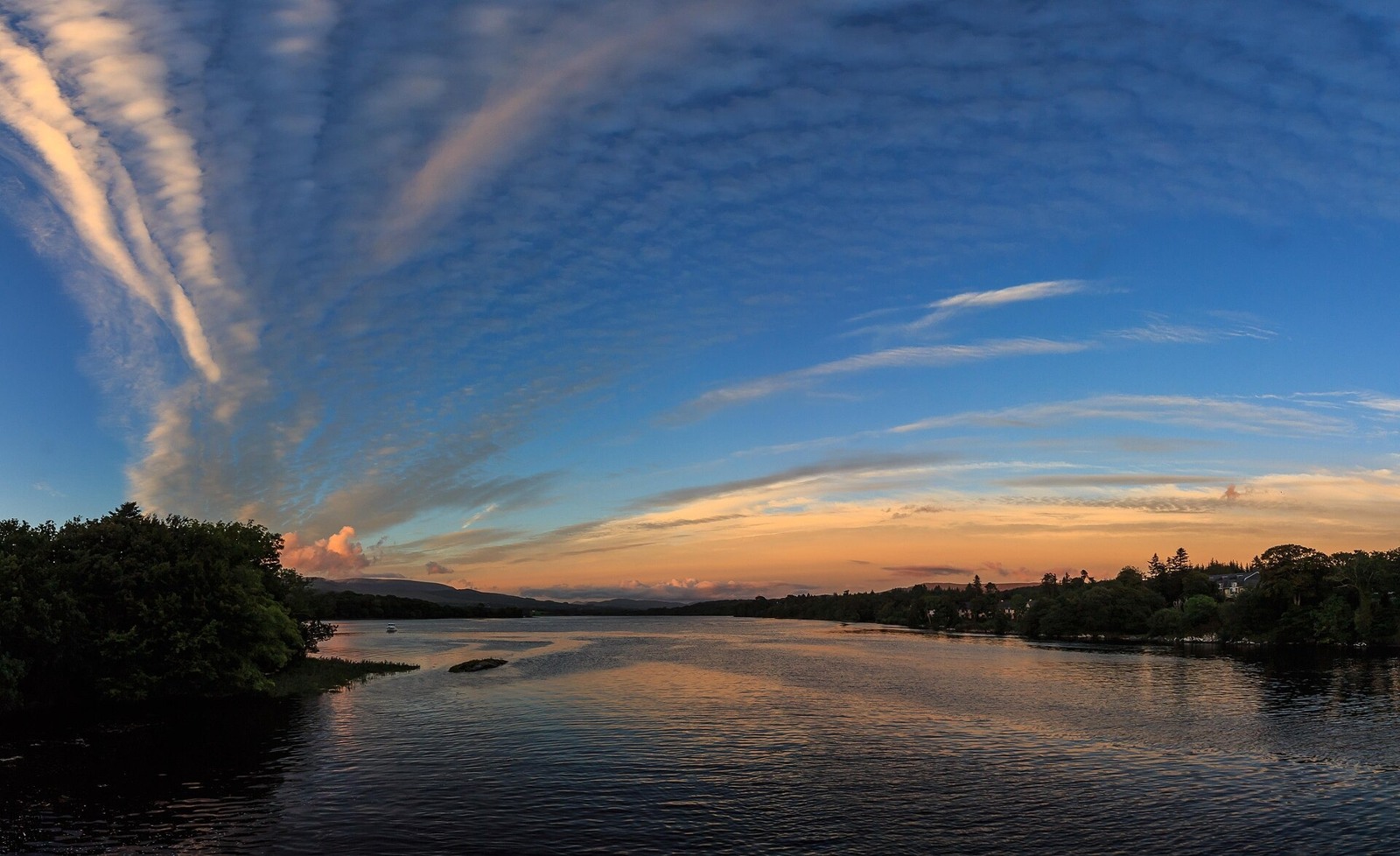
Ryan is mostly Ó Maoilriain, the follower of Rian: a family that settled in Owney, on the border of Tipperary and Limerick. A separate Ryan family ruled Idrone, in County Carlow. O'Connor, Ó Conchobhair, comes from an old personal name meaning high will, or desire. There were at least six O'Connor families. The most famous were kings of Connacht, and two of them became kings of all Ireland. O'Sullivan, Ó Súileabháin, is explained as the black-eyed. The family was pushed from Tipperary to the bays of Kenmare and Bantry. Doyle, Ó Dubhghaill, means the dark foreigner, very likely a name first given to a Viking. The surname scholar Patrick Woulfe, writing in nineteen twenty-three, found it most often along the coasts of Leinster and Munster. McCarthy, Mac Cárthaigh, is son of the loving one. The McCarthys were kings of Desmond, the south of Munster, in Cork and Kerry. Just behind them come O'Neill, the family of Tyrone, and O'Reilly, of Cavan. And at number thirteen, Burke, which is not Gaelic at all but Norman: de Búrca, of the borough, lords in Galway and Mayo. If your own family’s roots are around Kenmare or elsewhere in Kerry, see our guide to Irish surnames from County Kerry.
How the O and the Mac were lost
Now look at the list again. Only four of today's top ten carry an O or a Mac. And in eighteen ninety, two of those four, O'Connor and O'Sullivan, were usually written without it. The pressure started early. In fourteen sixty-five, a law ordered every Irishman living among the English in the counties around Dublin to take an English surname: a town, like Sutton or Kinsale; a colour, like white or brown; or a trade, like smith or carpenter. In the sixteen hundreds, according to a historical geographer at University College Cork, Irish surnames took roughly the forms we use today, and across much of the country the O and the Mac fell away. When the Registrar General counted the births of 1890, only about one in ten of the old O names still used the O. O'Reilly kept it less than one time in ten. O'Byrne, about one time in a hundred.
Smith, the translated name
Some names were not shortened. They were translated. Mac an Ghobhann means son of the smith. In the north it often stayed MacGowan. In the south it generally became Smith. The historian Edward MacLysaght thought that probably at least eight in ten of the Smiths of County Cavan were MacGowans by descent. So Smith, the most English-sounding name there is, came twenty-second among last year's babies in Ireland, and many of Ireland's Smiths began as Mac an Ghobhann.
How they came back
Then the prefixes started coming back. It began before eighteen ninety: around eighteen fifty, fewer than half the O'Neills used the O; by eighteen ninety, nearly two thirds did. From the eighteen eighties on, more and more families took back the O and the Mac. Look at last year's babies. O'Connor kept its O only one time in five in eighteen ninety. Last year there were two hundred and eighty-nine O'Connors and eighteen Connors. O'Reilly now outnumbers Reilly, and O'Brien is almost never written without its O. But some names never took it back. Murphy and Kelly both once had an O, yet last year neither O'Murphy nor O'Kelly reached the ten babies needed to appear in the count.
The same names in America
In America, the same names tell a different story. In the 2010 U.S. census, Murphy was the sixty-fourth most common surname in the United States, Kelly the seventy-fourth, and O'Brien the two hundred and fifty-eighth. Sullivan was a hundred and fifth, with almost two hundred and twenty-one thousand people. O'Sullivan was three thousand and thirty-second, with fewer than twelve thousand. That is about nineteen Sullivans for every O'Sullivan. In Ireland, the O came back. In America, mostly, it did not. So if your family is Sullivan, Connor or Reilly, nobody made a mistake. For centuries, that is how Ireland itself wrote those names. Curious what your own Irish surname says about where your family came from? See our guide to Irish surname origins.
Ireland’s top ten surnames, babies born in 2025
| Rank | Surname | Babies | Irish form | Meaning | Where the family began |
|---|---|---|---|---|---|
| 1 | Murphy | 557 | Ó Murchadha | descendant of Murchadh, "sea-warrior" | several families: Tyrone, Sligo and Wexford |
| 2 | Kelly | 455 | Ó Ceallaigh | descendant of Ceallach, "war, contention" | several families; the best known in Galway and Roscommon |
| 3 | O'Brien | 354 | Ó Briain | descendant of Brian (Brian Boru) | Clare |
| 4 | Walsh | 342 | Breathnach | the Welshman | many families; Normans who came from Wales |
| 5 | Byrne | 337 | Ó Broin | descendant of Bran, "raven" | north Kildare, then the Wicklow mountains |
| 6 | Ryan | 323 | Ó Maoilriain | follower of Rian | Owney, Tipperary and Limerick (and a separate family in Idrone, Carlow) |
| 7 | O'Connor | 289 | Ó Conchobhair | from Conchobhar, "high-will or desire" | at least six families; the best known kings of Connacht |
| 8 | O'Sullivan | 280 | Ó Súileabháin | explained as "black-eyed" | Tipperary, then the bays of Kenmare and Bantry |
| 9 | Doyle | 257 | Ó Dubhghaill | "the black foreigner" | most frequent on the Leinster and Munster coasts (Woulfe, 1923) |
| 10 | McCarthy | 209 | Mac Cárthaigh | son of Cárthach, "loving" | Desmond: Cork and Kerry |
Counts: Central Statistics Office, Irish Babies’ Names 2025, table VSA110 (each spelling counted separately). Irish forms, meanings and territories: Woulfe, Irish Names and Surnames (1923).
Sources
- Irish Babies' Names 2025 and table VSA110: Central Statistics Office
- Special Report on Surnames in Ireland (1894), Robert E. Matheson, General Register Office: scanned copy
- Atlas of Family Names in Ireland, William J. Smyth, University College Cork (archived copy)
- Irish Names and Surnames (1923), Rev. Patrick Woulfe, as published by Library Ireland
- Word meanings: eDIL, the electronic Dictionary of the Irish Language (Royal Irish Academy)
- Frequently Occurring Surnames from the 2010 Census: U.S. Census Bureau
Checked against each source on 15 October 2026.
Subscribe to Love Ireland on YouTube for a new plain-English guide to Ireland every week.
Tours & experiences you might love


Powered by Viator. Some links are affiliate links — we may earn a small commission at no extra cost to you.
Secure Your Dream Irish Experience Before It’s Gone!
Planning a trip to Ireland? Don’t let sold-out tours or packed attractions spoil your journey. Iconic experiences like visiting the Cliffs of Moher, exploring the Rock of Cashel, or enjoying a guided walk through Ireland’s ancient past often sell out quickly—especially during peak travel seasons.

Booking in advance guarantees your place and ensures you can fully immerse yourself in the rich culture and breathtaking scenery without stress or disappointment. You’ll also free up time to explore Ireland’s hidden gems and savour those authentic moments that make your trip truly special.
Make the most of your journey—start planning today and secure those must-do experiences before they’re gone!