

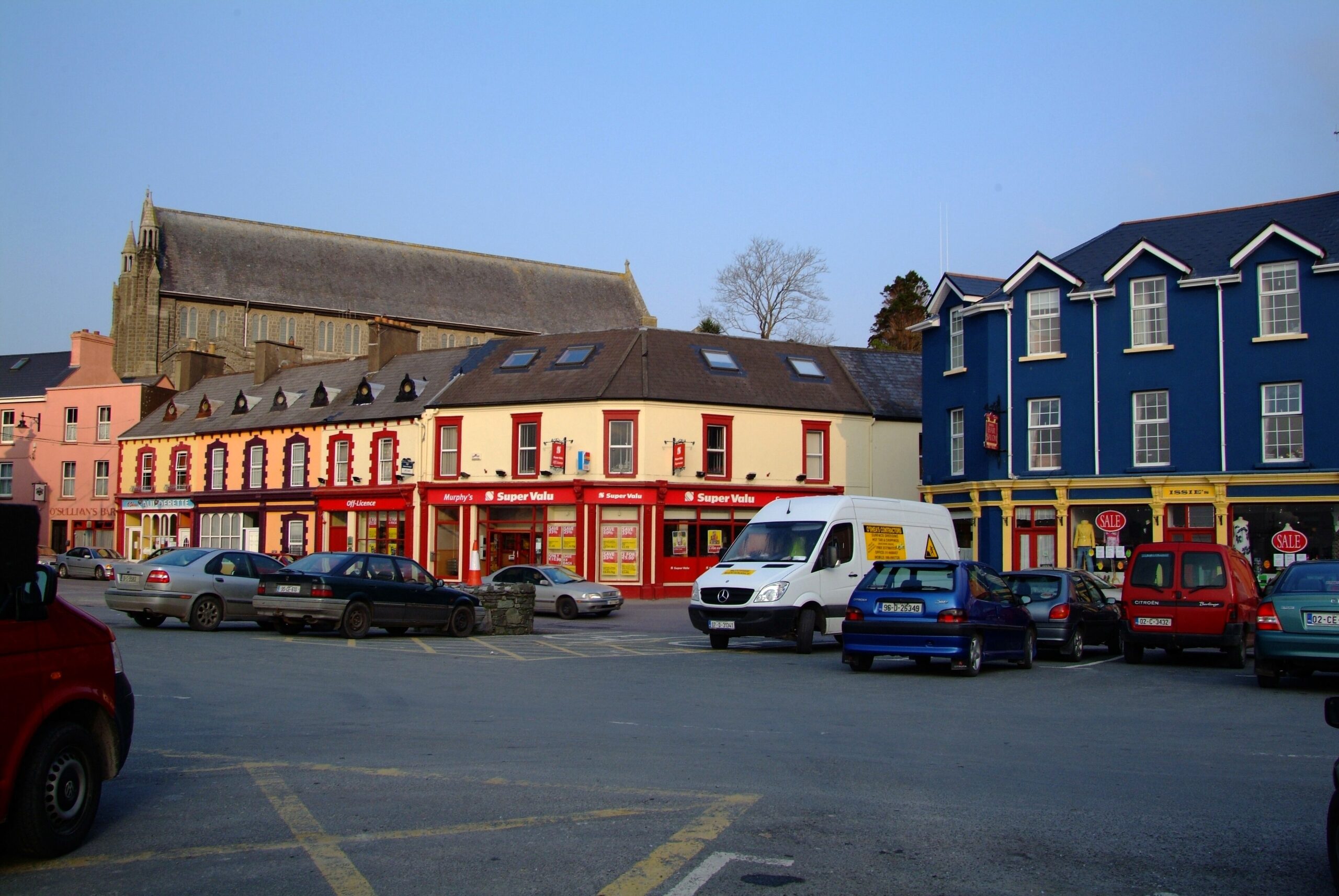
On 2 June 2026, a small harbour town in County Cork made global headlines. Castletownbere, on the Beara Peninsula, hosted 1,848 people who all share one surname: O’Sullivan. The gathering broke the Guinness World Record for the largest assembly of people with the same family name in one place.
Try the Guinness Timer ⏱️
A perfect pour takes 119.5 seconds — the rest, two minutes, gives the stout time to settle. Time your own pint and see if you wait long enough.
It was not just a local event. O’Sullivans flew in from Australia, New Zealand, Canada and the United States to take part. For many, it was their first visit to the land their ancestors left behind. For others, it was a homecoming that had been years in the making.
If you have Irish roots — or simply love Ireland — this is a story worth knowing.
What Happened on the Day
The record attempt was organised by the O’Sullivan Clan Association, which has been working for years to bring descendants of the clan together. The target was straightforward: gather more than the previous record number of people sharing the same surname in one location, verify each participant’s identity, and hold the event for the required duration.
Registration took place across Castletownbere town square and the surrounding streets. Guinness World Records adjudicators were on site to verify every participant. Each person had to provide documentation confirming their surname. By the final count, 1,848 O’Sullivans had been verified — a new world record.
The town itself rose to the occasion. Castletownbere is the largest settlement on the Beara Peninsula, known for its working fishing harbour and its position at the foot of the Slieve Miskish mountains. On record day, its streets were filled with people from across the globe, united by a shared name and a shared history.
Who Are the O’Sullivans?
O’Sullivan — written as Ó Súilleabháin in Irish — is one of the most common surnames in Ireland. The name is thought to derive from the Irish súilbhinn, meaning “dark-eyed” or “keen-eyed.” It is consistently ranked among the top five surnames on the island and is especially prevalent in Munster, particularly in Cork and Kerry.
Historically, the O’Sullivans were one of the most powerful clans in the province of Munster. Their territory covered much of what is now County Cork and County Kerry. At their peak, they controlled large stretches of the south-west coast, including the Beara Peninsula itself. Their strongholds included Dunboy Castle, which stands in ruins just outside Castletownbere today.
The clan divided into two main branches: Ó Súilleabháin Mór, based in Kerry, and Ó Súilleabháin Béara, based in Cork. It is the Béara branch — named after the very peninsula where the record was set — that gives Castletownbere its deep O’Sullivan connection.
Hundreds of thousands of O’Sullivans now live abroad, descendants of the waves of emigration that began in the 17th century and accelerated through the Famine years and beyond. The June gathering brought a fragment of that diaspora back to the place the name came from.
Want stories like this delivered to your inbox each week? Sign up for the free Love Ireland newsletter here.
The Beara Peninsula: An O’Sullivan Heartland
Castletownbere sits at the heart of the Beara Peninsula, a rugged stretch of land extending into the Atlantic between Bantry Bay and the Kenmare River. It is one of Ireland’s less-visited peninsulas, which means it has kept much of its original character — bare mountain ridges, patchwork farmland, tiny harbours, and very few tourist crowds.
The road that circles the peninsula — the Ring of Beara — passes through some of the most striking scenery in Ireland. Allihies Village, with its colourful painted houses and copper mine history, sits at the far end. The Uragh Stone Circle, on the Kerry side of the border, dates back over 4,000 years.
Dunboy Castle, a short drive from Castletownbere town, is one of the most significant O’Sullivan sites in Ireland. It was the last stronghold of Donal Cam O’Sullivan Béara, the clan chief who led a famous winter march north from Glengarriff in 1603 following the Battle of Kinsale. He set out with around 1,000 followers; fewer than 35 survived the journey to Leitrim. The march is remembered as one of the most dramatic episodes in Irish history.
For O’Sullivans visiting from the diaspora, standing in Castletownbere and looking out over Bantry Bay carries a weight that goes beyond sightseeing. This is where the name began.
The Irish Diaspora Came Home
The gathering drew participants from four continents. O’Sullivans arrived from Australia, New Zealand, Canada and the United States — countries that together hold hundreds of thousands of people with Irish heritage tracing back to Munster.
Many of the overseas participants had never been to Castletownbere before the event. Some had never visited Ireland at all. The record attempt gave them a specific reason to make the journey: a fixed date, a defined destination, and a shared goal. For heritage tourism, that combination is unusually powerful.
Ireland has one of the largest diaspora populations in the world relative to its home population. Estimates suggest that around 70 million people globally claim Irish descent — roughly fourteen times the current population of the island. For towns like Castletownbere, clan gatherings represent a direct line of connection to that global community.
The economic impact of diaspora tourism is also worth noting. When nearly 2,000 people travel from four continents to a single town in County Cork, the effect on local accommodation, restaurants, transport and services is considerable. Castletownbere is a working town, not a tourist resort. Events like this make a real difference to local businesses.
Thinking about visiting West Cork or tracing your own Irish roots? The Love Ireland newsletter has practical guides, travel inspiration and heritage stories every week — subscribe free here.
Why Clan Gatherings Matter
Ireland has a long tradition of clan rallies. The Clans of Ireland organisation has been bringing together families with surnames like O’Brien, O’Neill, McCarthy and Burke since the 1990s. These events serve several purposes at once.
They preserve family history. Many clan associations maintain detailed records of their family trees, and gatherings give members the chance to share research, compare notes, and discover relatives they did not know existed. The informal conversations at a clan event often turn up connections that no archive could provide.
They support cultural identity. For diaspora communities who have been away from Ireland for two or three generations, a clan gathering provides a tangible connection to a place of origin. It is not simply nostalgic — it is a way of grounding identity in something real, geographical, and shared.
And they put a spotlight on parts of Ireland that mainstream tourism sometimes overlooks. Castletownbere does not appear on every visitor itinerary. A Guinness World Record event of this scale changes that, at least for a moment, and reminds the world that the Beara Peninsula has a story of its own.
Planning a Visit to Castletownbere
If the O’Sullivan gathering has given you a reason to visit the Beara Peninsula, the area rewards the effort. Here are the essentials:
- Getting there: Castletownbere is around 120 kilometres from Cork city, via the N71 and R572. The drive takes approximately two hours. A car is the most practical way to get around — public transport connections are limited.
- Where to stay: The town has a small number of hotels, guesthouses and self-catering options. Accommodation books up quickly in summer, so plan in advance.
- What to see: Dunboy Castle ruins, Bere Island (accessible by ferry from the town pier), the Beara Way walking route, Allihies Village and the Copper Mine Museum, and the Uragh Stone Circle near Tuosist.
- When to go: June to August offers the most reliable weather, but May and September are quieter and often equally pleasant. The Ring of Beara is driveable year-round.
How to Research Your O’Sullivan Roots
If you carry the O’Sullivan surname — or suspect Irish ancestry — there are several practical starting points for tracing your family history.
The General Register Office holds civil records of births, marriages and deaths in Ireland from 1864 onwards. The National Archives of Ireland holds census records, estate papers and other historical documents. Catholic parish registers, many of which are now digitised and available via IrishGenealogy.ie, are particularly useful for Munster families.
County Cork’s local libraries and the Cork City and County Archives hold regional records that can help narrow a family line to a specific townland. The O’Sullivan Clan Association maintains genealogical resources and can connect you with others researching the same family branches.
If you are starting from scratch with no documents, a DNA ancestry test can confirm Irish heritage and potentially match you with living relatives. Several major providers offer services that link results to surname databases, making it easier to find distant cousins who have already done the research.
From heritage trails to hidden villages, the Love Ireland newsletter covers the stories behind the places you love. Join thousands of Ireland lovers and subscribe free today.
A Record That Belongs to Castletownbere
The 1,848 O’Sullivans who gathered in Castletownbere on 2 June 2026 did something that had never been done before. They set a Guinness World Record. But more than that, they chose a specific place, on a specific peninsula, for a reason. This corner of County Cork is where the O’Sullivan story began — in the townlands, the castles, and the harbour of the Beara.
For anyone with a connection to this name, or to Ireland’s wider story of emigration and return, the record is more than a number. It is a sign that the ties between the diaspora and the homeland remain strong — and that Castletownbere, quiet and rugged as it is, still has the power to bring people home.
Thinking about it seriously?
If you’ve started actually planning a move, our complete the full Move to Ireland guide walks through every step, every cost, and the paperwork that catches most people out.
Tours & experiences you might love


Powered by Viator. Some links are affiliate links — we may earn a small commission at no extra cost to you.
Secure Your Dream Irish Experience Before It’s Gone!
Planning a trip to Ireland? Don’t let sold-out tours or packed attractions spoil your journey. Iconic experiences like visiting the Cliffs of Moher, exploring the Rock of Cashel, or enjoying a guided walk through Ireland’s ancient past often sell out quickly—especially during peak travel seasons.

Booking in advance guarantees your place and ensures you can fully immerse yourself in the rich culture and breathtaking scenery without stress or disappointment. You’ll also free up time to explore Ireland’s hidden gems and savour those authentic moments that make your trip truly special.
Make the most of your journey—start planning today and secure those must-do experiences before they’re gone!
Subscribe Free