

Most people assume the headless horseman is an American invention. It isn’t. Long before Washington Irving wrote his famous tale in 1820, Irish country people were already warning one another about something far more terrifying — the Dullahan, a rider with no head at all, galloping through the dark to collect the dying.
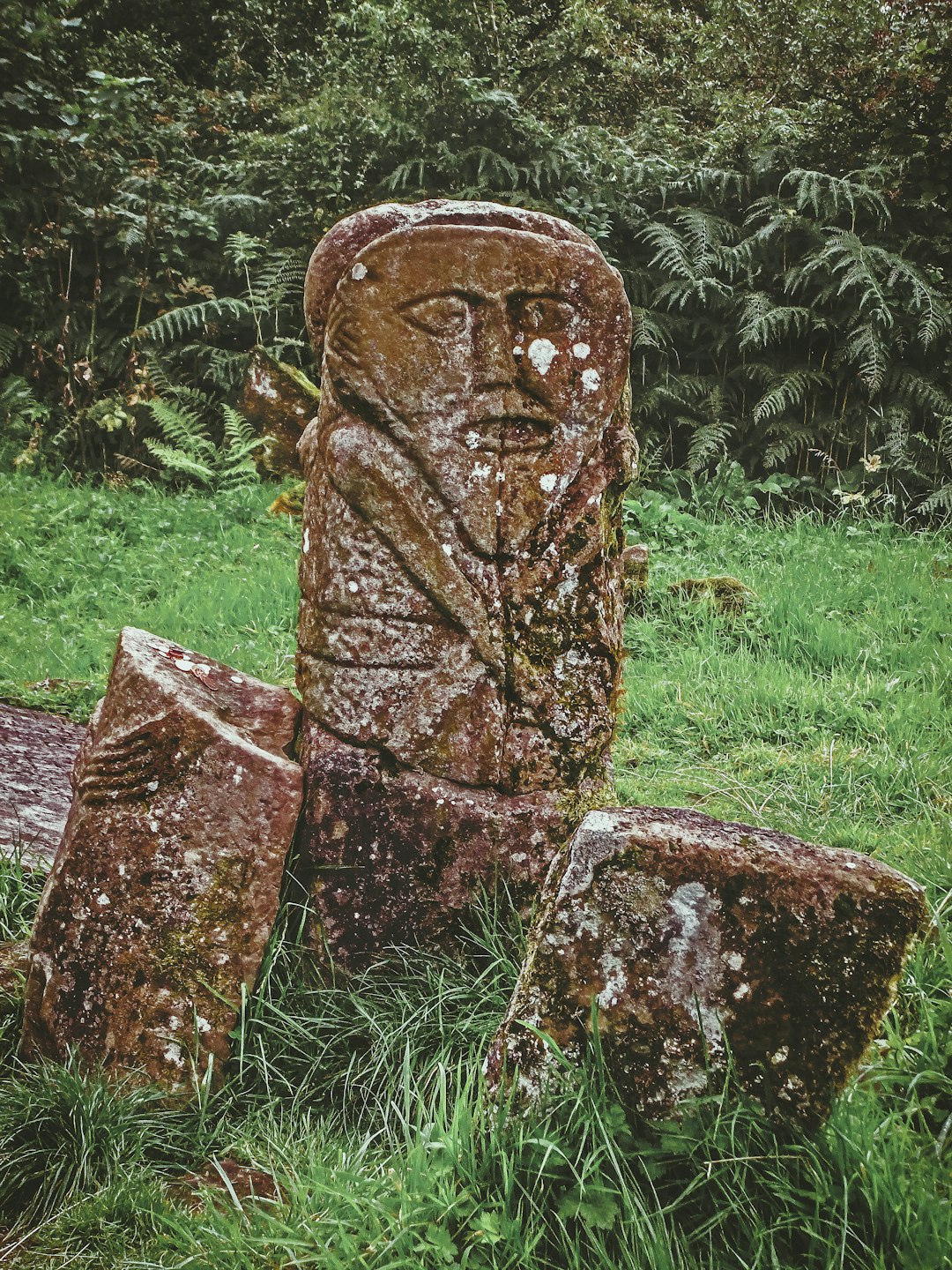
What the Dullahan Actually Is
The Dullahan (pronounced dull-a-HAWN) belongs to the darker, malevolent side of the fairy world. Unlike most fairy creatures, it has no fixed home or territory. It simply rides — alone, usually on a black horse — with its severed head tucked under one arm.
The head is not a pleasant sight. Its eyes dart constantly, scanning vast distances like flies searching for something. The skin is the colour of mouldy cheese. The grin stretches from ear to ear.
In some versions, the Dullahan doesn’t ride at all. Instead it drives the cóiste bodhar — the “deaf coach” — a black carriage built from human bones. The axles are made of thigh bones. The canopy is stitched from dried skin. The wheels turn in complete silence, because the wheels of death make no sound.
The Rules — What Happens When It Stops
The Dullahan doesn’t wander without purpose. It travels to specific places, for specific people.
When it halts — at a farmhouse gate, at a crossroads, outside a window — it raises its head and calls out a single name. Whoever hears their name called will die. There is no appeal, no bargain, no second chance.
Nor can you keep it out by locking your doors. Bolts draw back on their own as the Dullahan approaches. Gates swing open. Windows fly wide. The only thing that repels it is gold — even a single gold coin thrown in its path will make it turn and vanish into the dark.
Watch it pass from a window and it may throw a basin of blood in your face as a warning to mind your own business. The Dullahan does not appreciate an audience.
☘️ Enjoying this? 65,000 Ireland lovers get stories like this every week. Subscribe free →
The Ancient Roots of the Legend
Some scholars connect the Dullahan to Crom Dubh, a dark pre-Christian deity associated with the harvest and the dead. Each year, the god demanded tribute — a human life — before the crops could safely be brought in. Over centuries, this grim figure may have evolved into the Dullahan, the silent collector who rides when lives are owed.
The Dullahan is most active during Samhain — the ancient Celtic festival on 31 October, when the boundary between the living and the dead grows thin. It rides freely during these nights, called out by the thinning of the veil.
It is no accident that Halloween carries the image of a headless rider. The Irish who emigrated to America in the nineteenth century brought these stories with them. By the time Irving set his tale in Sleepy Hollow, Irish communities were already well established across New York and New England — and the headless figure was already part of the cultural memory they carried.
If you’re planning a trip to Ireland, tracing the ancient traditions that shaped Halloween is one of the most rewarding things you can do. The landscape itself still holds the mood.
Where the Legend Still Lives
The Dullahan is remembered most vividly in Connacht and Ulster — the west and north of Ireland. In County Sligo and County Donegal, these stories were treated with absolute seriousness well into the twentieth century. Not as tales for children. As warnings for adults.
Old people in rural areas would not travel alone after dark on the nights around Samhain. They kept gold coins in their pockets — not for luck, but for protection. They kept their curtains drawn when they heard hoofbeats on an empty road.
The Dullahan shares a world with the banshee and the fairy forts — a whole hidden landscape of forces that the Irish countryside was once understood to contain. These were not superstitions for the simple-minded. They were maps of a world that was genuinely believed to be far stranger than it looks.
What the Dullahan Says About Ireland
The Irish have never been afraid to look death in the eye. In a culture that gave the world the wake — a night of storytelling and laughter beside the coffin — death was not something to be hidden or euphemised. It was named, faced, and given its due.
The Dullahan is not a monster invented to frighten children. It is a way of acknowledging that death comes for everyone — that it cannot be locked out, that no wealth or position prevents it. The only thing that slows it down is gold. And then only briefly.
That might be the most Irish thing about it. Even the rider of death can be bribed.
Ireland’s country roads look entirely different after dark. The lanes that seem so friendly in the afternoon take on another character by midnight — narrow, hedged, empty. Farmhouses sitting far back from the road. Gates that shouldn’t swing open on a still night.
The next time you drive through Connacht or Ulster as the light fades, you might find yourself checking the rear-view mirror just a little more often than you normally would.
Not because you believe in the Dullahan, of course. But just in case.
☘️ You Might Also Love
☘️ Join 65,000+ Ireland Lovers
Every Friday, get Ireland’s hidden gems, local secrets, and travel inspiration — the kind you won’t find in any guidebook.
Already subscribed? Download your free Ireland guide (PDF)
Love more? Join 43,000 Scotland lovers → · Join 30,000 Italy lovers → · Join 7,000 France lovers →
Free forever · · Unsubscribe anytime
Tours & experiences you might love


Powered by Viator. Some links are affiliate links — we may earn a small commission at no extra cost to you.
Secure Your Dream Irish Experience Before It’s Gone!
Planning a trip to Ireland? Don’t let sold-out tours or packed attractions spoil your journey. Iconic experiences like visiting the Cliffs of Moher, exploring the Rock of Cashel, or enjoying a guided walk through Ireland’s ancient past often sell out quickly—especially during peak travel seasons.

Booking in advance guarantees your place and ensures you can fully immerse yourself in the rich culture and breathtaking scenery without stress or disappointment. You’ll also free up time to explore Ireland’s hidden gems and savour those authentic moments that make your trip truly special.
Make the most of your journey—start planning today and secure those must-do experiences before they’re gone!