

Every language has words it quietly borrowed. English has ‘donnybrook’. It means a brawl, a free-for-all, a scene of magnificent chaos. And it came from a Dublin fair so wild, so endlessly scandalous, that the city eventually had to pay to shut it down.
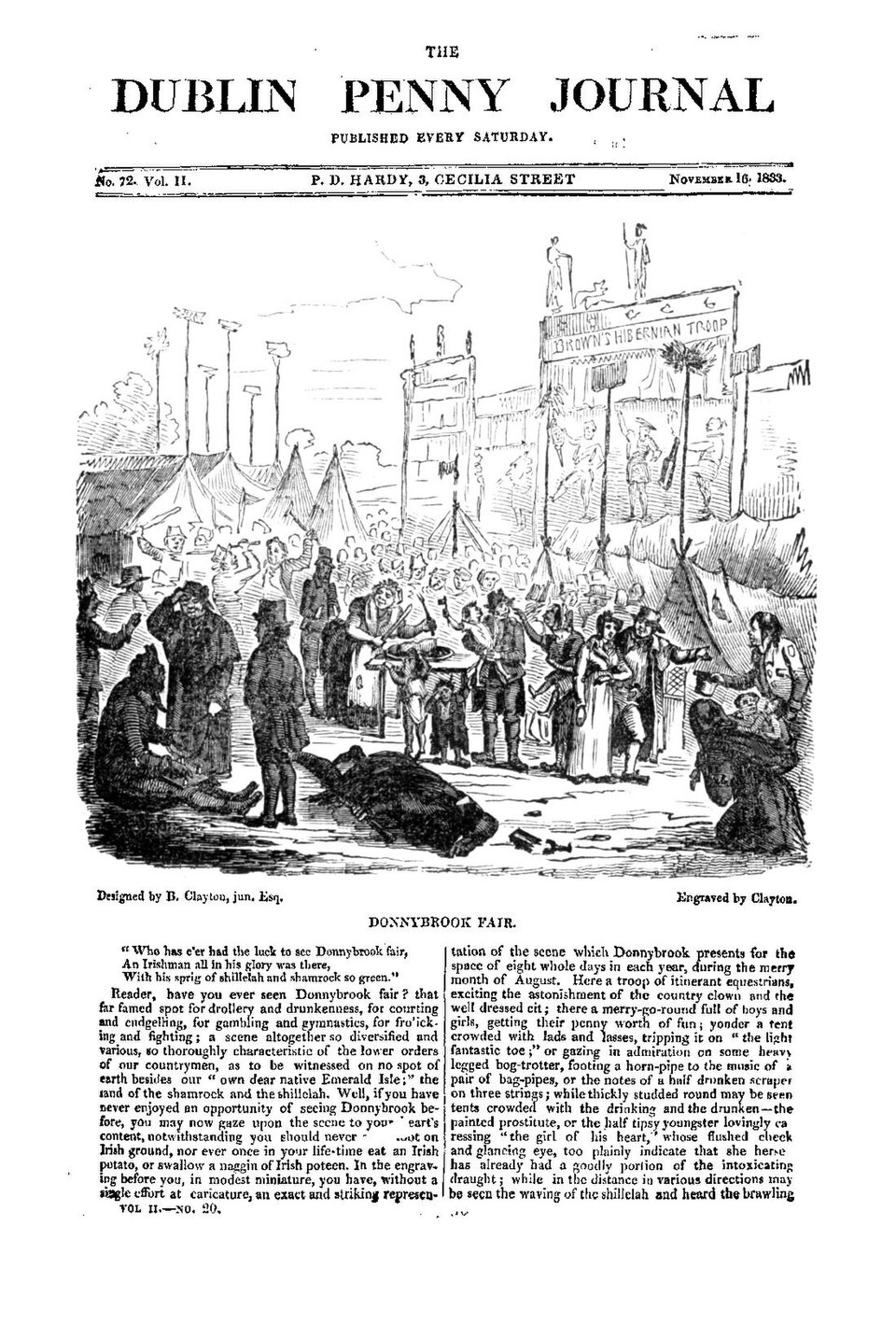
A Fair That Lasted 651 Years
In 1204, King John granted Donnybrook village a charter to hold an annual fair. At the time, Donnybrook sat outside Dublin’s city walls — a quiet stretch of the River Dodder, close enough to the city to be useful, far enough away to be ungovernable.
The fair ran every August for fifteen days. Traders came from across Ireland and beyond — cattle dealers, cloth merchants, food sellers, fortune tellers. Tents went up in the fields. Music played late into the evening. And the whiskey flowed.
For its first few centuries, Donnybrook Fair was a legitimate trading event. It was loud, crowded, and lively — an essential gathering in the calendar of Irish commercial life. Slowly, it became something else entirely.
What Actually Happened Under Those Tents
By the 18th century, Donnybrook Fair had developed a reputation that made respectable Dubliners nervous. What had started as commerce had become carnival — and the carnival had teeth.
Hundreds of whiskey tents lined the fairground. Entertainers, gamblers, and pickpockets worked the crowds. Young men settled old grievances with shillelaghs — the blackthorn walking sticks that had become symbols of Irish fighting culture. The phrase “shillelagh law” described the unwritten code: if you had a score to settle, you settled it here, in the field, with the sticks.
Contemporary accounts describe men fighting in organised groups while police stood overwhelmed on the margins. The fair lasted a fortnight, and by the end of it, Dublin’s newspapers were always full of court reports. It was not quiet. It was not dignified. And thousands of people attended every year.
The Word That Escaped the Fair
American newspapers picked it up first. By the 1840s, “donnybrook” was appearing in Boston, New York, and Philadelphia — used to describe any chaotic scene, any occasion where order had completely collapsed.
By 1854, the year before the fair was finally abolished, the word had made it into print dictionaries. Its definition: “a scene of uproar and disorder; a free-for-all brawl.” No origin note required. Readers already knew.
Today, “donnybrook” turns up in legal proceedings in Australia, parliamentary debates in Canada, and political commentary across the United States. Whenever it appears, it carries a fragment of that Dublin village — a ghost of the August tents, the clatter of shillelaghs, the smell of whiskey in a summer field.
If you enjoy discovering how Ireland shaped the wider world, the story of Irish whiskey’s global rise and fall follows a similarly dramatic arc.
☘️ Enjoying this? 64,000+ Ireland lovers get stories like this every week. Subscribe free →
Why the City Finally Paid to Close It
By the 1840s, Donnybrook had changed. Dublin had grown outward. The village that had once been beyond the city walls was now surrounded by respectable streets. The fair felt increasingly out of place — a relic of an older, rougher Ireland that Victorian Dublin preferred not to advertise.
Local residents petitioned year after year for its abolition. Clergy condemned it from the pulpit. Temperance campaigners made it a symbol of everything they opposed. The fair’s defenders argued it was tradition, commerce, community. Its critics argued it was a public nuisance.
In 1855, a group of local businessmen and landowners raised £3,000 to purchase the charter rights to the fair. They bought it. And then they closed it. After 651 years, the last Donnybrook Fair ended not with a brawl but with a property transaction.
Donnybrook Today
The Donnybrook of today bears almost no trace of its chaotic past. It is one of Dublin’s most pleasant suburbs — a village within the city, lined with good restaurants, independent shops, and pubs that close at a perfectly respectable hour.
The fields where the tents once stood are long gone, replaced by roads and houses. If you walk through Donnybrook today, nothing marks the spot where fifteen days of annual bedlam once defined Dublin’s summer. There is no plaque. No monument. No sign at all.
Only the word remains. Every time someone, anywhere in the world, uses “donnybrook” to describe a commotion — a meeting that got out of hand, a dispute that escalated, a moment when everyone started shouting at once — they are reaching back to those August tents on the banks of the Dodder.
It is a strange kind of immortality. And it is very Irish. You can read our complete guide to planning your trip to Ireland to include Dublin on your itinerary — and discover 200 more Irish words and phrases that travelled the world.
☘️ You Might Also Love
Tours & experiences you might love


Powered by Viator. Some links are affiliate links — we may earn a small commission at no extra cost to you.
Secure Your Dream Irish Experience Before It’s Gone!
Planning a trip to Ireland? Don’t let sold-out tours or packed attractions spoil your journey. Iconic experiences like visiting the Cliffs of Moher, exploring the Rock of Cashel, or enjoying a guided walk through Ireland’s ancient past often sell out quickly—especially during peak travel seasons.

Booking in advance guarantees your place and ensures you can fully immerse yourself in the rich culture and breathtaking scenery without stress or disappointment. You’ll also free up time to explore Ireland’s hidden gems and savour those authentic moments that make your trip truly special.
Make the most of your journey—start planning today and secure those must-do experiences before they’re gone!