

On a calm day, you can see Inishmurray from the Sligo shore. The island sits just seven kilometres out in the Atlantic — close enough to tempt you, far enough to be dangerous. For centuries, people made that crossing not to pray, but to curse.
The Island Nobody Lives on Anymore
Inishmurray sits off the coast of County Sligo, low and grey against the horizon. In 1948, the final 46 residents requested evacuation. After that, the island fell silent.
No roads. No facilities. No permanent population. Just stone walls, sea birds, and a monastery that has stood through fifteen centuries of Atlantic storms.
It is one of the most isolated inhabited sites in Ireland’s history — and one of the most unusual.
What the Monks Built Here
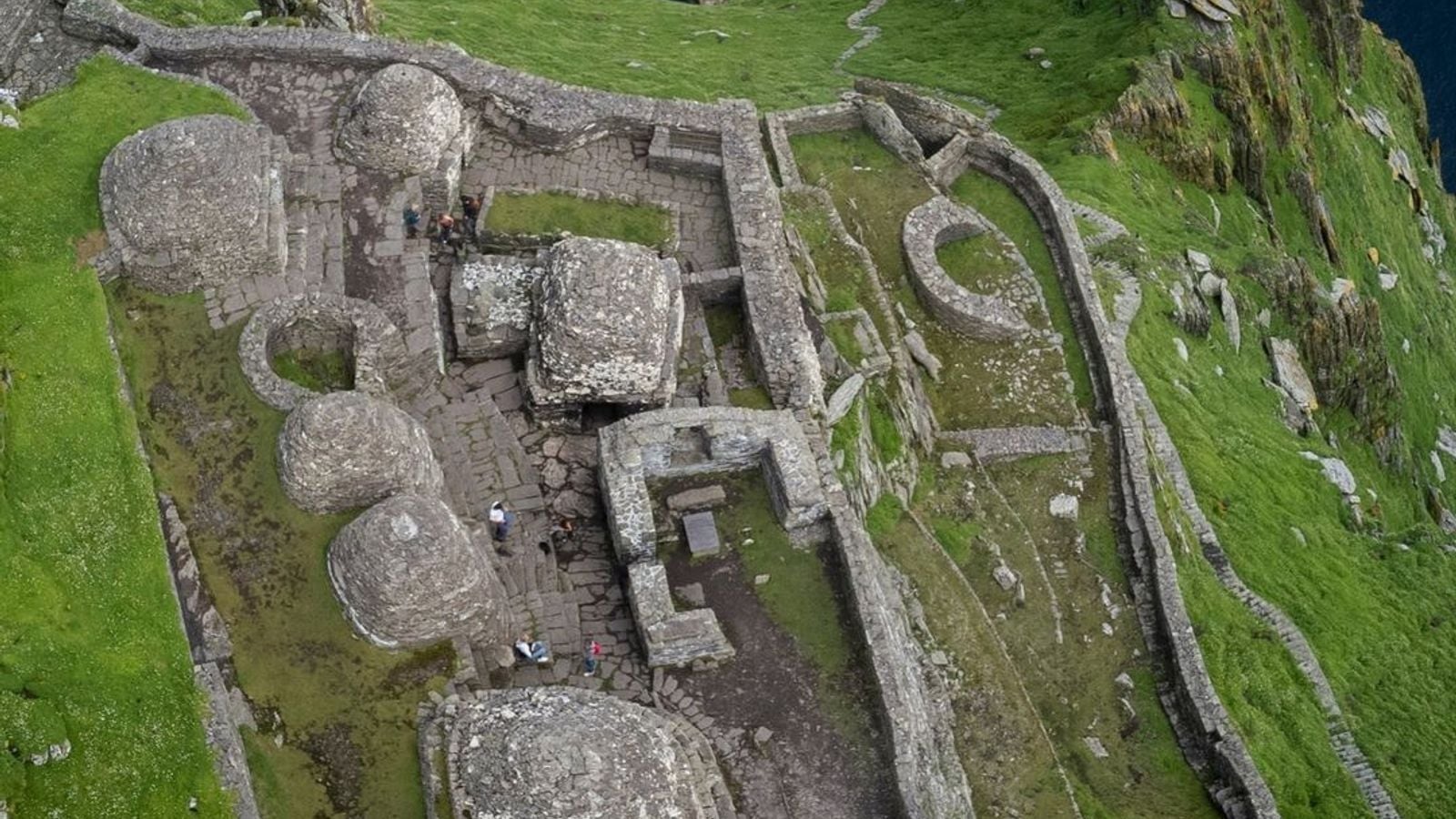
The monastery on Inishmurray is attributed to St Molaise, a 6th-century Irish saint. It sits within a cashel — a dry-stone enclosure — containing three churches, monks’ cells, and a stone sweathouse used for purification.
The site is among the best-preserved early Christian settlements in Ireland. Walk inside the cashel walls and you are standing where people have worshipped since the early medieval period.
But the island was never just a place of prayer. Something older and stranger survived here, long after the monks arrived.
Ireland’s early island monasteries were some of the most remote in Europe — you can read more about that tradition in why Irish monks chose island life.
The Stones That Could Ruin a Man
The most unsettling feature of Inishmurray is the Clocha Breaca — the speckled stones. About 50 of them, smooth and worn, arranged in rows near the monastery.
These were cursing stones.
To use them, you came to the island, stood at the stones, and recited prayers. Then you turned them anticlockwise — against the sun, against the natural order.
This was not considered dark magic by those who practised it. It was considered justice. The belief held that if your cause was righteous, the curse would land on your enemy. If it was not, the curse would rebound and fall on you instead.
The stones had a moral conscience built in.
Fishermen used them. Families seeking redress used them. Neighbours with grievances made the dangerous sea crossing just to turn a smooth stone and speak a name.
☘️ Enjoying this? 65,000 Ireland lovers get stories like this every week. Subscribe free →
The Language of Anticlockwise
The Irish word for anticlockwise is tuathal — against the sun, against the course of nature. It appears throughout Irish folklore wherever harm is intended.
Its opposite, deiseal — clockwise, sunward — was the direction of blessing, healing, and good fortune. Sacred wells were circumambulated deiseal. Prayers were said deiseal.
Turning the stones tuathal was a deliberate inversion of the sacred. Anyone doing it knew exactly what that meant.
The Atlantic crossing reinforced the seriousness of the act. Seven kilometres of open water in an open currach, often in unpredictable conditions. Nobody made that journey lightly.
How the Last Islanders Lived
Inishmurray was never easy to inhabit. In winter, rough seas cut the island off from the mainland for weeks at a stretch. The population farmed, fished, and maintained a tradition of poitín-making that kept the household economy running.
But they also maintained the old rituals. The cursing stones were not forgotten as the 20th century arrived. Islanders continued to observe the prescribed routes between ancient sites — the turnings, the recitations.
When the evacuation came in 1948, they took their belongings and left. The stones stayed where they had always been.
If you’re planning a trip to the west of Ireland, the Ireland trip planning guide covers Sligo and the Connacht coastline in detail.
What You Find There Now
Inishmurray can be reached by boat from Mullaghmore harbour, in calm conditions. There are no facilities, no café, and no warden. You land, you walk the ancient paths, and eventually you find the stones.
They are still there. Smooth, heavy, arranged in their old rows beside the ruined monastery walls.
Most visitors pick one up, look at it, and put it back. Whether that’s curiosity or caution is hard to say.
Sligo’s coastline holds more strange stories than most counties. The water monster that left a gravestone behind is another story from this corner of Ireland that refuses to be forgotten.
Inishmurray is not a comfortable place to visit. The silence is too complete. The ruins are too intact. And the Clocha Breaca are too smooth for any one generation to have worn them that way.
Fifteen centuries of hands will do that.
☘️ You Might Also Love
☘️ Join 65,000+ Ireland Lovers
Every Friday, get Ireland’s hidden gems, local secrets, and travel inspiration — the kind you won’t find in any guidebook.
Already subscribed? Download your free Ireland guide (PDF)
Love more? Join 43,000 Scotland lovers → · Join 30,000 Italy lovers → · Join 7,000 France lovers →
Free forever · · Unsubscribe anytime
Tours & experiences you might love


Powered by Viator. Some links are affiliate links — we may earn a small commission at no extra cost to you.
Secure Your Dream Irish Experience Before It’s Gone!
Planning a trip to Ireland? Don’t let sold-out tours or packed attractions spoil your journey. Iconic experiences like visiting the Cliffs of Moher, exploring the Rock of Cashel, or enjoying a guided walk through Ireland’s ancient past often sell out quickly—especially during peak travel seasons.

Booking in advance guarantees your place and ensures you can fully immerse yourself in the rich culture and breathtaking scenery without stress or disappointment. You’ll also free up time to explore Ireland’s hidden gems and savour those authentic moments that make your trip truly special.
Make the most of your journey—start planning today and secure those must-do experiences before they’re gone!