

The door was never locked. Nobody knocked. You simply walked in, pulled up a stool by the fire, and waited to see who else would arrive. This was the rambling house — and for generations of rural Irish families, it was the centre of their world.
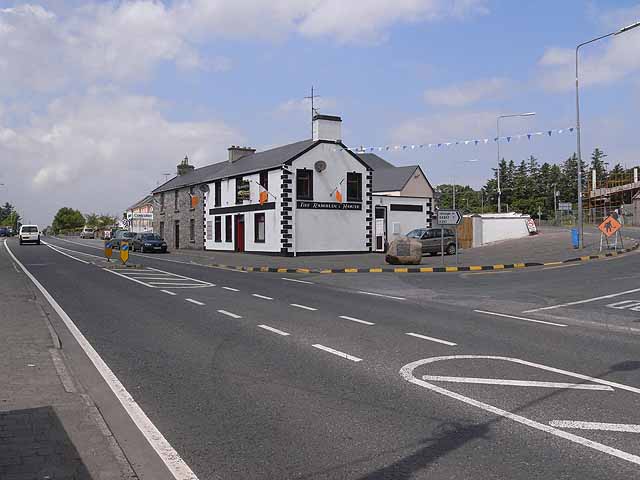
The House the Whole Community Claimed
Every townland had one. It might belong to an older couple with a gift for storytelling, a farmer with a fiddle, or simply a family generous enough to let the kettle boil all evening. The community chose the house almost by instinct — nobody announced it, nobody voted. Word just spread: go to Mick’s on a Tuesday, or Bridie’s on a Friday, and there would always be company.
In Irish, the tradition is called scoraiocht — an evening of visiting, conversation, and entertainment under one roof. In rural communities across Munster and Connacht, it was as natural as Mass on Sunday.
It was known by other names too. In Ulster, people called it simply “going on the cuairt”. In English it became “the rambling” or “the visiting”. The name changed depending on where you stood. The custom stayed the same: at nightfall, you went to the house.
What Nobody Told You About the Door
The door of a rambling house was never properly closed. Visitors arrived without invitation because no invitation was needed. Children tumbled in from neighbouring fields. An old man might arrive at nine and not leave until midnight. A young woman might bring her knitting. A teenager might bring nothing but curiosity.
This openness was not casual — it was deliberate. Irish rural culture held hospitality as a near-sacred duty. To close your door to a neighbour was one of the worst things you could do. The rambling house took that value to its fullest expression.
The host family provided the fire, the floor, and the tea. Everything else arrived with the visitors. A fiddle tucked under a coat. A story carried in from three townlands away. A piece of news that could not wait until Sunday Mass.
What Happened Around the Fire
The real business of the night was talk. A good storyteller could hold the room for hours — tales of fairies, giants, cursed fields, and local characters, delivered without a note or a script. The seanachie storytellers who could hold an entire village spellbound did their finest work in houses exactly like these — by firelight, with a room full of people who had come specifically to listen.
Music followed wherever the storytelling paused. A fiddle brought out from the corner, a tin whistle passed around, a voice raised in song. Nobody performed in any formal sense. It was more like conversation with instruments. If you could play, you played. If you could sing, you sang. If you could do neither, you listened and clapped.
Enjoying this? 65,000 Ireland lovers get stories like this every week. Subscribe free
Card games — typically 25 or 45 — filled the quieter corners. Old arguments were settled and new ones started. Matches were made between young people who had no other place to meet. The rambling house was, in many ways, the original social network of rural Ireland.
The Night It Changed
Two things ended the rambling house tradition, and they arrived quietly.
The first was radio. When the wireless reached Irish homes from the 1930s onwards, people had entertainment at their own hearth for the first time. You no longer needed to pull on your coat and walk through a wet field to hear a song or a story.
The second was television. By the 1960s and 1970s, it had drawn most households inward — each family sealed behind their own front door, eyes fixed on a screen. The rambling house became a memory. Something your grandmother mentioned with a particular look in her eye.
Some priests had tried to close the tradition down decades earlier, uncomfortable with young men and women mixing after dark without supervision. In some parishes, they succeeded. In others, the community simply ignored them and kept walking to the same warm door.
What Still Survives
The rambling house never entirely disappeared. In parts of the Gaeltacht — particularly in Kerry, Galway, and Donegal — something like it still happens. Houses where musicians gather without arrangement, kitchens where conversation runs until the small hours — these are direct descendants of the scoraiocht tradition.
The spirit lives on in Irish trad music sessions too, where the unwritten rules of who plays and when trace back to those fireside evenings. The session is the rambling house with a pint in hand.
If you are planning a trip to Ireland, look for these moments — the evening gathering that feels unplanned, the kitchen that fills without anyone quite knowing why. That instinct to gather, to talk, to share a fire never really left.
The rambling house did not need a licence or a stage. It just needed a fire and a family willing to leave the door on the latch. For most of Irish history, that was enough.
☘️ You Might Also Love
☘️ Your Irish family has a story waiting to be found.
Discover where your Irish ancestors came from — their county, their name, their story. Our free step-by-step guide walks you through every record, DNA tool, and ancestry archive. Join 64,000+ readers staying connected to Ireland.
Tours & experiences you might love


Powered by Viator. Some links are affiliate links — we may earn a small commission at no extra cost to you.
Secure Your Dream Irish Experience Before It’s Gone!
Planning a trip to Ireland? Don’t let sold-out tours or packed attractions spoil your journey. Iconic experiences like visiting the Cliffs of Moher, exploring the Rock of Cashel, or enjoying a guided walk through Ireland’s ancient past often sell out quickly—especially during peak travel seasons.

Booking in advance guarantees your place and ensures you can fully immerse yourself in the rich culture and breathtaking scenery without stress or disappointment. You’ll also free up time to explore Ireland’s hidden gems and savour those authentic moments that make your trip truly special.
Make the most of your journey—start planning today and secure those must-do experiences before they’re gone!