

From the air, Inis Mór looks like a cracked mosaic of grey and green. The largest of the Aran Islands is divided into thousands of small, irregular fields — each one bordered by a low grey wall. There are over a thousand kilometres of these walls on the island alone.
Nobody planned them the way a planner would today. They were built over centuries, one stone at a time, by the families who were clearing the land they needed to farm.
The Problem That Built a Landscape
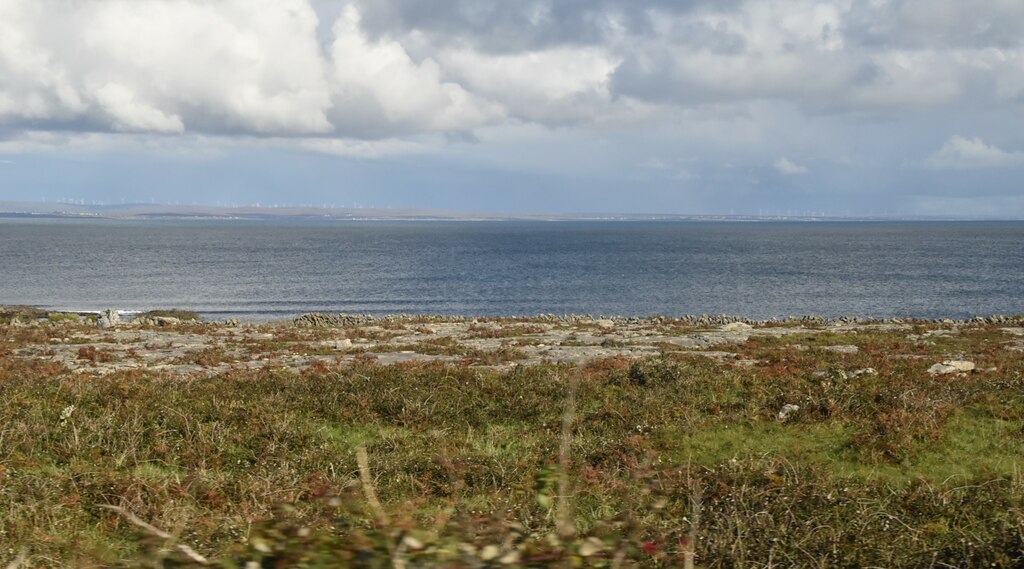
The Aran Islands rise from the Atlantic as bare limestone shelves. When families settled here, the land was almost entirely rock — fissured, exposed, and hostile to farming.
To grow anything, islanders had to make soil. They mixed seaweed and sand into the cracks in the limestone surface and waited for it to break down into something workable. The stones they prised up from the rock had to go somewhere.
They went into walls. Every stone wall on the Aran Islands began as an obstruction — a rock in the way of a field that did not yet exist.
Built Without Mortar
Drystone walls are built without cement or binding agents. On Inis Mór, they rise to two metres in places, running straight or curving with the underlying rock. Some sections are over four centuries old.
The technique requires selecting stones by shape and weight rather than cutting them. Each stone is placed so its mass holds the course beneath it, locking the wall through gravity alone. A well-built drystone wall lasts for generations. A poorly built one falls in a season.
The skill was passed down within families. A man who could build walls well was valued in a community where every patch of cleared ground mattered. The knowledge was local — tied to the specific shapes and sizes of limestone in that particular stretch of field.
What the Walls Were For
The walls served more purposes than simply marking property. They kept cattle from wandering onto a neighbour’s land. They created shelter from the Atlantic wind — in the lee of a wall, even a low one, the air is calm enough to protect young crops from salt spray and gale. On an island where the wind rarely stops, this was not a small thing.
Some walls had specific features built into them. A narrow gap at the base allowed lambs to pass between fields while keeping adult sheep contained. A wider gap with flat stones on each side was a stile — for people to cross without leaving the wall open to livestock.
Each field told a story. The width of a gap between two walls indicated whether it was meant for cattle or just for people. The height and thickness of a wall suggested whether the land behind it was for crops or rough grazing. Walking the walls, you learn to read the landscape as a document.
In visiting the Aran Islands, most people walk the path to Dún Aonghasa — the Iron Age fort on the western cliffs. Along that path, you cross dozens of walls through narrow stiles. Most visitors do not realise they are moving through what amounts to an ancient land registry, written in stone rather than paper.
☘️ Enjoying this? 64,000+ Ireland lovers get stories like this every week.
Thinking about it seriously? If you’ve started actually planning a move, our complete the full Move to Ireland guide walks through every step, every cost, and the paperwork that catches most people out.
Who Owned What — and How Everyone Knew
There were no written title deeds for most of the walls on the Aran Islands. Ownership was held in memory — passed from parent to child, enforced by community knowledge rather than any legal document.
Moving a wall by even a metre could mean appropriating another family’s land. The boundaries were not arbitrary; they reflected generations of labour, of clearing particular rocks, of mixing particular patches of soil. The wall said: my family did this work. This ground is ours.
County Galway and Connemara on the mainland tell the same story across a larger canvas. Walls there run up hillsides with no obvious agricultural purpose today — remnants of a time when every square metre of cleared ground mattered, and far more people depended on what it could produce.
What Remains
The walls are still being maintained on the Aran Islands, though imperfectly. A section falls after a winter storm and may take years before anyone gets to rebuilding it. Some sections have been removed where farming practices changed. But the overall pattern of the landscape is intact.
A small number of craftspeople still build and repair drystone walls across Ireland by hand, using exactly the same technique used centuries ago. There is no better method. The physics have not changed.
On Inis Mór, the ferry from Rossaveel in County Galway takes about forty minutes. The walls begin as soon as you step onto the island and follow you everywhere you walk. They do not look decorative, because they were never meant to be. They look necessary, because they were.
If you are planning a trip to Ireland, the Aran Islands will show you something that takes a moment to fully absorb. Every wall in that landscape was put there because it was needed. The practicality of it, multiplied across centuries and across families, produced something that looks completely extraordinary.
☘️ You Might Also Love
Tours & experiences you might love


Powered by Viator. Some links are affiliate links — we may earn a small commission at no extra cost to you.
Secure Your Dream Irish Experience Before It’s Gone!
Planning a trip to Ireland? Don’t let sold-out tours or packed attractions spoil your journey. Iconic experiences like visiting the Cliffs of Moher, exploring the Rock of Cashel, or enjoying a guided walk through Ireland’s ancient past often sell out quickly—especially during peak travel seasons.

Booking in advance guarantees your place and ensures you can fully immerse yourself in the rich culture and breathtaking scenery without stress or disappointment. You’ll also free up time to explore Ireland’s hidden gems and savour those authentic moments that make your trip truly special.
Make the most of your journey—start planning today and secure those must-do experiences before they’re gone!
Subscribe Free