

Ireland has a problem. It has too many castles.
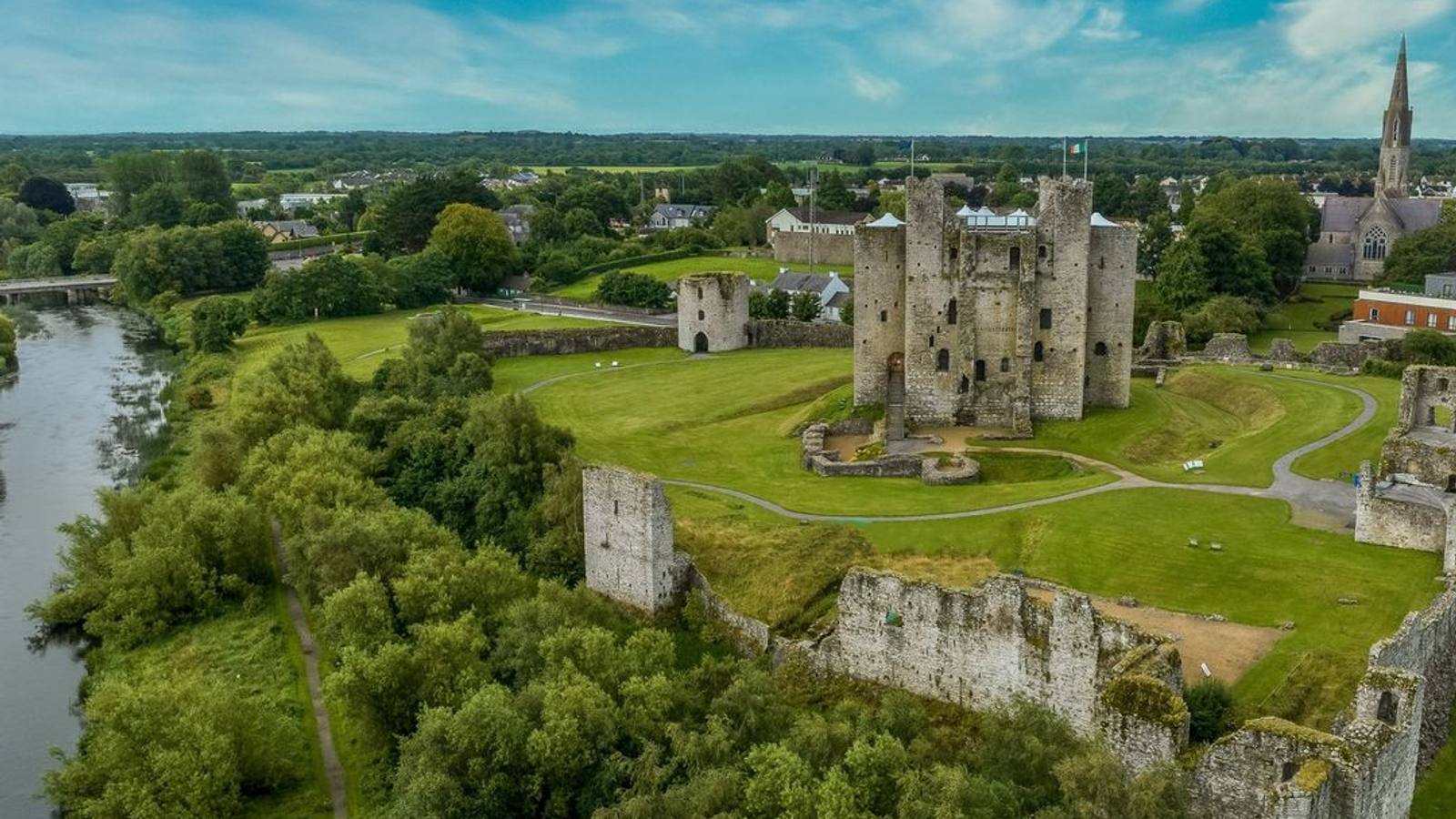
Not a bad problem — but a remarkable one. Drive any Irish back road and you will pass crumbling stone towers standing in farmers’ fields, silhouetted against grey skies, apparently forgotten. Most countries protect a handful of grand fortresses as national monuments. Ireland has around 3,000 castle ruins and ruined tower houses scattered across the island. For a country of its size, no other nation comes close to that density.
How did this happen?
The Building Boom Nobody Talks About
Between 1350 and 1650, Ireland went through a remarkable building frenzy. Not of cathedrals or grand manor houses — of tower houses.
A tower house was a practical structure. Usually four or five storeys of thick limestone, with narrow windows, a vaulted ground floor, and a tight spiral staircase. No grand entrance hall. No sweeping courtyard. Just a solid, defensible home for a local lord and his household.
Every chieftain wanted one. Every Anglo-Norman settler wanted one. Even prosperous merchants and minor landowners began building them. At the height of the building rush, hundreds of towers were going up simultaneously across the country. Some counties had a new one appearing every generation.
A Tower for Every Lord
Ireland in the medieval period was not one unified country. It was a patchwork of local territories, each controlled by a Gaelic chief or an Anglo-Norman family with its own laws, its own economy, and its own ambitions.
Power was intensely local — and deeply competitive.
A stone tower sent a message to every neighbour who could see it. It said: I have wealth. I have permanence. I am not going anywhere.
The Fitzgeralds built them across Munster. The Burkes scattered them across Connacht. The O’Briens, the MacCarthys, and the O’Donnells added their own. The result was a countryside thick with medieval towers, each one marking the centre of a lord’s world.
Built to Last — and to Fight
Life inside a tower house was more comfortable than the bare stone suggests. The ground floor held storage and sometimes livestock. The first floor contained the main hall and kitchen. Upper floors housed sleeping quarters and private chambers. The flat roof offered a battlemented walkway for watching the surrounding land.
The spiral staircases were almost always designed to wind clockwise. A right-handed defender coming down the stairs had full freedom to swing his sword. An attacker coming up was hemmed in by the central stone column. The sinister defensive detail above every Irish castle entrance is just one of many clever features built into these towers that most visitors walk straight past.
For a fuller picture of daily existence in these cramped but surprisingly warm spaces, what life was actually like inside an Irish tower house in the 1400s gives a vivid sense of how these buildings were really used.
☘️ Enjoying this? 64,000+ Ireland lovers get stories like this every week. Subscribe free →
Why So Many Were Simply Left Behind
Here is the part that surprises most people.
In the early 1600s, the power structure of Gaelic Ireland collapsed. The chieftains who had built so many of these towers were dispossessed, exiled, or destroyed by successive waves of plantation and conquest. The new landlords who replaced them preferred manor houses and walled estates to cold medieval towers.
The towers had no new owners. Nobody needed them.
Nobody demolished them either. Tearing down a thick-walled stone structure takes enormous effort — far more than simply walking away. And in Irish rural culture, disturbing an old ruin carries its own weight. The old stone holds memory, and memory in Ireland is not lightly disturbed.
So the towers stayed. Rain got in. Roofs collapsed. Floors rotted. Fields crept up to the base. Cattle sheltered in the lower vaults on winter nights. And slowly, across every county in Ireland, the landscape filled with ruins that belonged to nobody and everybody at once.
What You Pass Without Noticing
The strangest thing is how unremarkable the ruins have become to the Irish eye. Ask a farmer about the tower in the corner of his field and he will shrug. It has been there forever. It is just always been there.
That shrug carries centuries of history.
Each ruin was once the centre of someone’s entire world. A family lived there. Children were born in the upper chambers. The lord who built it believed it would pass through his bloodline for generations. He was right that it would endure. He simply could not have predicted that it would be empty when it did.
The next time you drive an Irish back road and a tower appears in a field, half-hidden by ivy and forgotten by the map, stop for a moment. Someone built that with their hands, their wealth, and their ambition. It stood through everything Ireland has been through since.
That is not a ruin. That is a survivor.
If you are planning a trip to Ireland and want to build in time to find these places, start with the Ireland planning guide to help you get beyond the tourist trail and into the real landscape.
☘️ You Might Also Love
☘️ Join 64,000+ Ireland Lovers
Every Friday, get Ireland’s hidden gems, local secrets, and travel inspiration — the kind you won’t find in any guidebook.
Love more? Join 43,000 Scotland lovers → · Join 30,000 Italy lovers → · Join 7,000 France lovers →
Free forever · · Unsubscribe anytime
Tours & experiences you might love


Powered by Viator. Some links are affiliate links — we may earn a small commission at no extra cost to you.
Secure Your Dream Irish Experience Before It’s Gone!
Planning a trip to Ireland? Don’t let sold-out tours or packed attractions spoil your journey. Iconic experiences like visiting the Cliffs of Moher, exploring the Rock of Cashel, or enjoying a guided walk through Ireland’s ancient past often sell out quickly—especially during peak travel seasons.

Booking in advance guarantees your place and ensures you can fully immerse yourself in the rich culture and breathtaking scenery without stress or disappointment. You’ll also free up time to explore Ireland’s hidden gems and savour those authentic moments that make your trip truly special.
Make the most of your journey—start planning today and secure those must-do experiences before they’re gone!