

Nobody says the set dance is French. Nobody ever has. But the truth of how it arrived in Irish villages — and what happened to it once it did — is one of the most joyful, surprising stories in Irish culture.
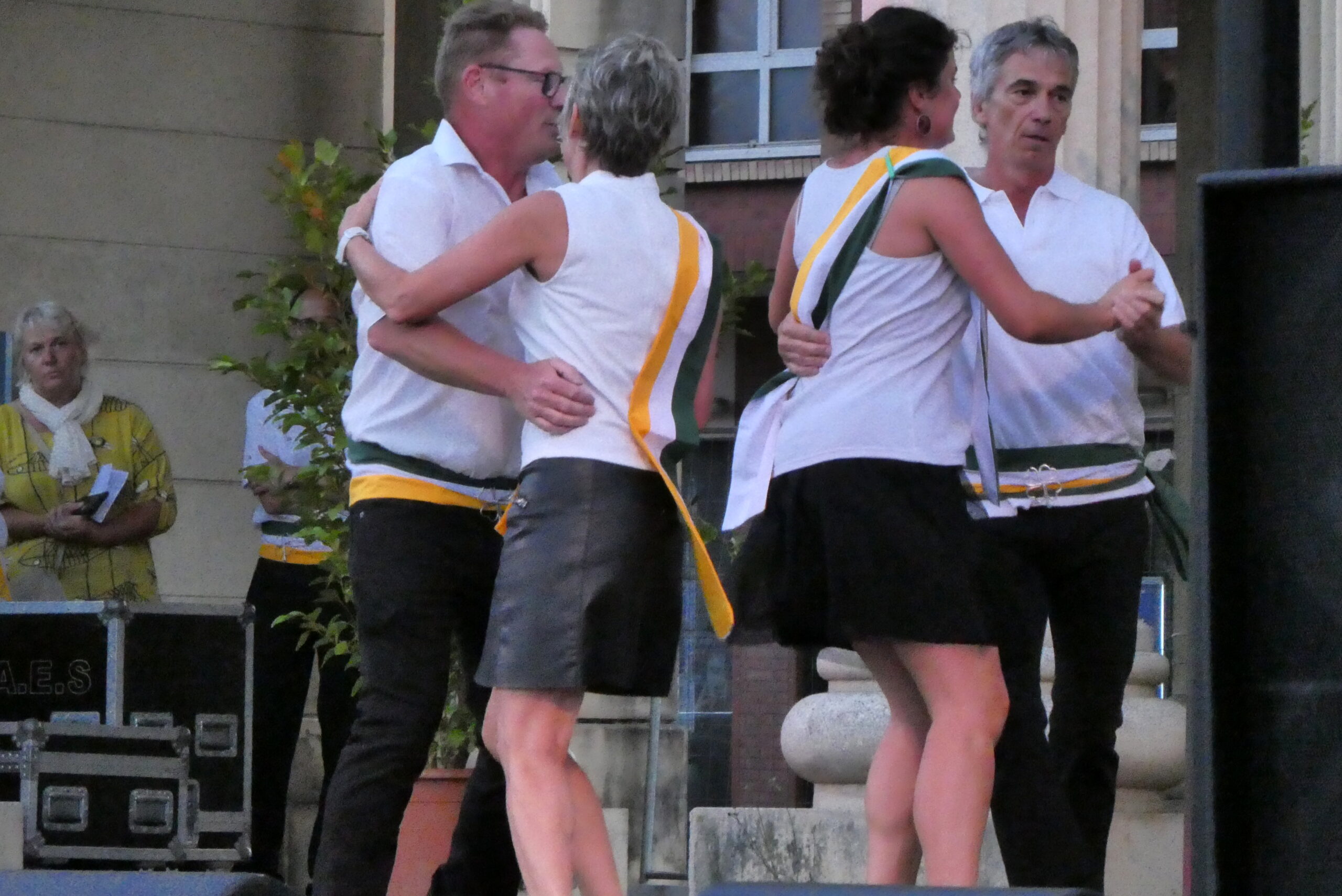
How French Dances Crossed the Irish Sea
In the early 1800s, a type of dance called the quadrille was sweeping the ballrooms of Europe. French in origin, it was performed by four couples arranged in a square, moving through a series of figures to a caller’s instruction. It was refined, choreographed, and very much at home in grand salons.
How exactly it reached rural Ireland is debated. One Limerick tradition credits soldiers returning home after the Napoleonic wars; historians more often point to travelling dance teachers and music publishers who carried the new fashion into Irish towns. However it arrived, the Anglo-Irish gentry adopted it eagerly at their grand estates, and then, inevitably, the country people of rural Ireland heard the music drifting from those grand houses.
What happened next is typical of everything Ireland does with culture it borrows: the people took it apart and rebuilt it as something unmistakably their own.
What a Set Actually Is
A set dance is a group of figures — typically six — performed by four couples arranged in a square. Each figure has a name and a structure. The music drives the dancers through the patterns. An experienced dancer or caller guides newcomers through each step.
But where the French quadrille was polished and formal, the Irish set became fast and earthy. Musicians played jigs, reels, and polkas. Dancers added their own character — a heel click here, an extra spin there. Every county began developing its own version of the figures, shaped by the local music and the local temperament.
The Clare Set. The Connemara Set. The Caledonian. The Plain Set. Each one carries the fingerprints of the region that shaped it. A dancer from Kerry and a dancer from Donegal might both claim to know the set — and mean entirely different dances.
Where the Dancing Happened
Before purpose-built halls existed, sets were danced in kitchens. Furniture was pushed against the walls. The table moved to one side. A fiddle player took a chair near the fire, and neighbours arrived unannounced and were welcomed in without question.
Later came the local hall — sometimes attached to the national school, sometimes a parish community building. For generations, Saturday night in rural Ireland meant the set. It was where young people met. Where friendships were made. Where the week’s work dissolved into laughter and music.
It was never about performance. Nobody was watching. Everyone was dancing. The set was not entertainment — it was the evening itself.
☘️ Enjoying this? 64,000+ Ireland lovers get stories like this every week.
Thinking about it for retirement? If you’ve started thinking seriously about retiring there, our complete our full Retire in Ireland guide covers the visa, healthcare, cost-of-living, and the regions worth shortlisting.
How the Sets Nearly Disappeared
By the 1950s and 1960s, set dancing had gone out of fashion across most of Ireland. Showbands arrived with travelling orchestras and bright stage lights. Ballroom dancing and rock and roll drew young people away from the local hall. The old sets seemed like something from a different age entirely.
The loss was quiet and gradual. The knowledge of the figures lived only in the memories of older dancers — passed down not through books or recordings, but through dancing itself. With each year, there were fewer people who remembered how the figures went.
The older solo traditions of Irish dance faced the same crisis. Both forms depended entirely on living transmission — one dancer showing another, in the same room, with the music playing. When that chain broke, the dance simply stopped existing.
The Revival Nobody Predicted
In the late 1970s and into the 1980s, a handful of dedicated dancers and musicians across Ireland refused to let the tradition die — among them Connie Ryan in County Tipperary and Pat Murphy in Dublin, both widely credited with driving the revival. They documented the old figures. Ran classes. Persuaded younger people back onto the floor. It was unglamorous, patient work — the kind that rarely gets celebrated until a generation has passed.
What started as cultural preservation became something far larger. By the 1990s, set dancing had returned — not just to village halls in Munster and Connacht, but to community centres in Dublin, Irish societies in Boston and Chicago, and festivals across Europe and Australia.
The Fleadh Cheoil became one of the gathering points where set dancers and musicians reconnected. The Willie Clancy Summer School in Miltown Malbay grew into a global destination for those serious about the tradition.
Today, All-Ireland Set Dancing Championships draw competitors from every county. Weekly classes run in cities across Ireland and in the diaspora. The French quadrille has been entirely forgotten. What remains is joyful, communal, and unmistakably Irish.
Why It Still Matters
Set dancing is not a spectator tradition. You cannot understand it from a distance — you have to step in, take somebody’s hand, and trust the music to carry you through the figure. That shared trust, that willingness to look slightly foolish together, is the whole point.
If you are planning your visit to Ireland, look up whether there is a set dancing class or a céilí near where you are staying. You do not need to know the steps before you arrive. Someone in the room will teach you — that is how it has always worked.
There is something quietly remarkable about a dance that was borrowed from France, transformed in Irish kitchens, nearly lost, and then recovered — not by institutions, but by ordinary people who simply loved to dance together. That stubbornness, that warmth, that refusal to let something beautiful disappear: that is Ireland at its best.
☘️ Join 64,000+ Ireland Lovers
Every Friday, get Ireland’s hidden gems, local secrets, and travel inspiration — the kind you won’t find in any guidebook.
Subscribe free — enter your email:
Free forever · · Unsubscribe anytime
Tours & experiences you might love


Powered by Viator. Some links are affiliate links — we may earn a small commission at no extra cost to you.
Secure Your Dream Irish Experience Before It’s Gone!
Planning a trip to Ireland? Don’t let sold-out tours or packed attractions spoil your journey. Iconic experiences like visiting the Cliffs of Moher, exploring the Rock of Cashel, or enjoying a guided walk through Ireland’s ancient past often sell out quickly—especially during peak travel seasons.

Booking in advance guarantees your place and ensures you can fully immerse yourself in the rich culture and breathtaking scenery without stress or disappointment. You’ll also free up time to explore Ireland’s hidden gems and savour those authentic moments that make your trip truly special.
Make the most of your journey—start planning today and secure those must-do experiences before they’re gone!
Subscribe Free