

In 1688, a young man in County Roscommon lost his sight to smallpox. He was around 18 years old. Most people in his position would have accepted a quiet, limited life. Turlough O’Carolan learned the harp instead — and spent the next 50 years riding across Ireland on horseback, composing music for anyone who’d open their door.
The tunes he left behind are still played at sessions today, 300 years later.
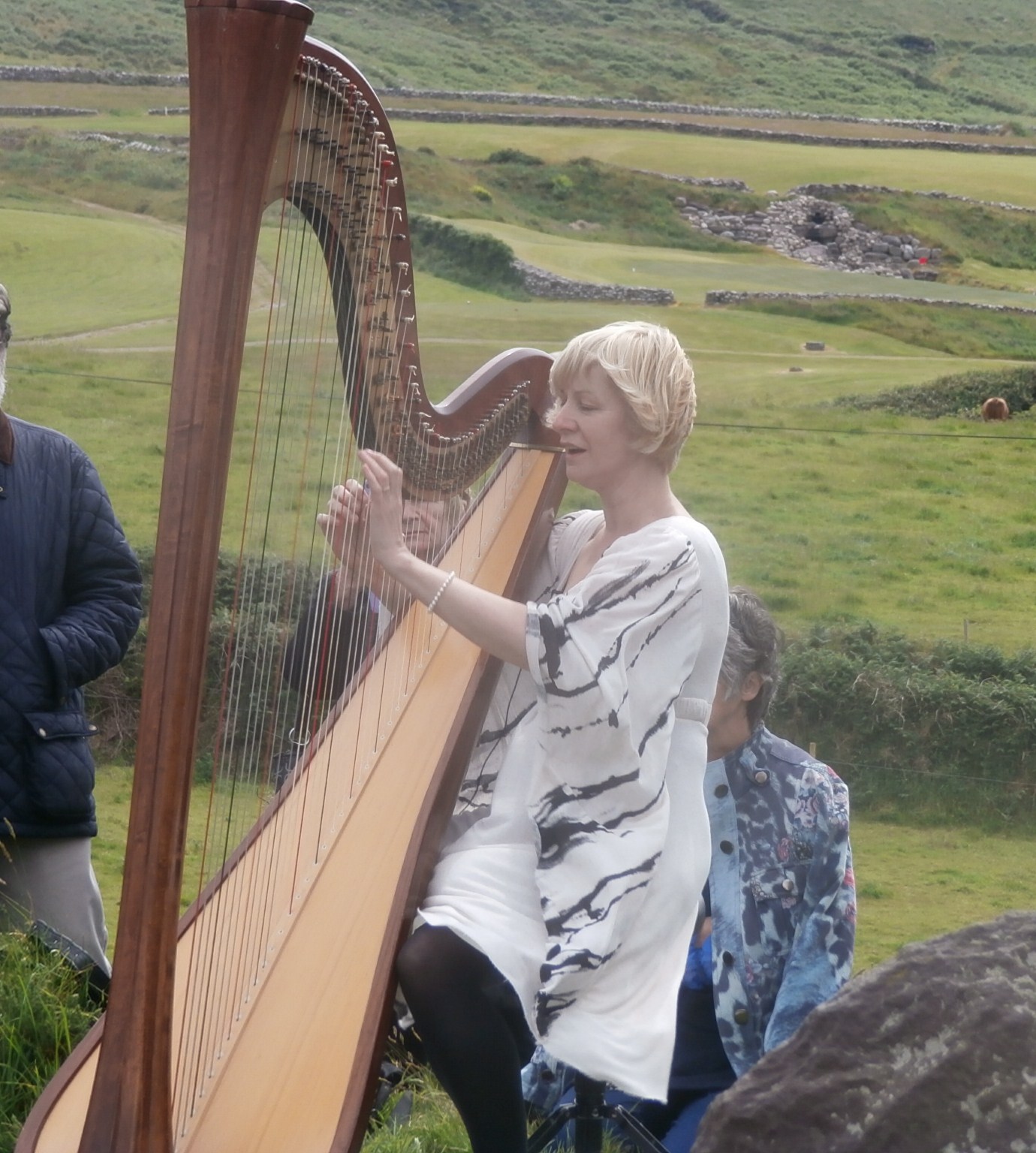
The Man Who Started With Nothing but a Harp
O’Carolan was born around 1670, probably near Nobber in County Meath, though his life became rooted in County Roscommon. When smallpox took his sight in his late teens, the MacDermott Roe family — his patrons — paid for three years of harp training.
At 21, he set out on horseback with a guide, a harp, and no fixed destination.
For the next half century, he had no permanent home. He rode from the houses of Gaelic chieftains to the estates of Anglo-Irish gentry, from farmhouses in Connacht to grand halls in Munster. In return for music, he received food, shelter, and the warmth of a fire.
How He Composed — and Why It Was Remarkable
O’Carolan didn’t play other people’s tunes. He wrote new ones, typically dedicated to whoever was hosting him. He would meet the family, take supper, and often present a new composition bearing their name before the night was out.
He wrote more than 220 tunes this way. Planxty Irwin. Planxty Burke. Planxty Drury. The word “planxty” — his own term for a harp tune dedicated to a patron — entered the Irish musical vocabulary and never left.
Each piece had its own character. They weren’t flattery set to music. They were genuine compositions, shaped by who the person was and what mood struck O’Carolan that evening.
The Old World and the New, in the Same Hands
O’Carolan was composing at a time when the old Gaelic order was fading. The bardic tradition — in which poets and musicians held formal roles within a chieftain’s household — was coming undone. He was among the last of the great travelling harpers.
Yet he was also absorbing something entirely new. His music carries the fingerprints of Italian Baroque composers, particularly Corelli and Vivaldi, whose work was fashionable across Europe at the time. O’Carolan somehow encountered their influence — possibly through the music played in the houses he visited — and wove it into something distinctly Irish.
The result was a style that belonged to neither world entirely, and to both completely.
☘️ Enjoying this? 64,000+ Ireland lovers get stories like this every week.
Thinking about it for retirement?
If you’ve started thinking seriously about retiring there, our complete our full Retire in Ireland guide covers the visa, healthcare, cost-of-living, and the regions worth shortlisting.
Subscribe free →
The Last Cup of Whiskey
O’Carolan died in March 1738 at the home of his first patron, the MacDermott Roe family, near Ballyfarnon in County Roscommon. He was around 68 years old.
According to Irish tradition, as he lay dying, he called for a cup of whiskey. When it was brought to him, he said it would be a poor thing for two such old friends to part without a last drink.
He drank it, and died.
The story may have been burnished over the centuries. But it rings true. O’Carolan spent his entire life accepting whatever hospitality Ireland offered — a fire, a meal, a glass. His deathbed was simply the last evening of the same.
Why His Music Never Disappeared
Traditional Irish music is passed on by ear, from player to player, generation to generation. Most of what O’Carolan composed could have faded into silence within a few decades. It didn’t.
His tunes entered the session repertoire and stayed. Today, Carolan’s Concerto, Planxty Irwin, and Sí Bheag, Sí Mór — composed, legend says, when O’Carolan was a young man dreaming of fairy hills — are played at trad sessions across Ireland and around the world.
Part of why they survive is the way Irish musicians in different counties approach the same tune differently — each generation reshaping it slightly, keeping it alive. O’Carolan’s melodies are sturdy enough to survive endless interpretation.
The harp he played has since become Ireland’s national symbol. The harp on your pint of Guinness faces a different direction than the one on your Irish passport — a small detail with a surprisingly long history behind it.
If you want to experience O’Carolan’s world for yourself, the west of Ireland is where he travelled most. Start planning with our Ireland travel planning hub.
If you ever sit in an Irish pub and hear a slow, rolling melody that nobody at the table can quite name — there is a reasonable chance it’s O’Carolan’s. He composed it 300 years ago for a family he’d never met before, at a hearth somewhere in the west of Ireland, blind and brilliant and entirely at home.
☘️ Your Irish family has a story waiting to be found.
Discover where your Irish ancestors came from — their county, their name, their story. Our free step-by-step guide walks you through every record, DNA tool, and ancestry archive. No experience needed.
Get the free guide
Enter your email and we will send you straight to the download.
Love more? Join 43,000 Scotland lovers → · Join 30,000 Italy lovers → · Join 7,000 France lovers →
Free forever · · Unsubscribe anytime
Tours & experiences you might love


Powered by Viator. Some links are affiliate links — we may earn a small commission at no extra cost to you.
Secure Your Dream Irish Experience Before It’s Gone!
Planning a trip to Ireland? Don’t let sold-out tours or packed attractions spoil your journey. Iconic experiences like visiting the Cliffs of Moher, exploring the Rock of Cashel, or enjoying a guided walk through Ireland’s ancient past often sell out quickly—especially during peak travel seasons.

Booking in advance guarantees your place and ensures you can fully immerse yourself in the rich culture and breathtaking scenery without stress or disappointment. You’ll also free up time to explore Ireland’s hidden gems and savour those authentic moments that make your trip truly special.
Make the most of your journey—start planning today and secure those must-do experiences before they’re gone!
Subscribe Free