

Ireland does not look like a country that was once swimming in gold. It looks like stone walls and Atlantic sky and green fields running down to grey water. And yet, buried beneath those fields, tucked into cracks in limestone pavement, submerged in bogland — there is gold. Extraordinary gold. Bronze Age gold so refined, so perfectly worked, that it still stops people cold when they see it in a museum case.
An Island Drowning in Gold
Bronze Age Ireland — roughly 2500 to 800 BCE — produced gold objects in staggering quantities. Crescent necklaces, massive collar ornaments, twisted torcs, armlets, and ceremonial boats were crafted here in numbers that surprised even the archaeologists who began cataloguing them in the nineteenth century.
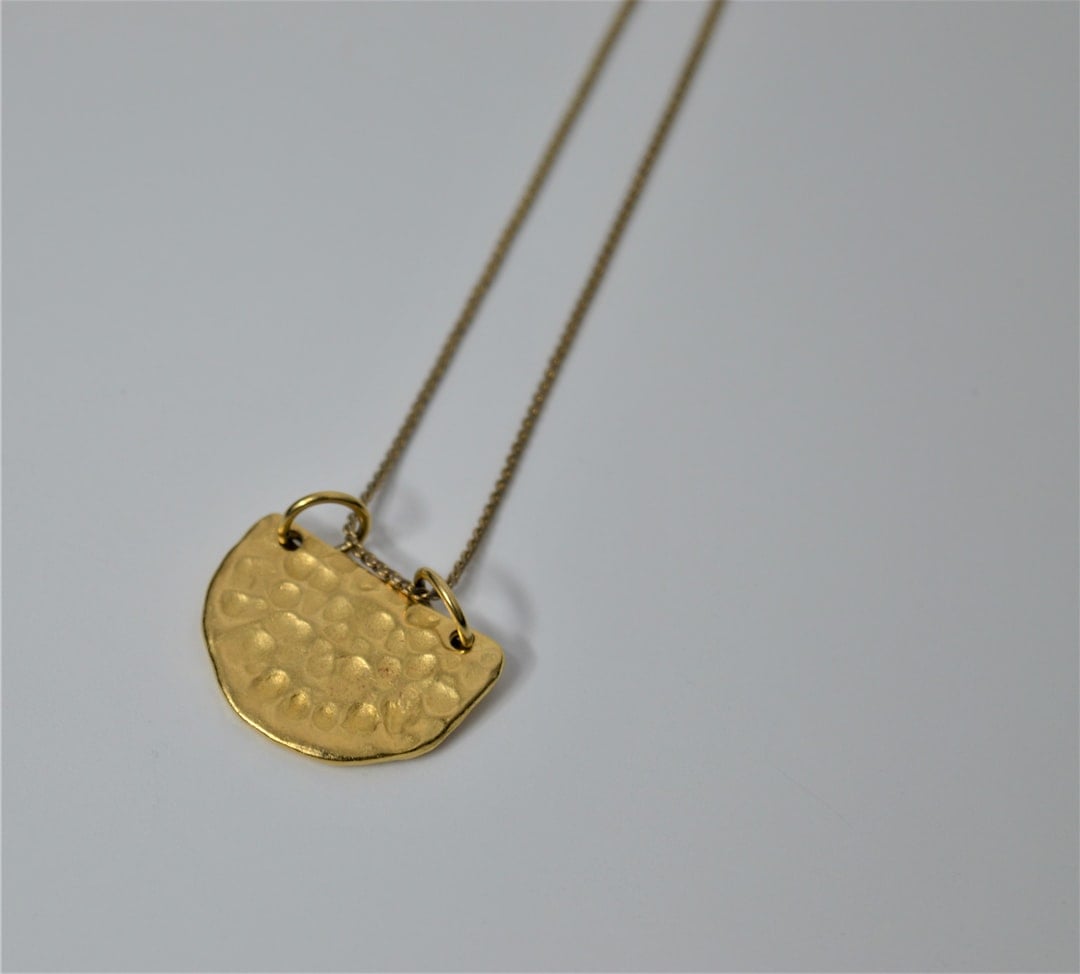
Lunulae — flat, crescent-shaped necklaces made from hammered sheet gold — have been found all over Ireland, then traced outward into Britain, Brittany, Scandinavia and the Alps. Roughly 80 are known to exist worldwide. The vast majority came from Ireland.
No other island in Europe comes close to that number. Something was happening here in the Bronze Age that was exceptional, and we are still piecing together what it was.
The Lunula — Thinner Than a Thumbnail
Pick up a lunula in your mind and consider what it is. A single sheet of hammered gold, bent into a crescent, sometimes no thicker than a fingernail. Along its edges, geometric patterns — zigzags, hatching, diamond shapes — beaten in with tools that were essentially sticks and stones.
These were made without lathes, without drills, without any of the equipment we associate with precision metalwork. The craftsmen who made them had hammers, chisels, and thousands of hours of learned skill passed between generations.
Some lunulae have been found folded flat — tucked into the ground as offerings, perhaps, or hidden during a raid that the owner never returned from. Others were found in bogs, which ancient Irish people treated as sacred, liminal places where the world of the living met something else entirely.
The Boy Who Found a King’s Treasure in the Burren
In 1932, a teenager was clearing stones from a dry limestone wall in County Clare when something caught the light in a crevice. He reached in and pulled out a large piece of worked gold.
It was the Gleninsheen Gorget — a magnificent ceremonial neck collar dating to around 800 BCE. Made from beaten gold sheet, it curves around the throat in a wide arc with two large decorated disc terminals. It is one of the finest examples of Late Bronze Age goldwork ever found anywhere in Europe.
That boy had been walking across the Burren — a landscape that looks, to an untrained eye, like nothing but cracked rock. It turned out to be one of the richest archaeological zones on the island.
The gorget is now in the National Museum of Ireland in Dublin, where it sits behind glass as one of the collection’s most prized possessions. It was made, carried, worn, and hidden by people who left no written record of themselves. The collar is all we have.
☘️ Enjoying this? 64,000+ Ireland lovers get stories like this every week.
Thinking about it seriously? If you’ve started actually planning a move, our complete the full Move to Ireland guide walks through every step, every cost, and the paperwork that catches most people out.
The Hoard That Almost Disappeared Forever
In 1854, railway workers cutting an embankment in County Clare made a discovery that should have rewritten Irish prehistory. They unearthed what became known as the Mooghaun Hoard — the largest Bronze Age gold find ever made in western Europe.
Over a hundred gold objects came out of the ground: neckrings, armlets, bracelets, ornaments of every kind. By some accounts, far more were found than were ever properly recorded.
Within hours, most of it was gone. Workers kept what they could carry. Objects were sold to goldsmiths and melted for their weight. A fragment of one piece eventually turned up in the British Museum, helping archaeologists trace what had been lost.
Only a small number of pieces survived. They are in the National Museum today, remarkable in their workmanship — and made more remarkable by the knowledge of everything that was destroyed. The loss of the Mooghaun Hoard is considered one of the great tragedies of Irish archaeology.
Where Did Ireland’s Gold Come From?
Ireland has gold deposits — rivers in County Wicklow have been panned for gold since antiquity, and small finds still turn up today. But the sheer volume of Bronze Age objects suggests something more complex was happening.
Researchers believe much of the raw gold came through trade networks that connected Bronze Age Ireland to Cornwall, the Alps, and possibly further afield. These were not isolated communities. They were connected to the wider ancient world in ways that archaeology is only beginning to map.
If you want to understand the deep roots of Irish culture and heritage, a visit to the full Ireland travel planner is the best place to start — the National Museum in Dublin, where so much of this gold now lives, is one of the great free museums in Europe.
The Question Nobody Can Answer
The most persistent mystery is why so much of it was buried in the first place.
Some objects ended up in bogs, which ancient communities throughout northern Europe used as ritual sites. Some were buried in stone walls or beneath field boundaries. The Mooghaun Hoard was deposited near a loch, which may have held religious significance. There is no single explanation that fits all the finds.
Were they offerings to gods? Valuables hidden during conflict and never retrieved? Seasonal deposits made to ensure good harvests? All of these theories have been proposed. None has been proven.
What is certain is that the gold has not all been found. Farmers turning sod in Wicklow, walkers crossing bog paths in Clare, children climbing walls in Kerry — Ireland is still quietly yielding its ancient treasures. The ground has not given up all its secrets yet.
The people who made these objects left no written language, no named monuments, no recorded history. They left only the gold — and the gold is extraordinary enough.
☘️ Your Irish family has a story waiting to be found.
Discover where your Irish ancestors came from — their county, their name, their story. Our free step-by-step guide walks you through every record, DNA tool, and ancestry archive. Join 64,000+ readers staying connected to Ireland.
Claim Your Free Irish Ancestry Guide →Already subscribed? Download your free Ireland guide (PDF)
Love more? Join 43,000 Scotland lovers → · Join 30,000 Italy lovers → · Join 7,000 France lovers →
Free forever · · Unsubscribe anytime
Tours & experiences you might love


Powered by Viator. Some links are affiliate links — we may earn a small commission at no extra cost to you.
Secure Your Dream Irish Experience Before It’s Gone!
Planning a trip to Ireland? Don’t let sold-out tours or packed attractions spoil your journey. Iconic experiences like visiting the Cliffs of Moher, exploring the Rock of Cashel, or enjoying a guided walk through Ireland’s ancient past often sell out quickly—especially during peak travel seasons.

Booking in advance guarantees your place and ensures you can fully immerse yourself in the rich culture and breathtaking scenery without stress or disappointment. You’ll also free up time to explore Ireland’s hidden gems and savour those authentic moments that make your trip truly special.
Make the most of your journey—start planning today and secure those must-do experiences before they’re gone!
Subscribe Free