

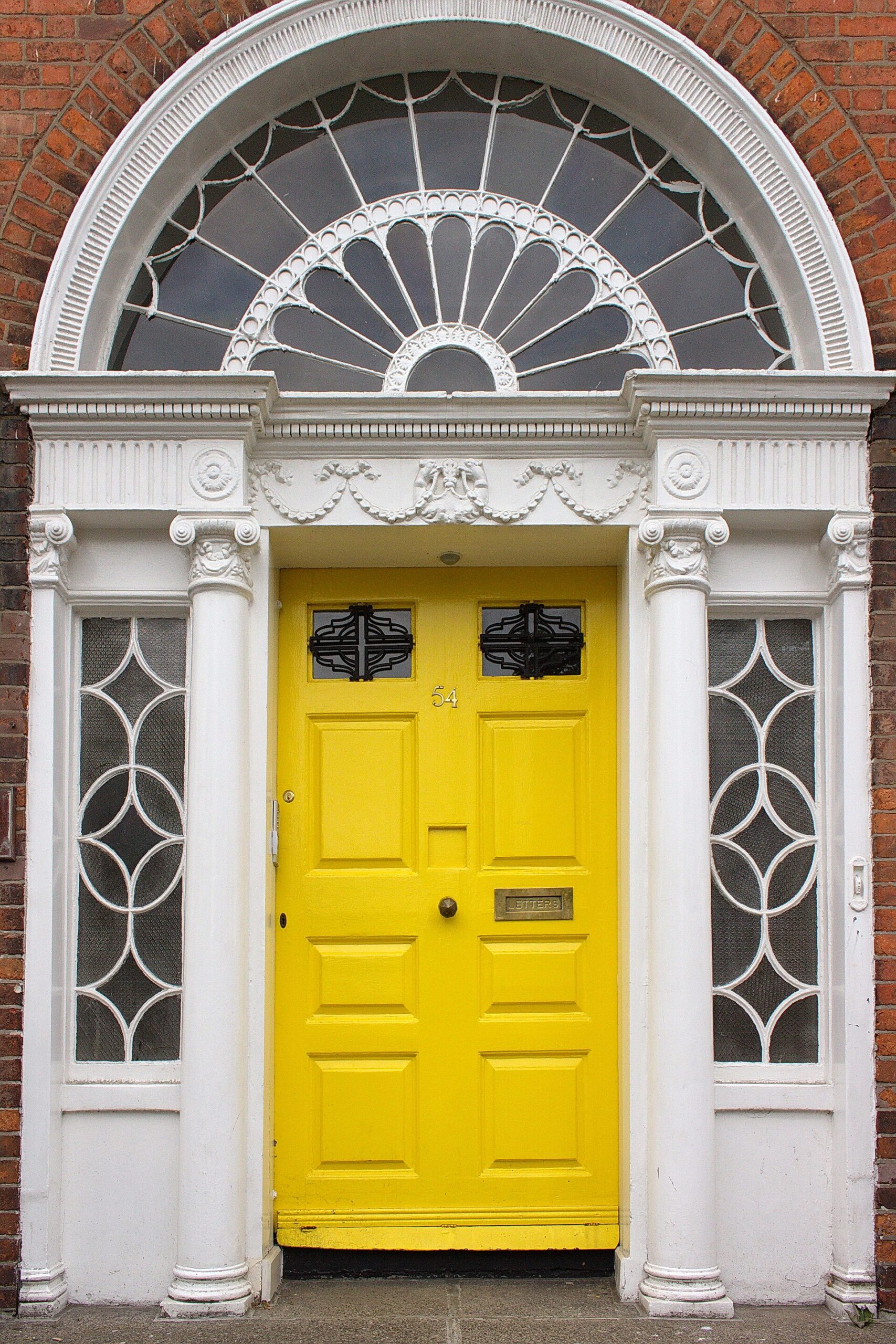
Every year, millions of visitors photograph Dublin’s painted doors. They line the streets of Merrion Square and Fitzwilliam Square in every shade imaginable — deep red, bright yellow, seafoam green, cobalt blue. Most visitors assume someone planned it that way. Nobody did.
The Street That Sparked a Thousand Stories
Dublin’s Georgian districts were built between the 1750s and the 1830s. Developers put up rows of identical brick townhouses for wealthy residents, merchants, and professionals. The houses were elegant but deliberately uniform — same height, same proportions, same brick.
The door was the only thing a resident could easily change.
What started as a practical identity marker became, over generations, a quiet competition. Who had the most eye-catching entrance? Whose door could be spotted from across the square?
The Story Everyone Knows (and Why It’s Complicated)
The most popular explanation involves Queen Victoria’s death in 1901. According to the legend, the British Crown ordered all doors painted black as a sign of mourning. Dublin’s homeowners responded by painting their doors in every bright colour they could find.
It’s a satisfying story. It just doesn’t hold up to scrutiny.
Dublin’s doors were already multi-coloured long before 1901. Paintings and engravings from the early 1800s show the same riot of colour. Georgian townhouses in Bath and Edinburgh — where no such story exists — also have brightly painted doors. The tradition is architectural, not political.
The real reason is both simpler and more interesting.
A City Without House Numbers
When Dublin’s Georgian streets were first laid out, there were no house numbers. None. The concept of numbered houses only arrived gradually, and even then, it wasn’t universal for some time.
If you were hosting a dinner or receiving a letter, you needed some way to help guests and couriers find you. The door was your address. Its colour, design, and decoration all said: this is where we live.
Each owner also chose their own fanlight — the arched decorative glass panel above the door. No two are the same. Some have sunburst patterns. Others have spider-web designs, elliptical shapes, or Gothic arches. Made by local craftsmen, they are considered among the finest examples of decorative ironwork and glasswork in Europe.
☘️ Enjoying this? 64,000+ Ireland lovers get stories like this every week. Subscribe free →
Thinking about it seriously?
If you’ve started actually planning a move, our complete Move to Ireland guide walks through every step, every cost, and the paperwork that catches most people out.
What Your Door Said About You
Georgian Dublin was a society that paid close attention to appearances. A well-painted door with a polished brass knocker and a carefully designed fanlight communicated status, taste, and attention to detail.
The choice of colour mattered. Deeper, richer shades — navy, forest green, burgundy — required more expensive pigments and more frequent repainting. A flaking, faded door said something about its owner that no one wanted said.
Boot scrapers were fixed into the stone steps. Columns flanked the entrance. Letter boxes were installed with precision. Every element of the Georgian doorstep was a quiet statement.
Where to See the Best Doors in Dublin Today
Merrion Square is the most photographed. Its north side includes the house where Oscar Wilde grew up — No. 1, now painted a distinctive blue. The square is open as a public park and free to walk. Our guide to the best things to do in Dublin covers the Georgian Quarter alongside every other major landmark.
Fitzwilliam Square is smaller and quieter. It remains largely intact and gives a better sense of what Georgian Dublin felt like as a lived neighbourhood rather than a tourist attraction.
Baggot Street and the streets off St Stephen’s Green offer more encounters at street level. Combine a walk through the area with a visit to the National Gallery of Ireland, which faces Merrion Square directly.
Not all of Dublin’s Georgian streets survived the 20th century. Whole terraces were demolished for office buildings in the 1960s and 1970s. What remains is a fraction of what once existed — which makes the streets that do survive feel all the more precious.
Still the Most Photographed Doors in Europe
Dublin’s painted doors appear on more postcards, tea towels, and tourist brochures than almost any other Irish image. They’ve become shorthand for the city — and for a certain kind of Irish aesthetic: warm, individual, quietly insisting on being noticed.
The real story isn’t about any single moment of history. It’s about a city full of people who, given identical houses on identical streets, found a way to say: this one is mine.
Planning your first visit to Ireland? Our Ireland travel planning guide covers everything you need before you arrive.
☘️ Join 64,000+ Ireland Lovers
Every Friday, get Ireland’s hidden gems, local secrets, and travel inspiration — the kind you won’t find in any guidebook.
Subscribe free — enter your email:
Already subscribed? Download your free Ireland guide (PDF)
Love more? Join 43,000 Scotland lovers → · Join 30,000 Italy lovers → · Join 7,000 France lovers →
Free forever · Unsubscribe anytime
Tours & experiences you might love


Powered by Viator. Some links are affiliate links — we may earn a small commission at no extra cost to you.
Secure Your Dream Irish Experience Before It’s Gone!
Planning a trip to Ireland? Don’t let sold-out tours or packed attractions spoil your journey. Iconic experiences like visiting the Cliffs of Moher, exploring the Rock of Cashel, or enjoying a guided walk through Ireland’s ancient past often sell out quickly—especially during peak travel seasons.

Booking in advance guarantees your place and ensures you can fully immerse yourself in the rich culture and breathtaking scenery without stress or disappointment. You’ll also free up time to explore Ireland’s hidden gems and savour those authentic moments that make your trip truly special.
Make the most of your journey—start planning today and secure those must-do experiences before they’re gone!
Subscribe Free