

Every visitor photographs it. Many cannot explain why it stops them. A thatched Irish cottage — white walls curved under a thick amber roof — does something to people that no castle or cliff can quite replicate. For diaspora on ancestry trips, it can bring tears without warning.
The roof is the reason. And the craft behind it is one of the oldest still practised in Ireland.
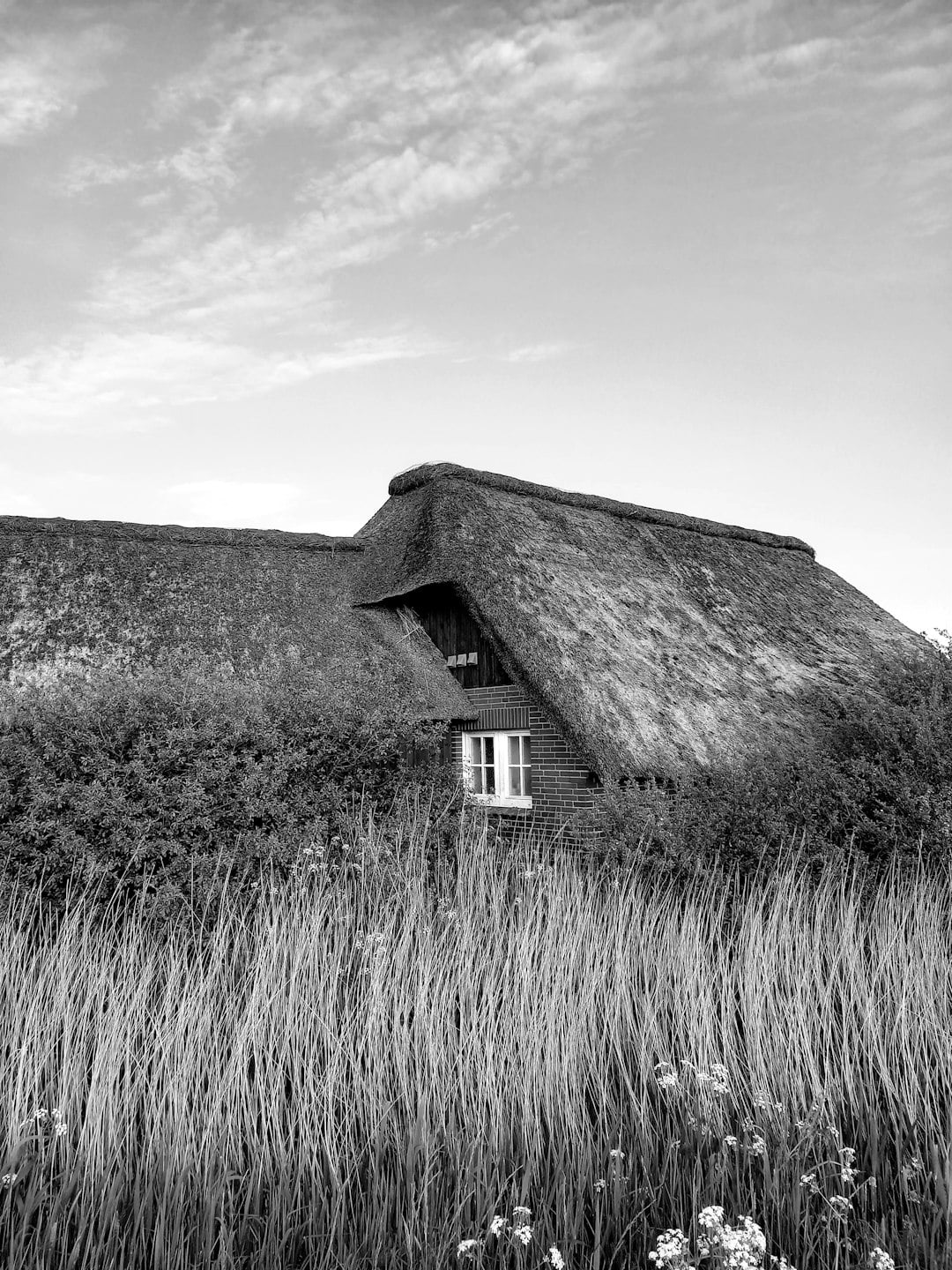
A Roof That Breathes
Thatch isn’t just straw. It’s an engineered system that took thousands of years to perfect.
Water reed — the preferred material in modern Irish thatching — is harvested from wetlands and layered in dense bundles called skeins. Each layer overlaps the one below, like fish scales, so rainwater rolls off before it can penetrate.
Air pockets trapped between layers act as insulation. An Irish cottage with a proper thatched roof stays cooler in summer and warmer in winter than its equivalent in brick. Before central heating, this wasn’t a style choice. It was survival.
Why Ireland’s Cottages Look Different
The shape of the traditional Irish cottage evolved to meet one adversary: the Atlantic wind.
Low, thick walls. Small windows facing east, away from the prevailing south-westerly gales. A hip roof that wraps around all four sides rather than ending in sharp gables. Every detail was engineered against the weather, not designed for aesthetics.
The whitewashed lime walls weren’t decorative either. Lime repels insects, seals moisture, and was cheap and available. A farmer could re-coat the walls every year with materials from his own land.
What visitors now photograph as “charming” was originally functional poverty architecture, refined over three millennia.
The Thatcher’s Knowledge
A skilled thatcher in Ireland today can name the wetlands where the best reed grows.
He knows how long a roof will last — twenty-five to thirty years for water reed, twelve to fifteen for wheat straw — and which county’s weather demands which approach. In the wetter west of Ireland, thatch is fixed with scallops: hazel rods bent and pinned into the underlying layer. Along the east coast, you’ll see wire fixings, a later adaptation.
The ridge — the crest of the roof — is where a thatcher shows his artistry. Every county has its own ridge style. You can tell where a cottage was built by looking at how the top of the roof was finished. That regional knowledge lives in fewer than 400 registered thatchers across the whole of Ireland.
☘️ Enjoying this? 64,000+ Ireland lovers get stories like this every week.
Thinking about it seriously? If you’ve started actually planning a move, our complete the full Move to Ireland guide walks through every step, every cost, and the paperwork that catches most people out.
Where the Tradition Holds On
Adare in County Limerick is Ireland’s most famous thatched village. The cottages lining its main street — many dating to the 1820s — are preserved under heritage protection. If you want to see what a working thatched village looked like at its peak, Adare is the closest thing still standing. The County Limerick guide covers everything worth seeing while you’re there.
Bunratty Folk Park in Clare has reconstructed an entire nineteenth-century thatched village, including a working farmhouse with a hearth fire kept permanently burning — a tradition that once lasted unbroken for centuries in rural Irish homes.
The Irish government now offers Heritage Council grants to homeowners maintaining thatched properties. Without them, the economics make little sense: thatching a standard Irish cottage costs between €15,000 and €30,000, compared to a few thousand for a modern slate roof.
The Emotional Weight of a Roof
For the Irish diaspora, thatched cottages carry a weight that’s hard to explain to outsiders.
During the nineteenth century, millions left Ireland forever from homes that looked exactly like this. Many cottages were abandoned in the decades that followed, their thatched roofs slowly surrendering to rain. Some ruins still stand in bog fields across the west — roofless now, but with walls that have held through 150 winters.
When someone of Irish descent stands in front of a restored thatched cottage, they’re often standing in front of what their ancestors left behind. Not ruins — a whole life. A fire in the hearth. Children at the door. A way of living that crossed the Atlantic only in memory.
What Is Being Lost
Ireland currently has around 1,800 thatched buildings remaining. A century ago, there were more than 150,000.
The decline is partly economic, partly cultural. Younger generations in rural Ireland don’t grow up wanting to learn thatching. The tools are unusual, the training is long, and the market is small. Each thatcher who retires takes a regional style with them.
Heritage organisations have begun recording these variations — the ridge patterns, the pinning techniques, the vocabulary — before they disappear. Because what looks like a roof is actually a library. If you want to see it for yourself, start planning your trip to Ireland before the number of working thatched villages shrinks further.
The thatcher doesn’t just lay straw. They’re setting down the weight of Irish domestic life, one carefully pinned skein at a time. When that craft disappears — and it may, within a generation — Ireland won’t lose a roofing material. It will lose a way of reading its own past.
☘️ Your Irish family has a story waiting to be found.
Discover where your Irish ancestors came from — their county, their name, their story. Our free step-by-step guide walks you through every record, DNA tool, and ancestry archive. Join 64,000+ readers staying connected to Ireland.
Claim Your Free Irish Ancestry Guide →Tours & experiences you might love


Powered by Viator. Some links are affiliate links — we may earn a small commission at no extra cost to you.
Secure Your Dream Irish Experience Before It’s Gone!
Planning a trip to Ireland? Don’t let sold-out tours or packed attractions spoil your journey. Iconic experiences like visiting the Cliffs of Moher, exploring the Rock of Cashel, or enjoying a guided walk through Ireland’s ancient past often sell out quickly—especially during peak travel seasons.

Booking in advance guarantees your place and ensures you can fully immerse yourself in the rich culture and breathtaking scenery without stress or disappointment. You’ll also free up time to explore Ireland’s hidden gems and savour those authentic moments that make your trip truly special.
Make the most of your journey—start planning today and secure those must-do experiences before they’re gone!
Subscribe Free