

Dunlough Castle sits at the edge of the world — or it looks that way. Perched on sea cliffs 100 metres above the Atlantic at the tip of West Cork’s Mizen Peninsula, these ancient ruins are among the most isolated in Ireland. Yet almost nobody talks about them. If you are planning your first trip to Ireland, Dunlough Castle offers something genuinely rare: a medieval ruin you may have entirely to yourself.
What Is Dunlough Castle?
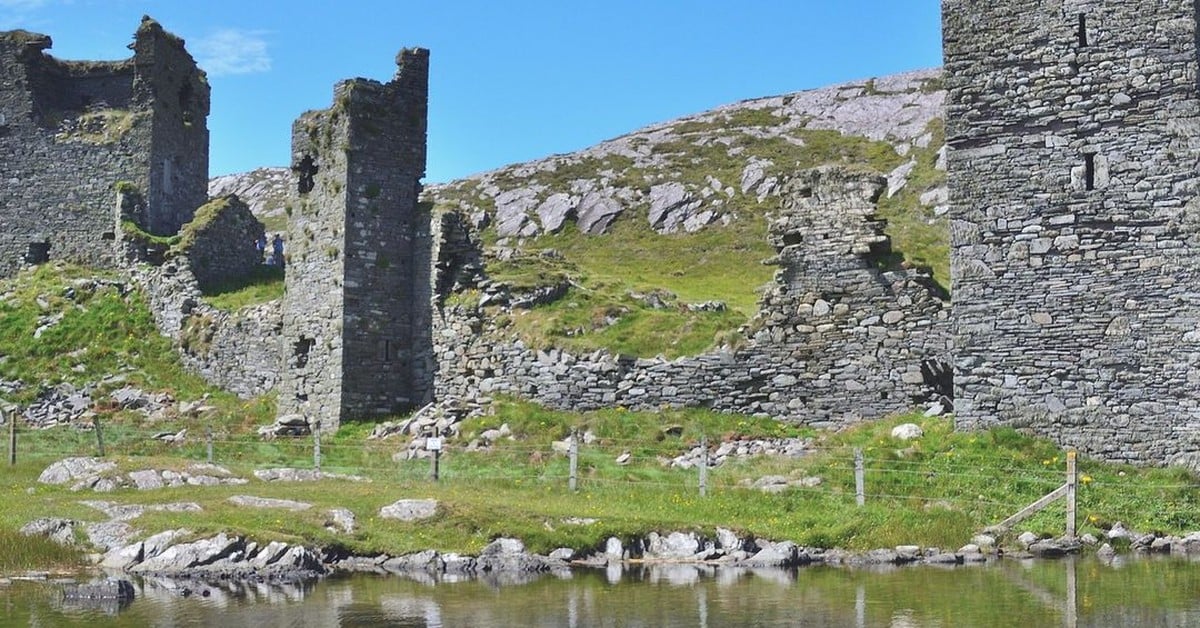
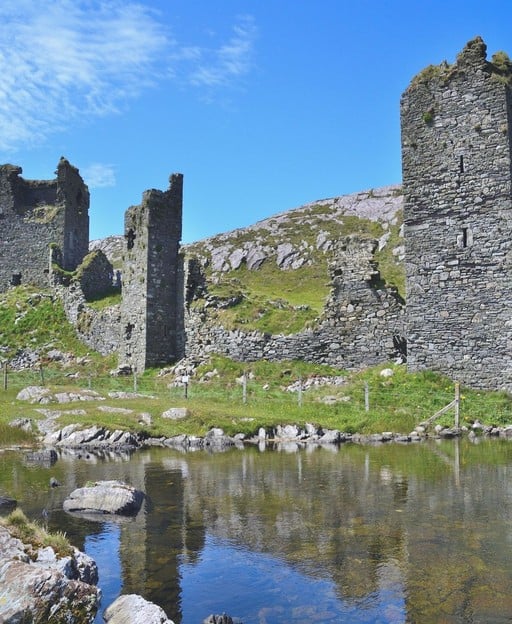
Dunlough Castle — also known as Three Castles Head — is a ruined 13th-century Norman tower house complex in West Cork. Three stone towers stand along a curtain wall that stretches across a narrow headland. A freshwater lake called Lough Fadda sits directly in front of the walls. Beyond the lake, cliffs drop 100 metres straight into the Atlantic.
The O’Mahony clan built the castle around 1207. At the time, they were one of the most powerful families in medieval West Cork. They chose this location deliberately. Attackers could only approach from one narrow direction. The ocean guarded every other angle.
The name Three Castles Head refers to the three distinct tower sections still visible today. Each served a different purpose — one as the main keep, one as a gatehouse, and one as a watch tower. All three remain standing, though in varying states of decay.
Where Is Three Castles Head?
Three Castles Head sits at the far western tip of the Mizen Peninsula in County Cork, about 10 kilometres west of the village of Toormore. The nearest village is Goleen, roughly 6 kilometres away.
From Cork city, the drive takes around two hours. Take the N71 through Skibbereen, then follow signs for Mizen Head via Bantry and the R591. From Dublin, allow four hours by road. Many visitors combine Three Castles Head with Mizen Head Signal Station, which sits at the far tip of the same peninsula — just 15 kilometres further west.
The site is not signposted on any main road. You will need to use Google Maps or a detailed OS map. Search for “Three Castles Head, County Cork” and follow directions to the lane that ends near the headland.
How to Get There
This is where many visitors are caught out. There is no formal car park, no signpost, and no paved path to Dunlough Castle. Getting there is part of the experience.
Parking
A rough lay-by along a narrow lane near Three Castles Head serves as the starting point. Do not expect a car park with facilities — it is a muddy track with space for a few cars pulled to one side. Check Google Maps satellite view before you arrive so you know what to look for.
The Walk
From the lay-by, the hike to Dunlough Castle takes 35 to 45 minutes each way. The route crosses open hillside and boggy ground. There is no marked trail, but the headland is visible ahead and the route is straightforward in clear weather.
Waterproof boots are essential. Regular trainers will be wet within five minutes. The ground stays boggy even in dry summers — this is West Cork, after all.
What to Bring
- Waterproof boots (non-negotiable)
- Rain jacket — West Cork weather changes fast
- Water and food — no facilities anywhere near the site
- A fully charged phone for navigation and emergencies
- An offline map as backup — signal is unreliable on the headland
☘️ Enjoying this? 64,000+ Ireland lovers get stories like this every week.
Thinking about it for retirement?
If you’ve started thinking seriously about retiring there, our complete our full Retire in Ireland guide covers the visa, healthcare, cost-of-living, and the regions worth shortlisting.
Subscribe free →
The History of Dunlough Castle
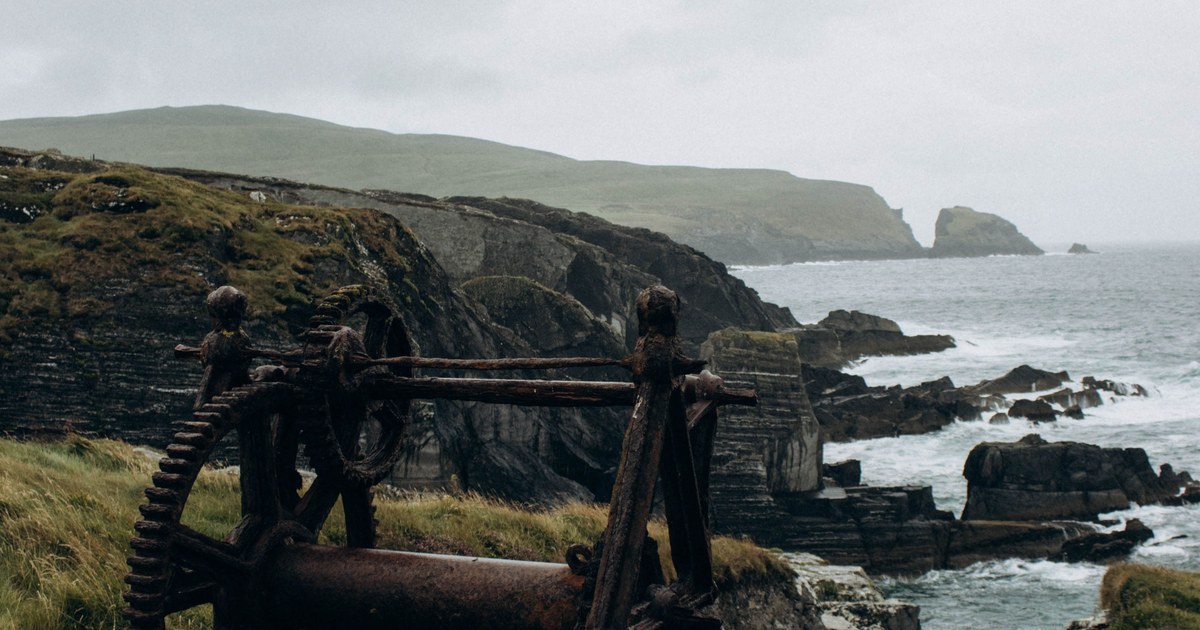
The O’Mahony clan built Dunlough Castle in the early 13th century following the Norman arrival in Ireland. The O’Mahonys controlled much of West Cork during the medieval period. Their tower houses — many of which survive along the Mizen and Sheep’s Head peninsulas — form one of the densest concentrations of medieval fortifications in Ireland.
The clifftop position at Three Castles Head was no accident. Control of the sea lanes around the Mizen Peninsula was commercially and militarily valuable at the time. Ships moving goods and raiding parties used coastal waters constantly. A fortress with a 100-metre elevation above the Atlantic had clear sight of every vessel for miles.
The castle fell into disuse during the 16th and 17th centuries as English power expanded through Munster and the old Gaelic and Norman order collapsed. By the Cromwellian period, Dunlough was already a ruin.
No restoration has ever taken place. The stones stand as they have for over 800 years — wind-worn, lichen-covered, and entirely open to Atlantic weather. That unaltered quality is precisely what makes Dunlough extraordinary.
What to Expect When You Arrive
As you cross the final ridge, three stone towers appear against a wide Atlantic sky. Lough Fadda sits directly below the curtain wall, and on calm days it mirrors the towers in still water. The effect is quietly breathtaking.
There is no formal ticket price, but an honesty box near the parking area requests a €3 donation per visitor — €1 from each donation goes to charity and trail maintenance. Bring small change. Note also that dogs are not permitted on the trail at any time (the land is an active sheep farm), and the trail closes to visitors in January, February, and March. You can walk directly up to the walls and look through doorways and window slits. Take care near any unstable stonework — this is an unrestored ruin, and not every wall is as solid as it looks.
On clear days, the views across to the Fastnet Rock lighthouse and the Sheep’s Head Peninsula are remarkable. On wild days, Atlantic waves hit the base of the cliffs far below. Either way, the atmosphere is unlike anywhere else in Ireland.
Most visitors spend 30 to 60 minutes at the site before walking back. You will rarely share the headland with more than a handful of other people, even in summer.
Practical Tips for Visiting
Best Time to Visit
May through September offers the most stable weather and the longest daylight hours. Autumn visits are possible and often beautiful as the hillside colours change. Winter is not recommended unless you are an experienced hiker — the ground becomes very boggy and Atlantic storms can be severe.
Best Time of Day
Early morning visits give the clearest views before midday sea haze builds. The castle photographs particularly well in low evening light when the sun catches the stone at an angle. Plan your arrival for around 8am or 6pm for the best light.
Is It Suitable for Children?
With care, yes. The walk is not technically difficult, but the terrain is uneven and there are sections near the cliff edge that require close attention. Older children who are comfortable on rough ground will manage well. Keep younger children well away from the cliff edges at the headland.
Accessibility
Dunlough Castle is not accessible for visitors with mobility difficulties. The walk involves rough, boggy terrain from start to finish, with no paved path at any point.
What Else to See Near Three Castles Head
Three Castles Head sits at the southwestern corner of the Mizen Peninsula. These sites are all within a 30-minute drive:
Mizen Head Signal Station — Ireland’s most southwesterly point. A suspension bridge crosses to the signal station on the headland, with dramatic sea cliffs on all sides. There is a visitor centre and café. Worth combining with a Three Castles Head visit on the same day.
Barley Cove Beach — A wide, sheltered beach in a beautiful cove. One of West Cork’s finest swimming beaches in summer. The dune system behind the beach is also worth exploring.
Crookhaven — A tiny harbour village with O’Sullivan’s pub, which has served fishermen and sailors for generations. One of the most peaceful places in County Cork for lunch or an afternoon pint.
For a full guide to the wider county, read our Best Things to Do in Cork guide, which covers the whole of County Cork from the city to the Wild Atlantic Way.
Dunlough Castle and the Story of Irish Tower Houses
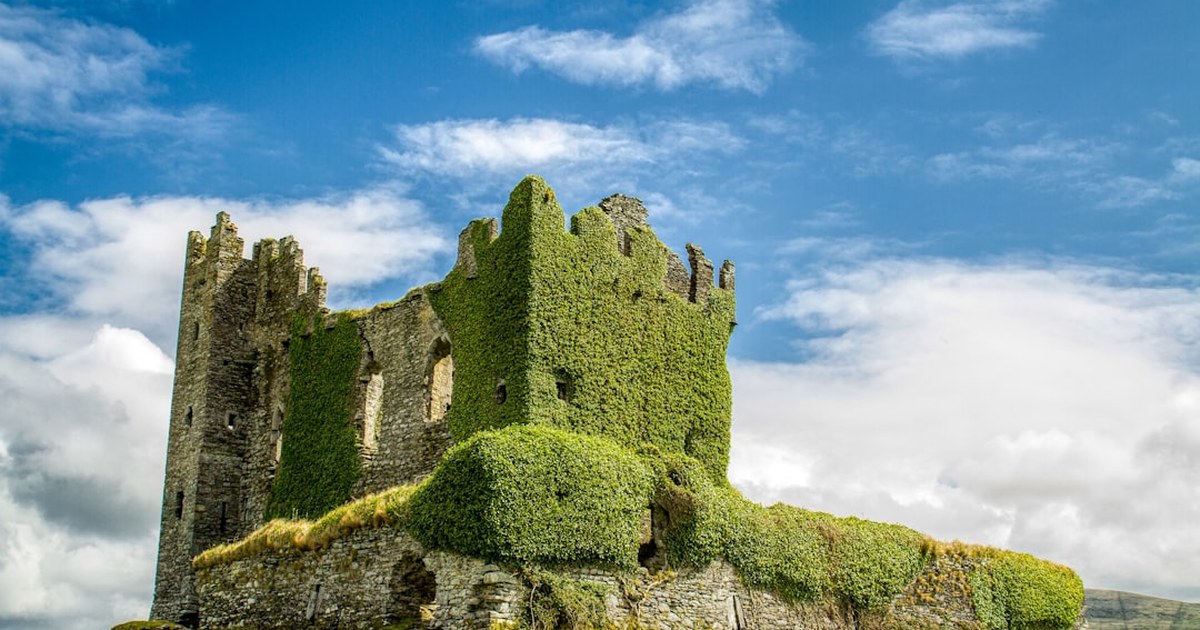
Ireland has more medieval castle ruins per square kilometre than almost any country in Europe. Around 3,000 castles and fortified sites survive in some form — from grand Norman keeps to simple tower houses built by Gaelic clans through the 15th and 16th centuries.
Dunlough stands out not for its size but for its position and survival. Most Irish castle ruins have been picked over for stone by later builders. Remote castles like Dunlough were simply left alone — too far from any settlement to be worth dismantling.
The O’Mahony tower houses stretch along the Mizen and Sheep’s Head peninsulas in a remarkable chain. Many are accessible and free to visit, forming an open-air heritage landscape that rewards curious visitors willing to leave the main road.
If you want to explore more of Ireland’s medieval heritage on your trip, our Ireland travel planning hub has itineraries covering castle sites across the country — from Kilkenny to Connemara.
You might also enjoy reading about Ireland’s historic abbeys and cathedrals, many of which sit in similarly dramatic locations across the island.
How long is the walk to Dunlough Castle?
The walk from the nearest lay-by parking to Dunlough Castle takes approximately 35 to 45 minutes each way across open hillside and boggy ground. Allow at least two hours for the round trip, including time spent at the site.
Is there an entry fee for Three Castles Head?
No. Dunlough Castle is an unmanaged ruin with no entry fee. The site has no ticket office, no car park charges, and no facilities. Visitors have traditionally accessed it freely across farmland — treat any farm gates and grazing animals with care.
What county is Dunlough Castle in?
Dunlough Castle is in County Cork, on the Mizen Peninsula in West Cork. It sits approximately 10 kilometres west of Toormore and 6 kilometres from the village of Goleen.
When was Dunlough Castle built?
Dunlough Castle was built around 1207 by the O’Mahony clan, a powerful Norman-Irish family who controlled much of West Cork during the medieval period. The castle’s clifftop position above the Atlantic gave it an exceptional defensive advantage.
☘️ Your Irish family has a story waiting to be found.
Discover where your Irish ancestors came from — their county, their name, their story. Our free step-by-step guide walks you through every record, DNA tool, and ancestry archive. No experience needed.
Already subscribed? Download your free Ireland guide (PDF)
📲 Know someone who’d love this? Share on WhatsApp →
Love more? Join 43,000 Scotland lovers → · Join 30,000 Italy lovers → · Join 7,000 France lovers →
Free forever · · Unsubscribe anytime
Tours & experiences you might love


Powered by Viator. Some links are affiliate links — we may earn a small commission at no extra cost to you.
Secure Your Dream Irish Experience Before It’s Gone!
Planning a trip to Ireland? Don’t let sold-out tours or packed attractions spoil your journey. Iconic experiences like visiting the Cliffs of Moher, exploring the Rock of Cashel, or enjoying a guided walk through Ireland’s ancient past often sell out quickly—especially during peak travel seasons.

Booking in advance guarantees your place and ensures you can fully immerse yourself in the rich culture and breathtaking scenery without stress or disappointment. You’ll also free up time to explore Ireland’s hidden gems and savour those authentic moments that make your trip truly special.
Make the most of your journey—start planning today and secure those must-do experiences before they’re gone!
Subscribe Free