

One in ten Americans claims Irish ancestry. But in the 1700s, when America was fighting for its independence, the Irish were not just present — they were central. Presidents, generals, signers of the Declaration of Independence, and the men who shaped the young republic’s laws and identity: a remarkable number of them came from Irish soil, or were the sons and grandsons of those who did.
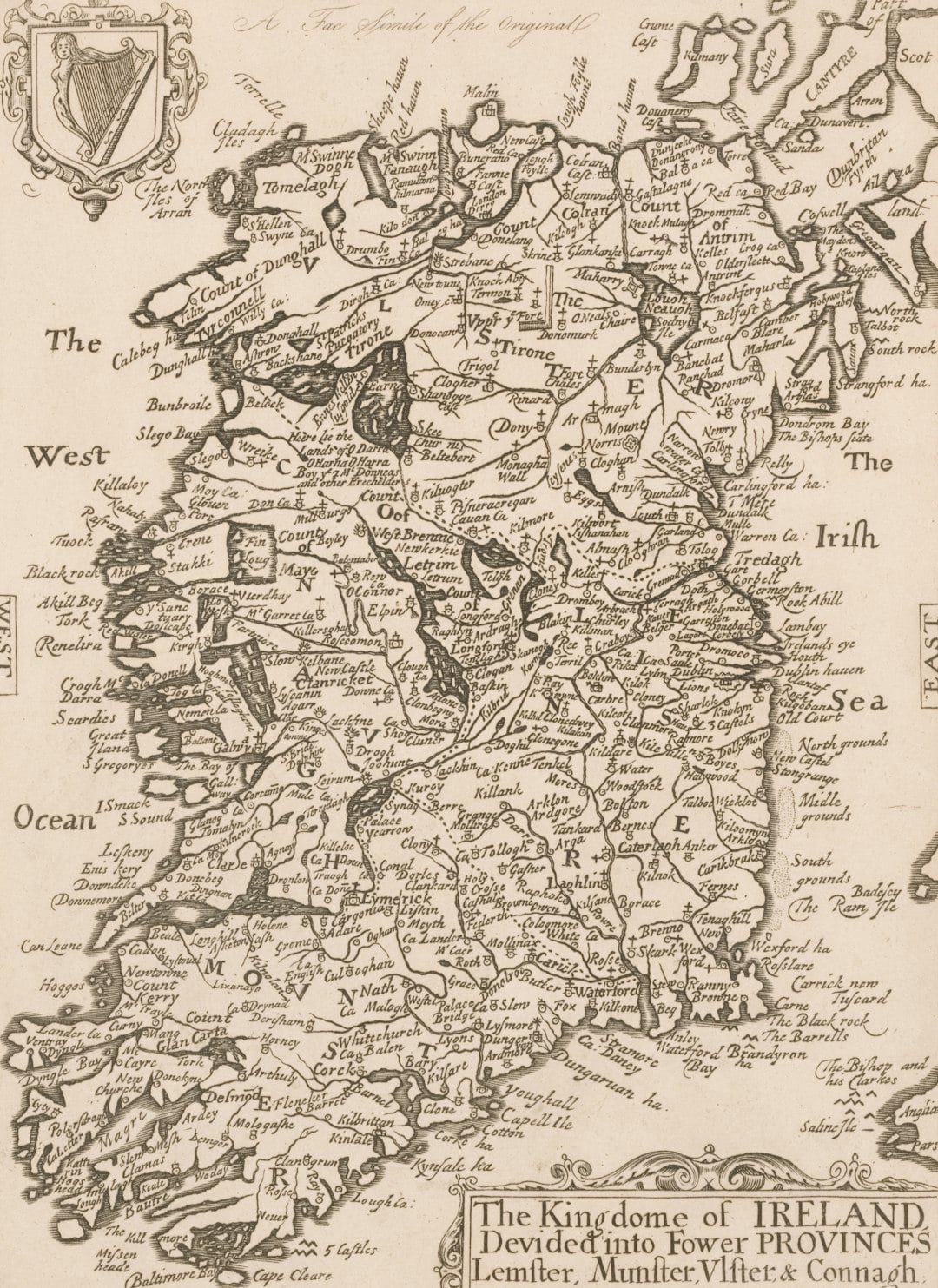
This is not a story of coincidence. It is the story of the Scots-Irish, the Ulster emigrations, and a century of displacement that deposited some of the most tenacious, independence-minded people on earth into exactly the right place at exactly the right moment in history.
Who Were the Scots-Irish?
The term “Scots-Irish” — or Ulster-Scots — describes the descendants of Scottish and English settlers who were planted in Ulster, in the north of Ireland, during the early 1600s. King James I encouraged Protestant settlers to move to Ireland to secure English control over the island.
For a few generations, it worked well enough. But the 1700s brought a series of blows that made life in Ulster increasingly difficult. English trade laws deliberately excluded Irish wool and linen from key markets. Rack-renting by absentee landlords drove up costs. Drought hit in the 1710s. Then smallpox. Then famine.
Between 1717 and 1775, historians estimate that 250,000 to 400,000 Ulster-Scots emigrated to North America. They came in waves: the first in 1717–1718, then again in the 1720s, the 1740s, and a final surge in the years just before the American Revolution. Each wave was driven by the same forces — economic hardship, insecure land tenure, and a culture that had spent generations learning to resist external authority.
They settled primarily in Pennsylvania, then pushed south and west into Virginia, the Carolinas, and Georgia. They were not the urban professionals of Boston and Philadelphia. They were farmers and frontier people, clearing forests, building communities, and developing a deeply personal relationship with the idea of self-determination.
The Irish-Born Founding Fathers
Several of the men who signed the Declaration of Independence were born on Irish soil.
Matthew Thornton was born in Ireland around 1714 — historians differ on whether it was County Limerick, County Clare, or Lisburn in County Antrim. His family emigrated when he was a child, settling in New Hampshire. He became a doctor, a judge, and eventually one of New Hampshire’s three signers of the Declaration — the only one of the three born in Ireland.
George Taylor was born in County Antrim around 1716. He came to Pennsylvania as an indentured servant, worked his way into the iron industry, and eventually became a wealthy manufacturer and a member of the Continental Congress. He signed the Declaration in 1776 and died less than two years later.
James Smith was born in Dublin around 1719. His family emigrated to Pennsylvania when he was young. He trained as a lawyer, became a colonel in the Pennsylvania militia, and was one of the signers who pledged “our lives, our fortunes, and our sacred honour.”
Beyond the signers themselves, the Irish-descended founders were everywhere. Charles Carroll of Carrollton — the only Catholic signer — came from a family that had been dispossessed of its Irish lands by English penal laws. His grandfather had fled Ireland for Maryland. Carroll was the wealthiest man in America at the time of signing, and among the most committed to independence.
☘️ Enjoying this? 64,000+ Ireland lovers get stories like this every week. Subscribe free →
Why the Ulster-Scots Were Ready to Revolt
There is a reason the Ulster-Scots became known as some of the most passionate advocates for American independence. They had lived under English rule in Ireland and knew exactly what arbitrary government looked like.
When the British Parliament began imposing taxes and restrictions on the American colonies, the Ulster-Scots recognised the pattern immediately. They had seen it before — in Ulster, where English trade restrictions had destroyed livelihoods, and where the Test Acts had excluded Presbyterians from public office and civic life.
The Rev. Dr John Witherspoon, born in Gifford, Scotland, but deeply connected to the Ulster-Scots tradition through his Presbyterian ministry, put it plainly. He was the president of the College of New Jersey (now Princeton), and the only clergyman to sign the Declaration of Independence. He said that when the news of Lexington and Concord came, the Scots-Irish communities in the back country were “not behind the most forward in the spirit of resistance.”
That spirit was not abstract. It came from lived experience. A people who had watched a distant parliament destroy their livelihoods and restrict their freedoms were not going to accept a repeat performance.
The 1700s Emigration Waves: A Timeline
Understanding why so many American founders were Irish requires understanding just how large the emigration waves were, and when they happened.
1717–1720: The first major wave, driven by a combination of drought, rack-renting, and the expiry of land leases in Ulster. Entire congregations left together, led by their Presbyterian ministers. They arrived mostly in Pennsylvania and quickly moved to the frontier.
1725–1729: A second wave, driven by further economic difficulties and by letters home from those who had already settled. By now the communities in Pennsylvania were established enough to provide a pull as well as Ireland a push.
1740–1741: A severe famine in Ireland — the Great Frost — killed an estimated 300,000 people. Another wave of emigration followed. Many who had previously considered staying finally left.
1771–1775: The final and largest wave, just before the Revolution. By this point, an estimated quarter of a million Ulster-Scots were already in the colonies. The new arrivals arrived to find a population already primed for resistance — and immediately joined it.
By 1776, the Ulster-Scots and their descendants made up perhaps a quarter of the entire colonial population. Their concentration in the frontier settlements, their military experience, and their institutional distrust of central authority made them indispensable to the revolutionary cause.
The Presidents With Irish Roots
The founders did not stop with the Revolution. The Irish connection extended deep into American presidential history.
Andrew Jackson, the seventh president, was born to Ulster-Scots parents from County Antrim. They emigrated to South Carolina in 1765. Jackson grew up on the frontier, fought the British as a teenager, and carried a lifelong hostility to concentrated power — a trait that, his biographers have noted, was distinctly Scots-Irish in character.
James Buchanan, the fifteenth president, had a father born in County Donegal. Chester A. Arthur, the twenty-first president, was the son of a man born in County Antrim who emigrated to Vermont. Woodrow Wilson‘s grandfather came from County Tyrone.
By some estimates, over twenty American presidents have claimed Irish ancestry. The line runs from the Revolution right through to the modern era — from Andrew Jackson to John F. Kennedy to Joe Biden, whose family roots trace back to County Mayo and County Louth.
Cobh: Where the Story Began
Many of the emigrants who left Ireland in the 1800s — later than the founders, but part of the same long story — sailed from Cobh in County Cork. Then known as Queenstown, it was the last piece of Irish soil that millions of emigrants ever touched.
Today, the Cobh Heritage Centre tells the story of Irish emigration from the 1700s through to the 20th century. It sits on the same waterfront where emigrants once waited for their ships. The Titanic’s last port of call before its fateful crossing was Cobh — 123 Irish passengers boarded there in April 1912.
If you want to understand why America has such a deep Irish thread in its founding and its identity, Cobh is one of the most powerful places to start. Stand on that waterfront and think about the scale of what happened: over two million people leaving Ireland for America in the 1840s and 1850s alone, each one carrying their language, their faith, their politics, and their memory of what it meant to resist.
The Ulster-American Folk Park
In Omagh, County Tyrone, the Ulster-American Folk Park tells the story of the 18th-century emigrations in extraordinary physical detail. The park has reconstructed an entire Ulster village and an entire American frontier settlement, connected by an emigrant ship experience that takes visitors through the journey between the two worlds.
The ancestral homes of several American presidents are preserved or commemorated here. The cottage where Andrew Jackson’s parents were born before they left for America. The land that Wilson’s grandfather farmed before making the crossing.
It is one of the best outdoor museums in Ireland — and one of the most undervisited by American tourists, despite being directly relevant to their own family history.
Tracing Your Own Founder Roots
If your family came from Ulster — from Antrim, Tyrone, Armagh, Londonderry, Down, Fermanagh, or Monaghan — there is a good chance your ancestors were part of the same migration waves that shaped the American founding generation.
The Ireland planning guide on this site includes resources for tracing Irish roots, including county-level archives and genealogy centres. The Ulster Historical Foundation in Belfast holds records for many of the Presbyterian families who emigrated in the 1700s, and the Public Record Office of Northern Ireland has extensive digitised records. Our guide to visiting the Irish roots of America’s founding fathers covers the key heritage sites in detail.
Many American families find, when they dig into the records, that their ancestors left specific townlands — not just counties. A townland is a very small unit of land, often just a few hundred acres. Knowing yours makes the journey home dramatically more meaningful.
For those tracing roots further south, the county heritage centres maintain genealogy databases. The Cork travel guide covers Cobh and the emigration story in full. And if you want to understand the military side of the story, our article on Irish soldiers in the American Revolution covers the regiments and battles in detail. County Donegal, County Mayo, and County Clare all have dedicated heritage services for the Irish diaspora.
Why This Matters Now
In 2026, Americans celebrate 250 years of independence. That anniversary is also, in a very real sense, an Irish anniversary.
The Ulster-Scots who left Ireland between 1717 and 1775 did not know they were going to help found a nation. They were simply trying to build a better life than the one they had been forced to leave. But the values they carried — a fierce suspicion of concentrated power, a commitment to individual conscience over institutional authority, a willingness to fight rather than submit — turned out to be exactly what the American Revolution required.
George Washington himself said, after Valley Forge, that if the Continental Army ever gave up, he would retreat into the valleys of Virginia and fight on with the Scots-Irish settlers there. He knew who his most reliable people were.
The Ireland they came from — its history of resistance, its dispossession, its Presbyterian independence of mind — is not ancient history. It is the living root of something that shaped the modern world. If you have Irish ancestry, part of that root is yours.
Why did so many Irish people emigrate to America in the 1700s?
The main causes were English trade laws that destroyed the Irish linen and wool industries, rack-renting by absentee landlords, and recurring droughts and famines. Between 1717 and 1775, an estimated 250,000 to 400,000 Ulster-Scots left for the American colonies, many of them arriving just in time for the Revolution.
How many American presidents have had Irish roots?
Over twenty American presidents are believed to have Irish ancestry, including Andrew Jackson (County Antrim), James Buchanan (County Donegal), Woodrow Wilson (County Tyrone), John F. Kennedy (County Wexford), and Joe Biden (County Mayo and County Louth). The Irish connection to the presidency runs from the founding era right through to today.
Where in Ireland can I visit to learn about the Irish-American connection?
The Ulster-American Folk Park in Omagh, County Tyrone is one of the best starting points — it reconstructs the emigrant experience from Ulster to America’s frontier. The Cobh Heritage Centre in County Cork tells the story of emigration through the southern ports. Many county heritage centres also offer genealogy services for tracing Irish-American roots.
Were the Scots-Irish and the Irish the same people?
Not exactly. The Scots-Irish (or Ulster-Scots) were descendants of Scottish and English settlers who had been planted in Ulster from the early 1600s. They were mostly Presbyterian. The later Irish emigrations of the 1800s brought predominantly Catholic emigrants from the south and west of Ireland. Both groups contributed enormously to American culture, but the founders’ generation came primarily from the Ulster-Scots community.
☘️ Join 64,000+ Ireland Lovers
Every Friday, get Ireland’s hidden gems, local secrets, and travel inspiration — the kind you won’t find in any guidebook.
Subscribe free — enter your email:
Thinking about it seriously?
If you’ve started actually planning a move, our complete Move to Ireland guide walks through every step, every cost, and the paperwork that catches most people out.
📲 Know someone who’d love this? Share on WhatsApp →
Free forever · · Unsubscribe anytime
Tours & experiences you might love


Powered by Viator. Some links are affiliate links — we may earn a small commission at no extra cost to you.
Secure Your Dream Irish Experience Before It’s Gone!
Planning a trip to Ireland? Don’t let sold-out tours or packed attractions spoil your journey. Iconic experiences like visiting the Cliffs of Moher, exploring the Rock of Cashel, or enjoying a guided walk through Ireland’s ancient past often sell out quickly—especially during peak travel seasons.

Booking in advance guarantees your place and ensures you can fully immerse yourself in the rich culture and breathtaking scenery without stress or disappointment. You’ll also free up time to explore Ireland’s hidden gems and savour those authentic moments that make your trip truly special.
Make the most of your journey—start planning today and secure those must-do experiences before they’re gone!
Subscribe Free