

The Irish signers of the Declaration of Independence number at least five — men born in Ireland or with direct Irish parentage who put their names to America’s founding document in 1776. Of the 56 signers who pledged their lives, fortunes, and sacred honour to the cause of American liberty, at least five carried Irish blood in their veins. They came from County Antrim, County Londonderry, Dublin, Tipperary, and the Catholic gentry of the Irish midlands. Each one understood, more than most of their American-born colleagues, precisely what it felt like to live under British rule.
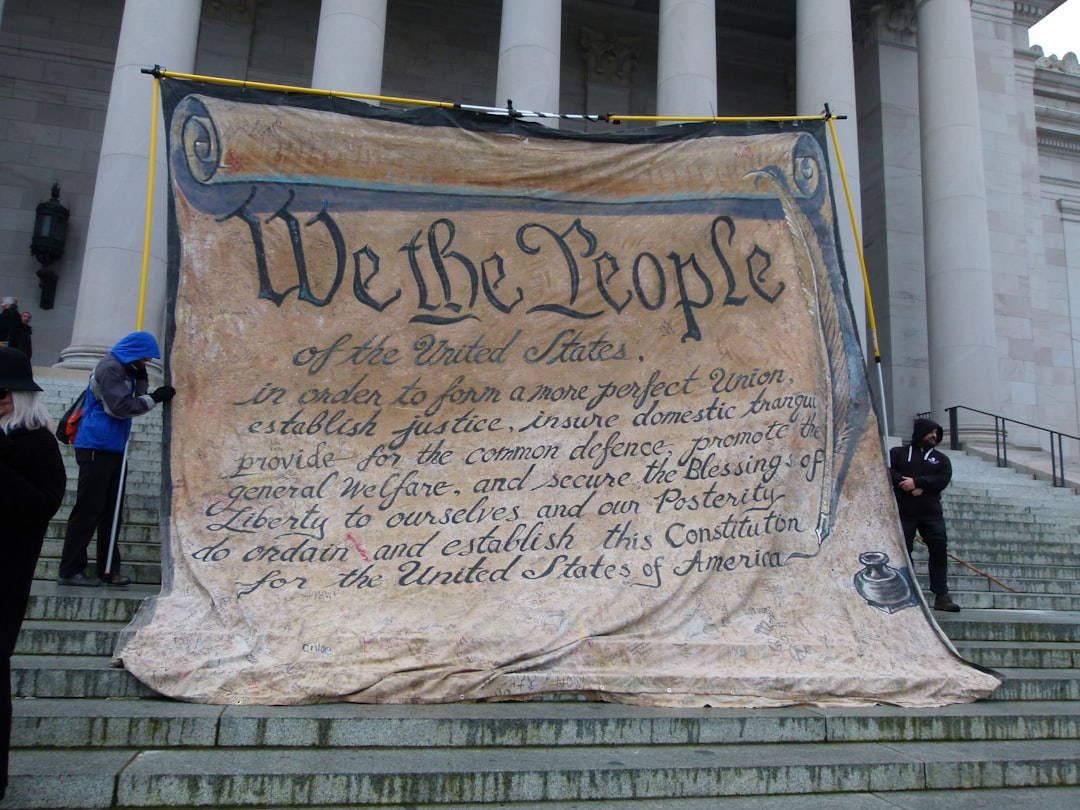
As America marks the 250th anniversary of independence in 2026, it is worth remembering that the revolution was, in no small part, an Irish story. This article introduces each of the five Irish-connected signers — where they came from in Ireland, how they got to America, and what they risked when they signed.
The Five Irish Signers of the Declaration of Independence
When historians count the Irish-born or Irish-descended signers of the Declaration of Independence, five names come up consistently: Matthew Thornton, James Smith, George Taylor, Charles Carroll of Carrollton, and Edward Rutledge. Their connections to Ireland range from birth on Irish soil to a grandfather who crossed the Atlantic from the Irish midlands. Each story is worth knowing.
Matthew Thornton — From County Londonderry to New Hampshire
☘️ Your Irish family has a story waiting to be found.
Discover where your Irish ancestors came from — their county, their name, their story. Our free step-by-step guide walks you through every record, DNA tool, and ancestry archive. No experience needed.
Claim Your Free Irish Ancestry Guide →Matthew Thornton holds a unique distinction among the Irish signers: he was born in Ireland and signed the Declaration as an adult who still remembered the old country. Born around 1714 in the north of Ireland — most likely in the area of what is now County Londonderry — he emigrated to America with his family around 1718, when he was roughly four years old.
The family settled in Worcester, Massachusetts, before eventually moving to what would become Londonderry, New Hampshire — a town they named in deliberate tribute to their home county in Ireland. The Ulster Scots who settled there brought their Presbyterian faith, their distrust of the English Crown, and their fierce sense of independence.
Thornton trained as a physician and built a respected medical practice. By 1776, he was 62 years old and a prominent figure in New Hampshire politics. He was not among the original signers who affixed their names in August 1776 — he was added to the New Hampshire delegation later, and signed the Declaration on 4th November 1776, making him one of the last to put pen to parchment. Thornton lived until 1803, dying at the age of approximately 89. The town of Londonderry, New Hampshire — bearing its Irish name still today — stands as his most visible legacy.
James Smith — From Dublin to Pennsylvania
James Smith was born near Dublin around 1719, making him one of two signers born in Ireland’s capital city and its surrounds. His family emigrated to Pennsylvania when he was still a child, settling in what is now York County. Like many Irish immigrants of his generation, he came with almost nothing and built a life through education and hard work.
Smith studied law and established a legal practise in York, Pennsylvania. He was known as a witty and entertaining speaker — qualities that served him well as he became increasingly involved in colonial politics during the 1770s. When war broke out, he formed and captained a militia company to defend his adopted country.
Smith’s personal cost for signing was direct. During the British occupation of Pennsylvania, his iron forge — a significant part of his livelihood — was destroyed by British forces. He rebuilt, but never fully recovered his fortune. He died in 1806 at the age of approximately 83, having seen the new nation he helped create survive its first three decades.
George Taylor — From County Antrim to Pennsylvania
Of all the Irish signers, George Taylor’s story is perhaps the most dramatic. Born around 1716 in County Antrim — in the north of Ireland — he came to Pennsylvania around 1736 as an indentured servant. He had no money, no connections, and no formal education beyond what he had received in Ireland.
Taylor worked as a labourer in an iron foundry owned by Samuel Savage in Bucks County. He was intelligent and capable, and when Savage died, Taylor married his widow, Ann Savage, thereby gaining ownership of the ironworks. He grew the business substantially over the following two decades, becoming one of the wealthier men in the region.
His path to signing the Declaration was short but consequential. Taylor was elected to the Second Continental Congress in July 1776 — just weeks before the vote on independence. He arrived in Philadelphia, voted in favour of independence, and signed the Declaration. Then his health collapsed. He resigned from Congress in February 1777 after just seven months, and died in February 1781, aged around 65. He had come to America as a servant and died a Founding Father — the kind of trajectory the revolution promised to make possible.
The abandoned farmsteads of County Antrim evoke the Ireland George Taylor left behind in 1736 — a land he never returned to, but whose spirit drove him toward revolution.
☘️ Enjoying this? 64,000+ Ireland lovers get stories like this every week. Subscribe free →
Charles Carroll of Carrollton — Irish Catholic Roots, Maryland Patriot
Charles Carroll of Carrollton was not born in Ireland — he arrived in Annapolis, Maryland, on 19th September 1737. But his roots were unmistakably Irish, and specifically Irish Catholic, at a time when that combination made him an outsider in British colonial society.
The Carroll family traced their origins to the O’Carroll sept of Tipperary, one of the ancient Gaelic families of Ireland. His grandfather Daniel Carroll emigrated from Ireland to Maryland in the 1680s, fleeing the religious persecution that followed the Williamite Wars. In Maryland, the family built extraordinary wealth through land, but Irish Catholics were formally barred from voting, holding public office, or practising law under colonial statutes.
Carroll was sent to France for his education — Saint-Omer’s Jesuit college, then the College of Louis-le-Grand in Paris — spending 17 years abroad before returning to Maryland in 1765. He arrived home to a colony on the verge of revolution. For a man who had spent his entire life excluded from the political rights the revolution now promised, the cause was personal.
He was the only Catholic to sign the Declaration of Independence — a fact of enormous significance in largely Protestant colonial America. He added “(of Carrollton)” after his name to distinguish himself from the several other Charles Carrolls in Maryland. His estate at Carrollton was worth an estimated $2 million in 1776 — he was the wealthiest signer by far, and had the most to lose.
Carroll outlived every other signer. He died on 14th November 1832, aged 95, the last of the 56 to leave this world. He had watched the United States grow from 13 rebellious colonies to a nation of 24 states across 56 years of independent history.
Edward Rutledge — Tipperary Blood in South Carolina
Edward Rutledge was born on 23rd November 1749 in Charleston, South Carolina — the youngest of all 56 signers, just 26 years old when he put his name to the Declaration. His father, Henry Rutledge, had emigrated from County Tipperary in Ireland, making Edward the son of an Irish immigrant and a man shaped by the Irish experience in the new world.
Rutledge trained as a lawyer in London’s Middle Temple and returned to South Carolina to build a successful legal practice. He was initially reluctant to vote for full independence. In July 1776, he was among those who argued for delay, believing the colonies were moving too quickly. He changed his mind after a month of deliberation, ultimately casting his vote for independence on 2nd August 1776.
His wartime experience was brutal. Captured by British forces during the fall of Charleston in 1780, he was imprisoned for nearly a year in St Augustine, Florida, before being released in a prisoner exchange in 1781. He went on to serve as Governor of South Carolina from 1798 to 1800, dying in office on 23rd January 1800, aged 50.
Why So Many of the Founders Had Irish Roots
The presence of so many Irishmen among the Founding Fathers was not an accident. The 18th century saw massive emigration from Ireland to the American colonies — particularly from Ulster, where the Scots-Irish (Ulster Scots) had settled under the Plantation of Ulster in the early 1600s. By 1776, between 250,000 and 400,000 people of Irish descent lived in the 13 colonies — roughly 14% of the entire colonial population.
For Irish emigrants, the grievances behind the American Revolution were not abstract. Many had left Ireland because of oppressive British policies: the Navigation Acts that strangled Irish trade, the penal laws that restricted Catholic worship and land ownership, and the rack-renting that drove tenant farmers off their land. When colonial leaders articulated their opposition to British taxation and governance, Irish immigrants recognised the argument immediately — and personally.
King George III reportedly described the American Revolution as “a Scots-Irish Presbyterian rebellion.” Of the roughly 2,000 generals and officers in the Continental Army, more than 400 were of Irish origin. The Irish contribution to American independence runs far deeper than five signatures on a single document.
Read more about this history in our full guide on how Irish soldiers shaped American independence, and discover where to visit the Irish roots of America’s founding fathers today.
Visiting the Irish Counties That Shaped America
If you want to stand in the landscape that formed these men before they changed history, Ireland makes it surprisingly accessible. The counties connected to the five signers span both the Republic and Northern Ireland — and several are among Ireland’s most rewarding places to visit.
County Antrim — George Taylor’s Homeland
County Antrim is home to some of Northern Ireland’s most dramatic scenery: the Giant’s Causeway (a UNESCO World Heritage Site since 1986), Fair Head, the Glens of Antrim, and Carrickfergus Castle, one of Ireland’s best-preserved Norman fortresses built in 1177. The Ulster-American Folk Park in nearby Omagh, County Tyrone — 90 minutes from Belfast — reconstructs the 18th-century emigration experience with full-scale replicas of Ulster farmsteads and an emigrant ship.
County Londonderry — Matthew Thornton’s County
Matthew Thornton came from the area around modern Derry city in the northwest of Northern Ireland. The city walls of Derry, built between 1613 and 1619, are the best-preserved in Ireland or Britain — standing 8 metres high and stretching 1.5 kilometres around the old city. Derry is 1.5 hours by road from Belfast and an excellent base for exploring the Causeway Coastal Route.
County Tipperary — The Carroll and Rutledge Connection
Both the Carroll and Rutledge families had Tipperary connections. The county contains two extraordinary heritage sites: the Rock of Cashel, a 12th-century royal fortress and cathedral complex rising 61 metres above the Tipperary plain, and Cahir Castle, one of the largest and best-preserved medieval castles in Ireland. Tipperary is a 2-hour drive from Dublin and 45 minutes from Cork.
For full trip planning, our complete Ireland planning guide covers everything from when to go to which counties to prioritise for heritage travel. You may also enjoy exploring our guide to the best things to do in County Tipperary to plan a visit to the Carroll and Rutledge heartland.
Frequently Asked Questions
How many Irish signers were there in the Declaration of Independence?
At least five of the 56 signers had direct Irish connections: Matthew Thornton (born in Ireland), James Smith (born near Dublin), George Taylor (born in County Antrim), Charles Carroll (Irish Catholic ancestry via Tipperary), and Edward Rutledge (father from County Tipperary). Some historians identify a broader circle of Irish-descended signers, but these five are consistently named in historical records.
Which Irish counties are the signers of the Declaration of Independence from?
Matthew Thornton is linked to County Londonderry, James Smith to the Dublin area, George Taylor to County Antrim, Charles Carroll to the O’Carroll lands of Tipperary through his grandfather’s emigration in the 1680s, and Edward Rutledge to County Tipperary through his father Henry Rutledge.
Is there an Irish heritage trail related to the American Revolution?
Yes. The Ulster-American Folk Park in Omagh, County Tyrone, is the most comprehensive heritage site dedicated to 18th-century Irish emigration to America. It reconstructs Irish and American environments from the 1700s and traces the entire emigration journey. Cobh Heritage Centre in County Cork also covers the broader story of Irish emigration to America across several centuries.
When is the best time to visit Ireland for a heritage trip in 2026?
May through September offers the best combination of weather and daylight for visiting heritage sites across Ireland and Northern Ireland. July 2026 is particularly fitting — the 250th anniversary of the Declaration of Independence means Irish-American heritage events are planned at major sites throughout the summer. Book accommodation at least 3 months in advance if visiting in late June or July.
☘️ Join 64,000+ Ireland Lovers
Every weekday morning, get Ireland’s hidden gems, local secrets, and travel inspiration — the kind you won’t find in any guidebook.
Subscribe free — enter your email:
Already subscribed?
Thinking about it seriously?
If you’ve started actually planning a move, our complete the full Move to Ireland guide walks through every step, every cost, and the paperwork that catches most people out.
Download your free Ireland guide (PDF)
📲 Know someone who’d love this? Share on WhatsApp →
Love more? Join 43,000 Scotland lovers → · Join 29,000 Italy lovers → · Join 7,000 France lovers →
Free forever · Unsubscribe anytime
Tours & experiences you might love


Powered by Viator. Some links are affiliate links — we may earn a small commission at no extra cost to you.
Secure Your Dream Irish Experience Before It’s Gone!
Planning a trip to Ireland? Don’t let sold-out tours or packed attractions spoil your journey. Iconic experiences like visiting the Cliffs of Moher, exploring the Rock of Cashel, or enjoying a guided walk through Ireland’s ancient past often sell out quickly—especially during peak travel seasons.

Booking in advance guarantees your place and ensures you can fully immerse yourself in the rich culture and breathtaking scenery without stress or disappointment. You’ll also free up time to explore Ireland’s hidden gems and savour those authentic moments that make your trip truly special.
Make the most of your journey—start planning today and secure those must-do experiences before they’re gone!
Subscribe Free