

Irish soldiers in the American Revolution played a decisive role in winning independence from Britain. Around one third of George Washington’s Continental Army was Irish-born or of direct Irish descent. Men who had left Ireland to escape poverty, persecution, and the brutal Penal Laws became some of the most effective fighters the new republic ever produced. Their story is your story — and it shaped a nation.
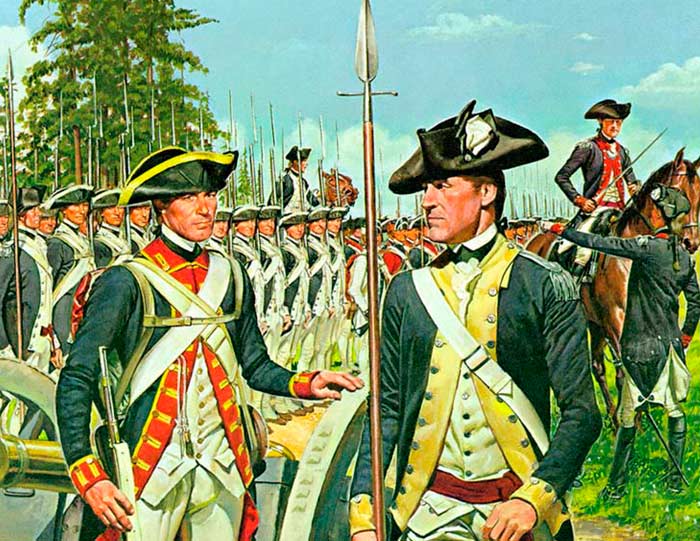
They came from Cork and Antrim, from Donegal and Tipperary. They crossed the Atlantic with little more than the clothes on their backs. And when revolution came, they picked up muskets and fought. This is the story of the Irish regiments that helped win America’s freedom.
Why So Many Irish Soldiers Joined the Revolution
The 1700s saw wave after wave of Irish emigration to the American colonies. The Penal Laws in Ireland stripped Catholics of property rights, education, and political participation. Ulster Presbyterians faced their own discrimination. Between 1718 and 1775, more than 200,000 Ulster Scots alone crossed the Atlantic.
Many settled in Pennsylvania, Virginia, and the Carolinas. They farmed the frontier, built communities, and remembered what oppression felt like. When Britain began taxing the colonies and restricting their freedoms, the Irish recognised the pattern immediately. They had seen it before — at home.
The connection between Irish grievance and American independence was not accidental. It was personal. Joining Washington’s army was, for many, a second revolution against the same enemy.
If you want to understand Ireland’s deep ties with the wider world, start here with our Ireland planning guide — and explore the land these men left behind.
General Richard Montgomery — Dublin-Born Hero of Quebec
Richard Montgomery was born in Dublin in 1738. He served in the British Army during the Seven Years’ War, but grew disillusioned with British rule. He settled in New York, married into a prominent family, and threw his lot in with the patriots when war broke out in 1775.
Congress appointed him Brigadier General in June 1775. He was one of the most senior Irish-born officers in the entire Continental Army. Montgomery led the American invasion of Canada, capturing Montreal in November 1775. He then pushed north toward Quebec City in the brutal Canadian winter.
On 31 December 1775, during the assault on Quebec, Montgomery was killed by grapeshot. He was 37 years old. His death shocked the colonies. Congress ordered a monument erected in his honour in St. Paul’s Chapel, New York — one of the first official tributes to a fallen American officer.
He gave his life for a republic he would never see established. Ireland gave America one of its first heroes.
Stephen Moylan and Moylan’s Dragoons
Stephen Moylan was born in Cork city in 1737. His family were prosperous Catholic merchants — a rare thing under the Penal Laws. He moved to Philadelphia in 1768 and quickly established himself as a leading businessman and patriot.
When the Revolution began, Moylan became one of Washington’s most trusted officers. He served as Muster-Master General, then as Quartermaster General, and finally as the commander of the 4th Continental Light Dragoons — known simply as Moylan’s Dragoons.
The Dragoons were a cavalry regiment that harassed British supply lines, scouted enemy positions, and fought at the Battle of Germantown in 1777. Moylan remained with the Continental Army for the entire war, rising to the rank of Colonel. Washington trusted him completely.
Moylan was the first person ever recorded to use the phrase “Your Most Obedient” at the close of a letter to George Washington — in a 1776 correspondence. The Cork man helped set the tone for the new republic’s culture and etiquette.
John Sullivan — Son of Irish Immigrants, Hero of Bunker Hill
John Sullivan was born in Somersworth, New Hampshire in 1740. His parents were Irish immigrants who had come from Limerick. Sullivan became a lawyer, then a militia officer, and rose to become one of Washington’s most important generals.
He fought at the Battle of Bunker Hill in June 1775 — one of the first major engagements of the Revolution. He then served at the Battle of Long Island, the Battle of Trenton (December 1776), and the Battle of Brandywine in 1777.
His most significant campaign came in 1779. Washington ordered Sullivan to lead a punitive expedition against the Iroquois Confederacy in New York and Pennsylvania. Sullivan commanded 4,000 men and destroyed 40 villages and 160,000 bushels of corn — effectively breaking Iroquois military power in the region.
After the war, Sullivan became Governor of New Hampshire twice, and later served as a federal judge. The son of immigrants from Limerick helped shape the legal and political foundations of the new republic.
☘️ Enjoying this? 64,000+ Ireland lovers get stories like this every week.
Thinking about it seriously? If you’ve started actually planning a move, our complete the full Move to Ireland guide walks through every step, every cost, and the paperwork that catches most people out.
Henry Knox — Boston-Born, Irish Descent, Father of American Artillery
Henry Knox was born in Boston in 1750 to an Irish immigrant family. His father, William Knox, came from Londonderry in Ulster. Henry grew up poor after his father died young, but educated himself obsessively in the bookseller’s shop where he worked.
When war came, Knox proposed something audacious. He would haul 59 cannons captured at Fort Ticonderoga — in upstate New York — 300 miles across frozen lakes and mountains to Boston. Washington agreed. Knox did it.
In the winter of 1775–76, Knox’s artillery train dragged the guns across the Berkshire Mountains on ox-drawn sleds. The cannons arrived in February 1776. Washington positioned them on Dorchester Heights overlooking Boston Harbour. The British, staring down the barrels, evacuated the city on 17 March 1776 — St. Patrick’s Day.
Knox later became the first US Secretary of War. Fort Knox in Kentucky is named after him. The son of an Ulsterman freed Boston on St. Patrick’s Day.
The Friendly Sons of St. Patrick — Philadelphia’s Irish Network
In 1771, Irish merchants and professionals in Philadelphia founded the Friendly Sons of St. Patrick. The organisation brought together Irish immigrants across religious lines — both Catholics and Protestants — to support one another and celebrate their shared heritage.
When the Revolution began, the Friendly Sons became a hub of patriot activity. Many of its members went on to serve as officers, suppliers, and financiers of the Continental Army. Stephen Moylan was a founding member. George Washington himself attended their dinners.
The network mattered. Ireland’s contribution to American independence was not just individual — it was organised, communal, and strategic.
The Wild Geese Come Home: Ireland’s Military Tradition
The Irish soldiers who fought in the Revolution were part of a long tradition known as the Wild Geese — Irish soldiers who went abroad to fight in foreign armies after being barred from serving in their own. From the 1600s onwards, tens of thousands of Irish men served in the French, Spanish, and Austrian armies.
In America, they finally found a cause they could make their own. They were not mercenaries or exiles this time. They were founders.
Washington reportedly said that if defeated everywhere else, he would retreat to the mountains of Augusta County, Virginia — a region heavily settled by Scots-Irish immigrants — and make his final stand there. He trusted the Irish.
Explore more about Ireland’s deep heritage and ancestry — or discover the landscapes these soldiers left behind with our guide to Donegal, the rugged north-western county that shaped so many emigrant families.
Key Irish Officers in the Continental Army
Here is a summary of the most significant Irish-born or Irish-descended officers who served in the Continental Army:
- Richard Montgomery (Dublin, 1738–1775) — Brigadier General, led the invasion of Canada, killed at Quebec.
- Stephen Moylan (Cork, 1737–1811) — Colonel, commander of the 4th Continental Light Dragoons, Washington’s close aide.
- John Sullivan (parents from Limerick, 1740–1795) — Major General, fought at Bunker Hill, Trenton, and Brandywine.
- Henry Knox (Boston, Irish descent from Londonderry, 1750–1806) — Major General, organised Continental Artillery, first US Secretary of War.
- Edward Hand (Clyduff, Co. Offaly, 1744–1802) — Brigadier General, Adjutant General of the Continental Army.
- William Thompson (Ireland, 1736–1781) — Brigadier General, led the 1st Pennsylvania Regiment.
- Andrew Lewis (Donegal, 1720–1781) — Brigadier General, hero of the Battle of Point Pleasant.
Frequently Asked Questions
How many Irish soldiers fought in the American Revolution?
Estimates vary, but historians broadly agree that around one third of the Continental Army was Irish-born or of direct Irish descent. Some estimates put the total number of Irish-born soldiers alone at between 20,000 and 30,000. Many others were second-generation immigrants with Irish parents.
What Irish regiments served in the American Revolution?
There was no single “Irish regiment” as such — Irish soldiers served throughout the Continental Army. However, units with strong Irish identities included Moylan’s Dragoons (led by Stephen Moylan of Cork), the 1st Pennsylvania Regiment (with many Irish-born soldiers), and Thompson’s Pennsylvania Rifle Battalion. Pulaski’s Legion also included significant numbers of Irish volunteers.
Why did Irish immigrants support American independence?
Most Irish immigrants had direct, personal experience of British rule in Ireland. The Penal Laws had stripped Catholics of rights and property. Ulster Presbyterians faced their own forms of discrimination. When Britain began taxing and restricting the American colonies, Irish immigrants recognised the pattern immediately. Fighting for American freedom felt like finishing a fight they had started at home.
Where did most Irish Revolutionary War soldiers come from in Ireland?
Many came from Ulster — particularly Antrim, Down, Tyrone, and Armagh — as part of the large Scots-Irish emigration of the 1700s. Others came from Munster, especially Cork and Limerick. Dublin and Leinster also contributed, particularly from merchant and professional families with existing trade connections to the American colonies.
☘️ Join 64,000+ Ireland Lovers
Every weekday morning, get Ireland’s hidden gems, local secrets, and travel inspiration — the kind you won’t find in any guidebook.
Subscribe free — enter your email:
Already subscribed? Download your free Ireland guide (PDF)
📲 Know someone who’d love this? Share on WhatsApp →
Love more? Join 43,000 Scotland lovers → · Join 29,000 Italy lovers → · Join 7,000 France lovers →
Free forever · Unsubscribe anytime
Tours & experiences you might love


Powered by Viator. Some links are affiliate links — we may earn a small commission at no extra cost to you.
Secure Your Dream Irish Experience Before It’s Gone!
Planning a trip to Ireland? Don’t let sold-out tours or packed attractions spoil your journey. Iconic experiences like visiting the Cliffs of Moher, exploring the Rock of Cashel, or enjoying a guided walk through Ireland’s ancient past often sell out quickly—especially during peak travel seasons.

Booking in advance guarantees your place and ensures you can fully immerse yourself in the rich culture and breathtaking scenery without stress or disappointment. You’ll also free up time to explore Ireland’s hidden gems and savour those authentic moments that make your trip truly special.
Make the most of your journey—start planning today and secure those must-do experiences before they’re gone!