

Ask anyone who has stood on a clifftop in Clare or watched the light shift across a Connemara lake, and the thought arrives almost unbidden: what if I never had to leave?
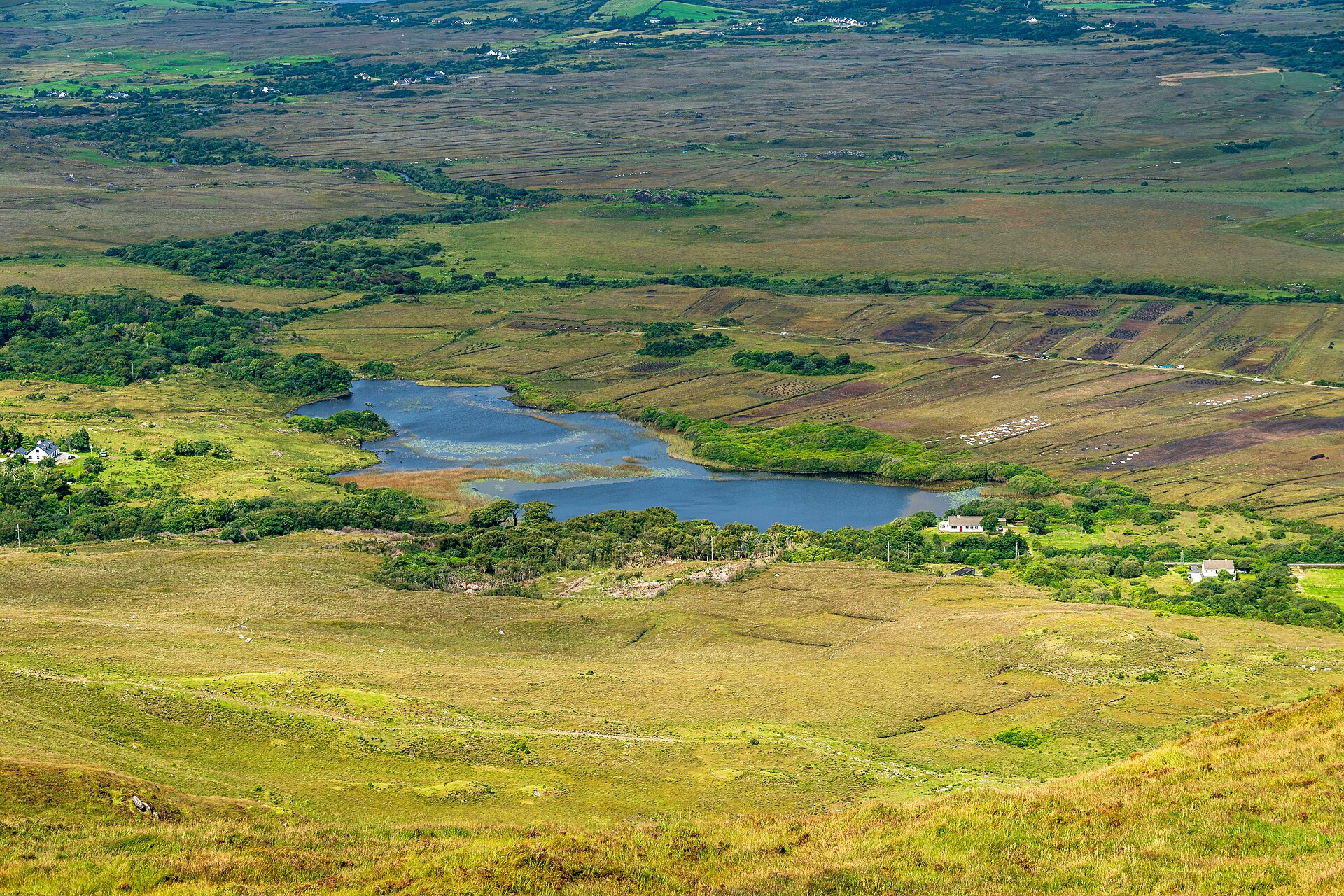
The question of retiring in Ireland — especially in that glorious “money no object” sense — has captured imaginations across social media and beyond, and it’s not difficult to understand why. Ireland occupies a particular space in the collective imagination: beautiful but accessible, ancient but alive, welcoming in a way that goes beyond tourist pleasantries. This is not a country that simply tolerates visitors. It absorbs them.
Whether you carry Irish blood or simply fell in love on a fortnight’s holiday, the dream of an Irish retirement is one of those persistent, quietly powerful ideas that refuses to dim. Here’s what that dream actually looks like — and why it stays with so many people long after the plane has touched down at home.
Ready to turn the dream into a plan?
Our Premium guide How to Retire in Ireland takes you beyond the dream — the Stamp 0 visa, the real monthly costs, healthcare, banking, and the exact steps to make the move. Everything in one place, for people who are serious about it.
Why Retiring in Ireland Is a Dream That Stays With You
There are places in the world that are beautiful from the outside — spectacular to photograph, wonderful to visit — but that don’t quite let you in. Ireland is different. It has a gravitational pull that operates on something deeper than scenery, though the scenery is extraordinary.
A Pace of Life That Heals You
Modern life tends to rush. Ireland resists. Not through inefficiency or apathy, but through a deeply rooted sense of what actually matters: conversation, community, the long way round. Villages in Connemara or West Cork operate on a rhythm that feels almost forgotten elsewhere — the morning coffee that becomes an hour’s chat, the walk that has no destination, the evening that simply unfolds without agenda.
For many people contemplating retirement, this pace isn’t an inconvenience. It’s the point. The idea of living somewhere that values presence over productivity is, for a growing number of us, the most luxurious thing imaginable.
A Community That Actually Sees You
One of the quiet crises of modern retirement — wherever in the world it happens — is isolation. Ireland has something of an antidote to this. Irish communities, particularly in smaller towns and rural areas, have a way of absorbing newcomers that goes beyond polite tolerance. You become part of things. You are known by name in the post office, invited to the set-dancing class, asked your opinion on the new café.
This isn’t sentimentality. It’s a cultural reality that expats and returning diaspora report consistently: Ireland is one of the few places where community still functions as a genuine support network, not merely a concept.
The Places You’d Choose If Cost Were No Concern
If you truly had freedom of choice — no budget constraints, no practical compromises — where in Ireland would you land?
Connemara — The Most Dramatic Backdrop on Earth
The Connemara region of County Galway is, for many people, the physical manifestation of the Irish dream. The Twelve Bens rising from the bogland, lakes so still they double the sky, stone walls threading across hills that seem untouched by modernity. The village of Clifden offers enough amenities to be comfortable; the surrounding landscape offers everything else.
Retiring in Ireland with Connemara as your backyard means waking to views that never become ordinary. It means knowing your local fishmonger by name. It means evenings in pubs where the music begins not because someone put it on a schedule, but because someone picked up a fiddle.
West Cork — Culture, Food, and the Atlantic on Your Doorstep
West Cork has long been a magnet for artists, writers, and those who simply refuse to live the way they’re told. Villages like Skibbereen, Baltimore, and Schull have built reputations as genuinely creative communities with exceptional food scenes, strong local identity, and a social calendar that somehow remains full without ever feeling forced.
The coastline here is breathtaking — harbours, peninsulas, and islands that make every evening walk feel like a small adventure. And West Cork’s food culture, fuelled by exceptional local produce and a thriving artisan community, means that eating well isn’t an occasional treat. It’s simply Tuesday.
County Clare — The Burren, the Cliffs, and a Slow Cup of Tea
Clare is the Ireland of wild geology and timeless music. The Burren’s limestone landscape — carpeted in wildflowers in spring, eerie and magnificent in winter — is unlike anywhere else on the island. The Cliffs of Moher need no introduction, but it’s the quieter spots that seduce the long-term resident: secluded coves, ancient ring forts, lanes that lead somewhere unexpected.
Ennis, Clare’s county town, buzzes with traditional music culture in a way that feels organic rather than performed. You can build a life around it. Many people have.
Kilkenny — Medieval Streets and a Creative Beating Heart
For those who want culture with their countryside, Kilkenny is the answer. Medieval architecture, galleries, craft studios, excellent restaurants, and a festival calendar that includes one of Ireland’s finest arts weeks. The city is small enough to feel intimate, large enough to never feel limiting. And the surrounding countryside — rolling farmland, river valleys, ancient ruins — is quintessentially Irish in its quiet beauty.
What Your Days Would Actually Look Like
The Morning Routine That Changes Everything
Picture this: you wake without an alarm. The light through the curtains is soft — Irish mornings rarely assault you. You put the kettle on and listen to the rain on the roof, which you have somehow learned to find comforting. You walk the same coastal path you’ve walked three hundred times, and it looks different again.
You stop in for a coffee at the same café, where the owner asks about your back (which is better, thank you), and you end up staying for forty-five minutes. This is not time wasted. This is the actual texture of a life well-lived.
Evenings That Remind You Why You Came
Irish evenings in small communities have a particular quality. Dinner made from ingredients bought that morning. A book. A fire, if it’s a cool evening — and in Ireland, it often is, which is somehow part of the charm. Then, possibly, a walk to the local for a pint and a conversation that ranges from the price of diesel to the meaning of life, somewhere around last orders.
It is a life that prioritises depth over volume. For many people imagining their ideal retirement, that is the entire dream.
The Practical Reality Worth Knowing
It would be dishonest to frame this entirely as fantasy. Retiring in Ireland — really doing it — involves visa considerations if you’re coming from outside the EU, questions of healthcare access, tax implications, and the very real experience of Irish weather in January and February.
But the infrastructure for expat retirees has developed significantly. Ireland is English-speaking, which removes one of the most common barriers to living abroad. The Irish healthcare system, while imperfect, offers real access. And the cost of living, while higher in Dublin, remains genuinely manageable in rural areas — particularly for those with a pension or savings denominated in stronger currencies.
For a full breakdown of what monthly life actually costs, our guide to the cost of living in rural Ireland in 2026 is essential reading. And if you’re thinking about specific regions, our guide to the Irish counties that most welcome retirees covers the places that consistently deliver on the promise. If you’re still in the early stages, our Ireland trip planning hub is the perfect starting point.
Why the Dream of Retiring in Ireland Never Quite Leaves You
What is it about Ireland that makes the retirement fantasy so persistent?
Part of it is the beauty, which is genuinely exceptional and genuinely varied — you don’t choose between dramatic and gentle, you get both, often within the same afternoon drive. Part of it is the culture: the literature, the music, the storytelling tradition that makes even an ordinary evening in a pub feel like something worth remembering.
But the deepest part, for most people, is the feeling of belonging. Ireland, perhaps more than anywhere else in the English-speaking world, has the cultural infrastructure to make you feel like you are somewhere, not merely somewhere comfortable. Like you have arrived, not just relocated.
The question “Would you retire in Ireland if money was no object?” is not really about money. It is about what we actually want from the years we still have — and whether we are brave enough to imagine it clearly.
For a great many people, that imagination looks like a stone cottage by a Connemara lake, a fiddle starting up in the corner of a warm pub, and a view of water that never stops moving. Perhaps that tells us everything we need to know.
☘️ Your Irish family has a story waiting to be found.
Discover where your Irish ancestors came from — their county, their name, their story. Our free step-by-step guide walks you through every record, DNA tool, and ancestry archive. No experience needed.
Claim Your Free Irish Ancestry Guide →☘️ Your Irish family has a story waiting to be found.
Discover where your Irish ancestors came from — their county, their name, their story. Our free step-by-step guide walks you through every record, DNA tool, and ancestry archive. No experience needed.
Claim Your Free Irish Ancestry Guide →Tours & experiences you might love


Powered by Viator. Some links are affiliate links — we may earn a small commission at no extra cost to you.
Secure Your Dream Irish Experience Before It’s Gone!
Planning a trip to Ireland? Don’t let sold-out tours or packed attractions spoil your journey. Iconic experiences like visiting the Cliffs of Moher, exploring the Rock of Cashel, or enjoying a guided walk through Ireland’s ancient past often sell out quickly—especially during peak travel seasons.

Booking in advance guarantees your place and ensures you can fully immerse yourself in the rich culture and breathtaking scenery without stress or disappointment. You’ll also free up time to explore Ireland’s hidden gems and savour those authentic moments that make your trip truly special.
Make the most of your journey—start planning today and secure those must-do experiences before they’re gone!